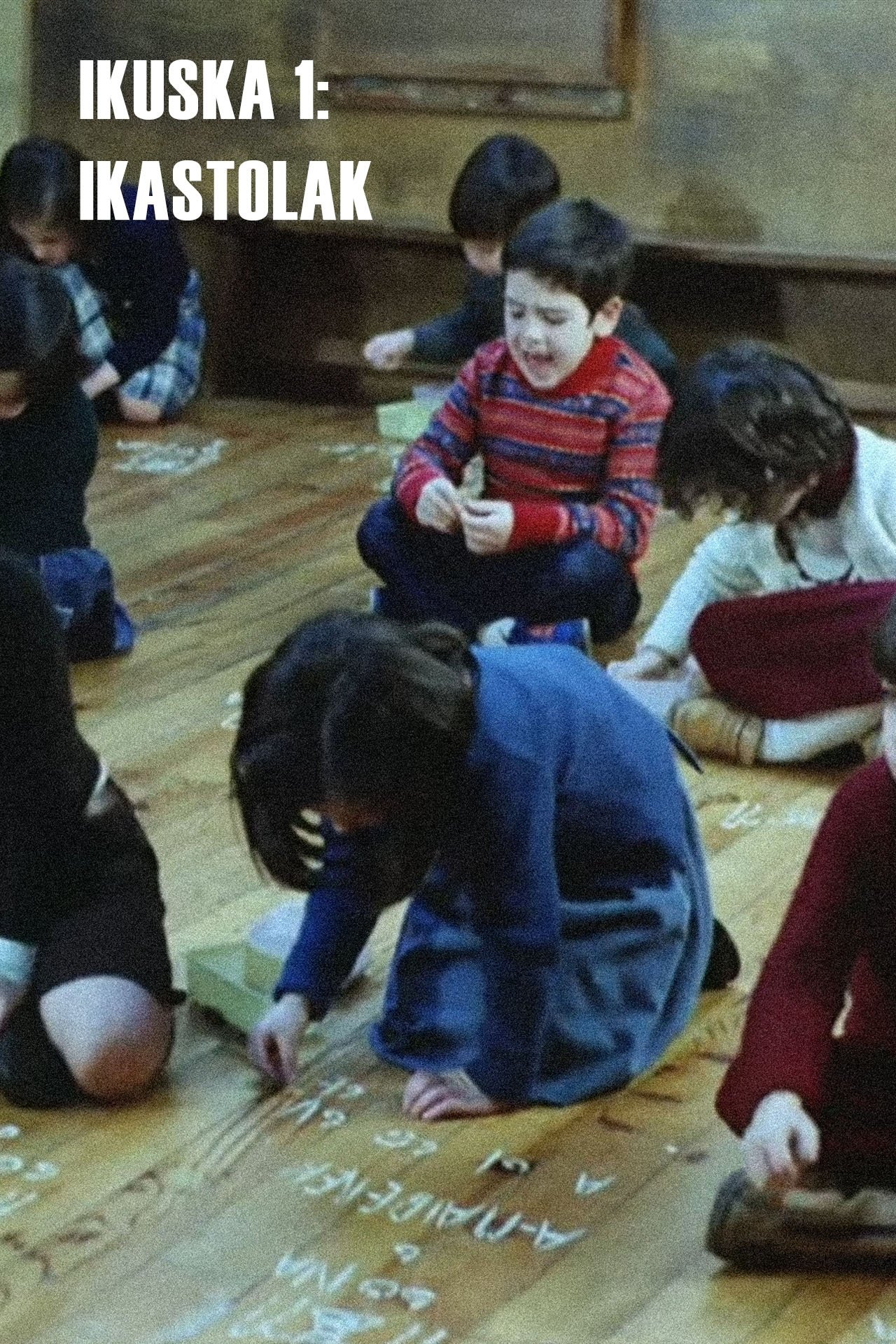
The first film of the 'Ikuska' series, on the situation of schools in Basque language.
Social & External
Two high school students from very different backgrounds participate in a musical with mentally disabled children, which eventually leads to the realisation of their dreams and aspirations.
Elementary Genocide is a documentary executive produced by award winning journalist/filmmaker Rahiem Shabazz. The documentary appeals to a wide general viewership by addressing the social, cultural, political and personal ramifications of how the federal government allots money to each state, to build prions based on the failure rate of 4th and 5th graders. In America, where half of the 4th grade is reading below grade level and more African-American males are in jail than are in college, Elementary Genocide serves as a striking reminder of a flawed system in need of repair.

Rahiem Shabazz continues the conscience-raising dialogue generated by his acclaimed documentary Elementary Genocide: The School To Prison Pipeline with his equally hard-hitting Elementary Genocide 2: The Board of Education vs The Board of Incarceration. The Board of Education vs The Board of Incarceration uncovers the true purpose of today’s educational system and how it’s failing the African child. Going beyond the school-to-prison pipeline headlines and conspiracy theories, The Board of Education Vs. The Board of Incarceration proves that something sinister is afloat by digging deep to explore its origin, its existence and how to plot its destruction to save every Black child.
World renowned journalist, and award-winning filmmaker Rahiem Shabazz presents the third installment of his docu-series Elementary Genocide: Academic Holocaust. The first two documentaries in the series; The School To Prison Pipeline and Elementary Genocide 2: The Board Of Education vs. The Board of Incarceration received critical acclaim and launched Shabazz as a political pundit and academic ambassador for the African American community. Elementary Genocide: Academic Holocaust adds more statistical proof of the scholastic inequalities faced by Original people around the country. The documentary revisits the importance of education and its impact on self-image, family structure, financial freedom, and the collective future of African/indigenous people in America and abroad.
An entertaining video filmed over two years. Kids, teachers, heads, parents, ex-pupils tell the story of this unique experimental school. “Kids don’t have to go to lessons at Summerhill and can wear and do mostly what they want. How does that work??!!
Why do we cheat in class? Why do they let us? In this short documentary we interview a class of high school students and study their motives behind deciding to cheat in class rather than study while witnessing it happening in action.
In Rome, Gianclaudio Lopez, a retired teacher, sets off in search of his former students who are now approaching their thirties. A Class Story mixes sequences of the video diary that the teenagers had filmed at the time and sequences shot now in which the protagonists, adults, remember this period and speak of their dreams, illusions and regrets.
One day in a kindergarten classroom at Van Horne Public School in Montreal. The teacher encourages children to turn their curiosity into questions and organizes group activities and play periods.
Gripping, heartbreaking, and ultimately hopeful, Waiting for Superman is an impassioned indictment of the American school system from An Inconvenient Truth director Davis Guggenheim.
The Pilchuck Glass School outside Seattle has been going for 43 years. Started by Dale Chihuly, when glass in America was at its infancy. This school is responsible for making the US Studio Glass movement what it is today. It's an international institution now, bringing students from all over the world. It started in 1971, during the peace movements, Flower Power and war in Vietnam This documentary tells the story of it's beginnings, and how it's now made the Pacific NW, the largest glass art center in the world.
Ute Vecchio has two years to prepare children who have just arrived from other countries for the German school system. The challenges she faces are just as diverse as the cultures the children originate from.
The film follows five people from different origins as they move anonymously around the streets of Berlin. Each of them with another life somewhere else, trying to ascertain where to go.
One year in the life of a Turkish teacher, teaching the Turkish language to Kurdish children in a remote village in Turkey. The children can't speak Turkish, the teacher can't speak Kurdish and is forced to become an exile in his own country. On the Way to School is a film about a Turkish teacher who is alone in a village as an authority of the state, and about his interaction with the Kurdish children who have to learn Turkish. The film witnesses the communication problem emphasizing the loneliness of a teacher in a different community and culture; and the changes brought up by his presence into this different community during one year. The film chronicles one school year, starting from September 2007 until the departure of the teacher for summer holiday in June 2008. During this period, they begin to know and understand each other mutually and slowly.
What does it mean to belong to a place, a country? In a south Tel Aviv elementary school, that question is addressed head-on by a fourth-grade class and their teacher. The children are asylum seekers whose families mostly do not have a legal status in Israel, yet learn, sing and play in Hebrew all the while examining their identity and sense of belonging.
During his stay in Italy, Harlan accepted a commission from Rai and created a ruthless portrait of society through an archetypal setting. This film, set in a Roman school and filmed inside a classroom during a lesson, is a ruthless portrait of students and Italian society after the end of the protest movements of previous years.
Euritan is a review of the narrative 'Klara eta biok', written by Itxaro Borda in 1985. Putting the author against the words of her past, it updates her view on the peripheral relationship around the Basque character.
13-year-old Anderson Cefola documents his month-long grounding in 2018 with an old handheld camera he kept.
In the Makarenko public elementary school in the Paris outskirts, children want to learn and to be cheered while teachers know they do not only teach, they also educate. With care, tenacity and efforts, children are trained to become not only responsible citizens but also human beings.