Social & External
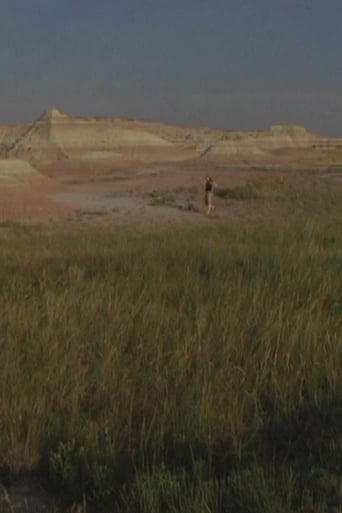
The birth of the radical environmental movement is captured in this short, poetic film on the legendary direct action at Glen Canyon Dam in March of 1981. The film contains one of the only interviews ever given by the late, great author Edward Abbey along with his classic speech from the back of a pick-up truck.
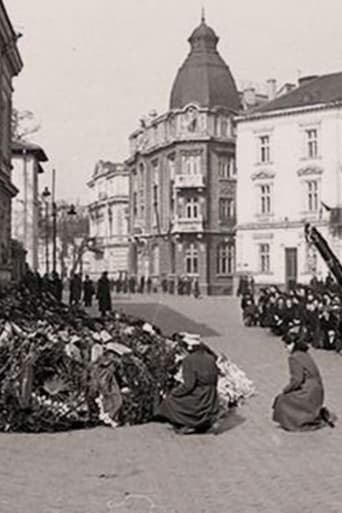
Otakar Vávra walks through Prague in front of the camera and with the camera, and remembers those who in the 1930s determined the pulse of the cultural and political life of that time.
Contracampos is the attempt to (re)build a landscape. A recreational area and a shooting range in the west of Asturies, which, between 1937 and 1943, housed a Francoist concentration camp through which thousands of Republicans passed – firstly militiamen, later guerrillas and their relatives. Sharing a leisurely observation with the viewer, the film intends to resignify that space, giving it back its political meaning. But it is not a question of showing –of filming– the invisible, but rather of showing what is missing in what exists today. What was and is no longer, not even in people's memories.
After a wave of arrests in 1969, Italian anarchist Giuseppe Pinelli allegedly falls out of a police building window while being interrogated. The circumstances leading to his death are re-enacted in three hypothetical versions in this attempt at counter-investigation. Released together with Nelo Risi's 'Giuseppe Pinelli', as 'Documenti su Giuseppe Pinelli'.
When the Soviet Army marched into Romania in 1944, a part of the Romanian population went “into the mountains” – a diverse assortment of nationalists and fascists, liberals, apolitical farmers and members of the middle-class, who were affected by the Communists’ expropriations. Over a thousand armed resistance groups took refuge in the inaccessible forests of the Carpathian Mountains where they waited in vain for the support of the Western Allies. One of them was led by Ion Gavrilă-Ogoranu, who managed to remain undetected until 1976 when he was arrested. This film depicts the daily existence of this group. It tells the story of a struggle that became an end in itself, as the enemy was constantly in pursuit and arrest meant torture and often liquidation. Hungry and emotionally withdrawn, the group of young men got entangled in a partisan war that could not be won, lost in the landscape of the South Carpathians, accompanied by a vigilant secret police, the Securitate.
A documentary overview of the life of Salvador Seguí, also known as El noi de Sucre, his anarcho-syndicalist tendencies and his relation to the CNT
A presentation of a case for a needed transition out of the current socioeconomic monetary paradigm which governs the entire world society. This subject matter will transcend the issues of cultural relativism and traditional ideology and move to relate the core, empirical 'life ground' attributes of human and social survival, extrapolating those immutable natural laws into a new sustainable social paradigm called a 'Resource-Based Economy'.
On the sidelines of history, some characters, often ignored of the greater public have, in the shadows, had a decisive weight on the most important events of our century. We are presenting you there «unknows». A two-part documentary, which is a two-and-a-half-hour interview with Léon Degrelle himself, was produced for FR3 in 1978 by Jean-Michel Charlier, as part of the series "LES DOSSIERS NOIRS" (The Obscure Records).The first part, "LÉON DEGRELLE: CHEF DE 'REX'" and the second part, "LE 'VOLKSFÜHRER' LÉON DEGRELLE".
Guernika, year 1937. The city is savagely bombed from the air by a battalion of fascist troops. During the bombardment, Republican artillery shoots down an Italian plane. The pilot manages to parachute very close to a village inhabited by three women. Badly wounded on the ground, he is going to be finished off by one of them, Ikerne. This one, however, feels disturbed by the man's presence, and in a purely impulsive act she decides to take him to the house's barn. The presence of the man in the house reveals the lethargic desire of the three women. But it will also bring out the small conflicts and contradictions that the harsh survival conditions in the house have generated. The solution finds its way between desire for man and hatred for the enemy.
Javier López Cronwell, journalist, son of an American and a Spaniard, comes to Spain to write a series of anti-communist articles. The boy is politically neutral and emotionally and personally cold. He comes into contact with his paternal grandfather and the friends of his father, who died in our Liberation War, who propose that he take the provisional ensigns as a topic for his article. He prepares his return to North America without waiting to see the 25th anniversary Victory Parade, despite the wishes of his father's friends, old ensigns who will parade to show the world that they are still in the breach.
Using previously unreleased archival material in addition to contemporary interviews, this Academy Award-winning documentary tells the story of the Frank family and presents the first fully-rounded portrait of their brash and free-spirited daughter Anne, perhaps the world's most famous victim of the Holocaust.
Polish socialist and Marxist Rosa Luxemburg works tirelessly in the service of revolution in early 20th century Poland and Germany. While Luxemburg campaigns for her beliefs, she is repeatedly imprisoned as she forms the Spartacist League offering a new vision for Germany.
Documentary compiled from archives and accompanied by a poet's commentary, shows the sweep of modern Italian history from 1911 to 1961, centering on the conditions leading to Fascism and the post-WWII reaction to the Fascist experience.
Comprised of footage shot during the Nazi regime, including propaganda, newsreels, broadcasts and even some of Eva Braun's colorized personal home movies, we explore the way in which the Third Reich infiltrated the lives of the German population, from 1933 to 1945.
Documentary giving the background on all of the major players involved in the planning of the assassination of President Lincoln, including the investigation and aftermath.
Resistance leader Omar Mukhtar opposes Italian colonization before World War II. The brutal guerrilla war against Italian General Rodolfo Graziani and the Fascist forces of Benito Mussolini highlights the struggle for Libyan independence and the harsh tactics utilised by the colonisers.
Javier Navarro, a Falangist, is ordered to infiltrate Republican Madrid to deliver a message to a member of the Fifth Column.
Historical drama set during the reign of Philip II of Spain. The royal troops have taken up quarters in the village of Zalamea. Captain Don Alvaro is staying with the farmer Pedro Crespo. His daughter Isabel behaves very coldly and dismissively toward the captain, which irritates him. Finally, he takes her by force and humiliates her father. The captain is put on trial in the village. Pedro is appointed judge and, despite all the threats from General de Lope, sentences the captain to death. De Lope then wants to deny him his judicial authority. Surprisingly, King Philip II appears in the village and confirms the harsh sentence, but wants to pardon the offender. However, the sentence has already been carried out.
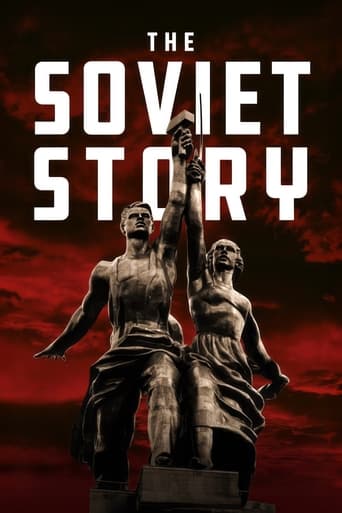
“The Soviet Story” is a story of an Allied power, which helped the Nazis to fight Jews and which slaughtered its own people on an industrial scale. Assisted by the West, this power triumphed on May 9th, 1945. Its crimes were made taboo, and the complete story of Europe’s most murderous regime has never been told. Until now...
Filmmaker Alain Resnais documents the atrocities behind the walls of Hitler's concentration camps.
A documentary about World War I with never-before-seen footage to commemorate the centennial of Armistice Day, and the end of the war.
Prelude to War was the first film of Frank Capra's Why We Fight propaganda film series, commissioned by the Pentagon and George C. Marshall. It was made to convince American troops of the necessity of combating the Axis Powers during World War II. This film examines the differences between democratic and fascist states.
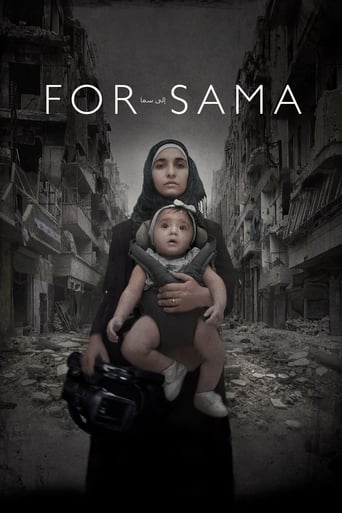
A love letter from a young mother to her daughter, the film tells the story of Waad al-Kateab’s life through five years of the uprising in Aleppo, Syria as she falls in love, gets married and gives birth to Sama, all while cataclysmic conflict rises around her. Her camera captures incredible stories of loss, laughter and survival as Waad wrestles with an impossible choice– whether or not to flee the city to protect her daughter’s life, when leaving means abandoning the struggle for freedom for which she has already sacrificed so much.
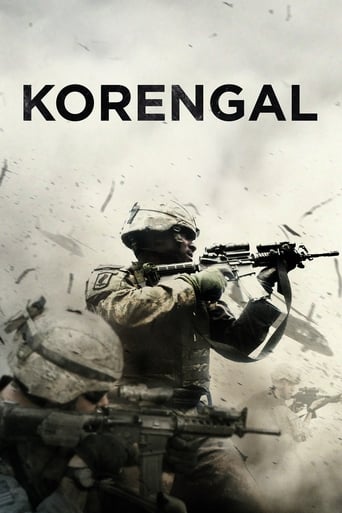
Korengal picks up where Restrepo left off; the same men, the same valley, the same commanders, but a very different look at the experience of war.
Amid the failing counteroffensive, a journalist follows a Ukrainian platoon on their mission to traverse one mile of heavily fortified forest and liberate a strategic village from Russian occupation. But the farther they advance through their destroyed homeland, the more they realize that this war may never end.
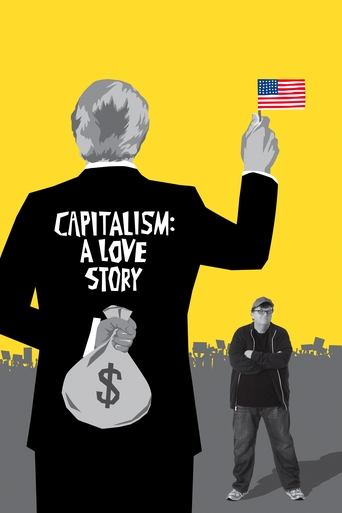
Michael Moore comes home to the issue he's been examining throughout his career: the disastrous impact of corporate dominance on the everyday lives of Americans (and by default, the rest of the world).
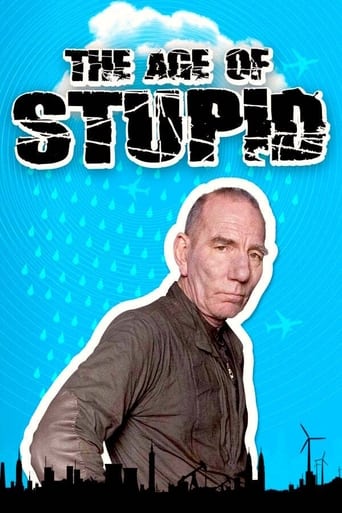
Pete Postlethwaite stars as a man living alone in the devastated future world of 2055, looking at old footage from 2008 and asking: why didn’t we stop climate change when we had the chance?
Director Claude Lanzmann spent 11 years on this sprawling documentary about the Holocaust, conducting his own interviews and refusing to use a single frame of archival footage. Dividing Holocaust witnesses into three categories – survivors, bystanders, and perpetrators – Lanzmann presents testimonies from survivors of the Chelmno concentration camp, an Auschwitz escapee, and witnesses of the Warsaw Ghetto Uprising, as well as a chilling report of gas chambers from an SS officer at Treblinka.
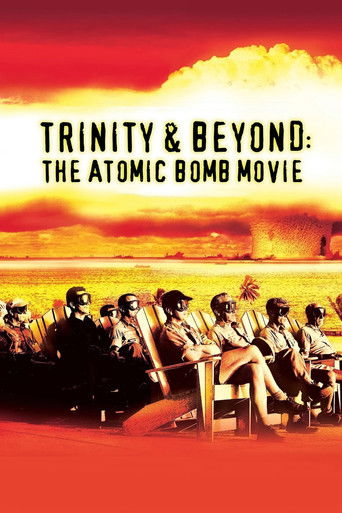
"Trinity and Beyond" is an unsettling yet visually fascinating documentary presenting the history of nuclear weapons development and testing between 1945-1963. Narrated by William Shatner and featuring an original score performed by the Moscow Symphony Orchestra, this award-winning documentary reveals previously unreleased and classified government footage from several countries.
The history of cinematic sound, told by legendary sound designers and visionary filmmakers.
WWII from Space delivers World War II in a way you've never experienced it before. This HISTORY special uses an all-seeing CGI eye that offers a satellite view of the conflict, allowing you to experience it in a way that puts key events and tipping points in a global perspective. By re-creating groundbreaking moments that could never have been captured on camera, and by illustrating the importance of simultaneity and the hidden effects of crucial incidents, HISTORY presents the war's monumental moments in a never-before-seen context. And with new information brought to the forefront, you'll better understand how a nation ranked 19th in the world's militaries in 1939 emerged six years later as the planet's only atomic superpower.
The final entry in a trilogy of films produced for the U.S. government by John Huston. Some returning combat veterans suffer scars that are more psychological than physical. This film follows patients and staff during their treatment. It deals with what would now be called PTSD, but at the time was categorised as psychoneurosis or shell-shock. Government officials deemed this 1946 film counterproductive to postwar efforts; it was not shown publicly until 1981.
As the Russian invasion begins, a team of Ukrainian journalists trapped in the besieged city of Mariupol struggle to continue their work documenting the war's atrocities.
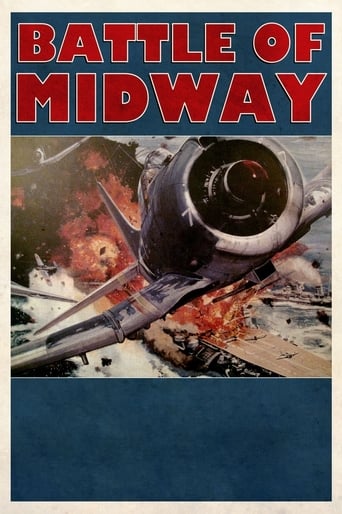
The Japanese attack on Midway in June 1942, filmed as it happened. Preserved by the Academy Film Archive, in partnership with Twentieth Century Fox Film Corporation, in 2006.
With unprecedented access, this documentary follows the extraordinary journey of “Raqqa is Being Slaughtered Silently”—a group of anonymous citizen journalists who banded together after their homeland was overtaken by ISIS—as they risk their lives to stand up against one of the greatest evils in the world today.
A collection of restored prints from the Lumière Brothers.
A documentary examining possible historical and modern conspiracies surrounding Christianity, the 9/11 terrorist attacks, and the Federal Reserve bank.
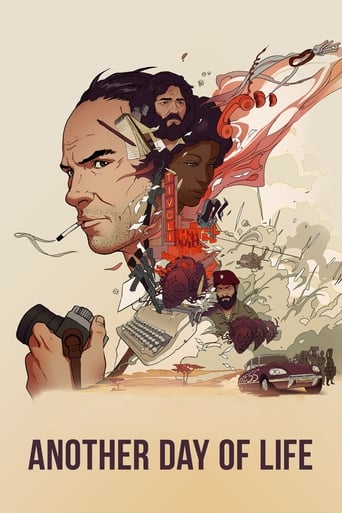
In 1975, Ryszard Kapuściński, a veteran Polish journalist, embarked on a seemingly suicidal road trip into the heart of the Angola's civil war. There, he witnessed once again the dirty reality of war and discovered a sense of helplessness previously unknown to him. Angola changed him forever: it was a reporter who left Poland, but it was a writer who returned…