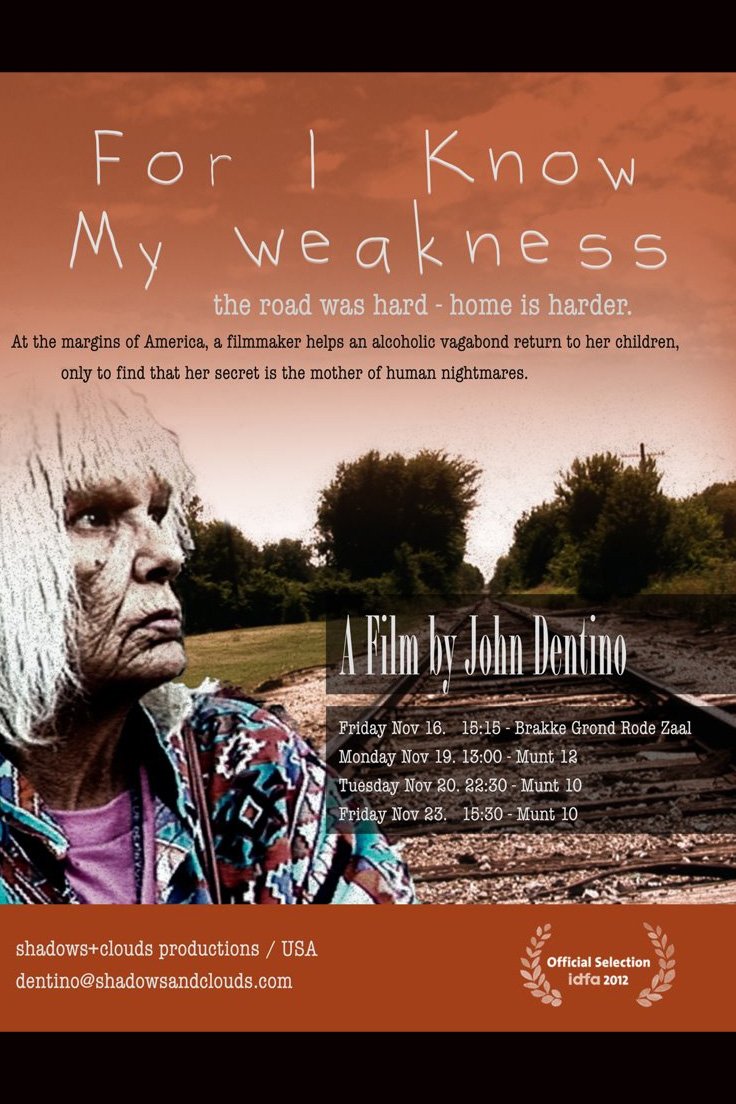
An unflinching look at life on the fringe, documenting the changing fortunes of residents throughout a year. Encountering humanity within this harrowing reality, a radical care-model offers hope for chronic alcoholism.
Social & External
Self
Stresses recognition and treatment of drug abuse emergencies, accurate identification of symptoms, and immediate clinical procedures. Presents scenes of actual cases in the emergency room and adjoining physician's offices of Beth Israel Medical Center in New York City. Viewers observe emergency treatment of patients in the major classes of drugs commonly abused, opiates, depressants, stimulants, and hallucinogens. The film demonstrates to health professionals that successful management of drug overdoses can save most lives and avert additional organic and psychiatric complications.
This film points out the risks of being a heroin addict. Explains that addicts cannot be identified solely with one particular socio-economic level and cannot always be detected by appearance. Addicts and ex-addicts describe the first and subsequent drugs they used.
This short, started early on into sobriety, finished about nine months in, is a collage of diaries and notes, collected from within addiction and into recovery.
Markenhof nursing home is located in the woods of Beekbergen. The unsuspecting walker might think it's a holiday park, but the buildings are home to 138 patients, all wandering around in various stages of memory-destroying Korsakoff's Syndrome. Korsakov's disease is caused by severe vitamin B1 deficiency, almost always the result of alcoholism. One patient can do little more than stare into space, while the other appears to be fine at first glance. Wracked by guilt, shame, addiction and a destroyed memory, patients Kenny and Christina try to create an understandable and livable world.
A personal film by Steffan Strandberg about his adolescence with an alcoholic mother.
Because of the internet's accessibility, anonymity, and affordability, pornography addictions have risen to epidemic levels, destroying intimacy, marriages and families, while distorting our definition of sex and sexuality.
Metro trains disappear on the turning track, only to immediately return on the same route. Tapio (57), Toni (42) and Aksa (60) are also stuck on these tracks. The men meet every morning in the square behind the Herttoniemi metro station, from where they transfer to Vuosaari in the metro's "restaurant car". Men's lives are dominated by alcohol and unemployment. The turning track of dreams follows the lives of Tapio, Toni and Aksa for a year - moments filled with joy, despair, self-destruction and friendship in the metro stations and trains of Eastern Helsinki. It gives voice to those who do not have special human dignity in the eyes of society.
Quiet towns across rural Australia are in the grip of an Ice epidemic. Major international drug cartels are working with local outlawed motorcycle gangs to push crystal meth to a captive market of children.
A tribute to drag superstar, The Vivienne. Friends and family share touching stories of the RuPaul's Drag Race UK winner and her legacy. Her spirit lives on through unreleased footage, showcasing her unique personality and how her passion for entertaining left a mark in the world. Interviews with her dearest drag sisters Baga Chipz, Michael Marouli, Danny Beard, Tia Kofi, Cheryl Hole and more.
Cocaine has always gotten a bad rap, and for a reason. It is a drug used by the rich and the poor legally and illegally, Mexican cartels fought over it with Colombia once associated with the brutal cocaine wars, and a source of tension between the American and Mexican borders on the people who are illicitly bringing in cocaine from one side of the border to another and will do anything to do it. So it can be surprising at times to the viewer throughout the course of the documentary special, that it was never always like this.
Alcohol: No substance in the world seems so familiar to us and is so incredibly diverse in its effect. Alcohol is available everywhere and this particular molecule has the power to affect all 200 billion neurons of our human brain in completely different ways. But hardly anyone calls alcohol a drug despite its psychoactive and cell-destroying effect. Why do we tolerate the death of three million people every year? Have we turned a blind eye to the dangers and risks for thousands of years? What role does the powerful alcohol industry play with an annual turnover of 1.2 trillion euros in this on-going concealment? The author, who himself enjoys having a drink, looks into the question why we drink at all, what alcohol does to us and to what extent the alcohol industry influences society and politics.
This short film takes a look at addiction and whom it affects, specifically those in the medical profession. It was sponsored in the interest of the medical profession by Winthrop Laboratories Limited
A documentary juxtaposing the events of the 20th century with the commentary of stand-up comedians.
Paris, Rue Beautreillis, July 3, 1971. The corpse of rock star Jim Morrison is found in a bathtub, in the apartment of his girlfriend Pamela Courson. The chronicle of the last months of the life of the poet, singer and charismatic leader of the American band The Doors, one of the most influential in the history of rock.
A homeless man living in a encampment in Minneapolis tells his perspective on the ongoing crisis of homelessness.
The people at the centre of this film are lawyers, civil servants, housewives, managing directors and mothers. They are also alcoholics. In her documentary, Carolin Schmitz explores the protagonists’ stories and their strategies for survival: the little tricks they employ in order to try and get through their daily lives – lives which become increasingly difficult to manage the stronger the addiction becomes. Their fear of losing control and being exposed as a drinker create their need to conform, but the protagonists can only cope with this pressure by increasing their alcohol intake.
With a loving gaze and shaking hand the now adult Kathrine reenters her father's deeply alcoholic world.
David Vandenbrink seems like a healthy 21-year-old, bright and articulate young man. There is little to suggest that while in his mother's womb, he suffered permanent brain damage. His condition, fetal alcohol syndrome (F.A.S.), went undiagnosed for the first 18 years of his life, causing confusion, anger, and pain for both David and his non-Indigenous adoptive family. Fetal alcohol syndrome is a term used to describe a set of symptoms seen in some children born to women who drank alcohol during pregnancy. The damage can be subtle or severe, resulting in a wide range of symptoms in the areas of slowed growth, disfigurement, and damage to the brain. Associated behavioural problems include impulsiveness, poor judgment, and an inability to grasp the consequences of actions. This personal story, using video footage shot by David himself, along with the experiences of members of his family, is a hard look into the serious consequences of a little-known, but widespread, health problem.



Bold & candid, One Little Pill will reveal to the world a startling pharmaceutical discovery & assault the skepticism & denial perpetuating alcohol dependence.