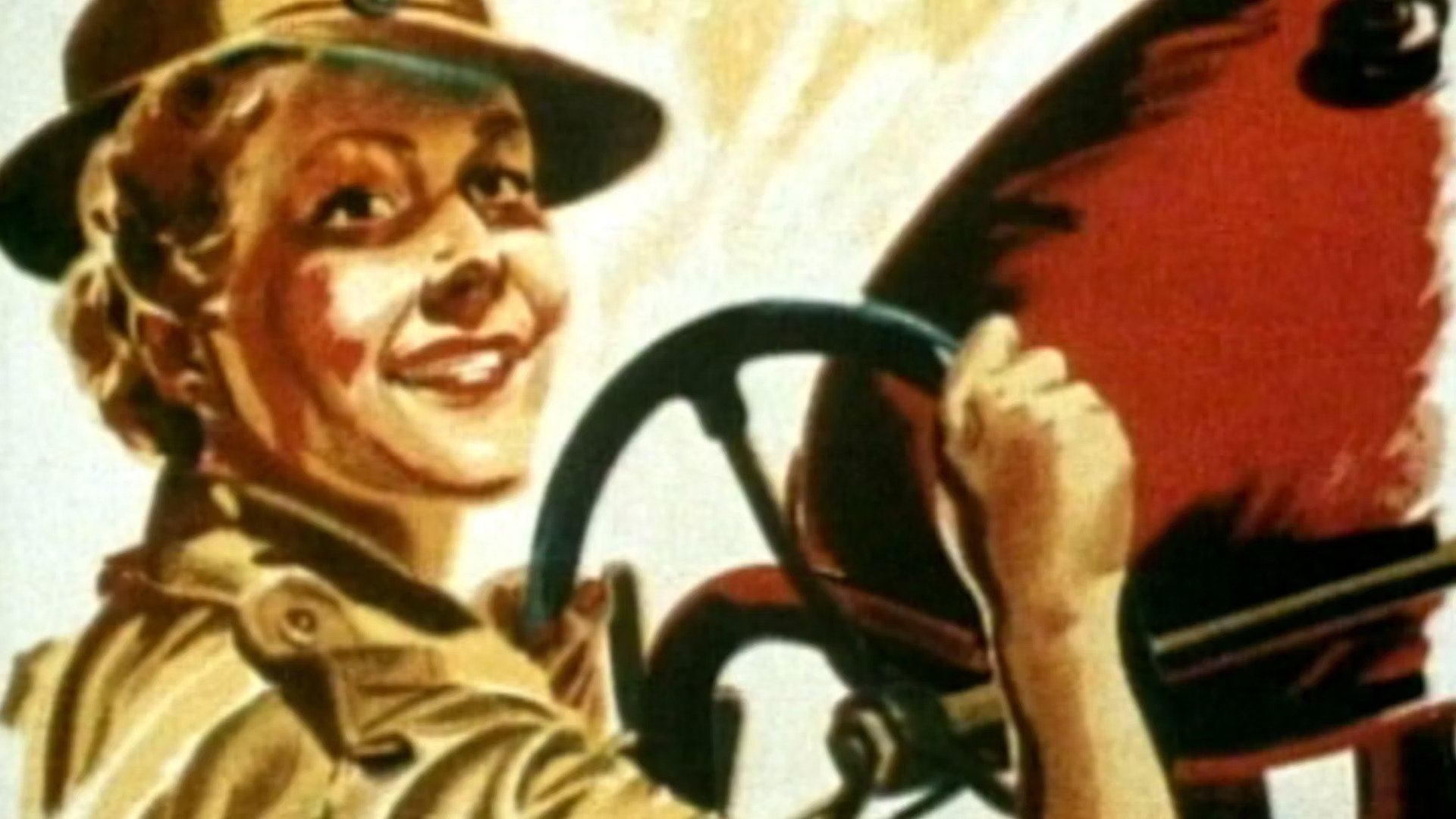
Documentary using archival footage, newsreels and contemporary interviews with women of the WW2 Australian Women's Land Army.
Social & External
Self
A bitter battle is fought between Australian and Japanese soldiers along the Kokoda trail in New Guinea during World War II.
During the final years of the World War II, Finnish sergeant Myllykoski and his fellow soldiers are forced to join the notorious Waffen-SS on a mission to find a mythical medieval chalice in the Soviet Union.
A World War II submarine commander finds himself stuck with a damaged sub, a con-man executive officer, and a group of army nurses.
In WWII Western Germany, Private David Manning reluctantly leaves behind a mortally wounded fellow soldier and searches for survivors from his platoon, only to learn from commanding officer Captain Pritchett that they have all been killed in action. Despite requesting a discharge on the grounds of mental disability, Manning is promoted to sergeant and assigned to lead a new platoon of young inductees.
Max Manus is a Norwegian 2008 biographic war film based on the real events of the life of resistance fighter Max Manus (1914–96), after his contribution in the Winter War against the Soviet Union. The story follows Manus through the outbreak of World War II in Norway until peacetime in 1945.
As World War II rages, the elite Sixth Ranger Battalion is given a mission of heroic proportions: push 30 miles behind enemy lines and liberate over 500 American prisoners of war.
During World War II, many Japanese immigrants in Santos, Brazil, were forced to move to another place. Matsubayashi draws attention to the fact that 60% of the immigrants were from Okinawa. Based on testimonies from interviewees, this film reveals the hidden historical relationship between Okinawa and Brazil.
In the months and years following the end of the World War Two, Allied forces faced a series of bombings and attacks in occupied Germany. Nazi loyalists attempted to derail the rebuilding process by killing any Germans collaborating with the enemy. And the mysterious SS-Werewolves underground organization boasted of the coming rebirth of the Party.
A lyrical fourfold perspective on WWII through the eyes of a young partisan couple, a town photographer and a German officer.
A story about the effect of the atomic bombing of Hiroshima on a boy's life and the lives of the Japanese people.
For more than a decade, Reichsmarschall Hermann Goering, Adolf Hitler's right-hand man during the infamous Third Reich, assembled a collection of thousands of works of art that were meticulously catalogued.
CHARBON depicts how Europe was built on fossil fuels over the past 100 years. And how it was torn apart by wars that were the result of these same fossil fuels. During 3 trips to Ukraine, Italy and Iraq, filmmaker Manu Riche explains how he and his French-German family are inseparably connected to the fate of the Iraqi filmmaker and refugee Hayder Helo.
The real Great Escape didn't feature Steve McQueen racing through the Third Reich on a motorcycle like in the 1963 movie, but the big breakout was still thrilling in every way. This program sheds new light on the audacious escape of 76 Allied airmen from a Nazi POW camp during World War II.
When his family moves from their home in Berlin to a strange new house in Poland, young Bruno befriends Shmuel, a boy who lives on the other side of the fence where everyone seems to be wearing striped pajamas. Unaware of Shmuel's fate as a Jewish prisoner or the role his own Nazi father plays in his imprisonment, Bruno embarks on a dangerous journey inside the camp's walls.
“It’s not every day that you meet an old Nazi.” So begins American historian Jonathan Petropoulos, recalling the day in 1998 when he met Bruno Lohse, who was Hermann Göring’s art agent in Paris during World War II. In this riveting account, Petropoulos details Lohse’s role in stealing countless masterpieces from prominent French and Dutch families, while evading meaningful punishment, and continuing to deal art profitably for most of the rest of his life. This explosively compelling tale calls the international art market to task for its continuing lack of regulation.
It is 1943, and the German army—ravaged and demoralised—is hastily retreating from the Russian front. In the midst of the madness, conflict brews between the aristocratic yet ultimately pusillanimous Captain Stransky and the courageous Corporal Steiner. Stransky is the only man who believes that the Third Reich is still vastly superior to the Russian army. However, within his pompous persona lies a quivering coward who longs for the Iron Cross so that he can return to Berlin a hero. Steiner, on the other hand is cynical, defiantly non-conformist and more concerned with the safety of his own men rather than the horde of military decorations offered to him by his superiors.
Starting in late May 1944, during the German retreat on the Eastern Front, Captain Stransky (Helmut Griem) orders Sergeant Steiner (Richard Burton) to blow up a railway tunnel to prevent Russian forces from using it. Steiner's platoon fails in its mission by coming up against a Russian tank. Steiner then takes a furlough to Paris just as the Allies launch their invasion of Normandy.
With the help of government-issued pamphlets, an elderly British couple build a shelter and prepare for an impending nuclear attack, unaware that times and the nature of war have changed from their romantic memories of World War II.
Prelude to War was the first film of Frank Capra's Why We Fight propaganda film series, commissioned by the Pentagon and George C. Marshall. It was made to convince American troops of the necessity of combating the Axis Powers during World War II. This film examines the differences between democratic and fascist states.
The extraordinary story of how Hollywood changed World War II – and how World War II changed Hollywood, through the interwoven experiences of five legendary filmmakers who went to war to serve their country and bring the truth to the American people: John Ford, William Wyler, John Huston, Frank Capra, and George Stevens. Based on Mark Harris’ best-selling book, “Five Came Back: A Story of Hollywood and the Second World War.”
This documentary movie is about the battle of San Pietro, a small village in Italy. Over 1,100 US soldiers were killed while trying to take this location, that blocked the way for the Allied forces from the Germans. Preserved by the Academy Film Archive in 2005.
When Sgt. First Class Brian Eisch is critically wounded in Afghanistan, it sets him and his sons on a journey of love, loss, redemption and legacy.
With unprecedented access, this documentary follows the extraordinary journey of “Raqqa is Being Slaughtered Silently”—a group of anonymous citizen journalists who banded together after their homeland was overtaken by ISIS—as they risk their lives to stand up against one of the greatest evils in the world today.
“The Soviet Story” is a story of an Allied power, which helped the Nazis to fight Jews and which slaughtered its own people on an industrial scale. Assisted by the West, this power triumphed on May 9th, 1945. Its crimes were made taboo, and the complete story of Europe’s most murderous regime has never been told. Until now...
When Allied forces liberated the Nazi concentration camps in 1944-45, their terrible discoveries were recorded by army and newsreel cameramen, revealing for the first time the full horror of what had happened. Making use of British, Soviet and American footage, the Ministry of Information’s Sidney Bernstein (later founder of Granada Television) aimed to create a documentary that would provide lasting, undeniable evidence of the Nazis’ unspeakable crimes. He commissioned a wealth of British talent, including editor Stewart McAllister, writer and future cabinet minister Richard Crossman – and, as treatment advisor, his friend Alfred Hitchcock. Yet, despite initial support from the British and US Governments, the film was shelved, and only now, 70 years on, has it been restored and completed by Imperial War Museums under its original title "German Concentration Camps Factual Survey".
Produced and presented as evidence at the Nuremberg war crimes trial of Hermann Göring and twenty other Nazi leaders, this film consists primarily of dead and surviving prisoners and of facilities used to kill and torture during the World War II.
WWII from Space delivers World War II in a way you've never experienced it before. This HISTORY special uses an all-seeing CGI eye that offers a satellite view of the conflict, allowing you to experience it in a way that puts key events and tipping points in a global perspective. By re-creating groundbreaking moments that could never have been captured on camera, and by illustrating the importance of simultaneity and the hidden effects of crucial incidents, HISTORY presents the war's monumental moments in a never-before-seen context. And with new information brought to the forefront, you'll better understand how a nation ranked 19th in the world's militaries in 1939 emerged six years later as the planet's only atomic superpower.
Amid the failing counteroffensive, a journalist follows a Ukrainian platoon on their mission to traverse one mile of heavily fortified forest and liberate a strategic village from Russian occupation. But the farther they advance through their destroyed homeland, the more they realize that this war may never end.
Meet the real-life airmen who inspired Masters of the Air as they share the harrowing and transformative events of the 100th Bomb Group.
A love letter from a young mother to her daughter, the film tells the story of Waad al-Kateab’s life through five years of the uprising in Aleppo, Syria as she falls in love, gets married and gives birth to Sama, all while cataclysmic conflict rises around her. Her camera captures incredible stories of loss, laughter and survival as Waad wrestles with an impossible choice– whether or not to flee the city to protect her daughter’s life, when leaving means abandoning the struggle for freedom for which she has already sacrificed so much.
Set both in Latin America and the United States, the film explores the historic and current relationship of Washington with countries such as Venezuela, Bolivia and Chile. Pilger says that the film "...tells a universal story... analysing and revealing, through vivid testimony, the story of great power behind its venerable myths. It allows us to understand the true nature of the so-called "war on terror". According to Pilger, the film’s message is that the greed and power of empire is not invincible and that people power is always the "seed beneath the snow".
Korengal picks up where Restrepo left off; the same men, the same valley, the same commanders, but a very different look at the experience of war.
Using the book 'Fragments', which collects Marilyn Monroe's poems, notes and letters, and with participation from the Arthur Miller and Truman Capote estates who have contributed more material, each of the actresses will embody the legend at various stages in her life.
Police pull over a woman who claims she just gave birth. But the baby — and the blood — aren't hers. Twisted lies unravel in this true-crime documentary.
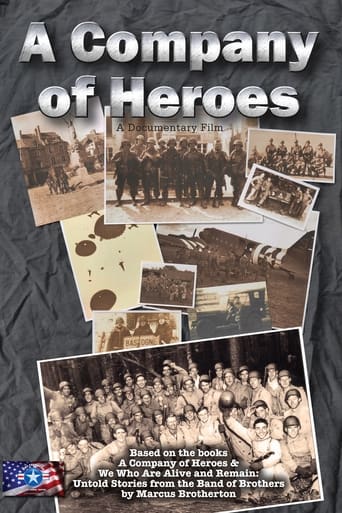
Over a period of two years, Mark Cowen and his crew travelled to thirty U.S. states and ten European cities, to interview the veterans of Easy Company. The stories told by the veterans themselves, create a history of the Second World War from the point of view of this heroic company of men, made famous in the mini-series Band of Brothers.
Unprecedented access to Muhammad Ali's personal archive of "audio journals" as well as interviews and testimonials from his inner circle of family and friends are used to tell the legend's life story.
In 1977, a book of photographs captured an awakening - women shedding the cultural restrictions of their childhoods and embracing their full humanity. This documentary revisits those photos, those women and those times and takes aim at our culture today that alarmingly shows the need for continued change.
The Japanese attack on Midway in June 1942, filmed as it happened. Preserved by the Academy Film Archive, in partnership with Twentieth Century Fox Film Corporation, in 2006.