Social & External
Man Ray, the master of experimental and fashion photography was also a painter, a filmmaker, a poet, an essayist, a philosopher, and a leader of American modernism. Known for documenting the cultural elite living in France, Man Ray spent much of his time fighting the formal constraints of the visual arts. Ray’s life and art were always provocative, engaging, and challenging.
Sam Roddick explores the enduring appeal of Botticelli's masterpiece The Birth of Venus, one of the most celebrated paintings in western art. A joyous celebration of female sexuality, its journey to worldwide fame was far from straightforward and it lay in obscurity for centuries. Artist and entrepreneur Sam explains why Botticelli's nude was so revolutionary, and explores its impact on contemporary culture with artists such as Terry Gilliam, who memorably reinvented Venus for his Monty Python's Flying Circus animations.
Alan Yentob profiles the most successful female architect there has ever been, the late Zaha Hadid, who designed buildings around the globe from Austria to Azerbaijan.
In this film, Will Young travels to Magritte's native Belgium to find out more about the man whose trademark was a bowler hat and whose apparently conventional exterior concealed the mind of a subversive rebel. Will uncovers a childhood marked by tragedy, a marriage that lasted from Magritte's adolescence until his death in 1967, and a stunning artistic legacy which endures to this day.
An installation film that consists of a six-hour-long monologue performed by Edith Clever, who reads texts by Syberberg and many different authors, such as Johann Wolfgang von Goethe, Heinrich von Kleist, Plato, Friedrich Hölderlin, Novalis, Friedrich Nietzsche, Eduard Mörike, Richard Wagner, William Shakespeare, Samuel Beckett, and Chief Seattle.
Through interviews and guerilla footage of graffiti writers in action on five continents, the documentary tells the story of graffiti from its origins in prehistoric cave paintings thru its notorious explosion in New York City during the 70’s and 80’s, then follows the flames as they paint the globe.
This ninety-minute film takes audiences on an epic journey across nine countries and over 1,400 years of history. It explores themes such as the Word, Space, Ornament, Color and Water and presents the stories behind many great masterworks of Islamic Art and Architecture. Narrated by Academy Award winning performer Susan Sarandon, this dazzling documentary reveals the variety and diversity of Islamic art. It provides a window into Islamic culture and brings broad insights to the enduring themes that have propelled human history and fueled the rise of world civilization over the centuries
The Ordinary Grand Film is the result of love at first sight with The Ordinary Grand Circus. With film and equipment borrowed from left and right, with the free complicity of all those who appear in the credits, they went on weekends to film a few moments of their tour.
This film tells Jean-Michel's story through exclusive interviews with his two sisters Lisane and Jeanine, who have never before agreed to be interviewed for a TV documentary. With striking candour, Basquiat's art dealers - including Larry Gagosian, Mary Boone and Bruno Bischofberger - as well as his most intimate friends, lovers and fellow artists, expose the cash, the drugs and the pernicious racism which Basquiat confronted on a daily basis. As historical tableaux, visual diaries of defiance or surfaces covered with hidden meanings, Basquiat's art remains the beating heart of this story.
In decades past, Native American artists who wanted to sell to mainstream collectors had little choice but to create predictable, Hollywood-style western scenes. Then came a generation of painters and sculptors led by Allan Houser (or Haozous), a Chiricahua Apache artist with no interest in stereotyped imagery and a belief that his own rich heritage was compatible with modernist ideas and techniques. Narrated by actor Val Kilmer and originally commissioned as part of an exhibit of Houser’s work at the Oklahoma History Center, this program depicts the artist’s tribal ancestry, his rise to regional and national acclaim, and the continuing success of his sons as they expand upon and depart from their father’s achievements. Key works are documented, as is Houser’s tenure at the Santa Fe–based Institute of American Indian Arts.
A documentary made for Konrad Mägi exhibition "The Light of the North" in Torino, Musei Reali (2019-2020), about Mägi's life and his legacy.
The Victorian era is often cited for its lack of sexuality, but as this documentary reveals, the period's artists created a strong tradition surrounding the classical nude figure, which spread from the fine arts to more common forms of expression. The film explains how 19th-century artists were inspired by ancient Greek and Roman works to highlight the naked form, and how that was reflected in the evolving cultural attitudes toward sex.
This documentary offers an intimate look at the life and legacy of American abstract expressionist Franz Kline. Through personal memories and reflections from those who knew him—such as fellow artist Willem de Kooning, de Kooning’s wife Elaine, and other contemporaries—the film paints a vivid portrait of Kline’s personality, artistic spirit, and lasting influence. Known for his powerful black and white compositions and bold brushwork, Kline is remembered not only for his art, but also for his wit, warmth, and passionate approach to painting. The episode explores both his creative process and the deep friendships that shaped his career.
Black Is the Color highlights key moments in the history of Black visual art, from Edmonds Lewis’s 1867 sculpture Forever Free, to the work of contemporary artists such as Whitfield Lovell, Kerry James Marshall, Ellen Gallagher, and Jean-Michel Basquiat. Art historians and gallery owners place the works in context, setting them against the larger social contexts of Jim Crow, WWI, the civil rights movement and the racism of the Reagan era, while contemporary artists discuss individual works by their forerunners and their ongoing influence.
This movie chronicles the life and times of R. Crumb. Robert Crumb is the cartoonist/artist who drew Keep On Truckin', Fritz the Cat, and played a major pioneering role in the genesis of underground comix. Through interviews with his mother, two brothers, wife, ex-wife and ex-girlfriends, as well as selections from his vast quantity of graphic art, we are treated to a darkly comic ride through one man's subconscious mind.
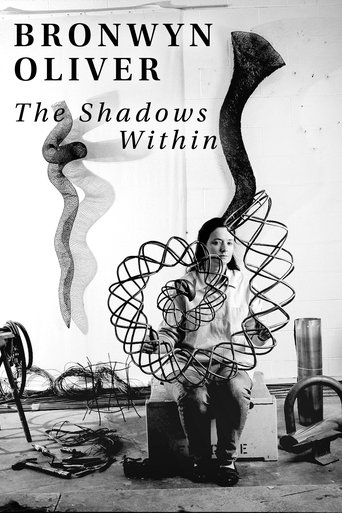
This intimate documentary follows the journey of Bronwyn Oliver, a working-class girl from the country who became one of Australia's most influential contemporary sculptors.
What does it mean to be Black in America in the 21st century? The recently formed Black American film group TNEG™ has set out to elucidate this very question. Hearing from the likes of fine artist Kara Walker and musical artist Flying Lotus, the film is based on a deceptively simple approach -- asking a refined list of black 'specialists' as well as 'uncommon folks' questions about what they think, and more importantly as lead director Arthur Jafa states, 'What they KNOW' -- the film is an unprecedented 'stream of the black consciousness' and a strikingly original and rarefied look at black intellectual and emotional life. What's so unorthodox about this simple approach is that the interviews were recorded separately from the images in the film. What results is a breathtaking, kaleidoscopic look of American black life from the dawn of three original filmmakers.
This documentary follows three parallel stories. First, that of the masterpiece, The Little Girl with the Blue Ribbon, this melancholic Renoir work with the "musical face" described by Henri Michaux. The painting was constantly tossed around, shelved by its patrons, looted by the Nazis, found by the Monument Men, recovered by the family, sold to a controversial collector, before finally arriving at the Kunsthaus Zurich. We also discover the painter's biography, and the eventful life of his model, Irene Cahen d'Anvers. Born into the Jewish upper middle class, this free and divorced woman long disowned the painting and left it to her daughter, who was murdered at Auschwitz. Discover the tumultuous journey of this painting, its model, Irene Cahen d'Anvers, and its connection to the dark hours of the Nazi regime.
World-renowned director Martin Scorsese narrates this journey through his favorites in Italian cinema.
In a series of simple and joyous vignettes, director Roberto Rossellini and co-writer Federico Fellini lovingly convey the universal teachings of the People’s Saint: humility, compassion, faith, and sacrifice. Gorgeously photographed to evoke the medieval paintings of Saint Francis’s time, and cast with monks from the Nocera Inferiore Monastery, The Flowers of St. Francis is a timeless and moving portrait of the search for spiritual enlightenment.
The Catholic Church secretly investigates Caravaggio as the Pope weighs whether to grant him clemency for killing a rival.
In autumn of 1526, the Emperor, Charles V, sends his German landsknechts led by Georg von Frundsberg to march towards Rome. The inferior papal armies, commanded by Giovanni de'Medici, try to chase them in the midst of a harsh winter. Nevertheless, the Imperial armies manage to cross the rivers along their march and get cannons thanks to the maneuvers of its Lords. In a skirmish, Giovanni de'Medici is wounded in the leg by a falconet shot. The attempts to cure him fail and he dies. The Imperial armies assault Rome. The film is beautifully but unassumingly set, and shows the hard conditions in which war is waged and its lack of glory. It ends straightforwardly with the declaration made after the death of Giovanni de'Medici by the commanders of the armies in Europe of not using again fire weapons because of their cruelty.
In this genre-bending tale, Errol Morris explores the mysterious death of a U.S. scientist entangled in a secret Cold War program known as MK-Ultra.
In 1914, with Italy on the cusp of joining World War I, a group of foreign artists establishes a commune on the rural island of Capri, catching the attention of young Lucia, a local illiterate shepherdess who soon falls under their spell.
In 1936, Victor H. Green (1892-1960) published The Negro Motorist Green Book, a book that was both a travel guide and a survival manual, to help African-Americans navigate safe those regions of the United States where segregation and Jim Crow laws were disgracefully applied.
Capturing life on the Italian island of Lampedusa, a frontline in the European migrant crisis.
The celebrations for the title of the Argentine National Team in the World Cup in Qatar 2022, through videos of Argentines around the world and unpublished material of the party in the streets.
Artists in LA discover the work of forgotten Polish sculptor Stanislav Szukalski, a mad genius whose true story unfolds chapter by astounding chapter.
In a Naples suspended between magic and superstition, madness and rationality, a mystery envelops the existence of Adriana, overwhelmed by a sudden love and a violent crime.
A compilation of over 30 years of private home movie footage shot by Lithuanian-American avant-garde director Jonas Mekas, assembled by Mekas "purely by chance", without concern for chronological order.
A documentary about the making of season five of the acclaimed AMC series Breaking Bad.
A portrait of the comic trio "Aldo, Giovanni e Giacomo".
Bizarre events keep occurring in an old mansion, and it's soon become obvious that something mysterious is up in the attic.
Legends (and myths) from the life of famed American frontiersman Davy Crockett are depicted in this feature film edited from television episodes. Crockett and his friend George Russel fight in the Creek Indian War. Then Crockett is elected to Congress and brings his rough-hewn ways to the House of Representatives. Finally, Crockett and Russell journey to Texas and the last stand at the Alamo.
In the fascist Italy of 1935, a painter trained as a doctor is exiled to a remote region near Eboli. Over time, he learns to appreciate the beauty and wisdom of the peasants, and to overcome his isolation.
Toni Chichiarelli arrives in Rome with the dream of becoming a painter, but his talent leads him elsewhere — from art galleries to state secrets. Between art, crime, and power, his signature ends up everywhere — even in the history of Italy.
If you ever find yourself traveling down Interstate 49 through Missouri, try not to blink—you may miss Rich Hill, population 1,396. Rich Hill is easy to overlook, but its inhabitants are as woven into the fabric of America as those living in any small town in the country. This movie intimately chronicles the turbulent lives of three boys living in said Midwestern town and the fragile family bonds that sustain them.
A behind the scenes look into George Romero's groundbreaking horror classic Night of the Living Dead.