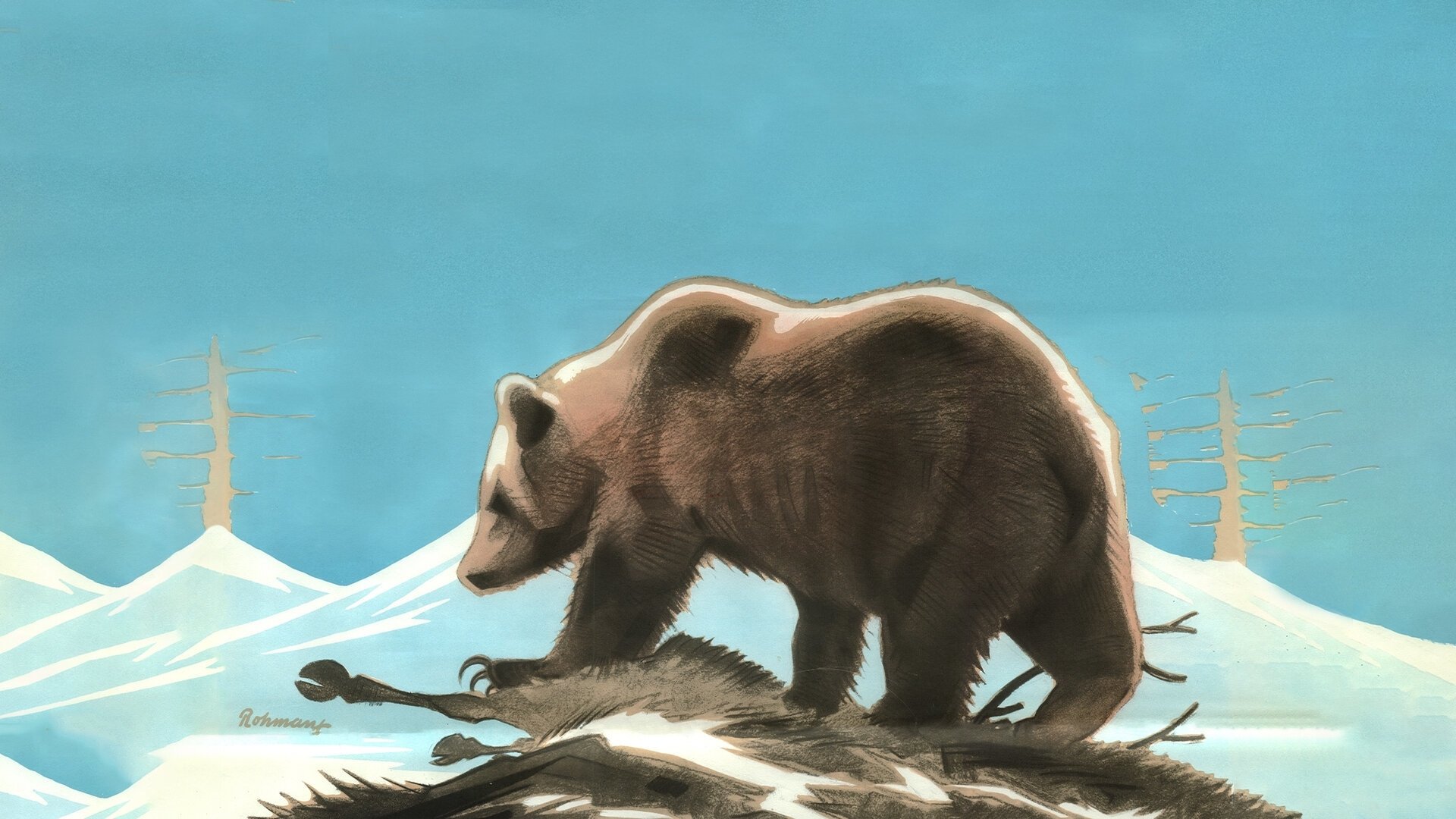
"The first authentic bear capture in Scandinavia."
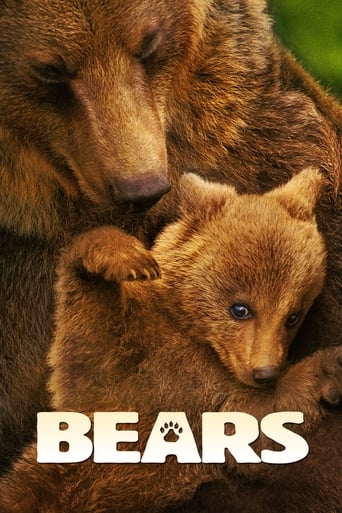
Documentary about bears where the animals were filmed completely undisturbed.
Social & External
Unknown Role
Set in the mountains of northeast Italy, this film may be considered an observational documentary about rural life. Although this is undeniably the case, at the same time Under the cold stars can hardly be considered a documentary: the microcosm on which it focuses appears to be a reflection of a broader reality and perhaps a way to deal with the themes of man’s existence and his relationship with animals, nature and, most importantly, with time. As written by Franco Piavoli "it is a film which essentially relies on images and sound, where words themselves are sound and the music of life, of the relentless flow of time."
Following in the footsteps of Charles Darwin, Heinz Sielmann traveled to the bizarre volcanic islands of Galapagos. The multi-award-winning film shows the unique wildlife on the Pacific Noah's Ark.
Since the summer of 2020, boats along the Atlantic coast from the Strait of Gibraltar to the Bay of Biscay in the north have been repeatedly attacked by orcas. The whales purposefully attack the rudders and destroy them. Researchers are trying to find out what drives them. Curiosity? Competition for food? Or play?
Eugen Schuhmacher focuses on endangered and rare animal species such as the European bison and the Northern bald ibis as well as the general fauna of the diverse and species-rich continent of Europe. The need to protect nature and animals is made impressively clear through the power of images.
Three farming families in Hanyuan, China, strive to give their children a good life in the midst of an ecological crisis, as widespread use of pesticides leads to a dramatic decline in bees and other pollinating insects in the valley.
Almost 70 years ago, the then director of Frankfurt Zoo, Prof. Bernhard Grzimek (1909-1987), shot this famous animal documentary about the African continent with his son Michael. The documentary was considered an impressive plea for the preservation of Africa's animal paradises at the time. It vividly illustrates the far-reaching consequences of the impending loss of what were then still largely untouched natural landscapes. Despite visible signs of age, the film has retained much of its fascination as a contemporary document to this day.
David Attenborough takes us on a guided tour through the secret world of plants, to see things no unaided eye could witness. Each episode in this six-part series focuses on one of the critical stages through which every plant must pass if it is to survive:- travelling, growing, and flowering; struggling with one another; creating alliances with other organisms both plant and animal; and evolving complex ways of surviving in the earth's most ferociously hostile environments.
Mollusks deserve a second chance to better their first impression since the world is truly one of a kind. Enter the secret world of mollusks!
From PBS - The fascinating story of beavers in North America - their history, their near extinction, and their current comeback, as a growing number of scientists, conservationists and grass-roots environmentalists have come to regard beavers as overlooked tools when it comes to reversing the disastrous effects of global warming and world-wide water shortages. Once valued for their fur or hunted as pests, these industrious rodents are seen in a new light through the eyes of this novel assembly of beaver enthusiasts and "employers" who reveal the ways in which the presence of beavers can transform and revive landscapes. Using their skills as natural builders and brilliant hydro-engineers, beavers are being recruited to accomplish everything from re-establishing water sources in bone-dry deserts to supporting whole communities of wildlife drawn to the revitalizing aquatic ecosystems their ponds provide.
Intact ecosystems provide the best defense against climate change! The ecosystem of a small creek is complex and diverse – the shocking reality is that in Central Europe only one in a thousand is still intact, today. What happened to our streams and brooks? What does the future hold? The film ‘One in a Thousand’ portrays the diverse wildlife inside and alongside a stream, explains the importance of this habitat and identifies the sources of its destruction. A blue-chip wildlife film that carries an important message.
One of the many unusual marine species is the crustacean. Caught between reality and fantasy, it has remained a mystery to man for centuries.
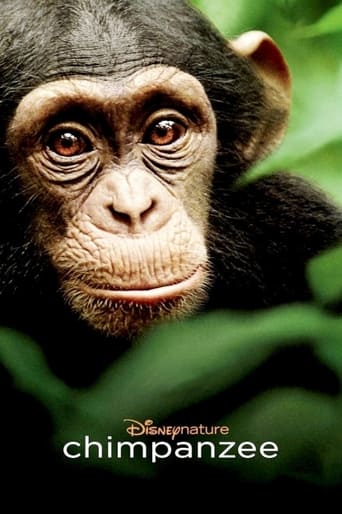
The story of one remarkable woman who became a global icon in animal welfare and conservation who not only hoped for a better world, she achieved it! This sweeping documentary celebrates the vast legacy of Dr. Goodall’s four decades of advocacy work for chimpanzees and depicts the next chapter for generations to come.
14-part special in which botanist Francis Hallé explains forest science and processes. Part of the "Once Upon a Forest" physical release.
The Wild Defending Itself is a feature-length documentary (90 min) by Vincent Verzat, produced by Partager c'est Sympa. The film traces his path between militancy and naturalism, his search for a balance between combat and contemplation. Based on a personal and sensitive story, the film makes the link between wild animals and the struggles being waged throughout France against the destruction of their habitats. The Wild Defending Itself sets out a path for living with dignity and preparing for what lies ahead.
With rising sea levels, land reclamation runs rampant in Singapore. Labrador Park is one such waterfront facing this change, and both the ecosystem and frequent fishermen have often been overlooked. This documentary seeks to explore the park's development from a scientific, economic and sociological perspective, produced in collaboration with SOTA and NUS.
This fascinating film tells the story of one man's struggle to protect a small population of gorillas on the slopes of Mount Kahuzi in Zaire and of his incredible relationship with Kasimir, the great silver-backed male, and his family.
Disneynature’s Elephant follows African elephant Shani and her spirited son Jomo as their herd make an epic journey hundreds of miles across the vast Kalahari Desert. Led by their great matriarch, Gaia, the family faces brutal heat, dwindling resources and persistent predators, as they follow in their ancestors’ footsteps on a quest to reach a lush, green paradise.
The white chalk cliffs of Rügen are among the most impressive natural monuments on earth, which the painter Casper David Friedrich immortalized for posterity as early as the 19th century. Germany's largest island with its seaside resorts from the Gründerzeit, its smaller side islands and peninsulas that give it its shape, its lagoon-like Bodden waters, the dense beech forests, the yellow rapeseed fields and the meadows, the shady tree avenues and the white sandy beaches is not only a magnet for tourists, but also a unique natural paradise in the middle of the Baltic Sea, a habitat for the rare white-tailed eagle, fallow deer, raccoon dogs and badgers as well as a resting place for huge swarms of migratory birds such as geese and cranes that can be heard trumpeting from afar. In this nature documentary, the unique landscapes and the diversity of the animal world of Rügen are captured with beautiful pictures during the changing of the seasons.