In fremder Erde (In Foreign Soil) documents the Muslim traditions of burial in Turkey and Germany, but above all, the paths the dead take to return to Anatolian soil.
Social & External
Self
Carlin returns to the stage in his 13th live comedy stand-up special, performed at the Beacon Theatre in New York City for HBO®. His spot-on observations on the deterioration of human behavior include Americans’ obsession with their two favorite addictions - shopping and eating; his creative idea for The All-Suicide Channel, a new reality TV network; and the glorious rebirth of the planet to its original pristine condition - once the fires and floods destroy life as we know it.
This exclusive documentary follows the journey of some of the worlds leading Muslim thinkers in a gathering that took place at the heart of an ancient Islamic city It was Habib Umar's first trip to the Maghreb and the film captures his travels and responses as he journeys through a land brimming with spirituality, knowledge and vast history. From the serene courtyards of the University of Qarawiyyin to busling souk streets, from walled city of Fez to the mountainous sanctuary of Moulay Idris, the film shares the spiritual secrets of the places and their stories. The beauty of the great city of Fez, founded by descendants of the Noble Prophet (May Allah swt shower blessings upon him), is shared by a visitor who is himself a direct descendant of that great household. The result is a moving meeting of two traditions that form the very core of great Islamic narrative.
"Nasr Hamed Abou Zayd is not Godot, and the expectation promised by the title is misleading: this great gentleman is present in almost every shot. Who is he? An Egyptian Muslim theologian of international reputation, he has published exegeses of the Koran which led to his being condemned for apostasy. Exile, forced divorce from his wife Ibtihal Younes since his marriage was subject to annulment, separation from his son, such are the consequences of his writings. But Abou Zayd has not given up, residing in Leiden in the Netherlands, he continues, always on the road, to give conferences, to explain with great serenity his positions in public debates, on television, etc. C It is this particularly impressive dedication that Mohammad Ali Atassi's camera recorded over a period of six years.
The Koran is one of the most important works ever written. For almost one billion people worldwide, it is the Holy Scripture, the word of God and his prophet. For others, it is a historical artifact that has left an indelible imprint on the world. DECODING THE PAST: SECRETS OF THE KORAN probes the heart of the work that many outside Islam find mysterious. This feature-length program examines the history of the verses and their implications for modern times, as well as the striking similarities and differences between the Koran and the Bible. Trace the influence of the Koran from the Golden Age of Islam to the modern rise of jihadism, and hear from top Islamic scholars and holy men as they share their insights into the work that lies at the foundation of one of the world's great religions. THE HISTORY CHANNEL provides the perfect guide to understanding the fundamental work that has shaped the Muslim faith for over 1,400 years, and will long continue to influence modern history.
Fourth film in the Mafrouza series. Two events mark the early winter in Mafrouza: the birth of a boy and a young woman's engagement. Within their homes, the intimate and the holy, cries, whispers and rituals: individuals' destinies are taking shape. Amidst the familial agitation, each finds their own way to live. Through their actions, but also through what they say, summoning the imaginary to reflect on reality, make it livable, and speaking of life, death and gender roles.
A collection of death scenes, ranging from TV-material to home-made super-8 movies. The common factor is death by some means.
Taken from DVD Volume 9, this documentary features the legendary Ustad Nusrat Fateh Ali Khan live in concert during his 1985 UK tour. Recorded at Wolverhampton’s Wulfrun Civic Hall on October 25, 1983, the film captures his mesmerizing performance. Known as the "Shahenshah of Qawwali," Nusrat revolutionized the Sufi devotional music tradition with his powerful vocals, intricate improvisations, and deep spiritual expression. Originally produced by Oriental Star Agencies Ltd. in 2004.
The film does not have a plot per se; it mixes documentary footage, along with standard movie scenes, to give the audience the mood of Germany during the late 1970s. The movie covers the two-month time period during 1977 when a businessman was kidnapped and later murdered by the left-wing terrorists known as the RAF-Rote Armee Fraktion (Red Army Fraction). The businessman had been kidnapped in an effort to secure the release of the original leaders of the RAF, also known as the Baader-Meinhof gang. When the kidnapping effort and a plane hijacking effort failed, the three most prominent leaders of the RAF, Andreas Baader, Gudrun Ensslin, and Jan-Carl Raspe, all committed suicide in prison. It has become an article of faith within the left-wing community that these three were actually murdered by the state.
In Uganda, AIDS-infected mothers have begun writing what they call Memory Books for their children. Aware of the illness, it is a way for the family to come to terms with the inevitable death that it faces. Hopelessness and desperation are confronted through the collaborative effort of remembering and recording, a process that inspires unexpected strength and even solace in the face of death.
Obsession is a film about the threat of Radical Islam to Western civilization. Using unique footage from Arab television, it reveals an 'insider's view' of the hatred the Radicals are teaching, their incitement of global jihad, and their goal of world domination.
You only die once. A film about the life of a corpse.
The Bridge is a controversial documentary that shows people jumping to their death from the Golden Gate Bridge in San Francisco - the world's most popular suicide destination. Interviews with the victims' loved ones describe their lives and mental health.
Switzerland is the only country in the world that allows foreigners to come and die on its territory. Since its founding in 1998, more than a thousand people have traveled to Zurich to end their lives with the help of the organization Dignitas. "Dignitas - Death on Prescription" is a documentary about an organization that provides people with terminal and incurable illnesses, intense unrelenting pain, and depression with a peaceful death. The organization's founder, lawyer Ludwig Minelli, is often the target of insults, especially from politicians, despite the fact that most Swiss citizens support the option of medically assisted suicide.
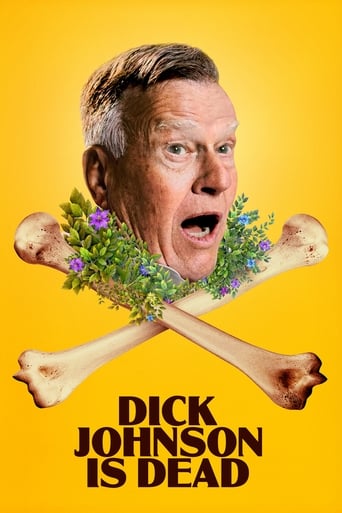
With this inventive portrait, director Kirsten Johnson seeks a way to keep her 86-year-old father alive forever. Utilizing moviemaking magic and her family’s dark humor, she celebrates Dr. Dick Johnson’s last years by staging fantasies of death and beyond. Together, dad and daughter confront the great inevitability awaiting us all.
Thomas Haemmerli is about to celebrate his fortieth birthday when he learns of his mother's death. A further shock follows when he and his brother Erik discover her apartment, which is filthy and full to bursting with junk. It takes the brothers an entire month to clean out the place. Among the chaos, they find films going back to the 1930s, photos and other memorabilia.
Against the backdrop of Pakistan's elections, this film follows the rise of powerful cleric Khadim Hussain Rizvi, on a mission to preserve the country's blasphemy laws, which prescribe a mandatory death sentence for disrespecting The Prophet Muhammad (P.B.U.H) and life imprisonment for desecrating the Holy Quran. With millions sympathetic to his goal, Rizvi silences anyone attempting to change the law by condemning them to death. As he pushes for more power, Rizvi decides to run for office in the upcoming general elections, and those accused of blasphemy or those who oppose the blasphemy laws- whether targeted minorities, liberals, and opposing Muslim voices - become the pawns of his ambition.
Rotem Genossar, a teacher at the Bialik-Rogozin campus in south Tel Aviv, founds a running group for his students, young African refugees whose families fled their homeland and now live in Israel without any legal status. At first running is just a social activity for the students, but it quickly becomes a means to fight for their civil rights, part of a struggle to secure them a place of their own, out of the margins of Israeli society.
Oriana Fallaci, the Italian journalist who is noted for her provocative interviews, interviews the leader of the Islamic Revolution, the Ayatollah Ruhollah Khomeini, on Sept 12, 1979. For 10 days Oriana Fallaci waited in the holy city of Qum for her interview with the 79 year old Ayatollah, who is the de facto ruler of Iran. On Sept. 12, she was led into the Faizeyah religious school, where Khomeini holds his audiences. She was accompanied by two Iranians Nyho and Iran prime minster Banisadr who had helped set up the interview and who served as translators. Oriana Fallaci, barefoot, enveloped in a chador, the head to toe veil of the Moslem woman, was seated on a carpet, when the Ayatollah entered, and the recorded interview could begin.
The Cove tells the amazing true story of how an elite team of individuals, films makers and free divers embarked on a covert mission to penetrate the hidden cove in Japan, shining light on a dark and deadly secret. The shocking discoveries were only the tip of the iceberg.
Women from Turkey and Mecklenburg are working together side-by-side at a fish-processing factory in Lübeck. As they work, they share stories about their lives, including their sorrows, griefs, hopes, and dreams, while expressing their longing for home and feelings of being lost in a foreign place.