Documentary about Swedish emigration to Argentina via Brazil.
Social & External
Self
Cyrille, a young gay farmer from Auvergne, has only one friend, a homosexual like him. One day, he goes on vacation to a beach in Charente Maritime. He cannot swim and sees the sea for the first time. It was there that he met the director Rodolphe Marconi who decided to devote this sensitive and gentle portrait to him, plunging us into an agricultural world in crisis and into a life often lonely and made up of hard work rarely pays off.
The Mancuso family has practiced transhumant grazing for generations, moving the herd of Podolica cattle from the Marcedusa countryside to the large Sila forests.
The Haywain by John Constable is such a comfortingly familiar image of rural Britain that it is difficult to believe it was ever regarded as a revolutionary painting, but in this film, made in conjunction with a landmark exhibition at the V&A, Alastair Sooke discovers that Constable was painting in a way that was completely new and groundbreaking at the time. Through experimentation and innovation, he managed to make a sublime art from humble things and, though he struggled in his own country during his lifetime, his genius was surprisingly widely admired in France.
A provocative and poetic exploration of how the British people have seen their own land through more than a century of cinema. A hallucinated journey of immense beauty and brutality. A kaleidoscopic essay on how magic and madness have linked human beings to nature since the beginning of time.
A poetic and intimate look at the life and work of photographer Luis Humberto.
A documentary on the surviving syncretic pagan midwinter customs of the British Isles, focusing on nine ritual celebrations ranging from the Moray Firth in the north, the Somerset Levels in the south, Humberside in the east, and County Kerry in the west. Featuring music by the Albion Band and narration by John Tams.
In 1927, filmmaker Oskar Fischinger traveled for three weeks along the side roads between Munich and Berlin, filming frame by frame the people he met along the way and the places he passed through. In 2020, the director did a remake of this film during a month-long walk between Paris and Brest.
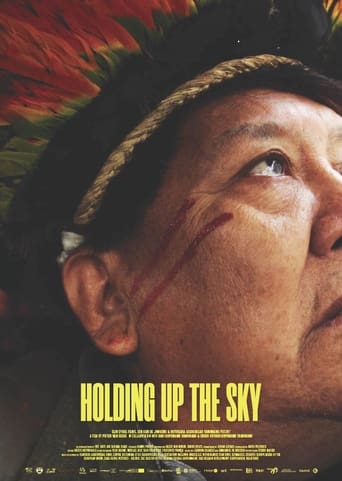
"When the shamans stop dancing and life in the rainforest loses its balance, the sky will collapse and come to crush everything." This wisdom is passed down from generation to generation by the Yanomami of Brazil. But gold miners are polluting the rivers, shamans are dying, the rainforest is disappearing and the earth is getting hotter. Davi Kopenawa, a tribal leader and spokesman for the Yanomami, has been fighting relentlessly against the colonization of his land for 40 years. He warns Westerners that when the sky collapses, they too will be crushed. Why don't they listen? Translated with www.DeepL.com/Translator (free version)
The film follows Tarcísio Amaro, a retired miner living in the vicinity of Serra da Estrela, interweaving thoughts on the past and the present, and looking at the decline of rural life in the deserted Portuguese hinterland.
After 18 years living in Italy, the Cuban Barbara Ramos returns to live in her homeland. In the town of Santa Clara, she discovers through the projects of family and friends what has changed in Cuba but also what has not and will likely never change. Shot over a period of three years - the time it took Barbara to build her dream house - RETURN TO CUBA chronicles her life in the wake of Raul Castro's liberal reforms and reconciliation with the United States of America. A light-hearted yet energetic movie positively demonstrating that finding happiness is possible in today's Cuba!
Currently Mongolia’s capital has 1.5 million inhabitants - half the population of the country. 50-year Tumurbaatar is only one of many coming to the city to fulfil their dreams of a better life.
In 1928, the city of Curitiba went through a rare snowstorm. To this day, it is the harshest snowstorm to ever take place in the city. Everything was recorded by Alberto Botelho in this short documentary.
Take a revealing tour along a coast of contrasts, from the folksy freshness of Whitby to the coaly Tyne, queen of all rivers.
To discover the truth behind the mysterious objects her uncle brought back from the Far East during her childhood, filmmaker Francesca Lixi embarks on a journey to those places through archival footage.
The interview, held on January 4, 2001, was the last given by Professor Milton Santos, who died from cancer on June 24 of the same year. The geographer is gone, but his thoughts remains. Its political and cultural ideals inspire the debate on Brazilian society and the construction of a new world. His statement is a true testimony, a lesson that the world can be better. Based on geography, Milton Santos performs a reading of the contemporary world that reveals the different faces of the phenomenon of globalization. It is in the evidence of contradictions and paradoxes that constitute everyday life that Milton Santos sees the possibilities of building another reality. He innovates when, instead of standing against globalization, proposes and points out ways for another globalization.
The film is a travelogue of sorts. Ostrovsky’s personal family footage meets the archives of Soviet propaganda footage. The result is a kind of Khruschev-era mix with a collage of Soviet music and a voice-over of my reminiscences of the Cold War era.
After a career filming across five continents, EMMY and BAFTA winning wildlife cameraman Stephen de Vere returns to the English countryside, to explore the hidden world beyond the garden gate. From playful fox cubs to the barn owl tending to her chicks, explore the extraordinary world waiting beyond the garden gate. The film is a personal view, giving an insight into what it’s like being a wildlife cameraman and reminding us that you don’t have to travel to all corners of the world to get close to nature.