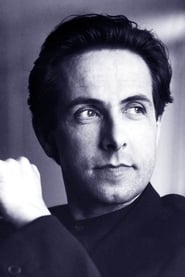
Short interview with Clive Barker about Midnight Meat Train, his artistic process, and his paintings. Includes a tour of his painting studio.
Social & External
Unknown Role
Documentary film about the painter and sculptor Jörg Immendorff who ranks among the most important German artists. The filmmakers accompanied Immendorff over a period of two years – until his death in May 2007. The artist had been living for nine years knowing that he was terminally ill with ALS. The film shows how Immendorff continued to work with unabated energy and how he tried not to let himself be restrained by his deteriorating health.
One of the most controversial writers of our times, join Trainspotting author Irvine Welsh as he undergoes a remarkable trip to find new meaning in his work, life and legacy.
Bob Ross brought joy to millions as the world's most famous art instructor. But a battle for his business empire cast a shadow over his happy trees.
Dedicated to the portrait work of Paul Cézanne, the exhibition opens in Paris before traveling to London and Washington. One cannot appreciate 20th century art without understanding the significance and genius of Paul Cézanne. Filmed at the National Portrait Gallery in London, with additional interviews from experts and curators from MoMA in New York, National Gallery of Art in Washington DC, and Musée d’Orsay in Paris, and correspondence from the artist himself, the film takes audiences to the places Cézanne lived and worked and sheds light on an artist who is perhaps one of the least known and yet most important of all the Impressionists.
NYC Graffiti Documentary "Kings Destroy" straight from the boogie down Bronx and right into your living room, with guest appearances by KRS-1, FAT JOE, CASE II, SEEN, and many more...
Departing from peripheral details of some paintings of the Bilbao Fine Arts Museum, a female narrator unravels several stories related to the economic, social and psychological conditions of past and current artists.
The film approaches the work of the Greek artist Nikos Koniaris. The particular way in which the painter depicts human suffering is presented through a film - a hybrid of real recording and directed material. The grief, the sick body, is reflected in self portraits, portraits of dying strangers and paintings of dead models. The paintings, apart from his work, also express a different version of himself. All together contribute to the depiction of man as a "garment of pain".
One of the greatest playwrights of the 20th century, Arthur Miller created such celebrated works as Death of a Salesman and The Crucible, which continue to move audiences around the world today. He also made headlines for being targeted by the House Un-American Activities Committee at the height of the McCarthy Era and entering into a tumultuous marriage with Hollywood icon Marilyn Monroe. Told from the unique perspective of his daughter, filmmaker Rebecca Miller, Arthur Miller: Writer is an illuminating portrait that combines interviews spanning decades and a wealth of personal archival material, and provides new insights into Miller’s life as an artist and exploring his character in all its complexity.
Literary icon Joan Didion reflects on her remarkable career and personal struggles in this intimate documentary directed by her nephew, Griffin Dunne.
Cinema and painting establish a fluid dialogue and begins with introspection in the themes and forms of the plastic work of a woman tormented by the elongated specters, originating from her obsessions and nightmares.
The film tells of the radical life-search by the Swiss writer Paul Nizon, born 1929 in Bern, Switzerland, who became what “he was meant to be” in Paris. Now 90-year-old, Paul Nizon grants insights into his life and work in a self-ironic, direct manner. The intimate portrait of a great literary outsider emerges, for whom the risk of life and the risk of writing merge into one and the same work of art.
A&E's long-running biography series takes a look at one of the 20th century's most emblematic figures, Ernest Hemingway. Through a collection of still photography, narration by granddaughter Mariel Hemingway, commentary from author A.E. Hotchner and publisher Charles Scribner, and readings from Hemingway's writing (including personal letters and unpublished works) by Scott Glenn, the film takes us from the man's Midwestern childhood roots up through the tragic suicide that serves as a bittersweet exclamation on what is otherwise considered to be a life of profound accomplishment.
The story of an exceptional painter talent, the Belgian-Hungarian Kim Corbisier who left a brilliantly powerful oeuvre behind after her tragically short and intense life. And a camera at her filmmaker friend. The mesmerising and often shocking footage of the camera bear witness to Kim's struggles with methadone addiction and, above all, her identity crisis caused by a series of unfortunate and criminal accidents in her family. After the unfinished attempts, with this film, the filmmaker is realising a project they had planned together 10 years ago.