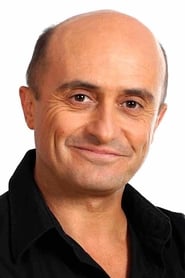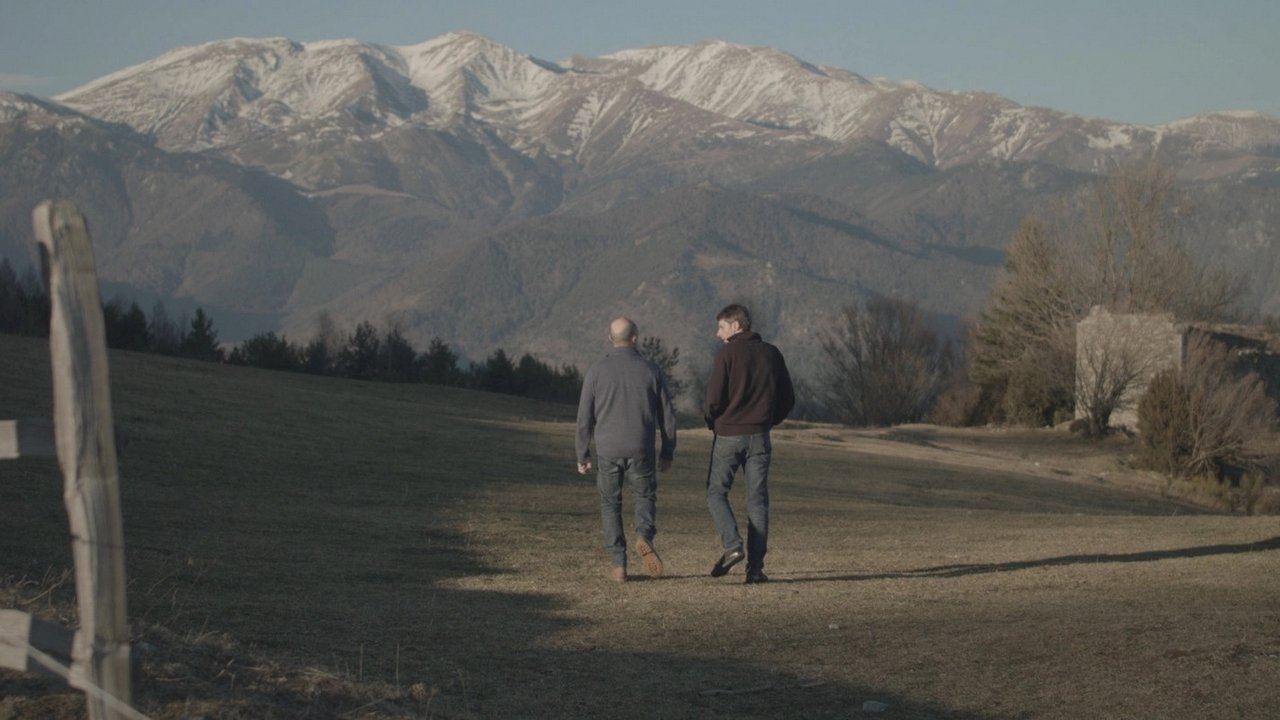
Spanish actor Pepe Viyuela embarks on a personal journey on the trail of his grandfather Gervasio, a soldier in the Republican Army during the Spanish Civil War.
Social & External
Self
The Algerian region of Tindouf is home to more than 170,000 Sahrawis, who have been living in refugee camps since 1976, when Morocco occupied the Western Sahara region. In a place of inhospitable conditions and scarcity, the Sahrawi population lives on dwindling humanitarian aid. Six percent of them face the added difficulty of coeliac disease.
The documentary of the Nuremberg War Trials of 21 Nazi dignitaries held after World War II.
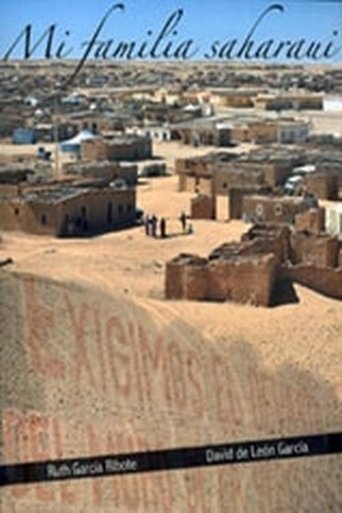
My Sahrawi family' is a report - documentary that reflects the bonds of unity between Sahrawi families and Spanish families who every summer welcome minors from refugee camps into their homes.
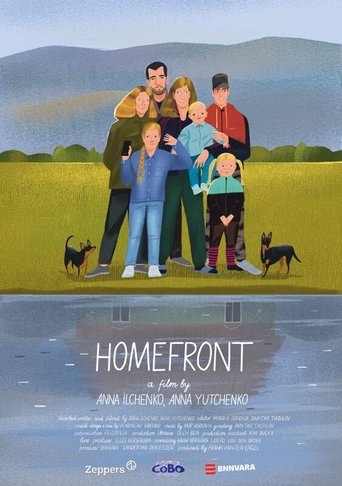
A family with five children flees the war raging in their home village on the Russian border. They end up in Mshanets, a farming village on the other side of the country, remote and unknown. Here the family starts building a new home. At the same time, two documentary makers come to the village, looking for a story. In the Lymar family they find the ideal characters for their film. But one day, when the renovation of their house is almost finished, the family disappears. The filmmakers go in search of their characters and along the way they try to find an answer to the question: what does a person need to feel at home?
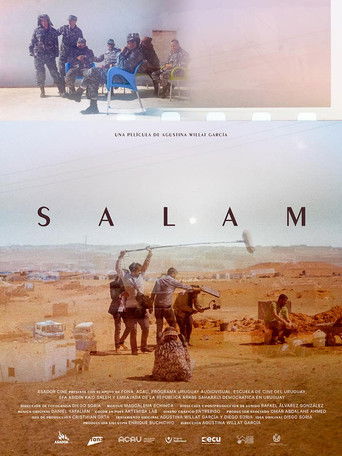
The Sahrawi people have lived in exile for almost half a century in the driest desert of the African continent. There, where basic resources such as water are scarce, there is a film school. As the world looks the other way, a group of young filmmakers carries out a battle against oblivion.
Refuge(e) traces the incredible journey of two refugees, Alpha and Zeferino. Each fled violent threats to their lives in their home countries and presented themselves at the US border asking for political asylum, only to be incarcerated in a for-profit prison for months on end without having committed any crime. Thousands more like them can't tell their stories.
In the Gaza refugee camp of Jerash, Palestinians face the critical issue of lacking identification documents. This situation undermines their rights and hinders access to essential services and opportunities.
Bobbing around on Mediterranean waters aboard the Ocean Viking, aid workers from the French relief service SOS Méditerranée gaze at the horizon. Is that a rubber dinghy in the distance, or is it garbage? The organization sails up and down the Libyan coast looking to pick up refugees in boats. On board is a 30-strong team ready to offer help and support refugees with their asylum applications.
"Legna: speak the Saharawi verse" is an audiovisual poetry story that traces the essential elements of the Saharawi culture, chaining the verses recited in a rigorous and evocative way in Hasania and Spanish by the poets and poetesses themselves. Poems that sing and evoke the essence of Bedouin material culture linked to the movement from Saquia el Hamra to Rio de Oro. A magical journey from the Draa River in the north to Agüenit and Leyuad on the southern border with Mauritania, from the coast with the white beaches of Bojador up to the vague boundaries of the Badia. A Saharawi national territory marked by the trace of the recent history of revolution, war, resistance (intifada) and waiting. Territory, history, culture, basted from poetry full of life, love and nostalgia.
At around 3,500 years old, the Ebers Papyrus is the oldest completely preserved medical manual in the world. Recipes were written down here on 18.6 meters in ancient Egypt. When Georg Ebers set out in search of the scroll in 1872, its existence was questionable and its sensational condition only a rumor.
Amid December’s festive glow, refugees remain hidden in forests along the Poland-Belarus border. This powerful documentary gives voice to their silent cries.
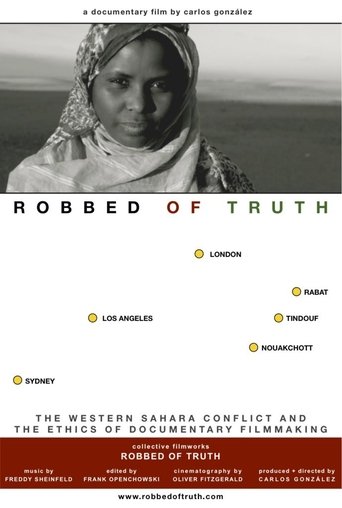
This is the true story of Fetim Salam, a Saharawi refugee falsely portrayed as a slave in the Australian documentary 'Stolen'. Australian filmmakers, Violeta Ayala and Daniel Fallshaw, travel to the Saharawi refugee camps in Tindouf, Algeria in 2007 and claim to discover 20,000 slaves in the camps run by the independence movement Polisario Front. Refugees are outraged for being portrayed as slaves, and humanitarian aid workers are incredulous about these allegations as they know the camps intimately. Filmmaker Carlos Gonzalez retraces their steps in search of the truth and finds a web of lies, misinformation and Moroccan operatives reshaping the truth.
A cell phone was the only thing that kept Yonas, an Eritrean refugee, connected to Jérôme, the French journalist who wanted to tell his story. They met in Libya in 2019, in the abyss of a detention center. Yonas managed to escape and attempted several times to cross the Mediterranean. Like many others who jump from one hell to another, Yonas's only option was to flee forward, and what lay before him was a small boat. Yonas's News chronicles the epic journey in which his life was at stake, summarized in the WhatsApp and voice messages, photos, and videos he was able to exchange with Jérôme. Jérôme Tubiana, journalist, researcher, and member of Doctors Without Borders, has visited Libya five times between 2018 and 2020.
Eighteen-year-old Shahnura is about to graduate from high school. Her mother spends hours at the dining table while Shahnura is at school, wondering if her mother, sister, and brother are still alive. Living in Germany without a passport or nationality, she listens to the harrowing stories of her mother and two friends who have experienced imprisonment and re-education camps in China. These accounts reveal the suffering, human rights abuses, forced adoptions, and the grim reality of the camps where the predominantly Muslim Turkic Uyghurs are tortured and mistreated.
The Stella Maris Berria is a tuna vessel destined for scrapping. However, Iñigo Mijangos and Iñigo Gutierrez, two members of the NGO Salvamento Marítimo Humanitario, have an unusual idea: to transform the fishing boat into a rescue boat to save refugees drowning in the Mediterranean Sea. That is how Aita Mari was born.
It is a daring idea: to grow food from old mattresses in a desolate camp at the edge of a war zone. When a refugee scientist meets two quirky professors, they must confront their own catastrophes - and make a garden grow. Short film now streaming on Waterbear.com.
Young Mohamed Dih, who in Seville, returns to his birthplace – a refugee camp in Western Sahara. Time flows differently here: the times of the day are marked by calls to prayer and the seasons – by the rainfall. When a torrential downpour destroys his family’s home, the protagonist stays in the camp for longer to help to rebuild it.
On Our Doorstep delves deep into an aspect of the refugee crisis that rarely reached the press. With NGOs being blocked by red tape and the absence of any positive action by French or British authorities, the film is a behind-the-scenes look at the unprecedented grassroots movement that rose to aid the refugees in Calais, and the community that sprang up there, before it was forcefully demolished. This is the story of what happens when young and inexperienced citizens are forced to devise systems and structures to support 10,000 refugees; and are left unguided to face the moral and emotional conflicts, blurred lines and frequent grey areas of giving aid to vulnerable people. People who do not want to be there. It questions whether the aims of the volunteers were met, and whether these aims ultimately served the refugees' needs.
After the military occupation of Western Sahara in 1976, Moroccan government attacked the civil population with hard repression, forcing hundreds of Saharan people to “disappear” in clandestine jails. An invisible and slow death was the only horizon. However, some prisoners were able to survive after suffering their own “extinction” for more tan 10 years, ripped from their families, suffering torture, in total isolation. When they finally were released, their known world had changed radically.