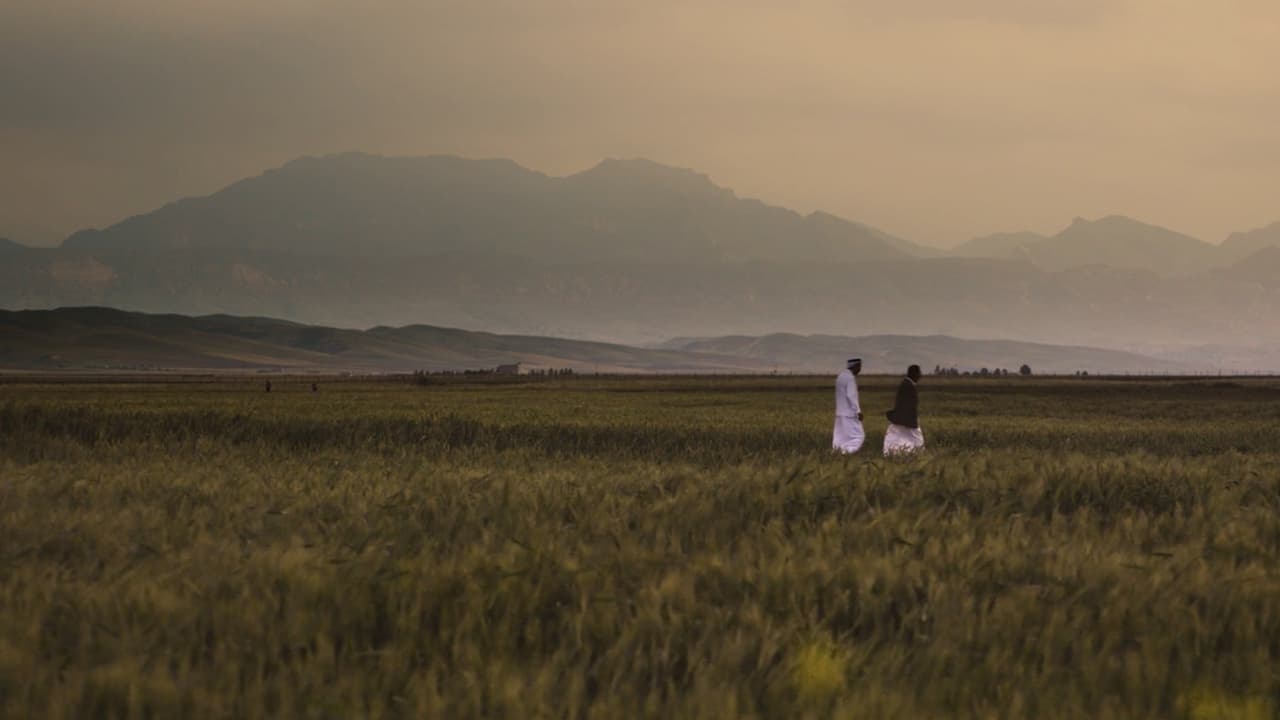
Through a series of vignettes from the ancient and war-torn Levant, WILD IS THE SPRING captures moments in the lives of diverse ethnic communities who struggle to survive when life descends into chaos.
Social & External
The people behind it
A young hare named Ferdinand is playing the harmonica before the battle. Soon the signal for attack will be given, and Ferdinand will face the terrible enemy on the battlefield.
A commanding officer defends three scapegoats on trial for a failed offensive that occurred within the French Army in 1916.
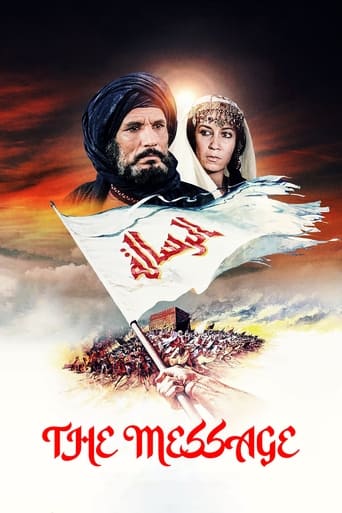
During World War I, English officer Thomas Edward 'T.E.' Lawrence sets out to unite and lead the diverse, often warring, Arab tribes to fight the Turks.
A story very loosely based the 480 B.C. Battle of Thermopylae, where the King of Sparta led his army against the advancing Persians.
La Guerre Dans le Haut Pays is a period piece set in the winter of 1797-98, during the six days leading up to the fall of Bern and the victory of Napoleon's army, when the Bern government is faced with mixed loyalties from its subjects. The population of the lower valley is divided, but the upper region remains loyal, since they have been given special autonomy and a favorable system of taxation. David, a postman, works between the two regions. His father, who is a hard-line conservative, does not approve of his relationship with Julie, who is from the lower part of the valley. Julie's father, on the other hand, is more open to the new ideas of liberation. As a result of his work, David is exposed to new ideas and becomes a believer in equality and justice.
Six thousand years before Sora and Shiro were even a blink in the history of Disboard, war consumed the land, tearing apart the heavens, destroying stars, and even threatening to wipe out the human race. Amid the chaos and destruction, a young man named Riku leads humanity toward the tomorrow his heart believes in. One day, in the ruins of an Elf city, he meets Schwi, a female exiled "Ex Machina" android who asks him to teach her what it means to have a human heart.
The story of Irish fighter pilot Brendan "Paddy" Finucane, who at the age of just 21, became the youngest ever Wing Commander in the Royal Air Force, and one of its greatest and most celebrated fighter aces during World War Two.
A pragmatic U.S. Marine observes the dehumanizing effects the U.S.-Vietnam War has on his fellow recruits from their brutal boot camp training to the bloody street fighting in Hue.
A Russian and a German sniper play a game of cat-and-mouse during the Battle of Stalingrad in WWII.
A touching story of an Italian book seller of Jewish ancestry who lives in his own little fairy tale. His creative and happy life would come to an abrupt halt when his entire family is deported to a concentration camp during World War II. While locked up he tries to convince his son that the whole thing is just a game.
1945. The International Military Tribunal begins its work in Nuremberg. A huge number of people from all over the world come to the trial, which will later be called the Trial of the Century: the city is crowded with journalists, lawyers, translators, witnesses and many participants and employees of the process.
Tomka is a boy who likes playing football with his friends. When the German army captures his town, the German soldiers establish their camp in the town stadium. Tomka with help from his friends and their parents organizes sabotage actions against the soldiers.
A distinguished military leader whose reign was touched by great scandal, shocking betrayals and rousing victories. A simple shepherd boy chosen to be king, under the watchful eyes of prophet Samuel.
This film brings to life, thanks to unknown footage from the great American director William Wyler, an important period in the history of Corsica during World War II. In 1944, the Alto base near Folelli was home to both a group of fighter-bombers from the U.S. Army Air Force (the 57th Fighter Group) and the famous French Lafayette fighter group. Day after day, the young pilots of these two units took off from the Alto runway in their P-47 Thunderbolts to attack, strafe, and bomb the German troops who, in Italy, had halted the Allied advance at Monte Cassino and participated in the Provence landings in August 1944. Isabelle Clarke and Daniel Costelle tracked down the pilots, and sixty years later, these pilots are reunited...
On January 8, 2020, Ukraine International Airlines Flight 752 went down as it was leaving Iranian air space. All 176 people on board were killed, many of them Iranian Canadians. For weeks Iranian authorities vociferously denied responsibility, but foreign governments and agencies were certain the plane was shot down by Iranian military, a fact Iran’s government eventually admitted. There were no answers as to why the plane was fired on or even why it was allowed to take off, since hostilities had broken out in the region in preceding days.
After his father is murdered by the Nazis in 1938, a young Viennese Jew named Ferry Tobler flees to Prague, where he joins forces with another expatriate and a sympathetic Czech relief worker. Together with other Jewish refugees, the three make their way to Paris, and, after spending time in a French prison camp, eventually escape to Marseille, from where they hope to sail to a safe port.
Jesus, a carpenter living a simple life, discovers his destiny as the biblical Messiah.
Three juxtaposing stories taking place in Portugal, Austria and Cuba create an intimate and poetic portrait of the daily lives and struggles of the elderly in an unstable world, seen through the eyes of their grandchildren.
In the center of the story are three main characters - Lieutenant Colonel Soshnikov, Captain Muravyov and Major Zakharov. Three ages, three different characters, three different destinies, which are destined to meet at the Khmeimim military base.
On the one hand, there’s the desert eating away at the land. The endless dry season, the lack of water. On the other there’s the threat of war. The village well has run dry. The livestock is dying. Trusting their instinct, most of the villagers leave and head south. Rahne, the only literate one, decides to head east with his three children and Mouna, his wife. A few sheep, some goats, and Chamelle, a dromedary, are their only riches. A tale of exodus, quest, hope and fatality.
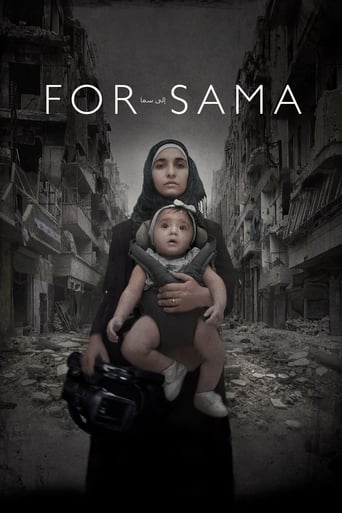
A love letter from a young mother to her daughter, the film tells the story of Waad al-Kateab’s life through five years of the uprising in Aleppo, Syria as she falls in love, gets married and gives birth to Sama, all while cataclysmic conflict rises around her. Her camera captures incredible stories of loss, laughter and survival as Waad wrestles with an impossible choice– whether or not to flee the city to protect her daughter’s life, when leaving means abandoning the struggle for freedom for which she has already sacrificed so much.
Prelude to War was the first film of Frank Capra's Why We Fight propaganda film series, commissioned by the Pentagon and George C. Marshall. It was made to convince American troops of the necessity of combating the Axis Powers during World War II. This film examines the differences between democratic and fascist states.
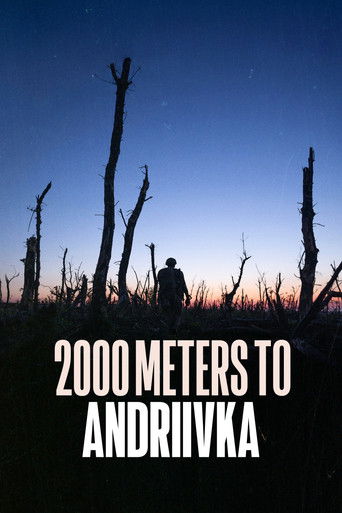
Amid the failing counteroffensive, a journalist follows a Ukrainian platoon on their mission to traverse one mile of heavily fortified forest and liberate a strategic village from Russian occupation. But the farther they advance through their destroyed homeland, the more they realize that this war may never end.
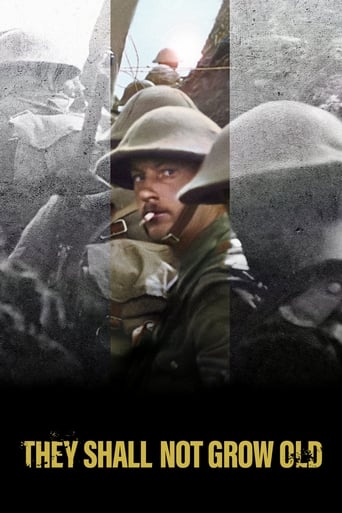
A documentary about World War I with never-before-seen footage to commemorate the centennial of Armistice Day, and the end of the war.
As the Russian invasion begins, a team of Ukrainian journalists trapped in the besieged city of Mariupol struggle to continue their work documenting the war's atrocities.
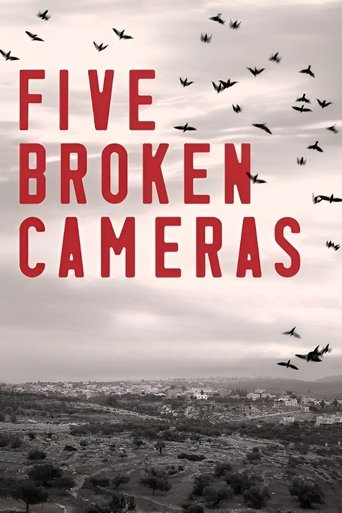
Five broken cameras – and each one has a powerful tale to tell. Embedded in the bullet-ridden remains of digital technology is the story of Emad Burnat, a farmer from the Palestinian village of Bil’in, which famously chose nonviolent resistance when the Israeli army encroached upon its land to make room for Jewish colonists. Emad buys his first camera in 2005 to document the birth of his fourth son, Gibreel. Over the course of the film, he becomes the peaceful archivist of an escalating struggle as olive trees are bulldozed, lives are lost, and a wall is built to segregate burgeoning Israeli settlements.
Against the darkening backdrop of New Delhi's apocalyptic air and escalating violence, two brothers devote their lives to protecting one casualty of the turbulent times: the bird known as the black kite.
When Sgt. First Class Brian Eisch is critically wounded in Afghanistan, it sets him and his sons on a journey of love, loss, redemption and legacy.
Korengal picks up where Restrepo left off; the same men, the same valley, the same commanders, but a very different look at the experience of war.
This documentary movie is about the battle of San Pietro, a small village in Italy. Over 1,100 US soldiers were killed while trying to take this location, that blocked the way for the Allied forces from the Germans. Preserved by the Academy Film Archive in 2005.
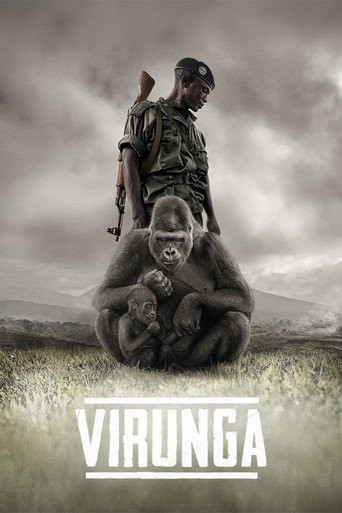
Virunga in the Democratic Republic of the Congo is Africa’s oldest national park, a UNESCO world heritage site, and a contested ground among insurgencies seeking to topple the government that see untold profits in the land. Among this ongoing power struggle, Virunga also happens to be the last natural habitat for the critically endangered mountain gorilla. The only thing standing in the way of the forces closing in around the gorillas: a handful of passionate park rangers and journalists fighting to secure the park’s borders and expose the corruption of its enemies. Filled with shocking footage, and anchored by the surprisingly deep and gentle characters of the gorillas themselves, Virunga is a galvanizing call to action around an ongoing political and environmental crisis in the Congo.
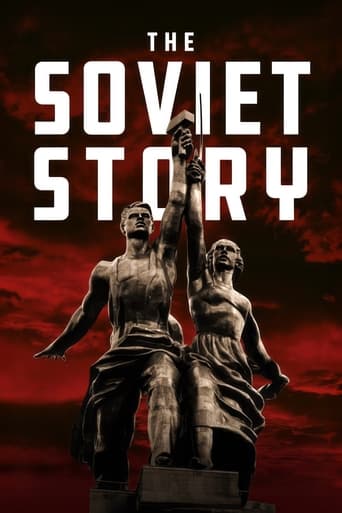
“The Soviet Story” is a story of an Allied power, which helped the Nazis to fight Jews and which slaughtered its own people on an industrial scale. Assisted by the West, this power triumphed on May 9th, 1945. Its crimes were made taboo, and the complete story of Europe’s most murderous regime has never been told. Until now...
The extraordinary story of how Hollywood changed World War II – and how World War II changed Hollywood, through the interwoven experiences of five legendary filmmakers who went to war to serve their country and bring the truth to the American people: John Ford, William Wyler, John Huston, Frank Capra, and George Stevens. Based on Mark Harris’ best-selling book, “Five Came Back: A Story of Hollywood and the Second World War.”
Meet the real-life airmen who inspired Masters of the Air as they share the harrowing and transformative events of the 100th Bomb Group.
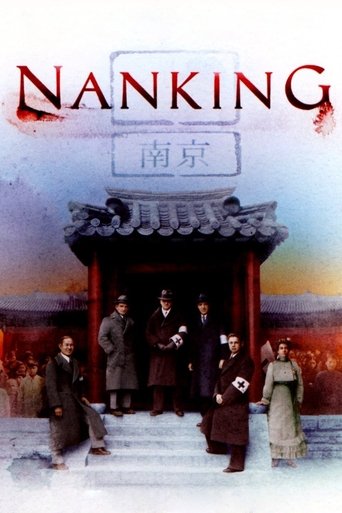
The story of the rape of Nanking, one of the most tragic events in history. In 1937, the invading Japanese army murdered over 200,000 and raped tens of thousands of Chinese. In the midst of this horror, a small group of Western expatriates banded together to save 250,000. Nanking shows the tremendous impact individuals can make on the course of history.
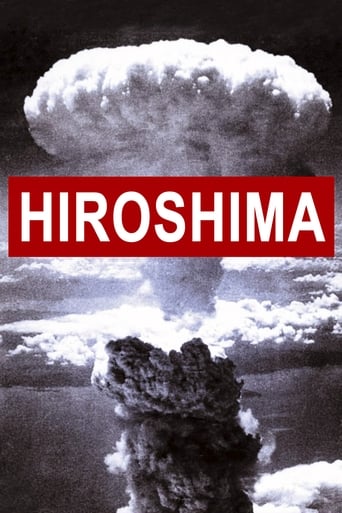
The documentary recounts the world's first nuclear attack and examines the alarming repercussions. Covering a three-week period from the Trinity test to the atomic bombing of Hiroshima, the program chronicles America's political gamble and the planning for the momentous event. Archival film, dramatizations, and special effects feature what occurred aboard the Enola Gay (the aircraft that dropped the bomb) and inside the exploding bomb.
The final entry in a trilogy of films produced for the U.S. government by John Huston. Some returning combat veterans suffer scars that are more psychological than physical. This film follows patients and staff during their treatment. It deals with what would now be called PTSD, but at the time was categorised as psychoneurosis or shell-shock. Government officials deemed this 1946 film counterproductive to postwar efforts; it was not shown publicly until 1981.
An ecological drama/documentary, filmed throughout the globe. Part thriller, part meditation on the vanishing wonders of the sub-aquatic world.
Director James Toback takes an unflinching, uncompromising look at the life of Mike Tyson--almost solely from the perspective of the man himself. TYSON alternates between the controversial boxer addressing the camera and shots of the champion's fights to create an arresting picture of the man.
A documentary shot by filmmakers all over the world that serves as a time capsule to show future generations what it was like to be alive on the 24th of July, 2010.