Social & External
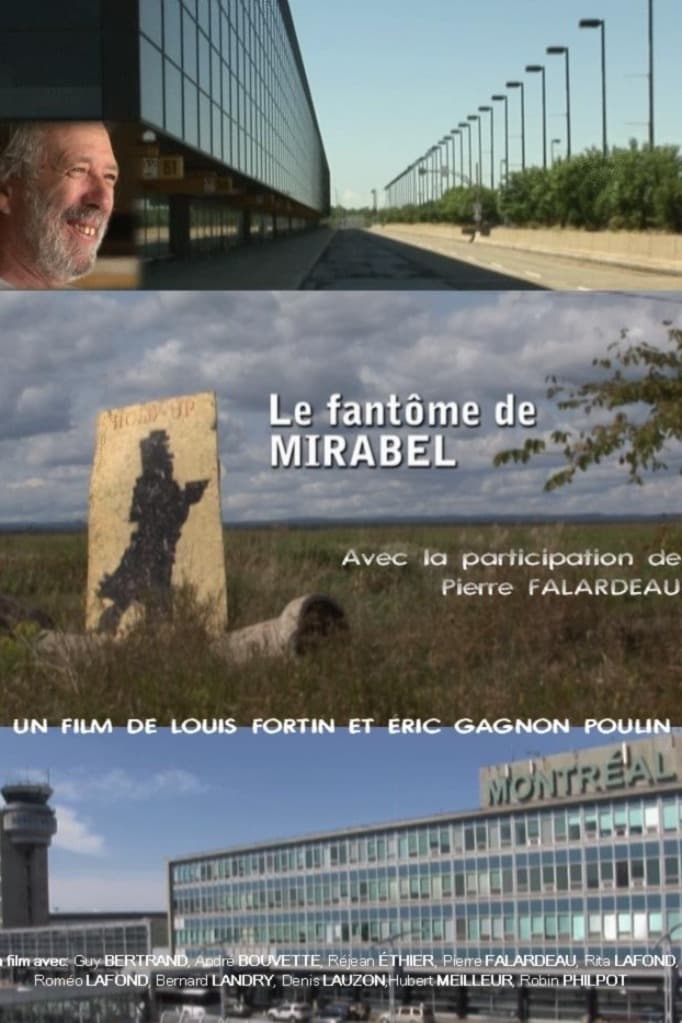
Animateur
expropriée
exproprié
anthropologue
Maire de Mirabel
ex-Premier Ministre du Québec
Avocat des expropriés
Auteur politique
The documentary Felipe González approaches some of the most important facets and stages of the Andalusian politician's life, before becoming President of the Government of Spain: his early years, his high school studies at the school of the Claretian Fathers in Seville, his years in the Catholic Action University Youth and the Catholic Workers' Youth, his entry into the Spanish Socialist Workers' Party (PSOE).
This film tells a story of ethnic Koreans from Russia and the post-Soviet territories making their new home in New York City. The history of the diaspora is told through conversations with Lidiya Kan’s mother, personal stories, fragmented memories, and her family photo archive. An important character of the film is Morkovcha, the Korean carrot salad, an invention of the Russian Korean diaspora; its essence is symbolic of their mixed identity.
Håkan Juholt came from the reserve bench and became captain of the whole team. A high-stakes bet that hardly anyone had dared to bet on. But after only 303 days, Håkan Juholt's time as party leader for the Social Democrats was over.
Takes us to locations all around the US and shows us the heavy toll that modern technology is having on humans and the earth. The visual tone poem contains neither dialogue nor a vocalized narration: its tone is set by the juxtaposition of images and the exceptional music by Philip Glass.
Short about the disappearance of the body of the political Argentinean writer Rodolfo Walsh after he was shot in an ambush by a special military group in Argentinia on March 25 1977.
Resilience is dedicated to those whose lives have been fragmented by intergenerational trauma, but who wish to break the cycle.
Journalist Dermi Azevedo has never stopped fighting for human rights and now, three decades after the end of the military dictatorship in Brazil, he's witnessing the return of those same practices.
An urgent and powerful documentary, shot in a detention centre where asylum seekers trying to reach Australian shores are indefinitely detained. Secretly shot on a mobile phone by Iranian journalist Behrouz Boochani while detained on Manus, in Papua New Guinea, the film is a collaboration with Dutch-Iranian filmmaker Arash Kamali Sarvestani. Boochani recounts, via the testimonies of fellow inmates, the abuse and violence inflicted and the precarious state of limbo they find themselves in. Chauka, the name of the dreaded solitary confinement unit within the detention centre, was originally the name of a beautiful bird and symbol of the Manus Island. By interweaving dialogue with two Manusian men and shots of daily life on the island, the film gives a much-needed voice to Manus inhabitants, understandably distressed by the current situation. With marked restraint, the film exposes lives broken by shocking immigration policies.
At the peak of Perestroika, in 1987, in the village of Gorki, where Lenin spent his last years, after a long construction, the last and most grandiose museum of the Leader was opened. Soon after the opening, the ideology changed, and the flow of pilgrims gradually dried up. Despite this, the museum still works and the management is looking for ways to attract visitors. Faithful to the Lenin keepers of the museum as they can resist the onset of commercialization. The film tells about the modern life of this amazing museum-reserve and its employees.
Autism spectrum disorder (DSA) - It is not what they have, but what they are, who they are. They are Felix, Anthony, Marc and Brigitte. They are different.
Follows the waves of literary, political, and cultural history as charted by the The New York Review of Books, America’s leading journal of ideas for over 50 years. Provocative, idiosyncratic and incendiary, the film weaves rarely seen archival material, contributor interviews, excerpts from writings by such icons as James Baldwin, Gore Vidal, and Joan Didion along with original verité footage filmed in the Review’s West Village offices.

Yagorihwanirats, a Mohawk child from Kahnawake Mohawk Territory in Quebec, attends a unique and special school: Karihwanoron. It is a Mohawk immersion program that teaches Mohawk language, culture and philosophy. Yagorihwanirats is so excited to go to school that she never wants to miss a day – even if she is sick.
The New Tango (El Nuevo Tango) was not shown in Argentina for a long time as it deals with the ascent of Argentinean president Hector Campora in May 1973, and features Cuban and Chilean presidents, Osvaldo Dorticos and Salvador Allende. A million people gathered on the Plaza de Mayo to acclaim the new President. One of Cámpora's first presidential actions was a granting of amnesty to political prisoners who where jailed during the dictatorship. On 28 May Argentina restored diplomatic relations with Cuba, which then received Argentine aid - such as food and industrial products - to break the United States embargo against Cuba.
Ten years after an enormous open-pit gold mine began operations in Malartic, the hoped-for economic miracle is nothing more than a mirage. Filmmaker Nicolas Paquet explores the glaring contrast between the town’s decline and the wealth of the mining company, along with the mechanisms of an opaque decision-making system in which ordinary people have little say. Part anthropological study, part investigation into the corridors of power, Malartic addresses the fundamental issue of sustainable and fair land management.
In a fascinating geopolitical drama, Danish filmmaker Mik-Meyer closely follows Ravalomanana as he attempts to return from exile in South Africa to Madagascar, under the threat of arrest and bodily harm.
An inside look at Jessica Piper, a Democratic Candidate running for a House seat in District 1 of Missouri. This is a snapshot of her mind and what it feels like to run a campaign in an overlooked place.
The documentary is titled after Arkadaş Z. Özger’s poem “Hello My Dear” which had caused much controversy in the period it was first published. Considered to be in defiance of heteronormativity, the said poem includes references to the poet’s personality, his family, his relationship to the society, and his “unexpected” death, which came three years after its publication. Today, 50 years after it was written, the documentary follows these same lines in the poem utilising cinematic elements. The documentary also rediscovers the poetics; reaches out to the family, the comrades, the friendships, departing from the official historical accounts, cognizant of his experience of otherness, in pursuit of the “lost” portrait of Arkadaş Z. Özger.