Social & External
(voice)
Man on Earth is a four-part British documentary television series presented by Tony Robinson. The programme documents the effects of climate change across 200,000 years of human history. The series premiered 7 December 2009 on Channel 4 with 1.4 million viewers. Accompanying Robinson to help explain the science are archaeologist Dr. Jago Cooper and climate modeller Dr. Joy Singarayer.
Follow Nikolaj Coster-Waldau’s search for the people, ideas, traditions, and attitudes – the solutions – which will transform fear of the future into hope, climate angst into optimism and human disconnection into engagement. In each of the six episodes, Nikolaj and his affable team criss-cross the globe exploring humanity, witnessing its power for good and learning about some of the remarkable solutions (both old and new) that inspire his optimism for the future.
David Attenborough celebrates the amazing variety of the natural world in this epic documentary series, filmed over four years across 64 different countries.
An international team of scientists, cavers and wildlife filmmakers venture deep into the heart of the remote tropical island of New Guinea.
In this limited series Simon Reeve begins his most ambitious journey yet, travelling the entire length of the Americas
A look at endangered species in the regions around the UK
A future within our reach. Inspiring stories to solve the climate crisis.
Climate change is everyone's problem, but the devastating effects aren't felt evenly. In partnership with a US public broadcaster, we zero in on protecting the most affected people and areas, or MAPA.
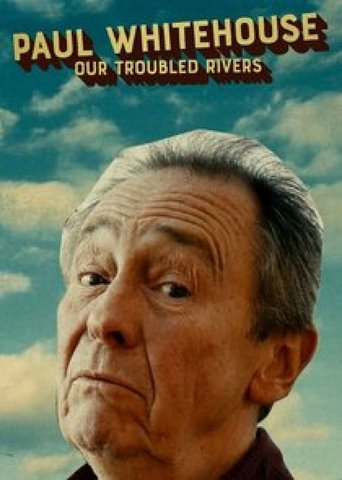
Paul Whitehouse travels around England and Wales looking at the pressures affecting our rivers and waterways from water companies, intensive agriculture and growing population. Paul explores what is going on beneath the surface, why our rivers and waterways are in decline and what needs to be done to protect them.
Biologist Liz Bonnin and geologist Martin Pepper set out on a global expedition to answer the most thought-provoking questions in earth science today. Throughout history, such geologic events as volcanic eruptions, tsunamis, tectonic plate motion, earthquakes, and asteroid impacts have continually reshaped Earth's surface, spreading chaos across the planet. By performing experiments, making observations in the field, and consulting expert scientists, the eight-part series works to uncover Earth's immeasurable capacity to create and destroy.
David Attenborough presents a documentary series exploring how animals meet the challenges of surviving in the most iconic habitats on earth.
The series offers fascinating insights into the most successful animal group in the world. From the tiny Etruscan shrew to the giant blue whale, Mammals will reveal the secrets of their success, and how their winning design, incredible adaptability, unrivaled intelligence, and unique sociability have all contributed to their remarkable rise.
The Great Global Warming Swindle is a polemical documentary film that suggests that the scientific opinion on climate change is influenced by funding and political factors, and questions whether scientific consensus on anthropogenic global warming exists. The program was formally criticised by Ofcom, the UK broadcasting regulatory agency, which upheld complaints of misrepresentation made by David King. The film, made by British television producer Martin Durkin, presents scientists, economists, politicians, writers, and others who dispute the scientific consensus regarding anthropogenic global warming. The programme's publicity materials assert that man-made global warming is "a lie" and "the biggest scam of modern times." Its original working title was "Apocalypse my arse", but the title The Great Global Warming Swindle was later adopted as an allusion to the 1980 mockumentary The Great Rock 'n' Roll Swindle about British punk band the Sex Pistols. The UK's Channel 4 premiered the documentary on 8 March 2007. The channel described the film as "a polemic that drew together the well-documented views of a number of respected scientists to reach the same conclusions. This is a controversial film but we feel that it is important that all sides of the debate are aired." According to Hamish Mykura, Channel 4's head of documentaries, the film was commissioned "to present the viewpoint of the small minority of scientists who do not believe global warming is caused by anthropogenic production of carbon dioxide."
A BBC/Animal Planet co-production, the three-part series focuses on the landscape and wildlife of the Great Rift Valley in East Africa.
Following his visit to the Great Barrier Reef in 1957, naturalist and broadcaster David Attenborough returns and uses the latest filming techniques to unlock the secrets of the natural wonder.
An excellent narration of oil industry since early days to 20th century and up to today. How oil changed the world and shaped our modern world today.