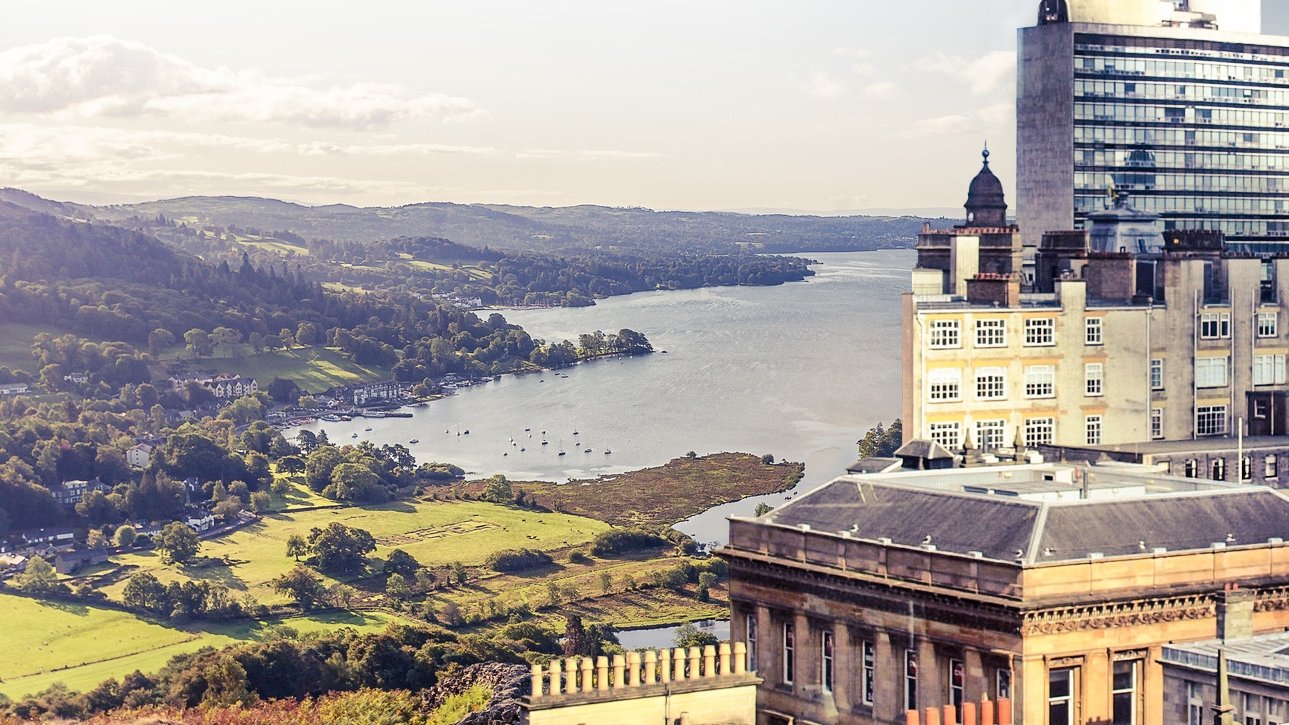


Celebrating life in the UK in all its diversity – as seen through the eyes of remarkable people doing extraordinary things.
Social & External
From the vast Gobi Desert to the jungles of Borneo, and from the polar wilderness of Siberia to the coral seas of the Indian Ocean, showcasing the breath-taking variety of Asia's wildest places.
Nine security guards from the Museu Nacional de Arte Antiga, in Lisbon, invite us to appreciate works of their choice from the Museum's permanent exhibition, in a presentation that crosses art, everyday life and biography.
Through unprecedented access we showcase the spectacle that is Wild Russia. From east to west, via mountains, volcanoes, deserts, lakes and Arctic ice, this breathtaking six-part series uses stunning cinematography to chart the dazzling natural wonders of this vast country.
Southeast Asia is the most diverse region on our planet. Nature’s most powerful forces have combined to create islands of fire, a water world driven by the sway of the moon and rich forests fuelled by the tropical sun. An extraordinary array of plants and animals live here; many of which are found nowhere else on Earth.
A celebration of California’s wildlife and wild places, and their coexistence with the 40 million people who call it home. Famous for its beaches and Hollywood, California is also a wellspring of biodiversity. Bounded by mountains, deserts and the Pacific Ocean, here are iconic wild places like Yosemite National Park and Death Valley, as well as Baja California’s lesser-known wild beauty.
In new six-part series Untamed China, wildlife adventurer Nigel Marven explores the country's mountains and grasslands, crosses its greatest deserts and treks through its deepest jungles in search of the rare, little-known and extraordinary creatures that live there. Over half of China's plant and animal species live in Yunnan Province in the far southwest of the country. In episode one, Nigel goes there to explore the ancient city of Dali and the surrounding mountains and forests. He meets some bizarre and deadly reptiles and amphibians, goes on a very unusual fishing trip, enjoys the fairy-tale lifecycle of butterflies and gets up close to highly endangered Yunnan snub-nosed monkeys.
From the Taiga to the Tundra to the Arctic Ocean, this series immerses the viewer in the nature of the northern extremities of Europe, beyond the Arctic Circle and into a land of ice and fire. Wildest Arctic captures the awesome cinematic range of the Arctic region, from the creaks, crashes of vast glaciers, to the howls of the wildest wolves and the haunting remoteness of this true wilderness.
In emblematic places around the world, Frédéric Lenoir, philosopher, sociologist and writer, goes to meet those who experience a spiritual quest, both religious and secular. A pilgrimage that mixes the voices of anonymous witnesses and personalities such as the Buddhist monk Matthieu Ricard, the apneist Guillaume Néry and the astrophysicist Hubert Reeves.
Millions of years ago, incredible forces ripped apart the Earth’s crust creating seven extraordinary continents. This documentary series reveals how each distinct continent has shaped the unique animal life found there.
Sitting on top of one of the world’s largest super-volcanos are 3,500 square miles of the most spectacular American wilderness. This summer, National Geographic Channel opens this world to you LIVE with a four-night special event. The action reaches boiling point in the world’s first National Park, Yellowstone.
Capturing the high drama of the Serengeti’s distinctive wildlife up close.
Zoologist Jack Randall journeys into Australia's Outback to encounter extraordinary wildlife.
The law of the wild is kill or be killed; learning how animals kill.
A glimpse into the life of Paul Pogba, the influential world-class French footballer.
Sir David shines the spotlight on some of nature’s evolutionary anomalies and reveals how these curious animals continue to baffle and fascinate.
Paranormal encounters from the viewpoint of those who lived them are detailed through immersive reenactments and present-day interviews.
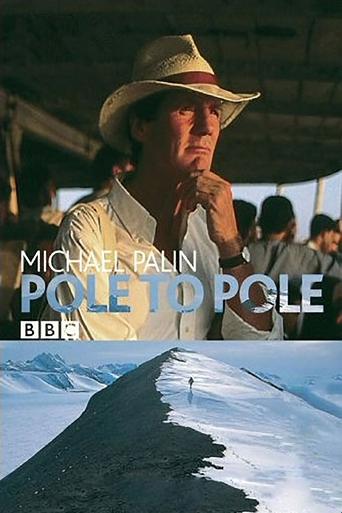
Michael Palin undertakes an epic journey of 23,000 miles, traveling from the North to the South Pole across 17 countries with a minimum of air travel, all on a tight deadline.
Sir David discovers a microscopic world that’s invisible to the naked eye, where insects feed and breed, where flowers fluoresce and where plants communicate with each other and with animals using scent and sound.
David Attenborough celebrates the amazing variety of the natural world in this epic documentary series, filmed over four years across 64 different countries.
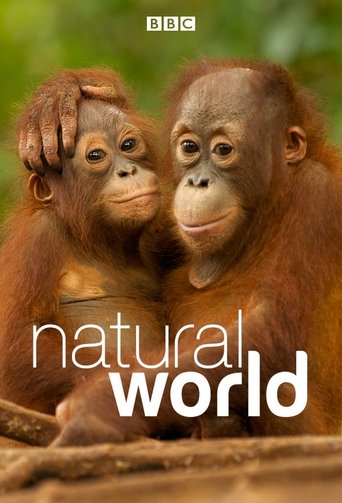
Natural World is a nature documentary television series broadcast annually on BBC Two and regarded by the BBC as its flagship natural history brand. It is currently the longest-running series in its genre on British television, with more than 400 episodes broadcast since its inception in 1983. Natural World is produced by the BBC Natural History Unit in Bristol, but individual programmes can be in-house productions, collaborative productions with other broadcasters or films made and distributed by independent production companies and purchased by the BBC. Natural World programmes are often broadcast as PBS Nature episodes in the USA. Since 2008, most Natural World programmes have been shot and broadcast in high definition.
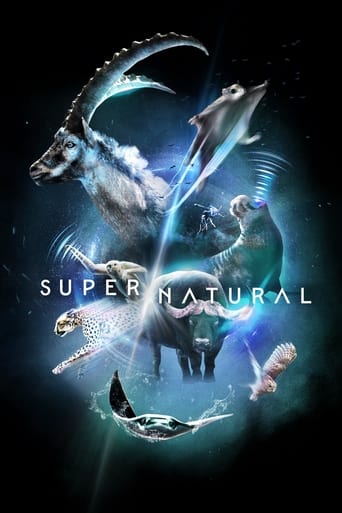
Filmed across six continents, this docuseries uses cutting-edge camera technology to capture animals' nocturnal lives, revealing new behaviours filmed in full color like never before.
Consistently stunning documentaries transport viewers to far-flung locations ranging from the torrid African plains to the chilly splendours of icy Antarctica. The show's primary focus is on animals and ecosystems around the world. A comic book based on the show, meant to be used an as educational tool for kids, was briefly distributed to museums and schools at no cost in the mid-2000s.
Infographics and archival footage deliver bite-size history lessons on scientific breakthroughs, social movements and world-changing discoveries.
PBS' premier science series helps viewers of all ages explore the science behind the headlines. Along the way, NOVA demystifies science and technology, and highlights the people involved in scientific pursuits.
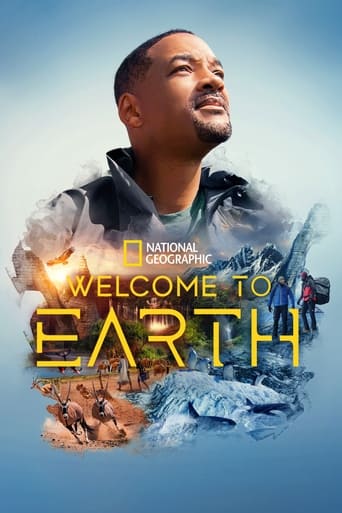
Will Smith whose curiosity and wonder is positively infectious—is guided by National Geographic Explorers traveling to different corners of the world to get up close and personal with the weirdest, most unusual, dangerous and thrilling spectacles of the planet.
Explore the surprising things we know (and don’t know) about why people are the way they are through expert interviews, rare footage from historical experiments, and brand-new, ground-breaking demonstrations of human nature at work.
Biography is a documentary television series. It was originally a half-hour filmed series produced for CBS by David Wolper from 1961 to 1964 and hosted by Mike Wallace. The A&E Network later re-ran it and has produced new episodes since 1987. The older version featured historical figures such as Helen Keller and Mark Twain, or long-dead entertainment figures such as Will Rogers or John Barrymore. The A&E series has placed the emphasis on such people as Marilyn Monroe, Elvis Presley, Plácido Domingo, Freddie Mercury, Jacqueline Kennedy Onassis, Eric Clapton, Pope John Paul II, Gene Tierney, Selena, Diego Rivera, Mao Zedong and Queen Elizabeth II, and fictional characters like The Phantom, Superman, Hamlet, Betty Boop, and Santa Claus. The program ended up profiling enough figures that in 1999, A&E spun it off into an entire network, The Biography Channel.
Australian host Steve Irwin and his wife Terri run a wildlife refuge. Their shared passion is educating the world about wildlife, including the much feared crocodile and numerous venomous snakes. Steve's specialty is the capture and relocation of crocodiles. No animal appears too threatening to Steve, his true respect for animals is the foundation for everything he does.
Documentary series looking at the most dramatic wildlife spectacles on our planet, showing how life responds to natural events which can dramatically transform entire landscapes.
Motoring programme featuring reviews of and reports about cars of all types.
MegaStructures is a documentary television series appearing on the National Geographic Channel in the United States and the United Kingdom, Channel 5 in the United Kingdom, France 5 in France, and 7mate in Australia. Each episode is an educational look of varying depth into the construction, operation, and staffing of various structures or construction projects, but not ordinary construction products. Generally containing interviews with designers and project managers, it presents the problems of construction and the methodology or techniques used to overcome obstacles. In some cases this involved the development of new materials or products that are now in general use within the construction industry. MegaStructures focuses on constructions that are extreme; in the sense that they are the biggest, tallest, longest, or deepest in the world. Alternatively, a project may appear if it had an element of novelty or are a world first. This type of project is known as a Megaproject.
Experience our planet's natural beauty and examine how climate change impacts all living creatures in this ambitious documentary of spectacular scope.
A series of standalone documentaries powered by the unparalleled journalism and insight of The New York Times, bringing viewers close to the essential stories of our time.
Journeying to the far reaches of our planet, this eight part series follows some of the world's most amazing species, telling extraordinary stories that are dramatic, thrilling, funny and sometimes heart-breaking, but always full of hope.
This docuseries showcases nature's lesser-known tiny heroes. Spotlighting small creatures and the extraordinary things they do to survive, each episode is filled with surprising stories and spectacular cinematography.
Doctor Who Confidential is a documentary to complement the revival of the long-running British science fiction television series Doctor Who. Each episode was broadcast on BBC Three on Saturdays, immediately after the broadcast of the weekly television episode on BBC One. The running time of the first two series was 30 minutes, being extended to 45 minutes in the third. BBC Three also broadcast a cut-down edition of the programme, lasting 15 minutes, shown after the repeats on Sundays and Fridays and after the weekday evening repeats of earlier seasons.
Shot from land and air, in trees and cliff-blinds, on ice floes and underwater, this documentary tells the powerful stories of many of the planet's species and their movements, while revealing new scientific insights with breathtaking high-definition clarity and emotional impact. The beauty of these stories is underscored by a new focus into these species; fragile existence and their life-and-death quest for survival in an ever-changing world.