Social & External
The people behind it
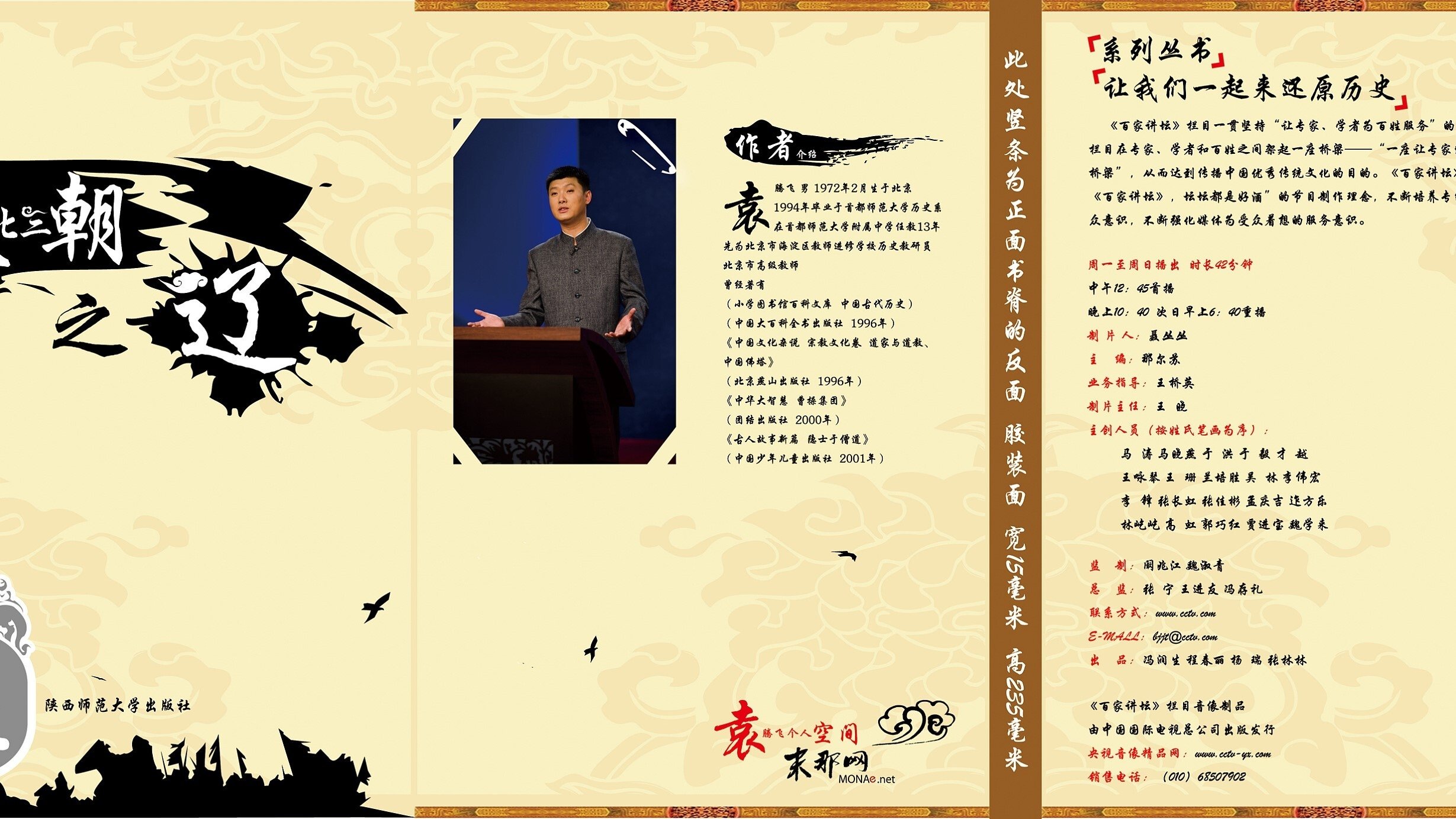
Yuan Tengfei
主讲人
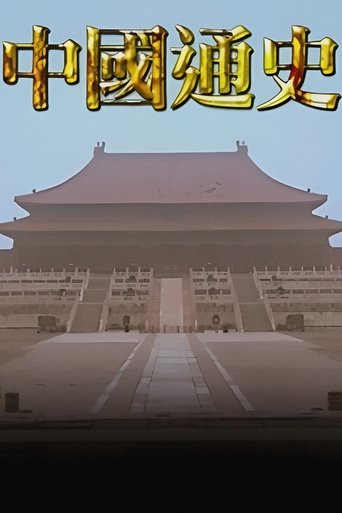
Retrace almost 2,000 years of Chinese ancient history – a period that holds vital clues to understanding how this powerful nation was built. Witness the evolution of civilization and visit the places where the dignitaries are buried, also visit the mausoleum of China's first emperor Qin Shi Huang Di.
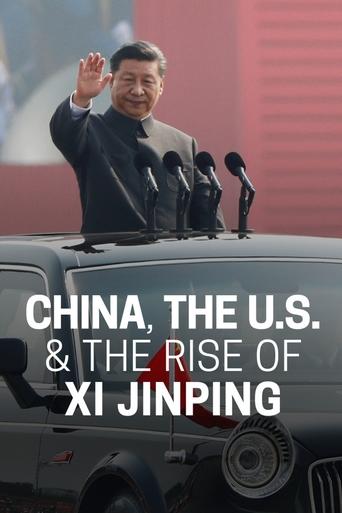
Tracing Xi Jinping's defining moments, how he's exercising his power and the impact on China and relations with the U.S.
China's First Emperor was a documentary aired on The History Channel on 2008. It tells the story of Qin Shi Huang's career as a military leader and ruthless ruler and how he unified China during the Qin Dynasty. He is played by Xu Peng Kai.
In the heart of Beijing lies the largest palace in the world, The Forbidden City. For five hundred years, it served as the home of the almighty Emperors of China along with their wives, concubines, and entourages of tens of thousands of eunuchs and civil servants. But the Forbidden City is more than an imperial residence; it is the center of the universe, a unique complex of structures revealing a hierarchy of power both imperial and divine.
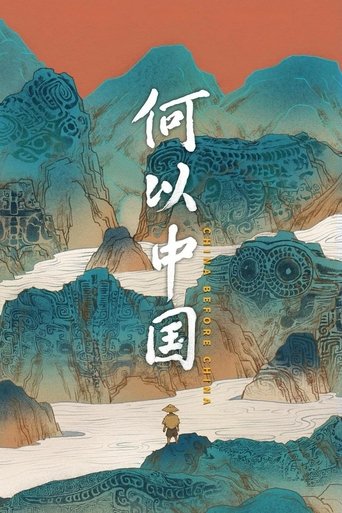
China Before China, an eight-episode documentary that tells stories of the origins and early development of Chinese civilization based on key archaeological findings.
Tells the story of the succession of royal power in the Xia Dynasty and Shao Kang’s restoration of the territory. From the loss of royal power and the killing of the Prince of Xiang to Shao Kang’s hardships and accumulation of strength, and finally, the elimination of enemies and the restoration of the throne, comprising the historical process of the historical “Shao Kang’s Restoration”.
Adapted from the classical 14th century novel of the same title by Luo Guanzhong, Romance of the Three Kingdoms is part historical, part legend, and part mythical – romanticises and dramatises the lives of feudal lords and their retainers, who tried to replace the dwindling Han dynasty or restore it. The focus is mainly on the three power blocs that emerged from the remnants of the Han dynasty, and would eventually form the three states of Cao Wei, Shu Han, and Eastern Wu.
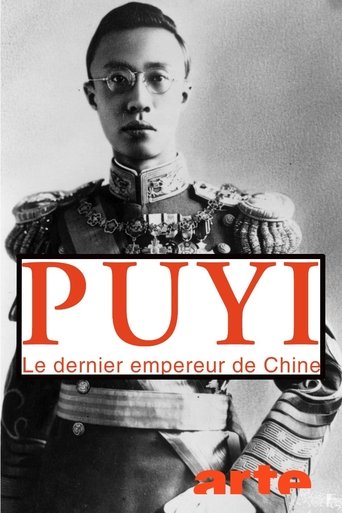
This program reveals the unorthodox life of Puyi, the last Emperor of China, through the use of rare footage from the period. Puyi's story, set against the immense luxury of the Chinese nobility, the decadent 1930s in Tianjin, the upheaval of World War II, the bleakness of prison, plus the turmoil of the Cultural Revolution, reflects the turbulent history of China and its people during the early and middle 20th Century.
Michael Wood embarks on a great historical adventure, exploring the stories, people and landscapes that have helped create China's distinctive character and genius over four thousand years.
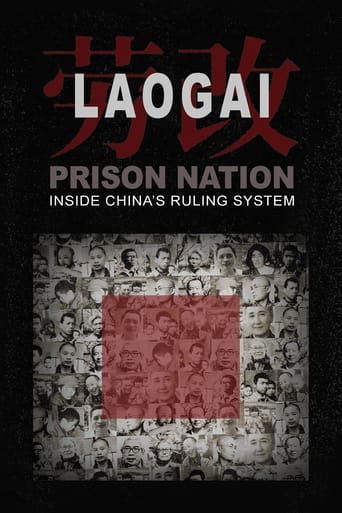
After the founding of the People's Republic of China in 1949, Mao Tsetung established a system of labor camps for systematic repression, known as Laogai, an abbreviation for "Reform Through Labor". In such camps, forced labor and physical and mental torture were used to bring about a so-called mental reform, re-education in the spirit of the Chinese Communist Party. Millions of Chinese were affected. Many were executed. In hundreds of camps, the Party took advantage of the prisoners' free labor to build the economy. Self-criticism and denunciation were often the only way to escape martyrdom. Successive waves of purges culminated in the Cultural Revolution, which saw massive human rights abuses, political assassinations, massacres, and exiles in remote parts of the country. Using unreleased archive footage, the documentary tells the story of the invention, development and improvement of China's totalitarian system of surveillance and repression up to the present day, never told before.
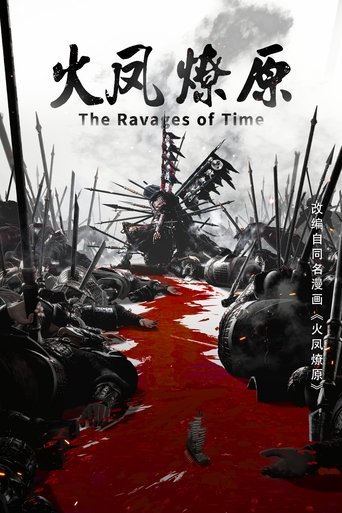
In the last years of the Eastern Han Dynasty, Dong Zhuo wreaked chaos in the capital city by holding the Emperor hostage to threaten the Imperial Marquises. He also held the family members of the Imperial Marquises as hostages. Using Lü Bu's scheme, the coalition forces were lured into Luoyang before it was set ablaze. To save the hostages, the coalition forces had to use various tactics and tricks. All the famous figures came to aid the cause. A battle deciding the future of the country ensued.
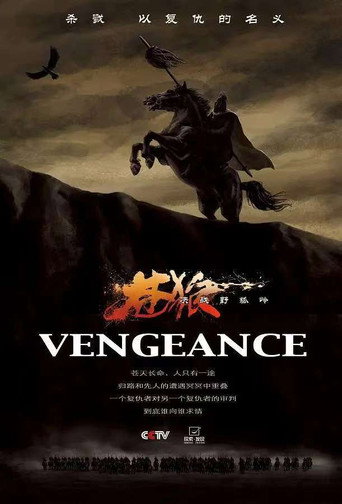
The series was adapted from Eryue He's historical novels, which are loosely based on historical events in the reigns of the Kangxi and Yongzheng Emperors in the Qing dynasty (1644–1911).
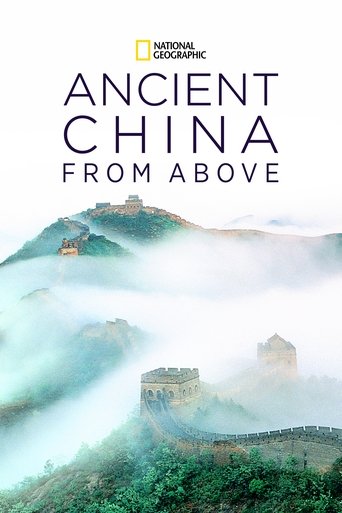
Epic adventure using new satellite imagery and cutting-edge technology to solve mysteries, explore secrets and reveal the wonders of Ancient China.
China's history of the last 200 years seems like a boomerang, returning to the West what it once unleashed. The series reveals how devastating the struggles for identity and power have been for the population since the fall of the "Middle Kingdom," and how closely these tragedies are intertwined with our own. Great hopes were placed in a wide variety of visions for the future—and each time, bitter disappointment ensued. From the decline of the empire to its resurgence as a superpower, China's history is both a dream and a nightmare, in which human life is of little value.
The imperial mausoleum of the Tang Dynasty is located on the mountain. It builds magnificently in a fan-shaped around Chang'an City. Together with Chang'an City and other palaces, it forms the highest level and density heritage site and treasure for Tang Dynasty. However, as time goes by, there are few heritage building left on the surface of the ground, which makes us even more lament.
World War II In Colour is a 13-episode television documentary miniseries recounting the events of World War II narrated by Robert Powell. The show covers the Western Front, Eastern Front, and the Pacific War. It is on syndication in America on the Military Channel. This series is in full color, combining both original and colorized footage.
The documentary series explores different political figures throughout history.
The story of the Second World War through the personal accounts of a handful of men and women from four American towns. The war touched the lives of every family on every street in every town in America and demonstrated that in extraordinary times, there are no ordinary lives.
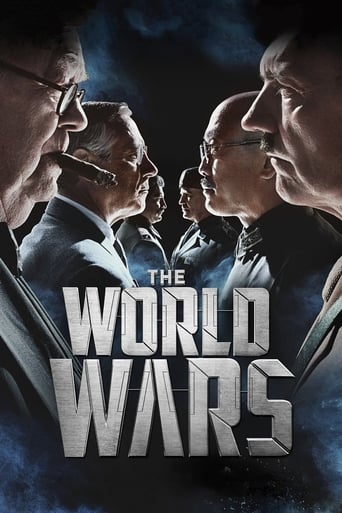
A documentary series that gives a historical account of the events of World War II, from its roots in the 1920s to the aftermath and the lives it profoundly influenced.
WWII in HD is a 10-part American documentary television miniseries that originally aired from November 15 to November 19, 2009 on the History Channel. The program focuses on the firsthand experiences of twelve American service members during World War II, including an Army nurse, a member of the Tuskegee Airmen, a second generation Japanese American and prisoner of war, and an Austrian Jewish immigrant. The twelve members recorded their time in both theaters and some had later interviews; found footage from the battlefield was paired with the stories of the twelve service members. The episodes premiered on five consecutive days, with two episodes per day. The series is narrated by Gary Sinise and was produced by Lou Reda Productions in Easton, Pennsylvania, United States.
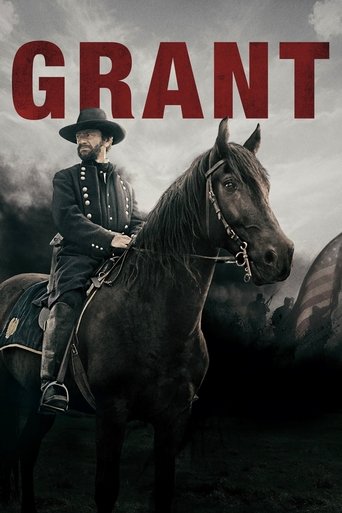
This documentary-series examines Grant's life story using his perspective and experiences to explore a turbulent time in history: the Civil War and Reconstruction.
Using highly advanced colourisation techniques, critical moments from World War II, from Stalingrad to The Battle of Britain, are shown in a whole new light.
A documentary on the American Civil War narrated by Ken Burns, covering the secession of the Confederacy to the assassination of Abraham Lincoln.
This captivating docuseries examines Winston Churchill's pivotal role in World War II and the formative events that made him an ideal leader for the era.
Through vividly enhanced archival footage and voices from all sides of the conflict, this docuseries brings WWII to life like never before.
Chronicles the lives of Theodore, Franklin and Eleanor Roosevelt, three members of the most prominent and influential family in American politics. It is the first time in a major documentary television series that their individual stories have been interwoven into a single narrative. This seven-part, fourteen hour film follows the Roosevelts for more than a century, from Theodore’s birth in 1858 to Eleanor’s death in 1962.
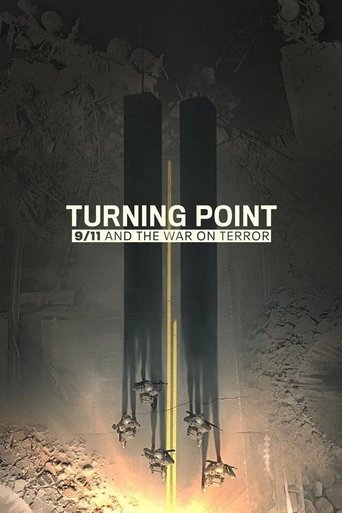
Modern history can be divided into two time frames: before 9/11 and after 9/11. This five-part docuseries is a cohesive chronicle of the September 11, 2001 attacks on the U.S., offering illuminating perspectives and personal stories of how the catastrophic events of that day changed the course of the nation.
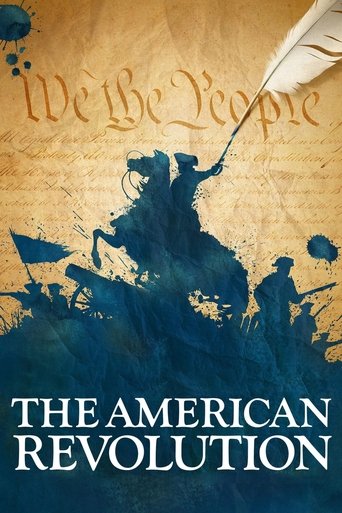
The American Revolution was at once a war for independence, a war of conquest, a civil war, and a world war, fought by neighbors on American farms and between global powers an ocean or more away. It impacted millions from Vermont’s Green Mountains to the swamps of South Carolina, from Indian Country to the Iberian Peninsula. In defeating the British Empire and giving birth to a new nation, the American Revolution turned the world upside-down. Thirteen colonies on the Atlantic Coast united in rebellion, won their independence, and established a republic that still endures. The American Revolution will present the story of the men and women of the Revolutionary generation, their humanity in victory and defeat, and the crisis that they lived through.
The acclaimed docu-series takes you on a lightning-fast journey through a day in the life of WWE's most intriguing Superstars and groundbreaking events.
Secrets from the "Stranger Things 2" universe are revealed as cast and guests discuss the latest episodes with host Jim Rash. Caution: spoilers ahead!
Ryan Bergara (a believer in the supernatural) and Shane Madej (a skeptic) travel to alleged haunted locations to investigate paranormal activity.
Dynamic reenactments and expert commentaries bring to life the tumultuous history and power struggles of a warring 16th-century feudal Japan.
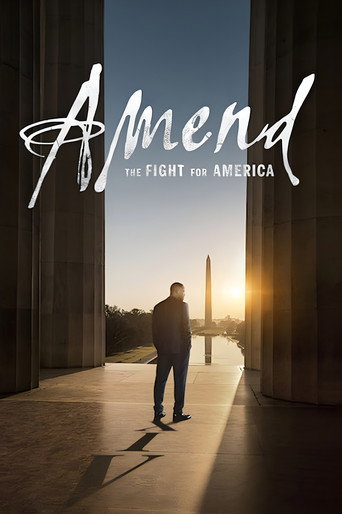
Will Smith hosts this look at the evolving, often lethal, fight for equal rights in America through the lens of the US Constitution's 14th Amendment.
In six films, Adam Curtis traces the different forces across the world that have led to now. It covers a wide range—including the strange roots of modern conspiracy theories, the history of China, opium and opioids, the history of Artificial Intelligence, melancholy over the loss of empire and, love and power. And explores whether modern culture, despite its radicalism, is really just part of the new system of power.
A PBS documentary concerning Jared Diamond's theory on why there is such disparity between those who have advanced technology and those who still live primitively. He argues it is due to the acquisition of guns and steel and the changes brought about by germs.