Social & External
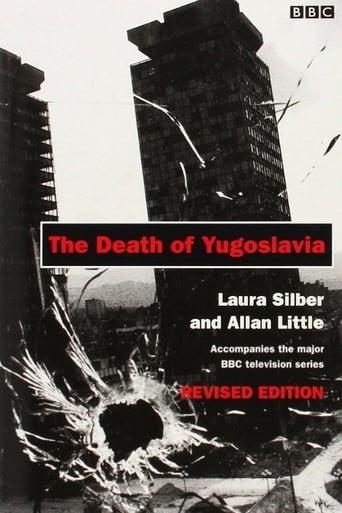
The Death of Yugoslavia is a BAFTA-award winning BBC documentary series first broadcast in 1995. It covers the collapse of the former Yugoslavia. It is notable in its combination of never-before-seen archive footage interspersed with interviews of most of the main players in the conflict, including Slobodan Milošević, the then President of Serbia. Norma Percy won the 1996 BAFTA TV Award for 'Best Factual Series' for the documentary. However, it has been argued that it presents a potentially slightly biased point-of-view; for instance during the trial of Milošević before the ICTY in The Hague, Judge Bonomy called the nature of much of the commentary "tendentious" (partisan).
Tito is a 2010 Croatian documentary television miniseries about Yugoslav leader Josip Broz Tito. The first episode aired March 19, 2010. The series is a co-production by Croatian Radiotelevision and Mediteran film. The two first collaborated on the series Long Dark Night, which at a top audience of 1.8 million viewers was one of the most-watched domestic productions in history. After the announcement of the documentary, Broz's granddaughter Saša announced that she and her family would use all means possible to obstruct filming. Tito cost a reported 1 million euros to make.
A 12-episode documentary series about the Independent State of Croatia.
Who were the Yugoslav Partisans? A docuseries about the founding and evolution of the largest armed resistance in Europe during World War II.
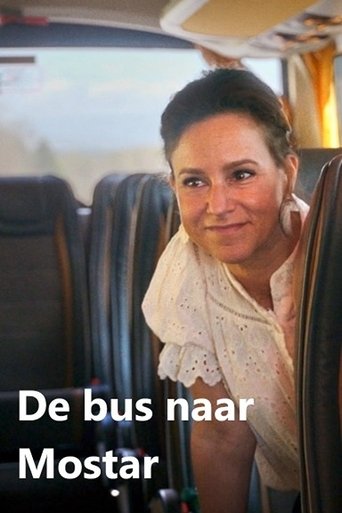
A girls' handball team from Mostar fled the war in the former Yugoslavia in the early 1990s, thanks to their coach. After a perilous bus journey, they arrived in Oosterblokker; without their parents, living in fear and uncertainty. Searching for answers, the women returned 33 years later, by bus to Mostar.
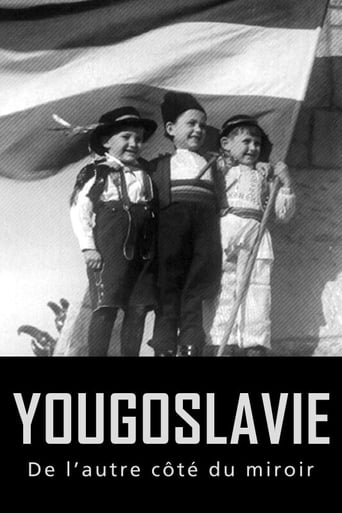
Through two films, this documentary reveals the creation and disintegration, within our own time, of a neighbouring European State named Yugoslavia. Part One covers the 1918-1980 period. Part Two covers the 1980-2001 period.
An intriguing history of Yugoslav nuclear program that proposed to build an atomic bomb and 16 nuclear facilities on Yugoslav soil. Only one project came to fruition, the nuclear power plant in Krsko, Slovenia.
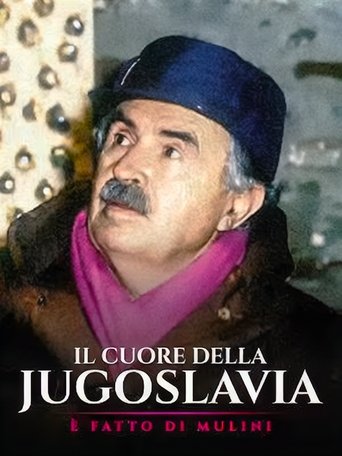
Italian writer and screenwriter Tonino Guerra's journey to discover Yugoslavia, from the big cities to the heart of its countryside, between a past of traditions and ancient rituals and a future still to be built. Filmed in 1979, the reportage in the then still united country has the flavour of both an intimate diary and a detailed travel documentary.
A moving story about the residents of correctional facility, rejected by parents and environment. Going through a strict regimen of life in the home, they are constantly trying to reverse the fate in their favor. Although they were given a chance to change, their actions always return to the beginning. Constantly on the border between personal whims and once-in-a-lifetime opportunity to become humans, they remain as wolves who find hard to change their mood. What finally remains is a perpetual dilemma whether their fate is innate, or is it forced by the communities in which they grew up...
Grlom u jagode is a 1975 Yugoslavian TV miniseries directed by Srđan Karanović and co-written by Karanović and Rajko Grlić. Depicting the life and times of a young man nicknamed Bane Bumbar, the series achieved huge popularity throughout SFR Yugoslavia. Revolving around Bane, his family, and his circle of friends, the series also portrays 1960s Belgrade, Serbia and Yugoslavia.
Story of forbidden love between Serbian guy and German girl in Vojvodina, Yugoslavia. Story begins in 1940's, just as war broke out and then goes threw this turbulent period to the 1960's, showing what was happening in Novi Sad. Germans have to fleed back to Germany, everything changed, but love remained
The intertwined lives of numerous characters set in 1990s Belgrade who all try to live happily during rather unhappy times.
Acclaimed profiles of eight great American film directors. Produced and directed by Richard Schickel and narrated by Cliff Robertson, with solid interviews and film clips, the series reviews the careers of Raoul Walsh, Frank Capra, Howard Hawks, King Vidor, George Cukor, William A. Wellman, Alfred Hitchcock and Vincente Minnelli.
Mobsters is an American documentary television series that profiles the lives of infamous individuals in history; the series puts the spotlight on some of history's most infamous gangsters and all that went on during their reigns. The series airs on The Biography Channel. Some episodes of Mobsters are rehashes of the similar TV Series American Justice as well as Notorious (TV series), both series that were originally broadcast on Biography Channel's sister channel, A&E Network; some episodes also rehash segments from another A&E series American Gangster, which began airing on the Black Entertainment Television channel. The only differences are the intro of the episodes and the lead-in's after commercials. Besides this, the rehashed episodes are no different in any way.
Historian Andrew Roberts journeys through the history and geography of Europe to bring the story of Napoleon vividly to life as he retraces the footsteps of the legendary leader himself.
Three part series hosted by Jonathan Ross, telling the story of Eric and Ernie's attempts to break America. Over the course of five years in the 1960s, Morecambe and Wise made multiple trips to New York to appear on the USA's biggest variety show, The Ed Sullivan Show. The untold story of their attempt to make it in the States is documented for the first time, including footage that has never been shown on British television before.
Akihito, the Emperor of Japan, abdicated on April 30, 2019. This 3-parts NHK World documentary series chronicles the life of a former "divine child" who became the symbol of the Japanese State when he ascended the throne in 1989.