The realistic chronicles of a working class group of Hispanic youth, with heavy subject matter like sex, drug dealing, teen pregnancy, abuse, drinking, rape, deception, and heartbreak.
Social & External
The people behind it
Sherlyn
Gabriela Chávez
Aarón Díaz
Kike González

Alfonso Herrera
Juan David Rodríguez Pineda

Dulce María
Marcela Mejía

Grettell Valdéz
Daniela Jiménez Robles

Christian Chávez
Fernando Lucena 'Fercho'

Francisco Rubio
Carlos Muñoz 'El Caballo'

Frantz Cossío
Freddy Ordóñez Peñaloza

Arap Bethke
Antonio "Chacho" Mendoza Cuervo
Imanol
Alejandro Acero Pineda
Tenías que ser tú is a Mexican telenovela produced by Carlos Téllez for Televisa and originally broadcast on Canal de las Estrellas from November 23, 1992, to March 12, 1993. Created by Jorge Patiño and Gerardo Sánchez Luna, it was the last telenovela produced by Carlos Téllez. The story follows Gabriela Beltrán, whose life changes dramatically after the tragic death of her father leaves her family in poverty. As she and her family struggle to rebuild their lives, Gabriela falls in love with her childhood friend, Gorka Charachaga. Their romance is threatened by Santa, an ambitious young woman determined to separate them, leading to a story of love, sacrifice, and perseverance in the face of adversity.
El Niño que Vino del Mar is a Mexican children's telenovela produced by Mapat L. de Zatarain for Televisa and originally broadcast on Canal de las Estrellas from April 19 to August 27, 1999. Based on the radio serial El pequeño Lord by Olga Ruilópez, it was adapted for television by Lourdes Barrios, Georgina Tinoco, and Dolores Ortega. The telenovela stars Imanol Landeta, Natalia Esperón, and Enrique Ibáñez. The story follows Felipín, a young boy who survives a shipwreck while traveling to reunite with his father, the wealthy Duke of Oriol. Rescued by the kind-hearted Nisa, he begins a new life in a coastal town, unaware that powerful enemies are determined to keep him away from his family and inheritance. As secrets from the past emerge, Felipín's courage and innocence help reunite his loved ones and restore justice.
La Madame is a 2013 Spanish-language series produced by RTI Producciones with collaboration of Sierralta Entertainment Group for México-based television network Canal de las Estrellas and United States-based television network UniMás. Alicia Machado stars as the protagonist. As of August 26, 2013, UniMás is broadcasting La Madame weeknights at 10pm/9c, replacing Clorofomo.
The mishaps of Chavo, an 8-year-old Mestizo-Latino American orphan boy who lives in a village. Together with Quico, Chilindrina, Ñoño and La Popis, Chavo experiences a series of humorous entanglements.
Vivir a Destiempo is a Mexican telenovela produced by Fides Velasco and Jacky Castro for Azteca. It stars Edith González and Ramiro Fumazoni as the protagonists alongside Humberto Zurita, Andrea Noli and Wendy de los Cobos as the main villains. The original story and screenplay is written by Eric Vonn. From February 25 to September 20, 2013 Azteca 13 broadcast Vivir a Destiempo, replacing Los Rey.
A wealthy and handsome man named Marco Durán arrives in a small coastal town called San Carlos, partly to consolidate his businesses in the area and partly to get away from Miranda Narváez, his obsessive and unstable ex-girlfriend. María del Cielo Montalvo is a beautiful and tasteful young woman, whose strength of character arouses the admiration of all the men in the sector and the love at first sight of Marco who does not hesitate to ask for her hand immediately after seeing her for the first time. She is the woman he has always dreamed of; However, for Cielo he is just another man like many who has come to poison the quiet life of San Carlos with his money and does not hide the contempt she feels for him, being also a woman engaged to Sergio Zambrano, her lifelong boyfriend.
Las Amazonas is a Mexican telenovela produced by Salvador Mejía Alejandre for Televisa and originally broadcast on Las Estrellas from May 16 to September 4, 2016. It is based on the Venezuelan telenovela Amazonas (1985). The story follows ranch owner Victoriano Santos and his three daughters, whose lives are transformed by love, family rivalries, and long-hidden secrets. As old betrayals resurface and unexpected romances develop, they must confront painful truths that will test their relationships, reshape their family, and change their future forever.
This is the story of four women who live on the paradisiacal Isla de Margarita: Saioa Mujica, Elizabeth Zamora, Rebeca Ponti and Eloína Díaz. The four will be forced to face the issues of fidelity and love with their partners, navigating the difficult waters of self-interest and true feelings.
Based on the original version of same name created by Cris Morena, the series tells the story of a group of orphans living in a manor, known as Raio de Luz, struggling and being guided by a young woman, Carol, that assumes a maternal figure for them. Their experiences such as discovering first love, deceptions, loneliness and friendship, as well as adventures in fantasy, are depicted throughout the series. The narrative is followed by musical themes and videoclips.
Mistreated by the Narváez family, the poor and innocent Maricruz is humiliated, abandoned, and imprisoned, losing everything. Upon discovering her true origins, she transforms into a wealthy and powerful woman. Driven by grief and the loss of her father, she vows revenge against everyone who made her suffer.
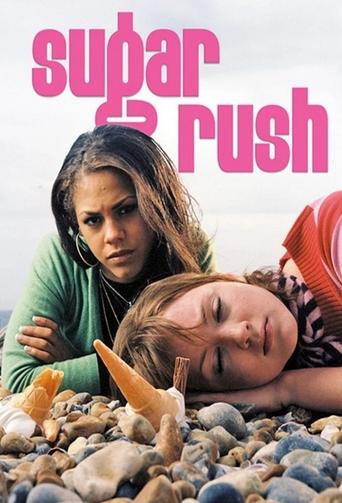
Sugar Rush is an Emmy Award–winning British television comedy drama series developed by Shine Limited and broadcast by Channel 4, based on the Julie Burchill novel of the same name. It follows the trials and tribulations of teenager Kim Daniels, who is dealing with all the usual adolescent issues, plus one - she thinks she might be gay. Her family has recently moved to Brighton from London, and she finds herself with a huge crush on her new best friend, Maria `Sugar' Sweet. Sugar has a bit of a wild side, and frequently gets Kim into trouble, though Kim can find trouble on her own as well. Despite attractions to other girls, and a few attempts at being interested in guys, Kim continues to long for Sugar.
In Tree Hill, North Carolina two half brothers share a last name and nothing else. Brooding, blue-collar Lucas is a talented street-side basketball player, but his skills are appreciated only by his friends at the river court. Popular, affluent Nathan basks in the hero-worship of the town, as the star of his high school team. And both boys are the son of former college ball player Dan Scott whose long ago choice to abandon Lucas and his mother Karen, will haunt him long into his life with wife Deb and their son Nathan.
El amor no es como lo pintan is a Mexican telenovela produced by Juan David Burns and Elisa Salinas for TV Azteca. It was broadcast on Azteca 13 from November 6, 2000 to April 27, 2001 for 165 episodes.
When his father remarries, Yuta Asamura winds up sharing a roof with his new stepsister, Saki Ayase, the hottest girl in his grade. Carrying the scars of their parents’ troubled divorces, they vow to maintain a respectful distance. But what starts as cautious camaraderie blossoms into something deeper from shared experiences. Is it admiration, familial love, or something more?
A dreamy seamstress and mother of three's life is turned upside down when she's wrongly diagnosed with a terminal disease along with an actually terminally ill wealthy book publisher.
Maricruz and Beatriz are school friends; Beatriz comes from a well-to-do family, whereas Maricruz belongs to a lower socioeconomic stratum. Both are on the verge of turning fifteen and are preparing to leave childhood behind. Issues within their family and social environments affect them directly; for Beatriz, her parents' marital breakdown becomes the primary obstacle to overcome, compounded by a sexual awakening fraught with taboos and misinformation. Meanwhile, Maricruz must contend with her mother's overprotectiveness and prejudices, as well as the tension caused by a neighbor who is obsessed with her.
Lola... Érase Una Vez is a teen targeted Mexican melodrama telenovela produced by Televisa that is an adaptation of the Argentine global phenomenon and teenage telenovela Floricienta. The show tells the story of a modern Cinderella, Lola, a 20 year old girl, who works as a nanny and sings in a rock band and meets her so call Prince Charming. It debuted in Mexico on February 26, 2007, starring Aarón Díaz and Eiza González. The show had gained popularity among teens and children not only in Mexico but also internationally including Venezuela, Spain and the in United States. With concert performances filling major auditoriums and songs by the protagonist become radio hits. It debuted in the United States on Univision in March 2008 and ended on January 26, 2009. The series consisted of 224 episodes which aried Monday through Friday at 3 P.M, intentionally for teenagers to watch after school, as is typical for most teenage & children telenovelas in Spanish networks.
A telenovela that dramatizes the romances and rivalries between two brothers and two sisters in Mexico between the years 1885 and 1900.
Emiliano, a wealthy Mexican businessman, is ripped off by his friends and partners. Hidden in Bogotá, he receives help from Rosario, a mariachi singer. She does not know Emiliano’s background and that he is wanted by the police of two countries and by a criminal organization. With a new name and personality, he adapts well to his new life as a mariachi band member and finds in Rosario the love of his life. But he is afraid his secret will tear them apart. He needs to clear his name and resolve his case to avoid that fate. Meanwhile, he often finds his love tested and vulnerable to several rivals, but Rosario always trusts that he has been honest with her.
Fernanda is the youngest daughter of the landowner Gonzalo Elizalde, owner of a large dairy company, and Eduardo is the son of Soledad, the Elizalde family's housekeeper. The two children have grown up together, united by an innocent and pure love, despite the difference in social class.
¡Válgame Dios! is a Spanish-language Venezuelan telenovela written by Mónica Montañéz for Venevisión. Sabrina Seara and Eduardo Orozco star as the main protagonists while Ricardo Alamo, Carlota Sosa and Raquel Yanez star as the main antagonists.
La Mujer Del Vendaval is a 2012 Mexican telenovela produced by Mapat L. de Zatarain for Televisa. It is a remake of the Venezuelan telenovela Un Esposo para Estela. Ariadne Díaz and José Ron star as the main protagonists, while Chantal Andere, Marco Muñoz, Manuel Flaco Ibañez and Florencia del Saracho as the main antagonists.
Popular telenovela produced in Mexico in 1979, starring Verónica Castro, Rogelio Guerra and Rocío Banquells. Castro also sang the theme Aprendí a Llorar, a song written by Lolita de la Colina. The telenovela was produced by Chilean Valentín Pimstein and Carlos Romero, it was directed by Rafael Banquells. The story was written by Inés Rodena and adapted by Valeria Philips.
Mi Pequeña Traviesa is a Mexican youth and family telenovela produced and directed by Pedro Damián for Televisa and originally broadcast on Canal de las Estrellas from December 8, 1997, to April 24, 1998. It is an adaptation of the Argentine telenovela Me llaman Gorrión, created by Abel Santa Cruz. The telenovela stars Michelle Vieth and Héctor Soberón. The story follows Julia González, a young woman whose dreams of pursuing a professional career are interrupted after her father is left paralyzed in an accident. To support her family, she disguises herself as a boy in order to find work. Along the way, she falls in love with Alberto Miranda, and together they must overcome social differences, family conflicts, and the many obstacles that stand in the way of their happiness.
La malquerida is a Mexican telenovela produced by José Alberto Castro for Televisa. It is an adaptation of the play "La malquerida", written by Spanish playwright Jacinto Benavente. Victoria Ruffo and Christian Meier will star as the adult protagonist, Ariadne Díaz and Mane de la Parra will star as the young protagonists, while Brandon Peniche will star as the main antagonist.
When Refugio and her three sons—Patricio, Edmundo, and Ignacio—are forced out of their home, a twist of fate brings them to Mexico City, where they begin a new life. Eighteen years later, they are settled in a small apartment in a working-class neighborhood. Refugio holds a modest job; although she suffers from serious vision problems, she neglects her own health to attend to her sons' needs. Patricio is studying law and dreams of a comfortable, prosperous future; his mother admires him for his charitable nature. Meanwhile, Edmundo begins courting Lucero—unintentionally hurting Ignacio, who secretly loved her—while Refugio tries in vain to make Patricio understand that he will never be happy with Olga.
True love threatens to tear a family apart in this epic Mexican serial set in the 1800s. Rich and beautiful Matilde falls in love with Adolfo, but her mother, Augusta, disapproves of the relationship when she learns Adolfo is poor. Augusta forces her daughter to marry rich and handsome Manuel Fuentes Guerra, but Matilde plays with fire by continuing to be with Adolfo. Adela Noriega, Fernando Colunga, Helena Rojo and Chantal Andere star.
La Patrona is a Spanish-language telenovela produced by United States-based television network Telemundo Studios, Miami and Mexican Argos Comunicación. The telenovela is a remake of the Venezuelan telenovela La Dueña, written by José Ignacio Cabrujas. The name reflects a local term or slang in Mexico to address a person recognized as the main boss. However, the title is also a reflection of both the protagonist and the antagonist struggle to conquer power, authority and respect in a labor field traditionally deemed to be a man's job.
Nunca te olvidaré is a Mexican telenovela produced by Juan Osorio for Televisa in 1999. It is based on a novel by Caridad Bravo Adams and starring Edith González, Fernando Colunga and antagonistic interests of Alma Muriel, Eugenia Cauduro and Humberto Elizondo.
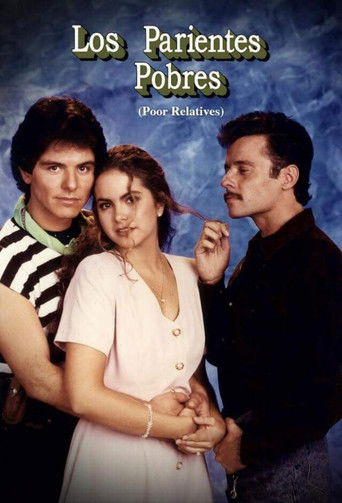
Los Parientes Pobres is a telenovela made by Mexican TV network Televisa. It is a telenovela set in Mexico. This telenovela was broadcast in 1993.
El Capo, the most wanted drug dealer in Mexico, has been intercepted while hiding with his trusted men, his wife and his lover. During his escape, he declares war on the government and his own past.
Juan de la Cruz, a young seminarian, visits the home of his mother, Ana Joaquina—a religious zealot who has always imposed her will on her son and instilled in him a calling to serve God. Working in Ana Joaquina’s household is Luciana, an innocent, dreamy young woman who falls in love with Juan de la Cruz. One night, swept up in the passion of youth, they give in to their feelings with tenderness and innocence. Upon discovering this, Ana Joaquina throws Luciana out; by then, Luciana is already pregnant with Juan de la Cruz’s child. When the time comes to give birth, she leaves her daughter at a stranger's doorstep, hoping the child will be raised there, but the baby is instead taken to an orphanage. To survive, Luciana becomes involved with a series of unsavory men—including Pedro Trujillo, a brutal man who beats and abuses her.
María José is a simple small-town woman eagerly awaiting her wedding day to Alejandro Lombardo, unaware that her “Alejandro” is actually Bruno—the half-brother of the real Alejandro—who has inherited a vast fortune.
Un gancho al corazón is a Mexican telenovela that began airing on Mexico's Canal de las Estrellas, beginning August 25, 2008. It began airing in the United States on Univision on June 22, 2009, with the show's run ending there on May 3, 2010. The telenovela is a production of Angelli Nesma Medina and is an original story by Adrian Suar starring Danna Garcia, Sebastián Rulli, and Laisha Wilkins. The telenovela is a remake of Argentine daily comedy Sos mi vida.
La Tormenta is a Colombian 2005 telenovela produced by RTI Colombia and broadcast by Telemundo and Caracol TV, starring Natalia Streignard and Christian Meier. Maria Teresa is a woman accustomed to living in the city, but she has to move to live at ‘La Tormenta’, her family’s estate, to try to save her family from financial ruin. The family is facing economic problems and she thinks La Tormenta will save them from bankruptcy.