Serbian music festival used as the national selection for Serbia's representative at the Eurovision Song Contest.
Social & External
The BBC's Europe editor, Katya Adler, travels across the Balkans.
The national competition to select San Marino's Eurovision entry.
Music entertainment show used as the Armenian national selection for the Eurovision Song Contest.
Music competition organised by Icelandic public broadcaster Ríkisútvarpið (RÚV) to determine its entry for the Eurovision Song Contest.
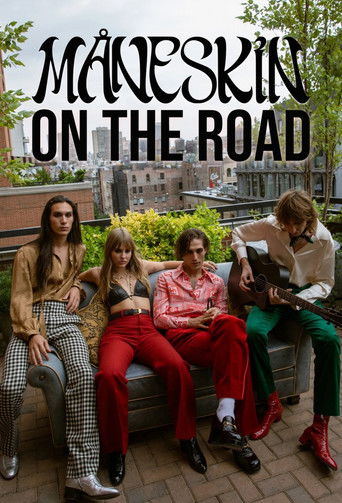
Four loud kids, the biggest festival stages in the world, thousands of screaming fans. Get on the road with us, rockin’ Europe, America, Asia and our home too, Italy. This is Måneskin.
Dora is the national selection used by Croatia to select its entry for the Eurovision Song Contest.
Yevrobachennia Natsionalnyi Vidbir (often shortened to Vidbir) has served as Ukraine's national selection for Eurovision since 2016.
Song contest organized by Radio Television of Serbia (RTS) to select the Serbian entry for the Eurovision Song Contest.
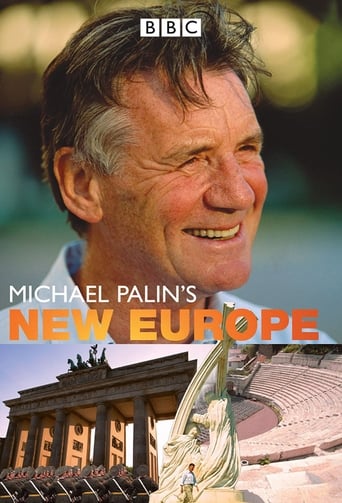
Michael Palin explores European countries that were once behind the Iron Curtain.
Miniseries about the life of Serbian statesman Nikola Pašić.
Graham Norton hosts the annual search for a singer or group to represent the United Kingdom at the Eurovision Song Contest.
Melodifestivalen (direct translation: The Melody Festival) is an annual music competition organised by Swedish public broadcaster Sveriges Television (SVT). The competition is a six part tour (5 heats + the final) with stops in cities across Sweden to determine the country's representative for the Eurovision Song Contest. Melodifestivalen is also known informally as "Mello", or internationally as "Melfest".
Eurosong was the Flemish selection for the Eurovision Song Contest. It selected the Belgian entry to the Contest every second year. The last Eurosong was in 2008. Due the good result of Tom Dice in 2010, who was chosen internally, the VRT decided to cancel Eurosong.
Melodi Grand Prix is an annual music competition organised by Norwegian public broadcaster Norsk Rikskringkasting. It determines the country's representative for the Eurovision Song Contest, and has been staged almost every year since 1960. The festival has produced three Eurovision winners and nine top-five placings for Norway at the contest. However, Norway holds the record for the number of entries who have come last since entering Eurovision; 11 in all. Despite this, the competition still makes considerable impact on music charts in Norway, and in other Nordic countries, with the 2008 winner topping the Norwegian charts.
Spain, 1968, an ambitious television executive is tasked with winning the Eurovision Song Contest. Massiel's catchy "La La La" triumphs with an iconic performance. This is the story behind that unexpected victory.
A long-running music competition that debuted in 1962 and has provided Albania's representative for Eurovision since 2004.
A Norwegian retrospective series produced by NRK to mark the 50th anniversary of Melodi Grand Prix and Eurovision. Each episode counts down a themed «Top 10», celebrating memorable Norwegian entries, international winners, unforgettable hits, and classic moments from the contest’s history, with archival clips and commentary.
The eight-episode series follows the life of the writer Ivo Andrić during several months in the fall and winter of 1961, from the moment he found out he had won the Nobel Prize until he returned from the award ceremony, via Switzerland, to Belgrade. Each of the episodes has two parallel streams of narration: one, related to the year 1961, in which we follow Andrić's preparations for going to Stockholm, and the second, a subjective jump back to the past. Andrić's view of the key moments of his own life, which were almost always the key moments of the country where he lived and lives, the encounters and decisions he made, is full of questioning, doubts and re-evaluation. Through eight episodes, the most important, well-known and less well-known, paths that Andrić walked, the faces that surrounded him and the places where he lived during the winter of 1961 and throughout his life are revealed and followed.