Social & External
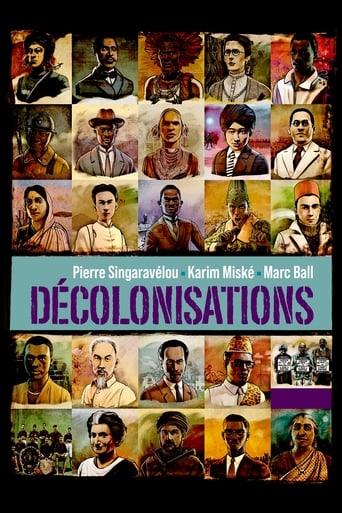
The history of decolonization from the point of view of colonized peoples, an epic story that still resonates and reverberates to this day.
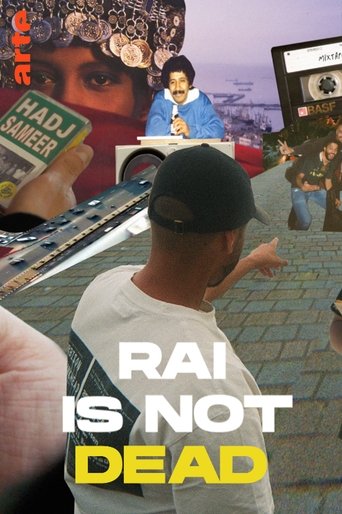
What musical genre can claim to have gone, in the space of fifty years, from a hidden cabaret in Oran to Super Bowl halftime? Born in Algeria at the end of the Second World War, the raï wave spread from the cabarets of western Algeria to the cassette shops of Barbès in Paris, before sweeping the world at the end of the 1980s. its hybridization, the intoxicating music traveled from Algerian and French weddings to the biggest international stages, before suddenly disappearing from the radar at the dawn of the new millennium. Icons that have disappeared, including Cheikha Remitti and Prince Hasni, to young heirs, passing by the star Khaled, the collector Hadj Sameer trace the tumultuous course of this musical genre, between clandestinity, planetary glory and resistance.
After World War II, the French colonial empire, which dominated the lives of over 110 million people on five continents, collapsed in just under a quarter century of blood and tears.
North Africa, 1954. The Algerian war of independence begins, a traumatic and extremely violent catastrophe that for eight long years will shake and finally overthrow the foundations of the colonial regime established by France in 1830.
In 1939 in eastern Algeria, Omar, a young boy of ten, lives with his family in a room in Dar Sbitar, a house shared by several families who overcome the trials they go through every day to ensure their subsistence. Her deceased father is Aïni, the mother, who bleeds herself from all four veins to keep her children and their grandmother alive. The families of Dar Sbitar share their intimacy and their daily life, this life animates the big house, which itself becomes a character in its own right. "El Harik" (The Fire), is an Algerian drama series in 10 episodes adapted from Mohamed Dib's trilogy "The Big House", "The Fire" and "The Loom".
Toussaint opposes the Spanish army and joins the French troops. On Saint-Domingue he succeeds to push the English back. He proclames himself as the gouvernor of Saint-Domingue. To restore the economy he takes a bold descision. He calls for the workers to return to the plantages...
Through the fictionalized lives of two young Saint-Simonians, this television film presents the history of French colonization in Algeria from 1837 to the end of the Second Empire.
A new look at the notorious case of Scott Peterson and the murders of his wife Laci Peterson and unborn son Conner. Additionally explores the latest developments after the Los Angeles Innocence Project announced they were taking the case.
The story of a journey through the mountains of Africa, conceived and realised by Giorgio Moser, with mountaineer and writer Stefano Maestri. The journey of documentary filmmaker Moser and mountaineer Maestri, both born in Trento, goes up the continent's peaks following the trails of mythology and legends, without neglecting the ancient culture of the different populations they meet along the way
Almost 200 days of filming, 27,000 kilometers, and countless encounters and stories along the way from Berlin to Tokyo: never before has a film crew taken on the challenge of crossing the highlands of Iran, the rainforests of Myanmar, the deserts of China, and the megacities of Japan in a single journey.
Chris Packham uses groundbreaking science and brand-new behaviour to delve deep beneath the skin and discover the unique features that have made certain animal groups successful.
Dr Adam Rutherford investigates the close relationship between discoveries in anatomy and the works of art that illustrate them.
It is estimated that 99 per cent of species have become extinct and there have been times when life's hold on Earth has been so precarious it seems it hangs on by a thread. This series focuses on the survivors - the old-timers - whose biographies stretch back millions of years and who show how it is possible to survive a mass extinction event which wipes out nearly all of its neighbours. The Natural History Museum's professor Richard Fortey discovers what allows the very few to carry on going - perhaps not for ever, but certainly far beyond the life expectancy of normal species. What makes a survivor when all around drop like flies? Professor Fortey travels across the globe to find the survivors of the most dramatic of these obstacles - the mass extinction events.
A look back at television appearances by legends of the silver screen, using archive footage to tell the story of their lives and careers.
Hybrid docuseries offering an expansive exploration of the exploitative and genocidal aspects of European colonialism, from America to Africa, and its impact on society today.
Since it began in 1983, Frontline has been airing public-affairs documentaries that explore a wide scope of the complex human experience. Frontline's goal is to extend the impact of the documentary beyond its initial broadcast by serving as a catalyst for change.
Infographics and archival footage deliver bite-size history lessons on scientific breakthroughs, social movements and world-changing discoveries.
Drivers, managers and team owners live life in the fast lane - both on and off the track - during one cutthroat season of Formula 1 racing.
The history of the sport of baseball in America, told through archival photos, film footage, and the words of those who contributed to the game in each era. Writers, historians, players, baseball personnel, and fans review key events and the significance of the game in America's history.
Explore the surprising things we know (and don’t know) about why people are the way they are through expert interviews, rare footage from historical experiments, and brand-new, ground-breaking demonstrations of human nature at work.
Motoring programme featuring reviews of and reports about cars of all types.
Horizon tells amazing science stories, unravels mysteries and reveals worlds you've never seen before.
This compelling series investigates the motives and m.o. of female murderers. While males are often driven by anger, impulse and destruction, women usually have more complex, long-term reasons to kill.
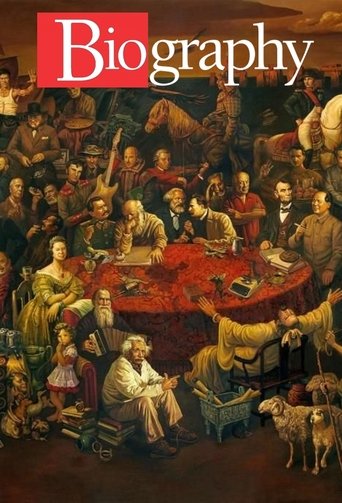
Biography is a documentary television series. It was originally a half-hour filmed series produced for CBS by David Wolper from 1961 to 1964 and hosted by Mike Wallace. The A&E Network later re-ran it and has produced new episodes since 1987. The older version featured historical figures such as Helen Keller and Mark Twain, or long-dead entertainment figures such as Will Rogers or John Barrymore. The A&E series has placed the emphasis on such people as Marilyn Monroe, Elvis Presley, Plácido Domingo, Freddie Mercury, Jacqueline Kennedy Onassis, Eric Clapton, Pope John Paul II, Gene Tierney, Selena, Diego Rivera, Mao Zedong and Queen Elizabeth II, and fictional characters like The Phantom, Superman, Hamlet, Betty Boop, and Santa Claus. The program ended up profiling enough figures that in 1999, A&E spun it off into an entire network, The Biography Channel.
The acclaimed docu-series takes you on a lightning-fast journey through a day in the life of WWE's most intriguing Superstars and groundbreaking events.
Documentary series tracking the dreams and worries of Wrexham, a working-class town in North Wales, UK, as two Hollywood stars (Rob McElhenney and Ryan Reynolds) take ownership of the town’s historic yet struggling football club.
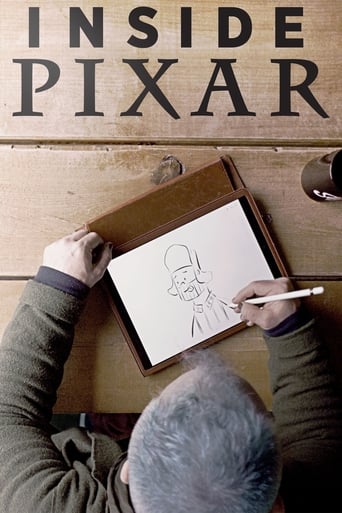
This documentary series of personal and cinematic stories that provide an inside look into the people, artistry, and culture of Pixar Animation Studios.
The Angry Video Game Nerd is an adult web television series of comedic retrogaming video reviews created by and starring James Rolfe. The show's format revolves around his commentary and review of older, but unsuccessful video games which are deemed to be of particularly low-quality, unfair difficulty or poor design. The series began as a feature on YouTube and later became a program on ScrewAttack Entertainment before moving to GameTrailers exclusively. The show was renamed The Angry Video Game Nerd to prevent any trademark issues with Nintendo and due to the fact he started reviewing games from non-Nintendo consoles such as those made by Atari and Sega. Rolfe's character, "The Nerd" is a short-tempered and foul-mouthed video game fanatic. He derives comic appeal from excessive and inventive use of anger, profanity, and habitual consumption of alcohol while reviewing video games.
A kaleidoscopic portrait told in two parts tracing the life of the imaginative artist.
Told from the perspective of the rebel leaders, the series chronicles a wave of rebellions against absolute power by those the Roman Empire called “barbarians” – tribes they viewed as beyond the fringe of civilization that lived a brutish and violent existence. But these also were men and women who launched epic struggles that shaped the world to come with a centuries-long fight to defeat the sprawling empire.
30 for 30 is the title for a series of documentary films airing on ESPN, its sister networks, and online highlighting interesting people and events in sports history. This currently includes four "volumes" of 30 episodes each, a 13-episode series under the ESPN Films Presents title in 2011–2012, and a series of 30 for 30 Shorts shown through the ESPN.com website. The series has also expanded to include Soccer Stories, which aired in advance of the 2014 FIFA World Cup, and audio podcasts. This entry refers to the main Volumes of the series presented by ESPN
An in-depth look at the history and pop cultural significance of horror films.
A docuseries following the Australian Men’s Cricket Team, offering a behind-the-scenes look at how one of the world’s best cricket teams fell from grace and was forced to reclaim their title and integrity.
Doctor Who Confidential is a documentary to complement the revival of the long-running British science fiction television series Doctor Who. Each episode was broadcast on BBC Three on Saturdays, immediately after the broadcast of the weekly television episode on BBC One. The running time of the first two series was 30 minutes, being extended to 45 minutes in the third. BBC Three also broadcast a cut-down edition of the programme, lasting 15 minutes, shown after the repeats on Sundays and Fridays and after the weekday evening repeats of earlier seasons.