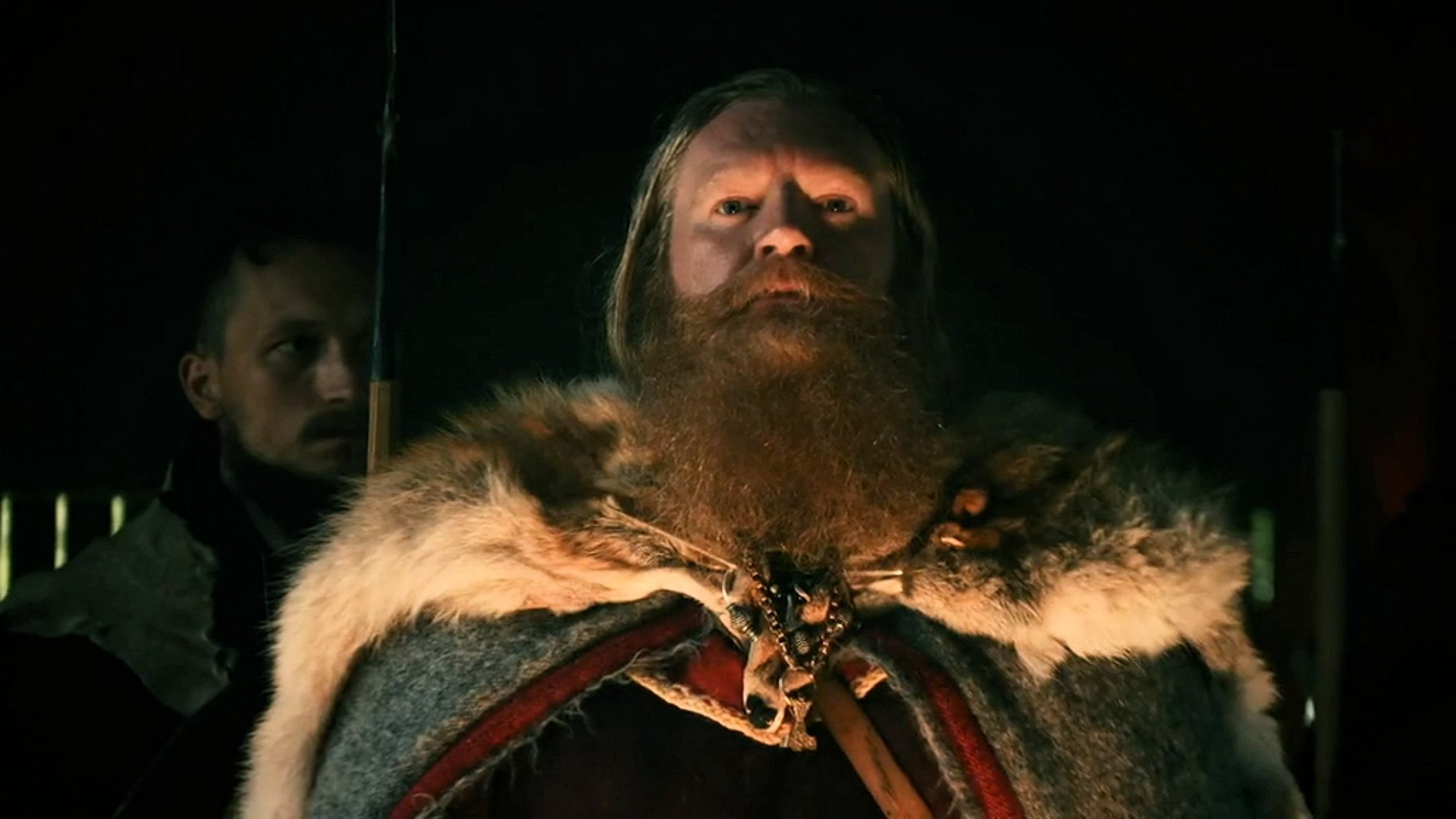
Through new discoveries in science and archaeology, explorers take a look at the origins of the Vikings and how they influenced history.
Social & External
Self - Narrator
Mankind The Story of All of Us is an epic 12-hour television event about the greatest adventure of all time—the history of the human race. It takes 10 billion years for the ideal planet to form and 3 billion more for the right conditions to emerge before it finally happens: mankind begins. From there unfolds a fast-paced story told here through key turning points—stepping stones in our journey from hunter-gatherer to global citizen. It’s a tale of connections—why some ideas take hold and spread around the globe, and how the lives of people in one part of the world are shaped by events in another.
Carla Hall travels around the world to track down the unexpected lineage and international origins of America's favorite dishes.
How To Survive the End of the World examines terrifying and scientifically plausible doomsday scenarios by exploring distinct, world-threatening events and the methods by which humanity would fight to survive against grim odds.
The year 2024 is the 10th year of the Grand Canal's successful application for World Heritage. In order to spread the pulse of the times when the thousand-year-old Grand Canal flows to the current day, and polish the Chinese cultural card, "The Grand Canal" opens a new chapter of documentary on the Grand Canal. The scholars from various fields and young talent representatives organize into a "Canal Visiting Group" and embark on a journey along the Canal, and each episode will bring them together in a city along the Canal. Through in-depth field visits, "Shining Night" with local characteristics, and in-depth chats about the "Opening of the Canal", the "Canal Visiting Group" will lead the audience to experience the blending of the Canal's history and modernity, and present the long-standing and well-established cultural essence of the Canal to everyone.
The naturalist visits uncharted territory in pursuit of new discoveries. Steve Backshall takes on physical challenges, encounters extraordinary wildlife and meets remarkable people.
How the constitution of the largest Democratic Republic in the world was created.
What it felt like to live through the collapse of communism and democracy. A series of films by Adam Curtis.
Art and culture define us - but in an age of change, who are we now? In divided times, Simon Schama asks whether art, music and words can be the threads that bind us together.
Millions of tourists visit Angkor Wat in Cambodia every year to marvel at its remarkable architecture, yet most are probably unaware that when it was built nearly 1,000 years ago it was even more impressive. Using remote sensing technology, scientists now know what is hidden beneath the nearby paddy fields and jungle: a sophisticated metropolis with an elaborate network of houses, canals, boulevards and temples covering 30 square kilometres that housed three-quarters of a million people. To put that into perspective, London at that time was home to just 18,000. These previously hidden finds tell us a great deal about life during the golden age of the powerful Khmer dynasty.
Vikings is a 2012 BBC television documentary series written and presented by Neil Oliver charting the rise of the Vikings from prehistoric times to the empire of Canute.
The Bible is both a religious and historical work, but how much is myth and how much is history?
About Adolf Hitler's time in Germany. On January 30, 1933, Adolf Hitler was appointed Chancellor of Germany and his tenure in power lasted for more than twelve years. It began with a standing ovation and ended after a world war in which 50 million people were killed.
Great Lighthouses of Ireland tells the story of Ireland’s lighthouses and their continuing importance to the country’s survival. For all their romance and mystery, lighthouses remain a vital part of Ireland’s maritime infrastructure.
In a landmark 7-part series, Spotlight - Northern Ireland’s leading team of investigative journalists - reveal important new discoveries about the conflict known as the Troubles, in the 50th anniversary of the deployment of British troops to Northern Ireland.
The stories behind innovations such as TV, radio, phones, airplanes, motorcycles and power tools as well as the inventors including Nikola Tesla, William Harley, Alexander Graham Bell, Duncan Black and Alonzo Decker.
The story of the Second World War through the personal accounts of a handful of men and women from four American towns. The war touched the lives of every family on every street in every town in America and demonstrated that in extraordinary times, there are no ordinary lives.
A mission to discover and re-create unexcavated worlds still hidden beneath the earth.
It is said to be one of the oldest books in the world. Has it been altered? If yes why? A remarkable journey back in time to see what the Old Testament and the New Testament is hiding from us.
Journalist and writer Graham Hancock travels the globe hunting for evidence of mysterious, lost civilizations dating back to the last Ice Age. He attempts to prove that a climatic event 12,000 years ago wiped out an entire civilization far more sophisticated than the simple hunter-gatherers some archaeologists believe lived at that time.
Time Team is a British television series which has been aired on British Channel 4 from 1994. Created by television producer Tim Taylor and presented by actor Tony Robinson, each episode featured a team of specialists carrying out an archaeological dig over a period of three days, with Robinson explaining the process in layman's terms. This team of specialists changed throughout the series' run, although has consistently included professional archaeologists such as Mick Aston, Carenza Lewis, Francis Pryor and Phil Harding. The sites excavated over the show's run have ranged in date from the Palaeolithic right through to the Second World War.