Social & External
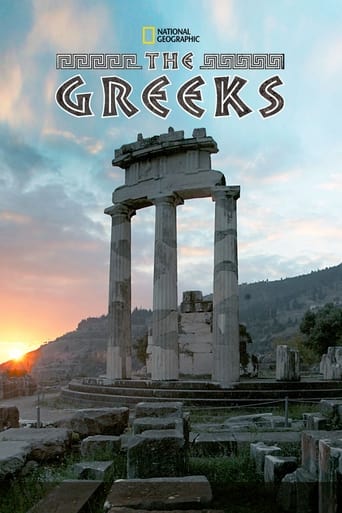
National Geographic's landmark event series, The Greeks, brings together historians, archaeologists, actors, athletes, scientists and artists to launch a groundbreaking exploration into the ancient Greeks' journey - not just to better understand their past, but to discover how their legacy illuminates our present, and will shape our future. The story of the Greeks is the story of us.
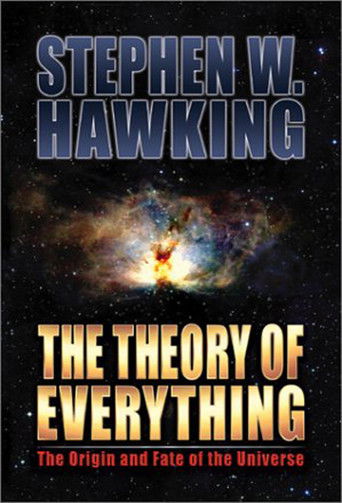
Join Stephen Hawking and other renowned thinkers as they explore the revolutionary new ideas that have evolved since the publication of his blockbuster book. Besides interviews, this stimulating documentary uses computer graphics and simple, easy-to-understand demonstrations to explain complex concepts. Topics include black holes, string theory, supersymmetry, dimensions beyond our perception, and the mysterious M force; all potential keys to unlocking the elusive "theory of everything" that seems so tantalizingly close.
Horizon tells amazing science stories, unravels mysteries and reveals worlds you've never seen before.
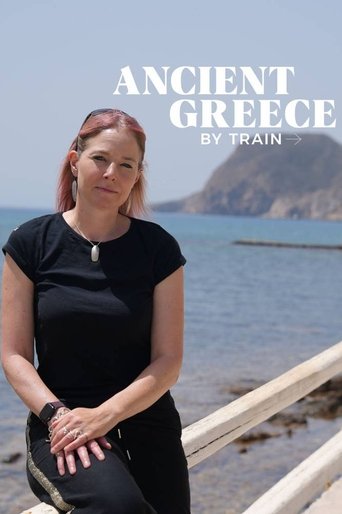
Professor Alice Roberts travels across Greece and thousands of years back to our collective past, tracing how the Ancient Greeks developed philosophy, art, theatre and democracy.
Stefan Molyneux, host of Freedomain Radio, travels to California to explore all of the political, economic, moral and demographic complexities of the Golden State. What he learned astounded him—what he shows you will shock you…
From the planets to the stars and out to the edge of the unknown, history and science collide in a wondrous yet deadly adventure through space and time.
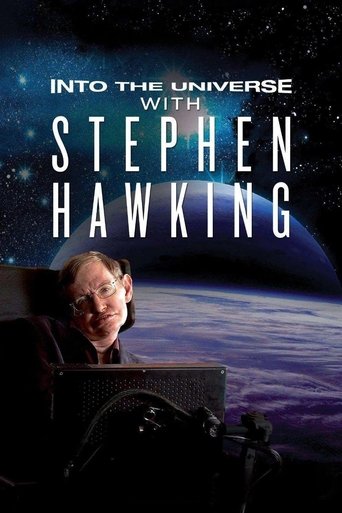
Hawking gives us the ultimate guide to the universe, a ripping yarn based on real science, spanning the whole of space and time -- from the nature of the universe itself, to the chances of alien life, and the real possibility of time travel.
Series of programmes about psychology, in which Jonathan Miller talks to eminent psychologists about their theories and beliefs.
Alastair Sooke explores the riches and unique legacy of Greek art.
Alain de Botton's psychobabble-free self-help course for the philosophically minded.
Asking how you tell what's real and what isn't sounds like an obvious question. But in this series of six programmes, James Burke shows that the more you think about it the harder it is to answer. After all, what have you got, apart from your five senses, to prove those senses are giving you the real thing?
Polish-Flemish philosopher Alicja Gescinska interviews national and international personalities with diverse philosophical and religious backgrounds.
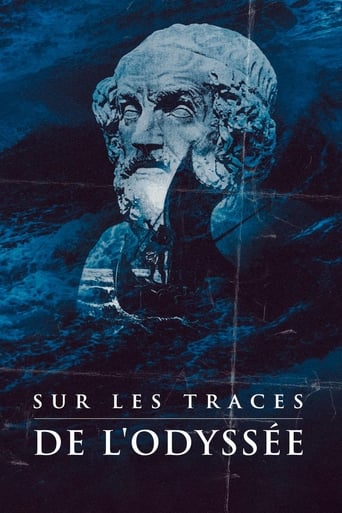
Who was Homer, and what is the meaning of The Odyssey? In this documentary we follow the footsteps of Ulysses, also known by his Greek name Odysseus—a hero as relevant today as he was nearly three thousand years ago, on a journey across some of the most fascinating landscapes and seascapes of the Mediterranean region. With the help of prominent international scholars, we seek to resolve the questions that still surround one of humanity’s greatest literary works and its enigmatic author.
Life Beyond explores humanity's future, the evolution of technology, and the mysteries of the universe. From AI and space exploration to philosophical reflections on existence, each chapter combines stunning visuals with emotional music, creating an immersive experience.
Professor Brian Cox and Dara O Briain are at Jodrell Bank Observatory, and joined by special guests to bring you the latest news and the best views of the night sky.
La Aventura del Pensamiento is a philosophy series presented by Fernando Savater about great occidental philosophers.
Brian Greene is going to let you in on a secret: We've all been deceived. Our perceptions of time and space have led us astray. Much of what we thought we knew about our universe-that the past has already happened and the future is yet to be, that space is just an empty void, that our universe is the only universe that exists-just might be wrong.
David Malone’s 3-part series takes a fresh look at how the universe was formed, from a scientific and theological point of view. TESTING GOD re-examines the relationship between science and religion and asks: is science’s claim to victory premature?
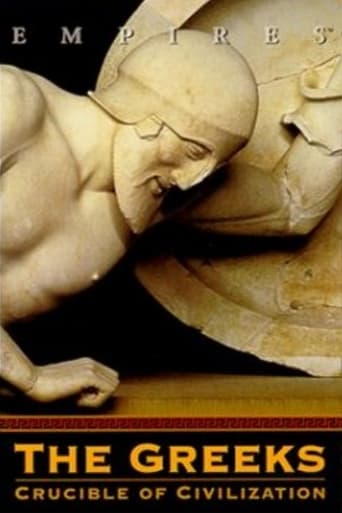
In the fourth and fifth centuries, B.C., the Greeks built an empire that stretched across the Mediterranean from Asia to Spain. They laid the foundation of modern science, politics, warfare and philosophy, and produced some of the most breathtaking art and architecture the world has ever seen. It was perhaps the most spectacular flourishing of imagination and achievement in recorded history.