Social & External
Unknown Role
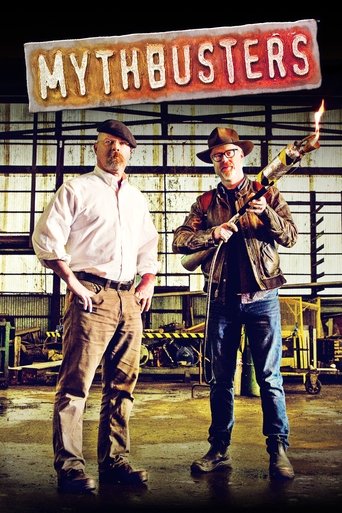
MythBusters is a science entertainment television program created and produced by Australia's Beyond Television Productions for the Discovery Channel. The show's hosts, special effects experts Adam Savage and Jamie Hyneman, use elements of the scientific method to test the validity of rumors, myths, movie scenes, adages, Internet videos, and news stories.
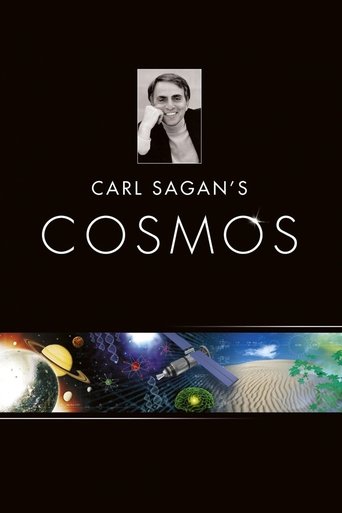
Carl Sagan covers a wide range of scientific subjects, including the origin of life and a perspective of our place in the universe.
Professor Brian Cox asks the biggest questions we can ask. Are we alone? Why are we here? What is our future? Join him in a stunning celebration of human life as he explores our origins, our place and our destiny in the universe.
Every day we are inundated with information. Can facts still be distinguished from fables? With a nod to today's 'do your own research' internet culture, Marijn, Joep and Tim invent their own experiments, of which they are part. They have one goal: to find out the truth once and for all.
The Bell System Science Series consists of nine television specials made for the AT&T Corporation that were originally broadcast in color between 1956 and 1964. Marcel LaFollette has described them as "specials that combined clever story lines, sophisticated animation, veteran character actors, films of natural phenomena, interviews with scientists, and precise explanation of scientific and technical concepts — all in the pursuit of better public understanding of science.
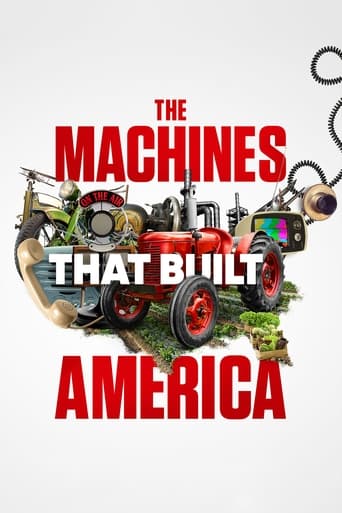
The stories behind innovations such as TV, radio, phones, airplanes, motorcycles and power tools as well as the inventors including Nikola Tesla, William Harley, Alexander Graham Bell, Duncan Black and Alonzo Decker.
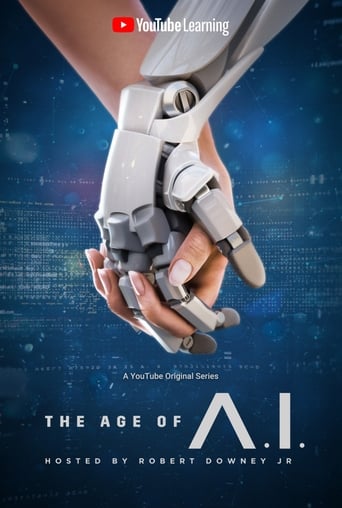
Explore the impact of A.I. and how it is transforming the way we live and work -- both now and in the future, featuring some of the brightest minds in science, philosophy, technology, engineering, medicine, futurism, entertainment and the arts to tell the dynamic story of A.I.
Join Stephen Hawking and other renowned thinkers as they explore the revolutionary new ideas that have evolved since the publication of his blockbuster book. Besides interviews, this stimulating documentary uses computer graphics and simple, easy-to-understand demonstrations to explain complex concepts. Topics include black holes, string theory, supersymmetry, dimensions beyond our perception, and the mysterious M force; all potential keys to unlocking the elusive "theory of everything" that seems so tantalizingly close.
From the planets to the stars and out to the edge of the unknown, history and science collide in a wondrous yet deadly adventure through space and time.
An NHK flagship program, centered around a diverse range of documentaries, delves into the dynamic shifts of society, politics and history, as well as the breathtaking wonders of the natural world.
Newton's Apple is an American educational television program produced and developed by KTCA, and distributed to PBS stations in the United States that ran from 1983 to 1999. The show's title is based on the rumor of Isaac Newton sitting under a tree and an apple falling near him—or, more popularly, on his head—prompting him to ponder what makes things fall, leading to the development of his theory of gravitation. The show was produced by Twin Cities Public Television. For most of the run, the show's theme song was Ruckzuck by Kraftwerk, later remixed by Absolute Music. Later episodes of the show featured an original song. An occasional short feature appeared called "Science of the Rich and Famous" in which celebrities appeared to explain a science principle.
Two-part documentary which deals with two of the deepest questions there are - what is everything, and what is nothing? Professor Jim Al-Khalili searches for an answer to these questions as he explores the true size and shape of the universe and delves into the amazing science behind apparent nothingness.
How We Invented the World is the ultimate action-packed, hi-energy, landmark series that examines the four inventions that define the modern world - mobiles, cars, planes and skyscrapers -celebrating the people and connections that made them possible. Each playing a crucial role in where we are now in the 21st Century - able to travel the globe, to talk to one another at any time at the push of a button, to live in huge cities, to commute, to capture the world we live in, making the fantasies we create come to life. This four part series lifts the lid on how these iconic inventions came to be. Showcasing the people who have shaped our lives in ways that they could have never imagined or anticipated, this series reveals stories of human ingenuity, extraordinary connections, unprecedented experimentation and jaw dropping accidents that created the world as we know it.
It's "Mr. Wizard" for a different decade. Bill Nye is the Science Guy, a host who's hooked on experimenting and explaining. Picking one topic per show (like the human heart or electricity), Nye gets creative with teaching kids and adults alike the nuances of science.
Explore mind-bending developments in basic science and math research. Quanta Magazine is an award-winning, editorially independent magazine published by the Simons Foundation.
From the biology of attraction to the history of birth control, explore the ins and outs of sex in this entertaining and enlightening series.
Time is a 2006 documentary television series first broadcast on BBC Four in the United Kingdom. It is written and presented by Michio Kaku.
Host Felipe Castanhari explores science, history, mysteries and marvels, uncovering mind-blowing facts with help from his lab buddies.