An anthology of six plays, contemporary twists on well-loved tales with dark endings.
Social & External
How certain people end up being accused of a crime.
Anthology drama series.
You’ve heard the story of Goldilocks and the Three Bears, but did you hear what happened after the story ended? Goldilocks apologized to Bear and now they’re best friends.
A peek behind closed doors at the intricacies of modern relationships. Each episode features three different fictional stories and follows various characters to see what happened during their most intimate moments. No subject is too taboo. All the stories have one very important thing in common, though: someone inevitably gets undressed.
Human nature is like aircraft black box. No matter what it has gone through, it looks the same from outside. The secret within can never be known.
The Adventures of Don Quick is a science fiction comedy television series broadcast from October–December 1970, on ITV. Starring Ian Hendry and Ronald Lacey, six 50 minute episodes were made, shown in a 60 minute time slot. Based on the characters of Don Quixote, astronaut Captain Don Quick and Sergeant Sam Czopanser (i.e. "Sancho Panza") are members of the Intergalactic Maintenance Squad. On each planet they visit, Quick attempts to right imaginary wrongs, often upsetting the inhabitants of whatever society he's in. As of 2008, only the first episode exists, the other five are now missing. A technologically impressive 30 foot model spaceship was built in the studio for the series. However the first three episodes in a primetime slot failed to draw the required ratings so the last three were in a much later slot before the show was cancelled.
Eight different stories of eight people who from different professions and ages.
A new generation of love stories, the love and fascination between the lovers, the dynamics of their relationships, their funny conversations and their conflicts.
Frédérique Lessard, three-time Olympic medalist, is retiring. She decides to leave her spouse, with whom she had planned to start a family. Faced with emptiness, she will discover that life is not a race and will have to learn to live without performing. Freely inspired by the life of Marianne St-Gelais, but also by several Olympians.
Special for Women (also known as Purex Specials for Women) is a drama/documentary anthology series broadcast on NBC from 1960 to 1965. It dramatized problems faced by everyday women, including menopause, sexual dysfunction and the feminine beauty ideal, followed by a discussion of that episode's topic with a panel of experts.
The Company of Five is a 1968 British anthology drama series produced by London Weekend Television for ITV, featuring a repertory cast of five actors—John Neville, Gwen Watford, Ann Bell, Cyril Luckham, and Ray Smith—who appear in different roles each week.
The story is about the adventures of an ordinary schoolboy Petya and his friend Wolf, who connects the world of people with the world of fairy tales. Petya helps the magical heroes solve their magical problems that require a non-standard approach.
The Great Adventure is a historical anthology series that appeared on CBS for the 1963-1964 television season. The series, narrated each week by Van Heflin, and featuring theme music by Richard Rodgers, presented a weekly one-hour dramatization of the lives of famous Americans and important historical events in American History.
Ford Star Jubilee is an American anthology series that aired once a month on Saturday nights on CBS at 9:00 P.M., E.S.T. from the fall of 1955 to the fall of 1956. The series was approximately 90 minutes long, aired in black-and-white and color, and was typically broadcast live. Ford Star Jubilee was sponsored by the Ford Motor Company.
In this crime anthology series, viewers discover how an ordinary person got caught up in an extraordinary situation, ultimately revealing how one wrong turn leads to another, until it’s too late to turn back. Told from the defendant’s point of view, each episode opens in a courtroom on the accused without knowing their crime or how they ended up on trial.
Dramarama is the name of a British children's anthology series broadcast on ITV between 1983 and 1989. It tended to feature drama of a science fiction or supernatural bent. The series was created by Anna Home, then head of children's and youth programming at TVS, however production responsibilities were divided amongst most of the regional ITV franchise holders. Thus, each episode was in practice a one-off production with its own cast and crew, up to and including the executive producer. Dramarama was largely a place for new talent to prove themselves and was a launching pad for the likes of Anthony Horowitz, Paul Abbott, Kay Mellor, Janice Hally, Tony Kearney, David Tennant and Ann Marie Di Mambro. It was one of Dennis Spooner's last credits. One of Dramarama's episodes, "Dodger, Bonzo And The Rest", gained so much popularity that it was turned in to its own series the following year. It starred Lee Ross and was based around a large foster home. The episode "Blackbird Singing In The Dead of Night" was developed by Granada into the TV series Children's Ward. It was also repeated for the first time since its original broadcast on 5 January 2013, during CITV's 30th anniversary Old Skool Weekend. The Series 7 episode "Back To Front" – notable for featuring a mirror image of the Yorkshire Television logo card at the end – was repeated on 6 January 2013, again as part of CITV's 30th anniversary Old Skool Weekend.
A British television anthology of stories, often with sinister and wryly comedic undertones, and a twist at the end. With early episodes written and presented by Roald Dahl, the series featured a plethora of big name guest stars.
Y-Destiny is the story of 7 best friends each of whom has different personalities according to their birthdays and fate leads them to meet their loved ones.
A Canadian-produced fantastic anthology series scripted by famed science-fiction author Ray Bradbury. Many of the teleplays were based upon Bradbury's novels and short stories.
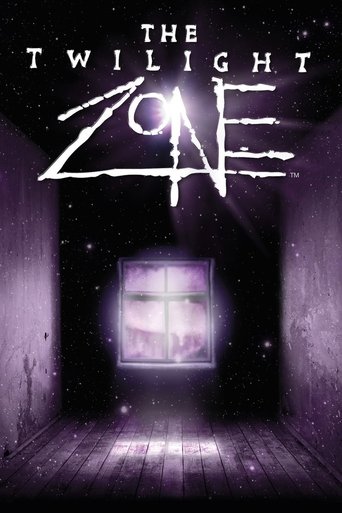
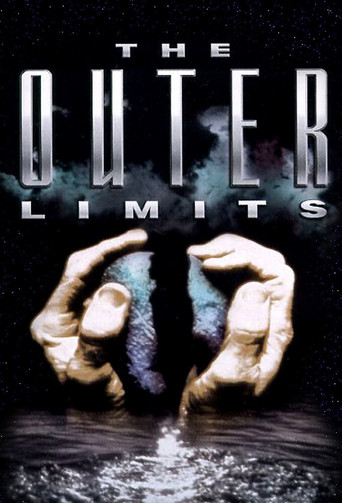
Tales of science fiction, fantasy and the occult, exploring humanity's hopes, despairs, prides and prejudices in metaphoric ways. Next stop ahead The Twilight Zone.
Tales from the Darkside is an anthology horror TV series created by George A. Romero, each episode was an individual short story that ended with a plot twist. The series' episodes spanned the genres of horror, science fiction, and fantasy, and some episodes featured elements of black comedy or more lighthearted themes.
Rod Serling narrates an anthology of fantasy, horror and sci-fi stories from a set resembling a macabre museum. A chilling work of art serves as the connective link between the stories.
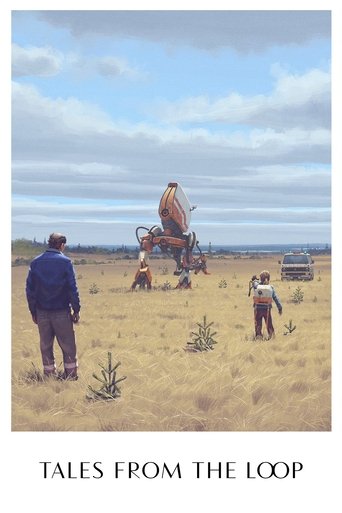
A diverse anthology of ambitious, moving tales inspired by Philip K Dick's short stories.
Anthology series telling character-driven stories set at different moments in time, aiming to showcase that during people's most isolated moments, and in disparate circumstances, the human experience connects everyone.
A young Victoria "Vic" McQueen discovers she has the power to unlock portals that help her find lost objects. As she delves further into this hidden universe, she encounters many other "inscape travelers" - some benevolent, and some who have been corrupted by their power. When Vic encounters Charlie Manx, an immortal who stays that way by feeding off of the souls of children, she makes a sworn enemy of Manx.
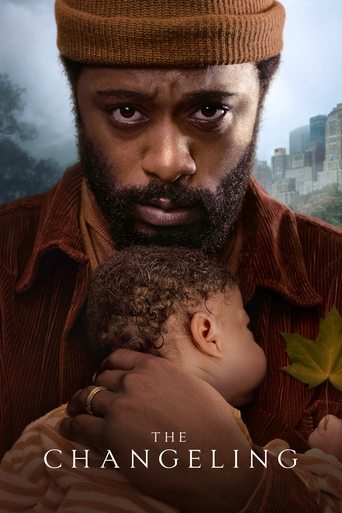
In this fantasy anthology series, encounters with mermaids, fallen angels and other strange beasts drive broken people to desperate acts in an attempt to repair their lives, ultimately showing there is a thin line between man and beast.
This 1980s revival of the classic sci-fi series features a similar style to the original anthology series. Each episode tells a tale (sometimes two or three) rooted in horror or suspense, often with a surprising twist at the end. Episodes usually feature elements of drama and comedy.
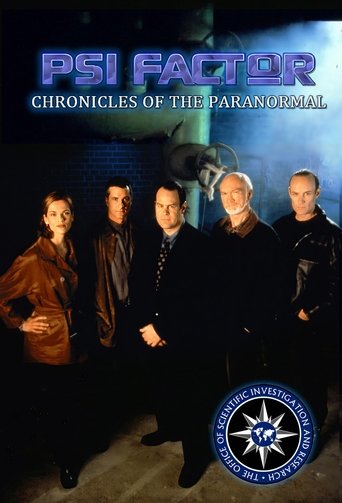
Psi Factor: Chronicles of the Paranormal is a Canadian science fiction television series that surrounds a scientific team that deals with all manner of paranormal phenomena around the world; from alien abductions to possessions. The organization depicted in the series is loosely inspired by a real-life scientific organization. While locations in the series took place worldwide, the series was primarily filmed in and around Toronto, Ontario, Canada, and aired 88 episodes over four seasons from 1996 to 2000.
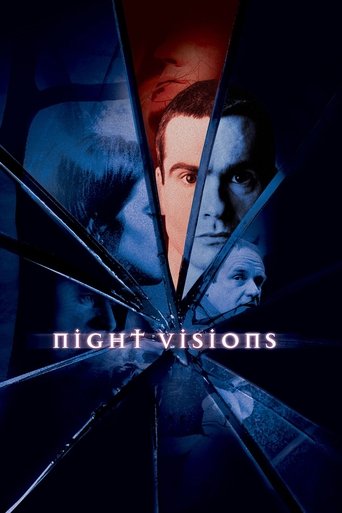
Horror anthology series, with each episode comprising two half-hour stories dealing with themes of the supernatural or simply the dark side of human nature.
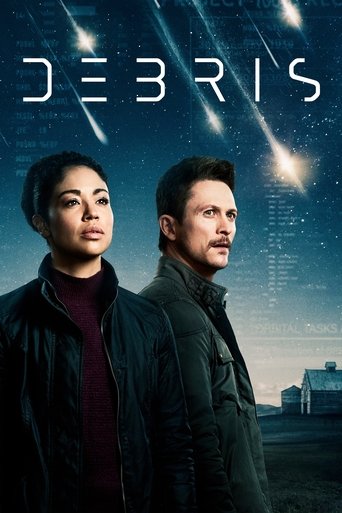
Two federal agents from two different continents, and two different mindsets, must work together to investigate when wreckage from a destroyed alien spacecraft has mysterious effects on humankind.
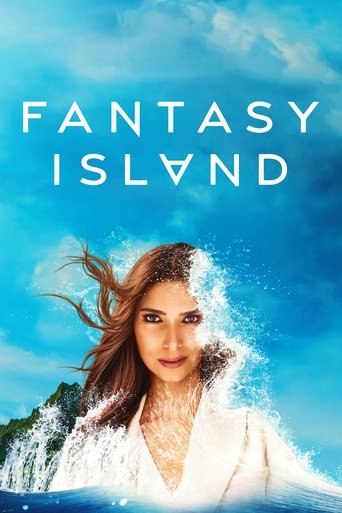
This contemporary version of the classic drama series delves into the “what if” questions that keep us awake at night. Each episode tells emotional, provocative stories about people who walk in with a desire, but end up reborn to themselves through the magical realism of Fantasy Island.
Anthology series of composed of distinct story episodes, sometimes with a plot twist at the end, with occasional recurring story elements that were often tied together during season-finale clip shows.
An anthology series of stand alone episodes delving into horror myths, legends and lore.
A young boy's horror comic book comes to life in this anthology series of terrifying tales.
In near-future California, high school senior Aisha learns a dark secret about herself. She goes from dreams of graduation and college...to suddenly running for her life.
A masked figure known as "The Curious" collects tales of dark magic, otherworldly encounters and twisted technology in this kids anthology series.
The Hunger is a British/Canadian television horror anthology series, co-produced by Scott Free Productions, Telescene Film Group Productions and the Canadian pay-TV channel The Movie Network. Though it shares a title with the feature film The Hunger the series has no direct plot or character connection to the film, and was created by Jeff Fazio. Originally shown on the Sci Fi Channel in the UK, The Movie Network in Canada and Showtime in the US, the series was broadcast from 1997 to 2000, and is internally organized into two seasons. Each episode was based around an independent story introduced by the host; Terence Stamp hosted each episode for the first season, and was replaced in the second season by David Bowie. Stories tended to focus on themes of self-destructive desire and obsession, with a strong component of soft-core erotica; popular tropes for the stories included cannibalism, vampires, sex, and poison.