Bold, untold stories from across Asia and the Pacific. Al Jazeera's in-depth, weekly current affairs programme from the world's most populated region.
Social & External
A journey of discovery through the ritual celebrations of Quebec’s various immigrant communities, as seen through the eyes of the local Greek, Portuguese, Lebanese, Moroccan, Chinese, Brazilian, Russian, Senegalese and other communities.
Nightline, or ABC News Nightline, is a late-night news program that is broadcast by ABC in the United States, and has a franchised formula to other networks and stations elsewhere in the world. Created by Roone Arledge, the program featured Ted Koppel as its main anchor from March 1980 until his retirement from the program in November 2005. Nightline airs weeknights at 12:37 a.m. Eastern Time, after Jimmy Kimmel Live!. It previously ran for 31 minutes, but in 2011, the program was reduced to 25 minutes. When the program moved to 12:37 a.m. ET, the program was expanded to 30 minutes. In 2002, Nightline was ranked 23rd on TV Guide's 50 Greatest TV Shows of All Time.
A 13-part documentary series by Chris Marker examining how ancient Greek ideas continue to shape modern Western thought. Each episode centers on a single Greek word—such as “democracy,” “philosophy,” or “mythology”—through conversations filmed in cities around the world. Combining symposium-style discussions with archival footage and visual motifs of the owl, Marker creates an expansive reflection on the enduring legacy of Greece.
Pierre Elliott Trudeau was one of the most striking, well-spoken and controversial leaders in Canadian history. He brought with him an almost rock-star aura of popularity to office in the 1960s, marking what was known as "Trudeaumania" in Canada during one of the country's most exciting and important times. Yet Trudeau's eccentricities were regularly mistaken for arrogance and he was often considered a traitor, particularly by those who wanted to see Quebec separated from the rest of Canada. With the province rocked by terrorist bombings and the nation disturbed by civil unrest, Trudeau was determined to "put the country in its place." Through hours of archival footage and interviews with Trudeau himself, Memoirs details the story of a man who used intelligence and charisma to bring together a country that was very nearly torn apart.
National identity, social class, inequality. David Olusoga shines a light on our fractured modern society through the lens of the past, exposing the fault lines dividing the UK.
This classic series follows the events that sparked the greatest conflict of the century, capturing the drama, the excitement and the ideological juxtapositions of these crucial years. Former CBS News correspondent and commentator Eric Sevareid, one of the world's most respected figures in journalism, presents this extraordinary series featuring stunning original newsreels, soundtracks, and rare archival footage.
In the past, there was only one path to success in Mexican politics: the path of the PRI. But the PRI is not just a political party; it is the institution that shaped Mexico's public and political behavior. It survived armed uprisings, student movements, economic crises, electoral defeats, and corruption scandals, but it was arrogance, corruption, inconsistency, and abuse of power that ultimately brought it down.
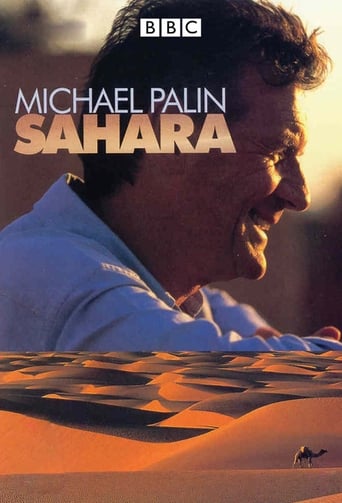
In this four-part BBC documentary, former Monty Python funnyman and renowned globe-trotter Michael Palin sets off from Gibraltar to travel across the Sahara, his witty humor downplaying the hardships he faces along the arduous journey. He travels to Morocco, Mauritania, Mali and beyond, across some of the harshest terrain on the planet.
This summer, prepare to see Donald Trump as you’ve never seen him before. Enter the world of Trump’s 2024 campaign and witness firsthand moments the American media will never show you.
In 1988, renegade filmmaker Robert Altman and Pulitzer Prize–winning Doonesbury cartoonist Garry Trudeau created a presidential candidate, ran him alongside the other hopefuls during the primary season, and presented their media campaign as a cross between a soap opera and TV news. The result was the groundbreaking Tanner ’88, a piercing satire of media-age American politics.
An enigmatic conservative Christian group known as the Family wields enormous influence in Washington, D.C., in pursuit of its global ambitions.
The Howard Years was a documentary series about the prime ministership of John Howard produced by the Australian Broadcasting Corporation. It was divided into four one-hour episodes - one episode for each term Howard served as Prime Minister of Australia - and originally broadcast on ABC1 from 17 November to 8 December 2008.
America's first and longest running hour-long nightly news broadcast known for its in-depth coverage of issues and current events.
Truth and facts are what viewers can expect from ‘Indisputable with Dr. Rashad Richey.’ On the show Dr. Richey will be delivering a heavy dose of fact-based truth with all his signature passion and insight. Each day's show will feature a combination of Dr. Richey's penetrating analysis of the most pressing news stories, interviews with political leaders, activists and commentators, and even lively debates with conservatives willing to hear opposing viewpoints.
David Dimbleby examines the power, wealth and survival of the institution at the heart of our national life: the monarchy.
Adventurer and filmmaker Tim Noonan embarks on a solo journey of self-discovery to worlds beyond his imagination to try and unlock the mysteries of some of the most ancient tribes and to discover what it means to be the ultimate man.
Seven-time WWE world champion Trish Stratus is going to the mat for a globe-trotting adventure. She travels to some of the world's most exotic locations -- Indonesia, Thailand, New Zealand and Fiji among them -- to explore the history and culture of the cities she visits, and to take part in some daring physical challenges.
How did an Indian Buddhist shrine influence a Japanese pagoda? How are Italian pigs and cowry shells related to porcelain? Why did the ferocious warriors of Mongolia wear silk underwear? And how did wood block printing bring about a revolution in Japan and in European culture? These intriguing questions are investigated in Artifacts, a series that explores the origins and hidden connections among the art and artifacts of the great cultures and belief systems across Asia - on a journey through time and across continents from India to Thailand, China and Japan - to understand the impact of calligraphy, porcelain, architecture, metallurgy, wood block printing and silk on Asian history and on the history of the world in general.
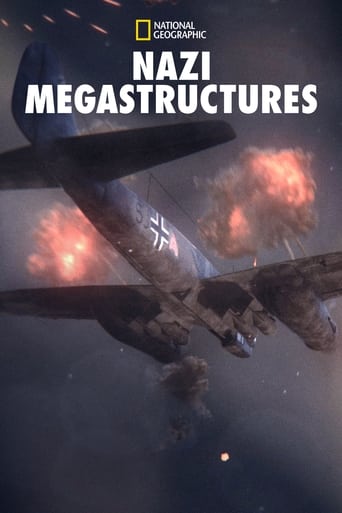
In a quest for world domination, the Nazis built some of the biggest and deadliest pieces of military hardware and malevolent technology in history. This is the stories of the engineers who designed them and how these structures sparked a technological revolution that changed warfare forever.
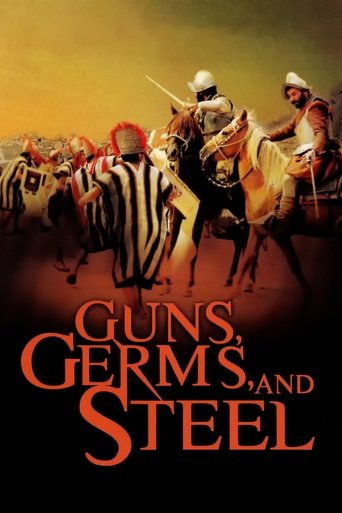
A PBS documentary concerning Jared Diamond's theory on why there is such disparity between those who have advanced technology and those who still live primitively. He argues it is due to the acquisition of guns and steel and the changes brought about by germs.
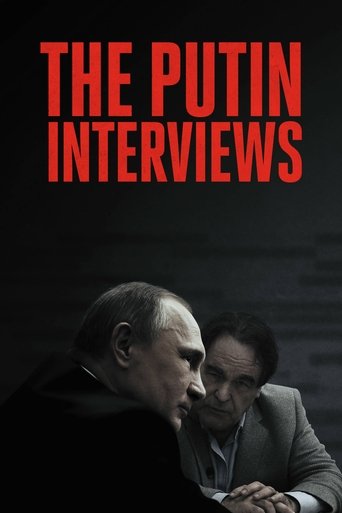
A revealing series of interviews between renowned filmmaker Oliver Stone and Vladimir Putin in which the Russian President speaks candidly on the US Election, Trump, Syria, Snowden and more.
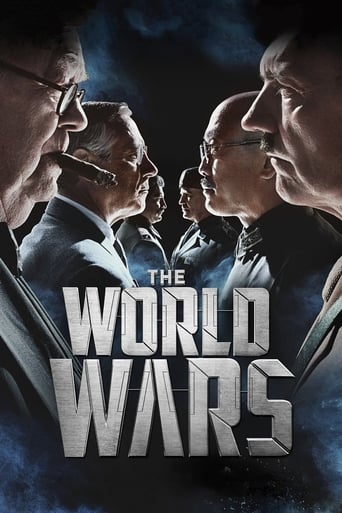
The story of three decades of war told through the eyes of various men who were its key players: Roosevelt, Hitler, Patton, Mussolini, Churchill, Tojo, DeGaulle and MacArthur. The series examines the two wars as one contiguous timeline starting in 1914 and concluding in 1945 with these unique individuals coming of age in World War I before ultimately calling the shots in World War II.