Social & External
Himself
Self
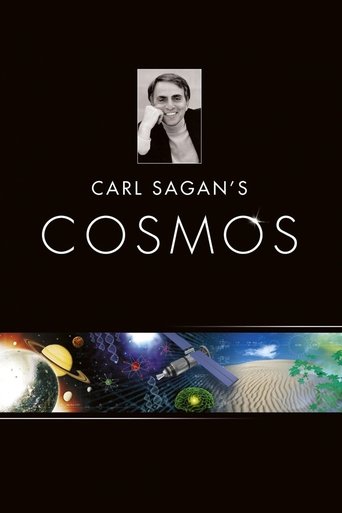
Carl Sagan covers a wide range of scientific subjects, including the origin of life and a perspective of our place in the universe.
Dive into the field of natural science, Discover the Solar System or the various functions of the human body. The information is presented in the "Eyewitness Museum", a computer-generated science museum. Various exhibits are shown, and stock video footage is usually seen through large windows or other depressions in the wall.
Professor Brian Cox explores the dramatic lives of the eight majestic planets/worlds that make up our solar system.
From the planets to the stars and out to the edge of the unknown, history and science collide in a wondrous yet deadly adventure through space and time.
In this spellbinding series, Professor Brian Cox visits the most extreme locations on Earth to explain how the laws of physics carved natural wonders across the solar system.
Hawking gives us the ultimate guide to the universe, a ripping yarn based on real science, spanning the whole of space and time -- from the nature of the universe itself, to the chances of alien life, and the real possibility of time travel.
Hosted by Morgan Freeman, Through the Wormhole explores the deepest mysteries of existence - the questions that have puzzled mankind for eternity. What are we made of? What was there before the beginning? Are we really alone? Is there a creator? These questions have been pondered by the most exquisite minds of the human race. Now, science has evolved to the point where hard facts and evidence may be able to provide us with answers instead of philosophical theories. Through the Wormhole brings together the brightest minds and best ideas from the very edges of science - Astrophysics, Astrobiology, Quantum Mechanics, String Theory, and more - to reveal the extraordinary truth of our Universe.
The series uses stunning interactive CGI to reveal step-by-step how a world is put together. With a little help from the world's top scientists and engineers, Hammond will build the Earth and Solar System piece by piece.
A users' guide to the cosmos, from the Big Bang to galaxies, stars, planets and moons: where did it all come from and how does it all fit together? A primer for anyone who has ever looked up at the night sky and wondered.
Professor Jim Al-Khalili investigates the important concepts of energy and information.
Imagine crashing through the acid storms of Venus, taking a space walk in the magnificent rings of Saturn, or collecting samples on the disintegrating surface of an unstable comet. Seen through the eyes of five astronauts on a six-year mission to the new frontiers that make up our solar system, it reveals the spectacle - and the dangers - they face when landing on and exploring the exotic worlds of our neighbouring planets.
Documentary series tracing mankind's exploration of our solar system.
Voyage across the solar system with Professor Brian Cox and explore the new discoveries, natural wonders and strange mysteries on the diverse worlds that orbit the sun.
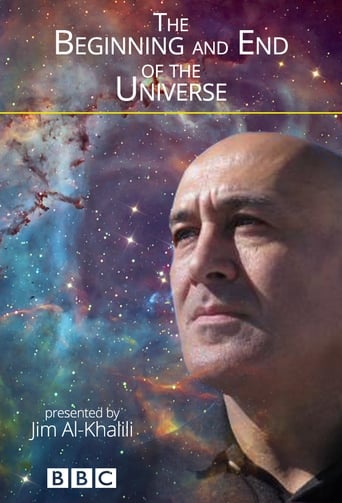
Jim Al-Khalili tackles the greatest question in science - how the universe began. By recreating key experiments Jim unravels the mystery of science's creation story.
Your monthly journey through the fascinating world of space and astronomy with the latest thinking on what's out there in space and what you can see in the night sky.
Viewers are taken on a breathtaking journey through the planets in our solar system. In each episode, see stunning images of each planet including highly detailed images captured by today’s ultra high-tech telescopes. Advanced animation takes you up close and personal with these distant worlds, as we plunge through space to get a better look at the neighbors.
Professor Brian Cox goes on a grand tour of the planet to explain how the Earth's beauty is created by just a handful of forces.
Since the Big Bang 13.8 billion years ago, light has sculpted the cosmos. It traverses the void, interacts with matter, and dances with shadows. It multiplies and proliferates, offering the world ever more complex and luminous structures. If it could speak, what would it tell us?
In the early 1900s, Albert Einstein developed an idea - called Relativity - that changed our understanding of reality. It explained how both space and time were flexible - and how the Universe was made of a four-dimensional fabric called space-time. This single idea gave us a new way to understand the force of gravity, explained how the stars were born and introduced us to the concept of the big bang. And, in the hands of Stephen Hawking, it allowed us to understand the most extreme monsters in the Universe - black holes. This two-part BBC documentary explores how two of the most famous scientists of the 20th Century transformed our understanding of the Universe - thus changing the world.
Witness the remarkable story of our universe over billions of years and its inextricable link to life on Earth in this sweeping documentary series.
Horizon tells amazing science stories, unravels mysteries and reveals worlds you've never seen before.
Motoring programme featuring reviews of and reports about cars of all types.
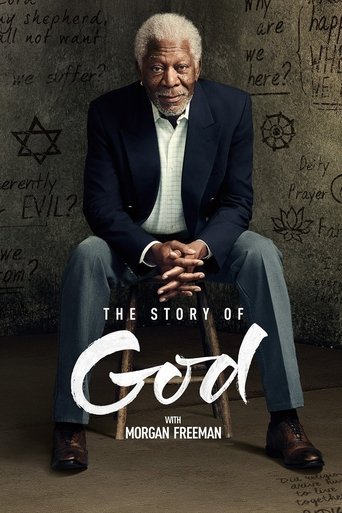
Morgan Freeman presents his quest in order to find how most religions perceive life after death, what different civilizations thought about the act of creation and other big questions that mankind has continuously asked.
The history of the sport of baseball in America, told through archival photos, film footage, and the words of those who contributed to the game in each era. Writers, historians, players, baseball personnel, and fans review key events and the significance of the game in America's history.
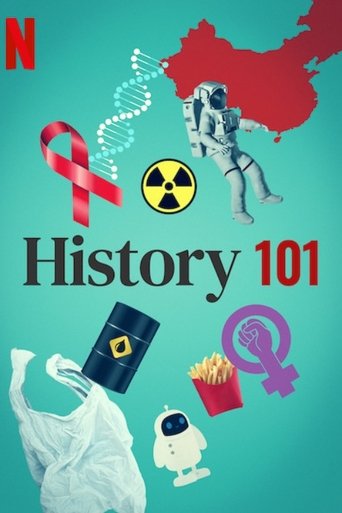
Infographics and archival footage deliver bite-size history lessons on scientific breakthroughs, social movements and world-changing discoveries.
Explore the surprising things we know (and don’t know) about why people are the way they are through expert interviews, rare footage from historical experiments, and brand-new, ground-breaking demonstrations of human nature at work.
This immersive series follows the world's most magnificent creatures, capturing never-before-seen moments from the heartwarming to the outrageous.
A series of standalone documentaries powered by the unparalleled journalism and insight of The New York Times, bringing viewers close to the essential stories of our time.
Famed astrophysicist Neil deGrasse Tyson provides clarity for the vision of the cosmos as he voyages across the universe with never-before-told stories that delve into the scientific concepts of the laws of gravity and the origins of space and time.
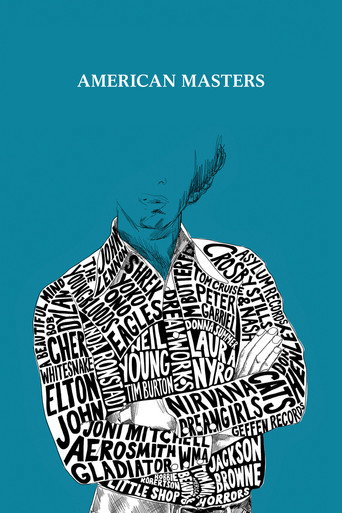
American Masters is a PBS television series which produces biographies on enduring writers, musicians, visual and performing artists, dramatists, filmmakers, and others who have left an indelible impression on the cultural landscape of the United States.
Biography is a documentary television series. It was originally a half-hour filmed series produced for CBS by David Wolper from 1961 to 1964 and hosted by Mike Wallace. The A&E Network later re-ran it and has produced new episodes since 1987. The older version featured historical figures such as Helen Keller and Mark Twain, or long-dead entertainment figures such as Will Rogers or John Barrymore. The A&E series has placed the emphasis on such people as Marilyn Monroe, Elvis Presley, Plácido Domingo, Freddie Mercury, Jacqueline Kennedy Onassis, Eric Clapton, Pope John Paul II, Gene Tierney, Selena, Diego Rivera, Mao Zedong and Queen Elizabeth II, and fictional characters like The Phantom, Superman, Hamlet, Betty Boop, and Santa Claus. The program ended up profiling enough figures that in 1999, A&E spun it off into an entire network, The Biography Channel.
Doctor Who Confidential is a documentary to complement the revival of the long-running British science fiction television series Doctor Who. Each episode was broadcast on BBC Three on Saturdays, immediately after the broadcast of the weekly television episode on BBC One. The running time of the first two series was 30 minutes, being extended to 45 minutes in the third. BBC Three also broadcast a cut-down edition of the programme, lasting 15 minutes, shown after the repeats on Sundays and Fridays and after the weekday evening repeats of earlier seasons.
Through the prism of Jeff Goldblum's always inquisitive and highly entertaining mind, nothing is as it seems. Each episode is centered around something we all love — like sneakers or ice cream — as Jeff pulls the thread on these deceptively familiar objects and unravels a wonderful world of astonishing connections, fascinating science and history, amazing people, and a whole lot of surprising big ideas and insights.
The series heads to the very frontiers of space and science to produce the definitive television history of science fiction, told through its impact on cinema, television and literature, with the help of filmmakers, writers, actors, and graphic artists. Each episode will explore one of the enduring themes of science fiction: time travel; the exploration of space; robots and artificial intelligence; and aliens.
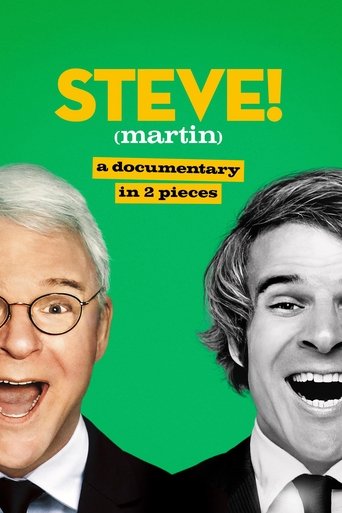
Steve Martin is one of the most beloved and enigmatic figures in entertainment. Dive into his extraordinary story from two distinct points of view—past and present—as Martin reflects on how his beginnings led to his unexpectedly fulfilling life today.