Explore the last 100 years of aviation history in unprecedented detail. From the Wright brothers first flight to the Apollo moon landings and beyond, the series highlights milestones in an industry defined by innovation.
Social & External
Self - Narrator (voice)
A risky expedition along thoroughfares that harbor mortal danger for those who use them or live on them. They run through deserts, ice, and snow, deep in the jungle, along water, and over mountains: the world's most dangerous roads, truly "hot roads." Many have died along these roads.
AFP: American Fighter Pilot is a reality series broadcast briefly on CBS in 2002. It followed three Air Force officers as they trained to become pilots of F-15 fighter jets at Tyndall Air Force Base outside of Panama City, Florida. The series included footage of their experiences in the air, as well as interactions with their families and instructors. Directors Tony Scott and Ridley Scott were co-executive producers. Unsuccessful in the ratings, the series was cancelled after two episodes.
Investigating mankind's insatiable necessity to move faster and further; for pleasure, for work, to explore, to survive.
The lush Hawaiian Islands provide a dramatic backdrop as the pilots of Windward Aviation risk injury and even death as they perform rescues in this tropical paradise.
The story of flying boats is one of ingenuity and enterprise; of style during the dying days of Britain's imperial grandeur; of Coastal Command's war against the U-boats and of post-war skepticism that hastened their end. For all those who flew in them the flying boats were unique and unforgettable.
This definitive history of manned flight has been compiled into 26 hour episodes, with access to some of the rarest archive film ever taken. Unprecedented co-operation has been extended by the world's leading aircraft manufacturers and leading archive libraries. Included in the footage are shots of rare prototype accidents and failures which contributed to the inevitable achievement and success of man in the air. Since Charles Lindbergh became the first lone aviator to cross the Atlantic in 1927, air transport has greatly accelerated , revolutionised by the giant Boeing 747 Jumbo Jet - and what might we see in the 21st century?
Terror of the World: The story of a deadly war that intertwines Germany, Poland, Japan, Italy and Spain, and the remorseless development of weapons and bombers.
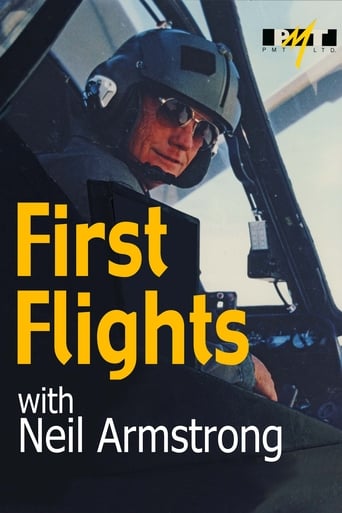
NASA Apollo astronaut Neil Armstrong adds to his long list of space flight & aviation accomplishments as he takes the controls of a variety of flying machines. Each episode blends historic footage, interviews, and flying. Armstrong takes you on an exhilarating adventure through time.
This new series features the fascinating stories of three of the most important commercial aircraft ever to take to the skies.
Intercity 125 – Britain's own original high-speed train – rules the rails today, but this national icon is set to give way to hi-tech imports. It's time to celebrate the heroic story of a design classic that saved Britain's railways from terminal decline.
In 1903, not only did the Wright brothers ’plane soar, but a young man named William Boeing stepped out of the Yale University gates. 13 years later, using wood, canvas and wire, the first "Boeing model", the B&W, was born. Boeing has since grown into a huge company and developed countless models, including the 1957-92 passenger jet, the 707. Later, we learn about the Constellation designed by Lockheed in the early 1940s. The fuselage of the machine evokes the graceful form of a dolphin, no wonder that with its beauty it also won the title of "Queen of Heaven". The C-69 was the first model to cross non-stop America, covering the Los Angeles-Washington DC distance in record time of 7 hours and 3 minutes. Connies were used for both military and civilian purposes until the early 1960s. This and many more stories are recounted here in Great Planes.
Discover the excitement of flying as we reveal the most remarkable aircraft ever built and the aeronautical advancements that shaped flying history in Flying Through Time. Audiences will marvel at historic airships, be wowed by war planes and delight at luxury jetliners.
The warplane has evolved over nearly a century to become what it is today, in 2004. This series is the story of how, through life-and-death necessity, invention, ingenuity and sheer hard work that warplane technology evolved. The Warplane series is not a history of every military plane but rather a look at the major stepping stones that advanced military aviation.
A century ago, the world experienced a revolution in mobility. Cities like Berlin grew rapidly, with the Graf Zeppelin soaring over the city in 1928, sparking excitement for airship travel. These majestic airships made ocean crossings faster and more luxurious, and even enabled polar expeditions. At the same time, automobiles and motorcycles became staples for many, although streets became congested. Women like Amelia Earhart and Elly Beinhorn broke barriers in aviation, inspiring new possibilities for both genders in the field of technology. While air travel grew in popularity, trains remained the main long-distance transport. The era also saw an explosion of new mobility options, with faster, cheaper ways to travel across the globe, making the world seem smaller and more connected. However, this golden age of mobility would be cut short by the outbreak of World War II.
The story of the people building the AVRO Arrow, an advanced jet fighter-interceptor designed to defend Canada's vast territory during the Cold War. Though the jet was an engineering marvel, cost over-runs, U.S. government pressure from the military industrial complex, and the election of the Progressive Conservative Diefenbaker government, stopped the jet just as it was getting off the ground.
Dallas Campbell and Dr Hannah Fry investigate what it takes to get a million people and their luggage off the ground and up in the air. From building the world's biggest passenger plane to navigating through the busiest airport on the planet, to the perils of getting airborne in the coldest city on earth - Dallas and Hannah go to extremes to get under the skin of the remarkable story of departure. You will never look at flying in the same way again.
From the first men in their flying machines to World War One, from the first Atlantic crossing to the supersonic era, this is the story of the most daredevil challenges the world has ever known, braved by the men and women who wrote the history of human flight.
EMMY-nominated PBS documentary covering the history of American aviation, from the Wright Brothers to the very frontiers of space.
A look at the unseen side of aviation. With unprecedented access to the world of air traffic control, the series puts the spotlight on the hidden army of controllers whose job it is to keep our skies safe.
Examining the construction of the massive jet and the engineering and logistical challenges faced by its builders.
Motoring programme featuring reviews of and reports about cars of all types.
Infographics and archival footage deliver bite-size history lessons on scientific breakthroughs, social movements and world-changing discoveries.
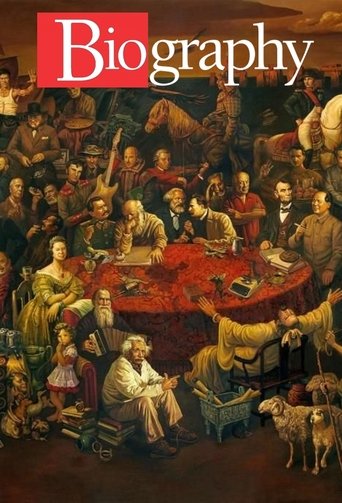
Biography is a documentary television series. It was originally a half-hour filmed series produced for CBS by David Wolper from 1961 to 1964 and hosted by Mike Wallace. The A&E Network later re-ran it and has produced new episodes since 1987. The older version featured historical figures such as Helen Keller and Mark Twain, or long-dead entertainment figures such as Will Rogers or John Barrymore. The A&E series has placed the emphasis on such people as Marilyn Monroe, Elvis Presley, Plácido Domingo, Freddie Mercury, Jacqueline Kennedy Onassis, Eric Clapton, Pope John Paul II, Gene Tierney, Selena, Diego Rivera, Mao Zedong and Queen Elizabeth II, and fictional characters like The Phantom, Superman, Hamlet, Betty Boop, and Santa Claus. The program ended up profiling enough figures that in 1999, A&E spun it off into an entire network, The Biography Channel.
An insider's look at the engineering and scientific miracles behind the things that form the modern world.
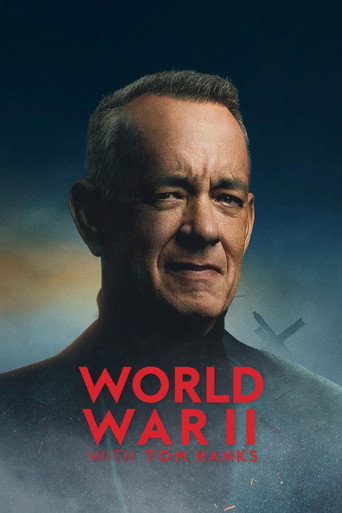
TV's most-watched history series brings to life the compelling stories from our past that inform our understanding of the world today.
MegaStructures is a documentary television series appearing on the National Geographic Channel in the United States and the United Kingdom, Channel 5 in the United Kingdom, France 5 in France, and 7mate in Australia. Each episode is an educational look of varying depth into the construction, operation, and staffing of various structures or construction projects, but not ordinary construction products. Generally containing interviews with designers and project managers, it presents the problems of construction and the methodology or techniques used to overcome obstacles. In some cases this involved the development of new materials or products that are now in general use within the construction industry. MegaStructures focuses on constructions that are extreme; in the sense that they are the biggest, tallest, longest, or deepest in the world. Alternatively, a project may appear if it had an element of novelty or are a world first. This type of project is known as a Megaproject.
Doctor Who Confidential is a documentary to complement the revival of the long-running British science fiction television series Doctor Who. Each episode was broadcast on BBC Three on Saturdays, immediately after the broadcast of the weekly television episode on BBC One. The running time of the first two series was 30 minutes, being extended to 45 minutes in the third. BBC Three also broadcast a cut-down edition of the programme, lasting 15 minutes, shown after the repeats on Sundays and Fridays and after the weekday evening repeats of earlier seasons.
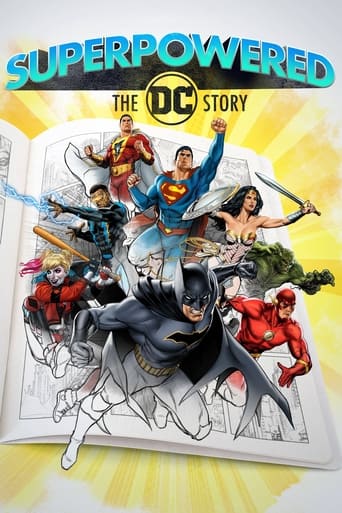
This docuseries takes an unprecedented look at the enduring and influential legacy of DC, allowing fans to rediscover the universe of characters, as well as the iconic comic book company’s origins, its evolution and its nearly nine-decade cultural impact across every artistic medium.
The history of the sport of baseball in America, told through archival photos, film footage, and the words of those who contributed to the game in each era. Writers, historians, players, baseball personnel, and fans review key events and the significance of the game in America's history.
A series of standalone documentaries powered by the unparalleled journalism and insight of The New York Times, bringing viewers close to the essential stories of our time.
Don Wildman unearths relics from the world's greatest institutions to reveal secrets from the past. He examines each artifact to illuminate history's most incredible triumphs, sensational crimes and bizarre encounters.
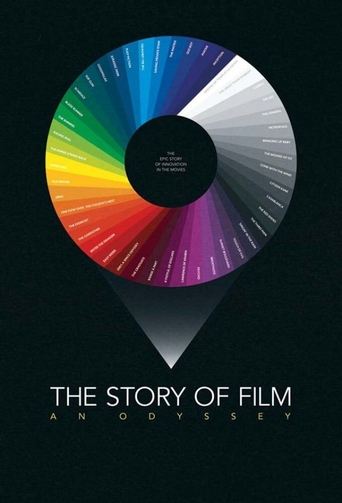
A worldwide guided tour of the greatest movies ever made and the story of international cinema through the history of cinematic innovation.
30 for 30 is the title for a series of documentary films airing on ESPN, its sister networks, and online highlighting interesting people and events in sports history. This currently includes four "volumes" of 30 episodes each, a 13-episode series under the ESPN Films Presents title in 2011–2012, and a series of 30 for 30 Shorts shown through the ESPN.com website. The series has also expanded to include Soccer Stories, which aired in advance of the 2014 FIFA World Cup, and audio podcasts. This entry refers to the main Volumes of the series presented by ESPN
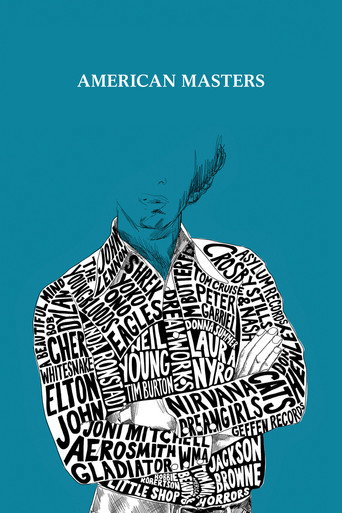
American Masters is a PBS television series which produces biographies on enduring writers, musicians, visual and performing artists, dramatists, filmmakers, and others who have left an indelible impression on the cultural landscape of the United States.
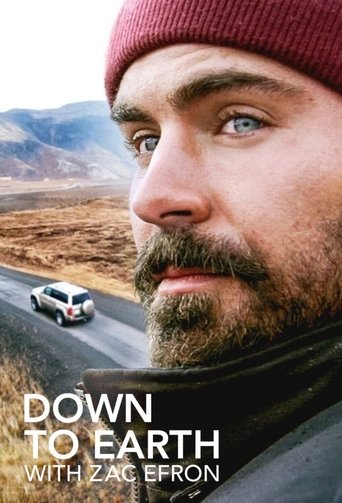
Actor Zac Efron journeys around the world with wellness expert Darin Olien in a travel show that explores healthy, sustainable ways to live.
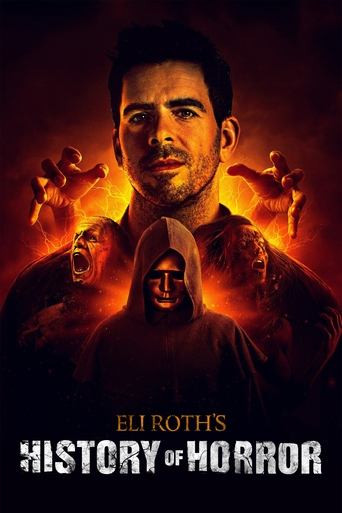
An in-depth look at the history and pop cultural significance of horror films.
A miniseries documenting American human spaceflight, spanning from the first Mercury flights through the Gemini program to the Apollo moon landings, the Space Shuttle, and the construction of the International Space Station. It was created in association with NASA to commemorate the agency's fiftieth anniversary in 2008.
This compelling series investigates the motives and m.o. of female murderers. While males are often driven by anger, impulse and destruction, women usually have more complex, long-term reasons to kill.
Award-winning actor and nervous explorer Eugene Levy steps out of his comfort zone for a whirlwind tour of the world's most beautiful and intriguing destinations.
Horizon tells amazing science stories, unravels mysteries and reveals worlds you've never seen before.