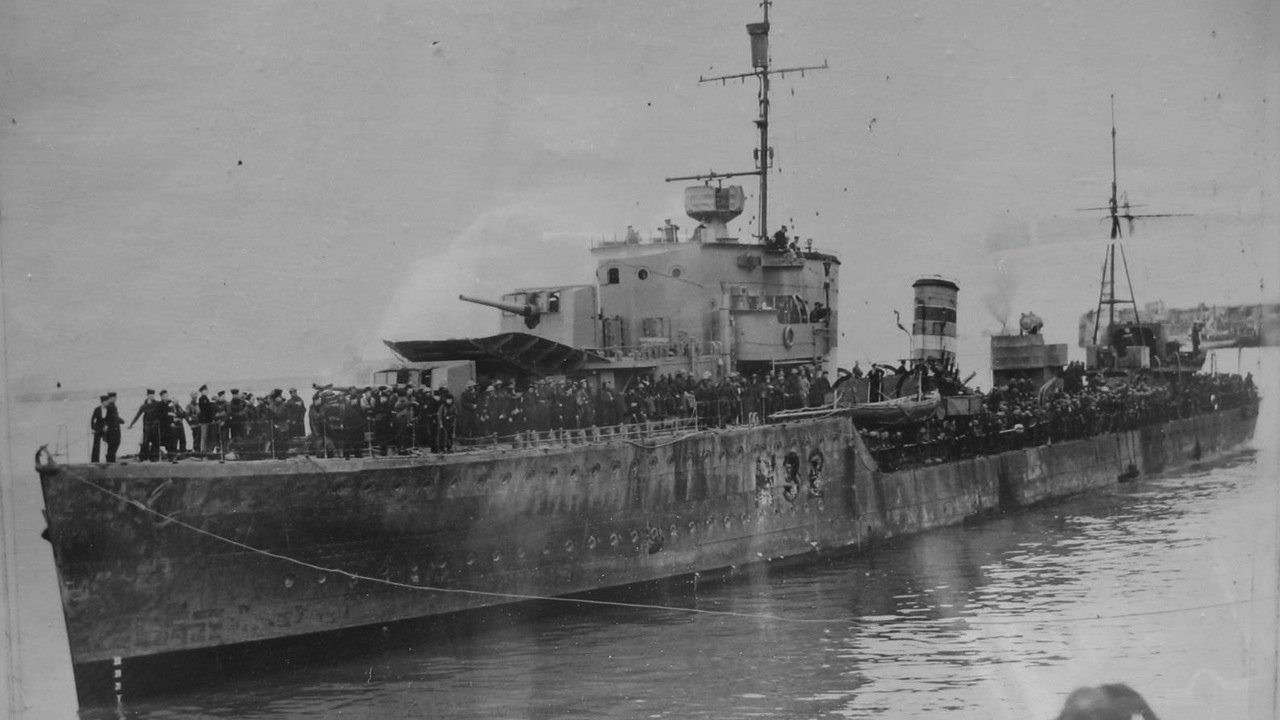
Major factual drama telling the story of history's greatest maritime evacuation, after the World War II Battle of Dunkirk in May and June 1940.
Social & External
Harry Noakes
Winston Churchill
Narrator
Guardsman Desmond Thorogood
Lt Jimmy Langley
In Manchester, Nathan is in a love triangle with Fi and Jase, and the trio explore how chance and coincidence shape their lives.
With the growing threat of viral epidemic and the possibility of worldwide environmental catastrophe, humanity has an unprecedented ability to destroy itself, and vampires need to take control of their threatened food source. CIB is a clandestine, elite government unit that hunts vampires, referred to as 'Code Fives' or 'leeches'. DS Michael Colefield joins the team after his partner is turned, blending a realistic, scientific approach with modern vampire mythology, including their inability to appear on video or audio recordings.
GBH was a seven-part British television drama written by Alan Bleasdale shown in the summer of 1991 on Channel 4. The protagonists were Michael Murray, the Militant tendency-supporting Labour leader of a city council in the North of England and Jim Nelson, the headmaster of a school for disturbed children. The series was controversial partly because Murray appeared to be based on Derek Hatton, former Deputy Leader of Liverpool City Council — in an interview in the G.B.H. DVD Bleasdale recounts an accidental meeting with Hatton before the series, who indicates that he has caught wind of Bleasdale's intentions but does not mind as long as the actor playing him is "handsome". In normal parlance, the initials "GBH" refer to the criminal charge of grievous bodily harm - however, the actual intent of the letters is that it is supposed to stand for Great British Holiday.
Epic History makes videos about the most dramatic and important stories from our past, from the rise and fall of empires to global conflicts and revolutions. Our team have history degrees and decades of experience in documentary production, and regularly collaborate with specialist historians around the world, so you’re in safe hands as we explore some of the most epic moments in history.
Reveals the rise and fall of Grey's Anatomy star writer Elisabeth Finch, whose jaw-dropping lies fooled Hollywood for years, and became fodder for many high-profile episodes of Grey's. The story is told by some of her closest contacts, many speaking for the first time.
After suffering a plane crash, Leo receives a blood transfusion and, some time later, discovers that he ended up contracting the AIDS virus. Desperate, he does his best to find out the identity of the bearer of the blood he received, and suffers from the prejudice of friends and people close to him.
Americans consider themselves a 'nation of immigrants', but as the catastrophe of the Holocaust unfolds in Europe, the U.S. prove unwilling to open its doors to more than a fraction of the hundreds of thousands of desperate refuge seekers. Through riveting firsthand testimony of witnesses and survivors who as children endured persecution, violence and flight as their families tried to escape Hitler, this three-part documentary series delves deeply into the tragic human consequences of public indifference, bureaucratic red tape and restrictive quota laws in America. Did the nation fail to live up to its ideals? This is a history to be reckoned with.
In this docuseries, a scrappy electronic cigarette startup becomes a multibillion-dollar company until an epidemic causes its success to go up in smoke.
The world of a seemingly perfect family shatters when a shocking murder proves that they're willing to make desperate moves to protect one another.
Diane, a young woman growing up in Australia in the mid 1960s, walks away from her fiancé to join a convent after being sure she has a calling to the faith. The Catholic Church and its followers are struggling with huge changes. The Pope has died, there is war in Vietnam and mandatory conscription, there is the Vatican controversy on abortion and contraception, and the changing face of the Church as a whole. Told in six parts, Diane faces her own demons and has to finally decide if she can teach what the Church preaches, or if it's simply impossible for her to reconcile all the contradictions of the faith and uphold her vow of obedience.
Ellie and Jack Shannon move to Burma to start a jewellery business but soon find themselves caught in the dark underbelly of the Golden Triangle drug trade and an international AFP conspiracy.
Great Blunders Of World War II is a documentary series looking some of the worst errors of World War II that affected the course of history. They are the decisions that have gone down in infamy, the battles determined not by bravery and brilliance but by incompetence and arrogance.
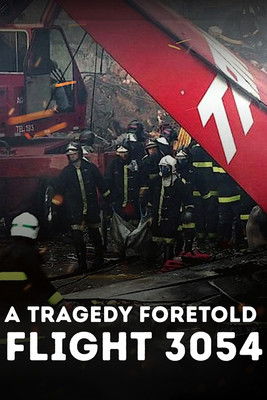
New interviews and an up-to-date analysis of evidence shed light on the 1992 murders of three girls in Spain and their profound impact on the nation.
Island at War is a British television series that tells the story of the German Occupation of the Channel Islands. It primarily focuses on three local families: the upper class Dorrs, the middle class Mahys and the working class Jonases, and four German officers. The fictional island of St. Gregory serves as a stand-in for the real-life islands Jersey and Guernsey, and the story is compiled from the events on both islands. Produced by Granada Television in Manchester, Island at War had an estimated budget of £9,000,000 and was filmed on location in the Isle of Man from August 2003 to October 2003. When the series was shown in the UK, it appeared in six 70-minute episodes.
Set in the near future against the background of a British space programme, the story of the first crewed flight into space, supervised by Professor Bernard Quatermass of the British Experimental Rocket Group.
A priceless jewel, originally plundered from a Hindu shrine, is presented to Rachel Verinder on her 18th birthday. The jewel goes missing and suspicion falls over the household, threatening to destroy someone close to Rachel's heart.
Kolumbowie follows a group of Polish resistance fighters during WWII in the days leading up to the Warsaw Rising.
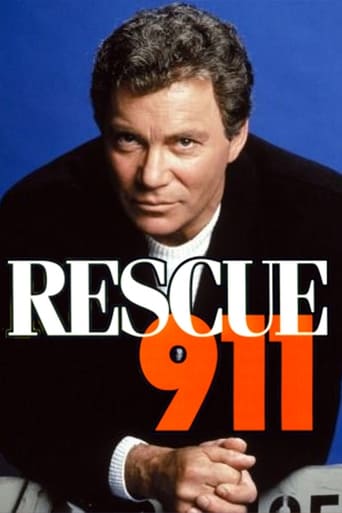
Rescue 911 is an informational reality-based television series that premiered on April 18, 1989 and ended on August 27, 1996. The series was hosted by William Shatner and featured reenactments of emergency situations that often involved calls to 911. Though never intended as a teaching tool, various viewers used the knowledge they obtained watching the show. Two specials, titled "100 Lives Saved" and "200 Lives Saved," were dedicated to viewers who had written to CBS with their stories on how the knowledge they obtained watching the show allowed them to save the life of someone else. At least 350 lives have been saved as a result of what viewers learned from watching it. The show's popularity coincided with the widespread adoption of the 911 emergency system, replacing standalone police and fire numbers that would vary from municipality to municipality. The number is now universally understood in the United States and Canada to be the number dialed for emergency assistance nationwide.
The show features accounts of individuals and groups caught in dangerous scenarios, presented both through interviews and dramatic reenactments. The main focus is how the survivors survived and the decisions they made that kept them alive.
With firsthand accounts and access to prominent figures around the world, this comprehensive docuseries explores the Cold War and its aftermath.
The First 48 follows detectives from around the country during these first critical hours as they race against time to find the suspect. Gritty and fast-paced, it takes viewers behind the scenes of real-life investigations with unprecedented access to crime scenes, autopsies, forensic processing, and interrogations.
A documentary series that gives a historical account of the events of World War II, from its roots in the 1920s to the aftermath and the lives it profoundly influenced.
Through vividly enhanced archival footage and voices from all sides of the conflict, this docuseries brings WWII to life like never before.
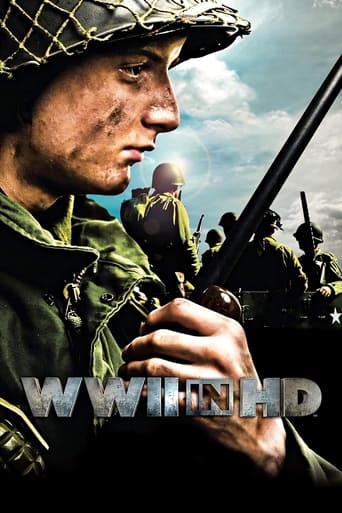
WWII in HD is a 10-part American documentary television miniseries that originally aired from November 15 to November 19, 2009 on the History Channel. The program focuses on the firsthand experiences of twelve American service members during World War II, including an Army nurse, a member of the Tuskegee Airmen, a second generation Japanese American and prisoner of war, and an Austrian Jewish immigrant. The twelve members recorded their time in both theaters and some had later interviews; found footage from the battlefield was paired with the stories of the twelve service members. The episodes premiered on five consecutive days, with two episodes per day. The series is narrated by Gary Sinise and was produced by Lou Reda Productions in Easton, Pennsylvania, United States.
30 for 30 is the title for a series of documentary films airing on ESPN, its sister networks, and online highlighting interesting people and events in sports history. This currently includes four "volumes" of 30 episodes each, a 13-episode series under the ESPN Films Presents title in 2011–2012, and a series of 30 for 30 Shorts shown through the ESPN.com website. The series has also expanded to include Soccer Stories, which aired in advance of the 2014 FIFA World Cup, and audio podcasts. This entry refers to the main Volumes of the series presented by ESPN
A documentary on the American Civil War narrated by Ken Burns, covering the secession of the Confederacy to the assassination of Abraham Lincoln.
Executive producer Jon Favreau invites the cast and crew of The Mandalorian to share an unprecedented look at the making of the series. Each chapter explores a different facet of the first live-action Star Wars television show through interviews, never-before-seen footage, and roundtable conversations hosted by Favreau himself.
Doctor Who Confidential is a documentary to complement the revival of the long-running British science fiction television series Doctor Who. Each episode was broadcast on BBC Three on Saturdays, immediately after the broadcast of the weekly television episode on BBC One. The running time of the first two series was 30 minutes, being extended to 45 minutes in the third. BBC Three also broadcast a cut-down edition of the programme, lasting 15 minutes, shown after the repeats on Sundays and Fridays and after the weekday evening repeats of earlier seasons.
This stylish mix of documentary and historical epic chronicles the reign of Commodus, the emperor whose rule marked the beginning of Rome's fall.
This compelling series investigates the motives and m.o. of female murderers. While males are often driven by anger, impulse and destruction, women usually have more complex, long-term reasons to kill.
Don Wildman unearths relics from the world's greatest institutions to reveal secrets from the past. He examines each artifact to illuminate history's most incredible triumphs, sensational crimes and bizarre encounters.
Biography is a documentary television series. It was originally a half-hour filmed series produced for CBS by David Wolper from 1961 to 1964 and hosted by Mike Wallace. The A&E Network later re-ran it and has produced new episodes since 1987. The older version featured historical figures such as Helen Keller and Mark Twain, or long-dead entertainment figures such as Will Rogers or John Barrymore. The A&E series has placed the emphasis on such people as Marilyn Monroe, Elvis Presley, Plácido Domingo, Freddie Mercury, Jacqueline Kennedy Onassis, Eric Clapton, Pope John Paul II, Gene Tierney, Selena, Diego Rivera, Mao Zedong and Queen Elizabeth II, and fictional characters like The Phantom, Superman, Hamlet, Betty Boop, and Santa Claus. The program ended up profiling enough figures that in 1999, A&E spun it off into an entire network, The Biography Channel.
Natural World is a nature documentary television series broadcast annually on BBC Two and regarded by the BBC as its flagship natural history brand. It is currently the longest-running series in its genre on British television, with more than 400 episodes broadcast since its inception in 1983. Natural World is produced by the BBC Natural History Unit in Bristol, but individual programmes can be in-house productions, collaborative productions with other broadcasters or films made and distributed by independent production companies and purchased by the BBC. Natural World programmes are often broadcast as PBS Nature episodes in the USA. Since 2008, most Natural World programmes have been shot and broadcast in high definition.
Seconds from Disaster is a US/UK-produced documentary television programme that investigates historically relevant man-made and natural disasters of the 20th century. Each episode aims to explain a single incidental by analyzing the causes and circumstances that ultimately effected the disaster. The program uses re-enactments, interviews, testimonies, and CGI to analyze the sequence of events second-by-second for the audience. Narrators for the show are Ashton Smith, Richard Vaughan and Peter Guinness.
This series reveals recent natural disasters as they happened in real-time through footage captured by eyewitnesses who found themselves in the wrong place at the right time and boldly held up their camera phones to capture the eye of the storm.
Infographics and archival footage deliver bite-size history lessons on scientific breakthroughs, social movements and world-changing discoveries.
World War II In Colour is a 13-episode television documentary miniseries recounting the events of World War II narrated by Robert Powell. The show covers the Western Front, Eastern Front, and the Pacific War. It is on syndication in America on the Military Channel. This series is in full color, combining both original and colorized footage.