Social & External
The four-part investigative doc-series "Juan Carlos: Downfall of The King" charts the rise and fall of the former Spanish King Juan Carlos I from his enthronement to the present day, accompanied by affairs, greed for money, accusations of corruption and abuse of power on an unimaginable scale.
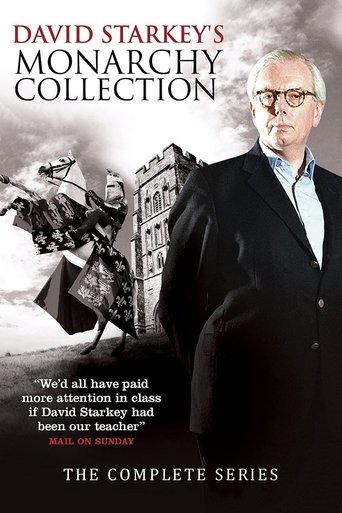
Monarchy is a Channel 4 British TV series, 2004-2006, by British academic David Starkey, charting the political and ideological history of the English monarchy from the Saxon period to modern times. The show also aired on PBS stations throughout the United States, courtesy of PBS-member station WNET. In Australia, all four seasons were broadcast on ABC1 from May 2005 onwards.
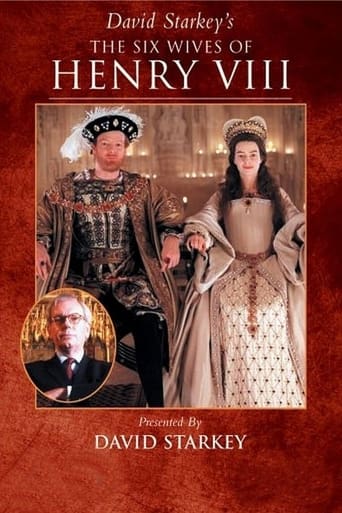
Through dramatic reconstructions and his own passionate narration, Dr. David Starkey, the controversial Tudor historian, profiles the six women who married Henry Vlll.
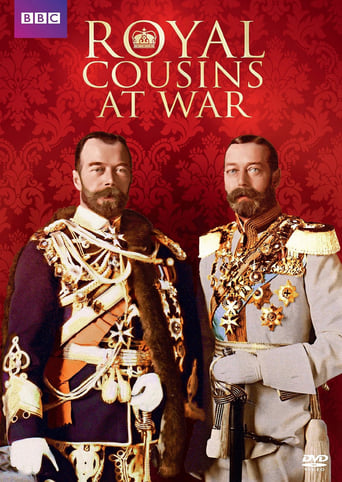
At the time World War I broke out, the King of England, the Czar of Russia, and the Kaiser of Germany were first cousins. This two-part series looks at the role played by Tsar Nicholas II of Russia, Kaiser Wilhelm II of Germany and King George V of England, and their relationships with each other, in the outbreak of war. Mismanaging their countries and mishandling foreign policy, they failed to adapt to the forces of nationalism and democracy, and so brought tumbling down their own ideal of a Europe governed by the descendants of Queen Victoria. While it was war that delivered the final blow, this fascinating series shows how the problems had set in much earlier. A two part miniseries.
The railway age in the Austrian Empire began with the construction of the horse-drawn railway from Linz to Budweis. Plans soon followed to connect the imperial capital of Vienna with the iron and coal deposits in northern Moravia and with the port city of Trieste. In 1837 the Kaiser Ferdinands Nordbahn was opened, in 1857 the Semmeringbahn planned by Karl Ritter von Ghega, overcoming one of the most difficult obstacles on the way to the Adriatic. The crossing of the Alps by train, such as over the Arlberg or the Brenner, is still considered a unique engineering masterpiece. The expansion of the railway network brought epochal changes. Goods and people circulated on an unprecedented scale – life accelerated. It had succeeded in connecting the northern crown lands such as Silesia or Bohemia and Moravia with Carinthia, Tyrol or the coastal region.
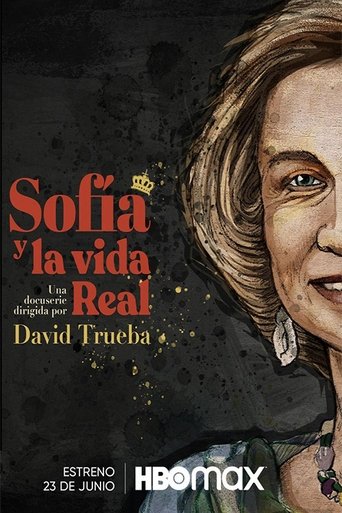
A story of spies and silent pacts, this fascinating docuseries, told in first person by witnesses and experts, exposes how the machinery of the state is keen to protect the former King of Spain, Juan Carlos I, and conceal his scandals.
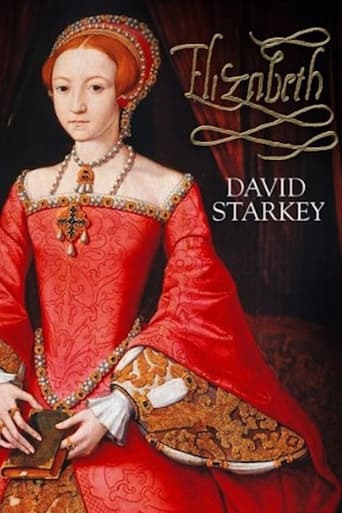
Elizabeth is a four-part British documentary about Queen Elizabeth I of England.
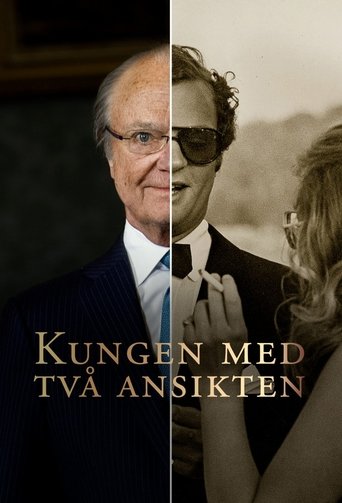
A story about Sweden's monarchy, the role of the royal family in society and what happens when the person behind the monarch is reminded.
A history of the French Revolution from the decision of the king to convene the Etats-Generaux in 1789 in order to deal with France's debt problem. The first part of the movie tells the story from 1789 until August 10, 1792 (when the King Louis XVI lost all his authority and was put in prison). The second part carries the story through the end of the terror in 1794, including the deaths by guillotine of Louis XVI, Marie-Antoinette, Danton, and Desmoulins.
Charting the life of Isabella I of Castile, one of the most important women in Spain’s history, Isabel follows her passionate story from childhood to being crowned Queen. From her political struggles within King Henry IV's court to her wedding to Ferdinand of Aragon, the drama encapsulates the passions, emotions and sacrifices of a woman who refused to just be a figurehead and whose outlook was ahead of her time.
Set in the constitutional monarchy in an imaginary South Korea, South Korea's Crown Prince Lee Jae Ha is forced to join the World Officers Competition, WOC, by his brother. There, he meets North Korea's strongest female devil instructor Kim Hang Ah.
A biographical miniseries of Spain's Juan Carlos I, covering 1948 to 1993.
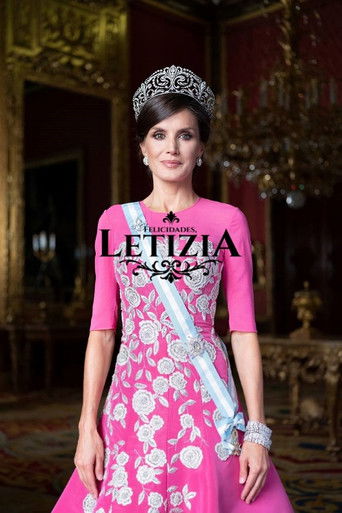
Dramatization of King Felipe and Queen Letizia of Spain's relationship before their marriage.
The story of how the young Queen Charlotte’s marriage to King George sparked both a great love story and a societal shift, creating the world of the Ton inherited by the characters in Bridgerton.
Elizabeth I is a two-part 2005 British historical drama television miniseries directed by Tom Hooper, written by Nigel Williams, and starring Helen Mirren as Elizabeth I of England. The miniseries covers approximately the last 24 years of her nearly 45-year reign. Part 1 focuses on the final years of her relationship with the Earl of Leicester, played by Jeremy Irons. Part 2 focuses on her subsequent relationship with the Earl of Essex, played by Hugh Dancy. The series originally was broadcast in the United Kingdom in two two-hour segments on Channel 4. It later aired on HBO in the United States, CBC and TMN in Canada, ATV in Hong Kong, ABC in Australia, and TVNZ Television One in New Zealand. The series went on to win Emmy, Peabody, and Golden Globe Awards. The same year, Helen Mirren starred as Queen Elizabeth II in The Queen, with which she dominated the award season.