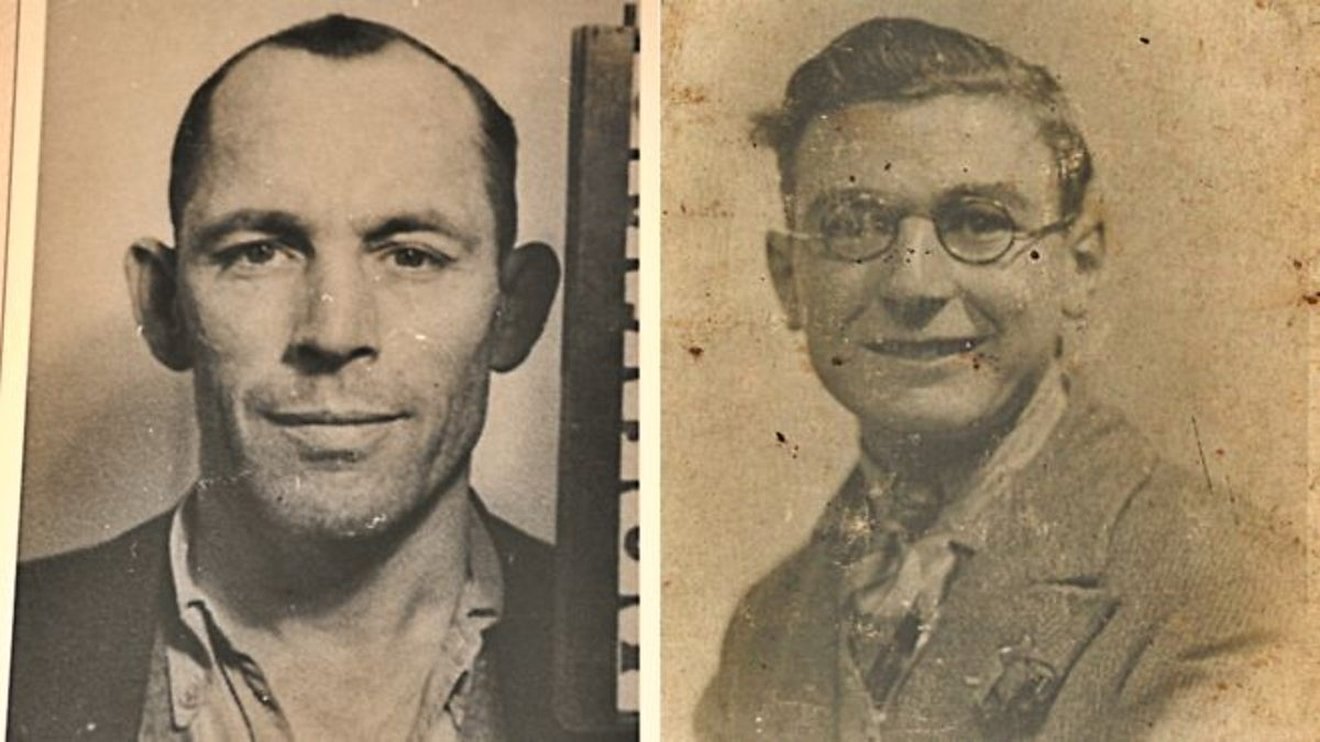
Two women embark on a harrowing journey to discover the fate and final resting place of loved ones snatched by the Nazis.
Social & External
Narrator
A documentary series that gives a historical account of the events of World War II, from its roots in the 1920s to the aftermath and the lives it profoundly influenced.
Submarines today are highly complex machines crammed with technology and weapons. As impressive as their construction is, as terrifying is their destructive power. Hardly any other weapon triggers as many emotions as the submarine. It strikes from ambush and can use nuclear missiles to drag the whole world into the abyss. Submarines originated from a completely non-military idea, namely to be able to view the world under water. But the interest in the military use of submarines soon prevailed.
This ground-breaking series examines the lives of the leading Nazis, in an effort to answer the question, why did it happen? It explores and tries to understand the incredible transformation of educated men into Nazi criminals, by charting the lives of six people who over the course of 20 years descend into moral oblivion.

Jungle Warfare in the 20th century, from WW2, to Malaya and Indonesia, to Vietnam and Cuba.
The Valiant Years was a documentary produced by ABC based on the memoirs of Winston Churchill, directed by Anthony Bushell and John Schlesinger, narrated by Gary Merrill and with extracts from the memoirs voiced by Richard Burton. It ran in the United States from 1960 to 1961, in 27 30-minute episodes and was broadcast in the UK by the BBC from February to August 1961. Its incidental music was written by Richard Rodgers, who won an Emmy for it in 1962. Scriptwriters included Victor Wolfson a dramatist and writer, Quentin Reynolds, William L. Shirer an American journalist, war correspondent and historian, and Richard Tregaskis. One of the program's London-based producers was actor Patrick Macnee, just prior to his being cast as secret agent John Steed in the long-running cult TV series The Avengers.,
Hitler had proclaimed that Nazi conquered Europe was an impenetrable fortress. On the 6th of June 1944, the Allies launched the largest combined land, air and sea operation ever. This invasion, designed to begin the liberation of Europe, would forever be known as D-Day. The years leading up to 1944 had seen total domination of Europe by Nazi Germany. Despite the entry of America into WWII, strategic bombing, the invasions of North Africa and Italy, Germany remained in control and was able to strength its coastal defenses, The Atlantic Wall, in preparation for the inevitable Allied invasion. Operation Overlord was the Allied plan to defeat those defenses and open a Western Front. The hard lessons learned at Anzio, Dieppe and Salerno were about to be brought into focus with the greatest invasion the world had ever seen. But how had the Allies come to this point? Who were the personalities and what compromises were made to forge this great alliance?
This is the story of two wars fought at the same time on opposite ends of the globe, often mislabeled as a single war: The Second World War. These conflicts remade our world in just a few decades. A story of how the rise and fall of great powers, from Nazi Germany to Imperial Japan, recast nations into those who could afford, and those that could not afford The Price of Empire.
Nazi diehard and fanatics fight to the last man to stop Allied forces from freeing Europe, keeping an unrelenting grip on the naval bases, citadels and fortresses of occupied Europe.
WWII in the Pacific focuses on the events, notable figures, various bands of brothers, and heroic actions of the Allied powers. Take an inside look, starting with the conflict and tensions leading up to the war, the attack on Pearl Harbor, the evolution of the Pacific Theater, and the development and dropping of the atomic bomb, up until the subsequent end of WWII.
The epic television history of the Second World War’s Eastern Front giving an unprecedented Russian perspective on the war’s most decisive and bloody theater.
Exploring the eight days in May 1941 when Britain, and Liverpool in particular, was subjected to one of the most intense bombardments of the entire war. Featuring eyewitness accounts and recollections from many whom have never spoken out before.
Using witness testimony, archive and archaeological evidence, this three-part series reveals the untold story of the preparations to defend World War Two Britain by the Home Guard.
The Nazi era from 1993 to 1945 is illustrated through archived material, with insights and anecdotes provided by world-leading experts and commentators.
During the darkest days of the Third Reich, the most dreaded sound was a knock at the door after dark. Everyone who lived under Nazi rule lived in fear of the secretive agents known colloquially as "V-Men". Hitler called them his "deadliest weapon", and without them the Fuhrer's ambition could never have been realized.
Through vividly enhanced archival footage and voices from all sides of the conflict, this docuseries brings WWII to life like never before.
Who were the Yugoslav Partisans? A docuseries about the founding and evolution of the largest armed resistance in Europe during World War II.
Dwight D. Eisenhower, John F. Kennedy, Lyndon B. Johnson, Richard Nixon, Gerald Ford, Jimmy Carter, Ronald Reagan and George H.W. Bush. This is the story of how their war experiences change them, how they emerge from conflict as leaders and how the crucible of war shapes the decisions they make when they reach the White House.
World War II was marked by its epic battles, which decided the fate of nations and changed the course of history. From Germany's Blitzkrieg attacks on Poland that launched the European campaign to the Allied invasion of Berlin that signaled its violent end, we bring these seminal conflicts to life through never-before-seen colorized combat footage. This six-part series puts you in the center of the action through rarely scene films from the frontline plus personal memoirs and oral histories from both sides of the battle lines.
Using highly advanced colourisation techniques, critical moments from World War II, from Stalingrad to The Battle of Britain, are shown in a whole new light.
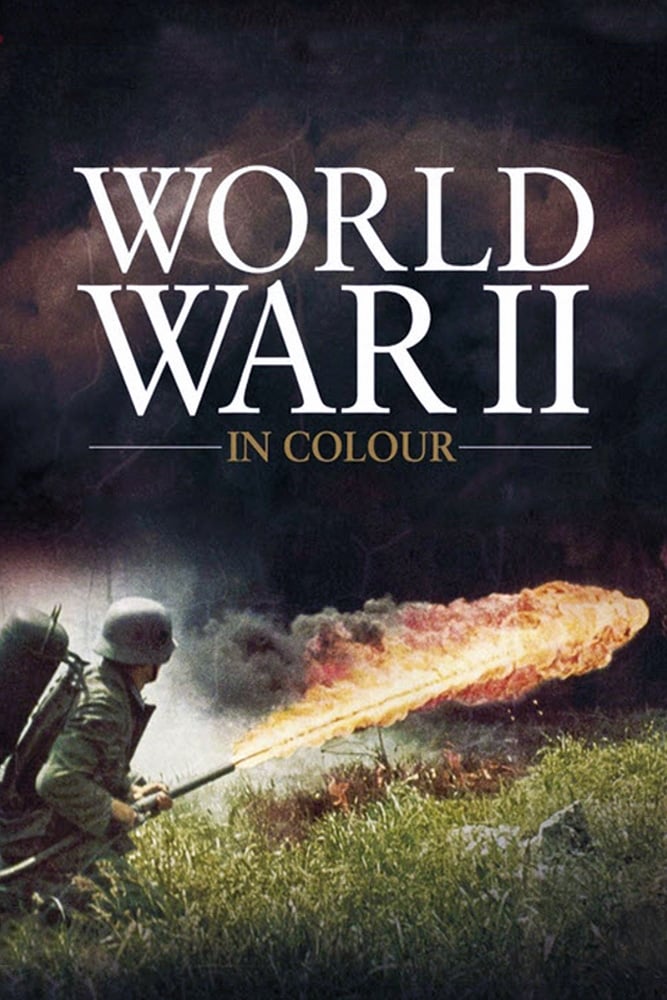
World War II In Colour is a 13-episode television documentary miniseries recounting the events of World War II narrated by Robert Powell. The show covers the Western Front, Eastern Front, and the Pacific War. It is on syndication in America on the Military Channel. This series is in full color, combining both original and colorized footage.
The story of the Second World War through the personal accounts of a handful of men and women from four American towns. The war touched the lives of every family on every street in every town in America and demonstrated that in extraordinary times, there are no ordinary lives.
WWII in HD is a 10-part American documentary television miniseries that originally aired from November 15 to November 19, 2009 on the History Channel. The program focuses on the firsthand experiences of twelve American service members during World War II, including an Army nurse, a member of the Tuskegee Airmen, a second generation Japanese American and prisoner of war, and an Austrian Jewish immigrant. The twelve members recorded their time in both theaters and some had later interviews; found footage from the battlefield was paired with the stories of the twelve service members. The episodes premiered on five consecutive days, with two episodes per day. The series is narrated by Gary Sinise and was produced by Lou Reda Productions in Easton, Pennsylvania, United States.
Investigates a wide range of historically compelling topics and the mysteries surrounding each including the Titanic, D.B. Cooper, Roswell, John Wilkes Booth, and more. Fresh, new evidence and perspectives will be showcased, such as never-before-released documents, personal diaries and DNA evidence.
Since it began in 1983, Frontline has been airing public-affairs documentaries that explore a wide scope of the complex human experience. Frontline's goal is to extend the impact of the documentary beyond its initial broadcast by serving as a catalyst for change.
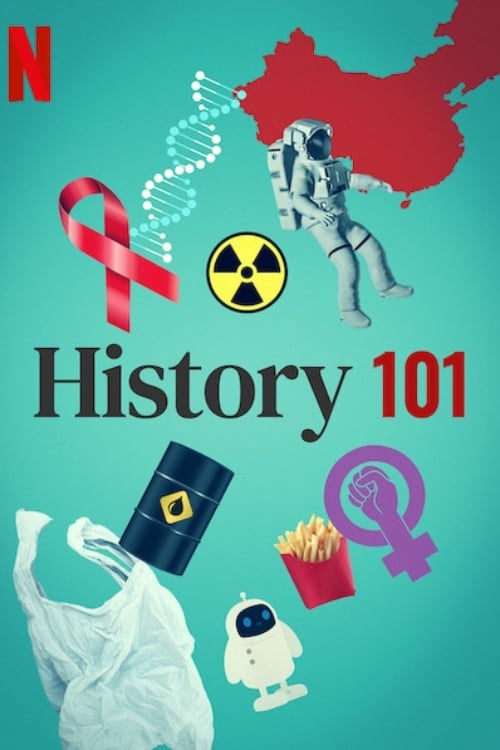
Infographics and archival footage deliver bite-size history lessons on scientific breakthroughs, social movements and world-changing discoveries.
30 for 30 is the title for a series of documentary films airing on ESPN, its sister networks, and online highlighting interesting people and events in sports history. This currently includes four "volumes" of 30 episodes each, a 13-episode series under the ESPN Films Presents title in 2011–2012, and a series of 30 for 30 Shorts shown through the ESPN.com website. The series has also expanded to include Soccer Stories, which aired in advance of the 2014 FIFA World Cup, and audio podcasts. This entry refers to the main Volumes of the series presented by ESPN
Experience the wonders of our world like never before in this epic series from Jon Favreau and the producers of Planet Earth. Travel back 66 million years to when majestic dinosaurs and extraordinary creatures roamed the lands, seas, and skies.
Major factual drama telling the story of history's greatest maritime evacuation, after the World War II Battle of Dunkirk in May and June 1940.
Have you ever wondered how the products you use every day are made? How It's Made leads you through the process of how everyday products, such as apple juice, skateboards, engines, contact lenses, and many more objects are manufactured.
Explore the surprising things we know (and don’t know) about why people are the way they are through expert interviews, rare footage from historical experiments, and brand-new, ground-breaking demonstrations of human nature at work.
Award-winning actor and nervous explorer Eugene Levy steps out of his comfort zone for a whirlwind tour of the world's most beautiful and intriguing destinations.
Host Guy Fieri takes a cross-country road trip to visit some of America's classic "greasy spoon" restaurants — diners, drive-ins and dives — that have been doing it right for decades.
David Attenborough presents a documentary series exploring how animals meet the challenges of surviving in the most iconic habitats on earth.
An in-depth look at the history and pop cultural significance of horror films.
This compelling series investigates the motives and m.o. of female murderers. While males are often driven by anger, impulse and destruction, women usually have more complex, long-term reasons to kill.
Hybrid docuseries offering an expansive exploration of the exploitative and genocidal aspects of European colonialism, from America to Africa, and its impact on society today.