Esperanza is a Peruvian nanny, who arrives in Chile with her son, in search of better job opportunities.
Social & External
The people behind it
Daniela Ramírez
Esperanza Reyes
Álvaro Escobar
Juan Pablo Marticorena
Ingrid Cruz
Beatriz Solovera Vergara
Patricio Achurra
Génaro Solovera
Shlomit Baytelman
Trinidad Vergara
Víctor Montero
Jesús Vargas
Teresita Reyes
Carmen Salazar
Nunca te olvidaré is a Mexican telenovela produced by Juan Osorio for Televisa in 1999. It is based on a novel by Caridad Bravo Adams and starring Edith González, Fernando Colunga and antagonistic interests of Alma Muriel, Eugenia Cauduro and Humberto Elizondo.
It follows the lives of four housewives and the everyday problems and mysteries that surround their husbands, friends, and neighbors, which are sometimes more sinister than they appear.
El amor no tiene precio is an American telenovela. It aired in 2005 until the series finale in 2006.
Dulce Amargo is a Venezuelan telenovela produced and aired on Televen in co-production with Mexican channel Cadena Tres and distributed internationally by Telemundo. It is a remake of the Chilean telenovela Los treinta which is adapted by Venezuelan writer Iris Dubs. Official production of Dulce Amargo began on June 11, 2012, and premiered on October 31, 2012 in the prime-time hours. Scarlet Ortiz and Erik Hayser star as the main protagonists with Fernando Noriega and Juliet Lima as the main antagonists. The co-protagonists include Roxana Díaz, Juan Carlos Martín del Campo, Alejandra Ambrosi, Carlos Guillermo Haydon, Alejandra Sandoval, Juan Carlos García and Anabell Rivero. It is the second telenovela produced in high definition by Televen after Nacer Contigo and the first to be co-produced with Cadena Tres. The cast is composed of Venezuelan, Mexican and Colombian actors.
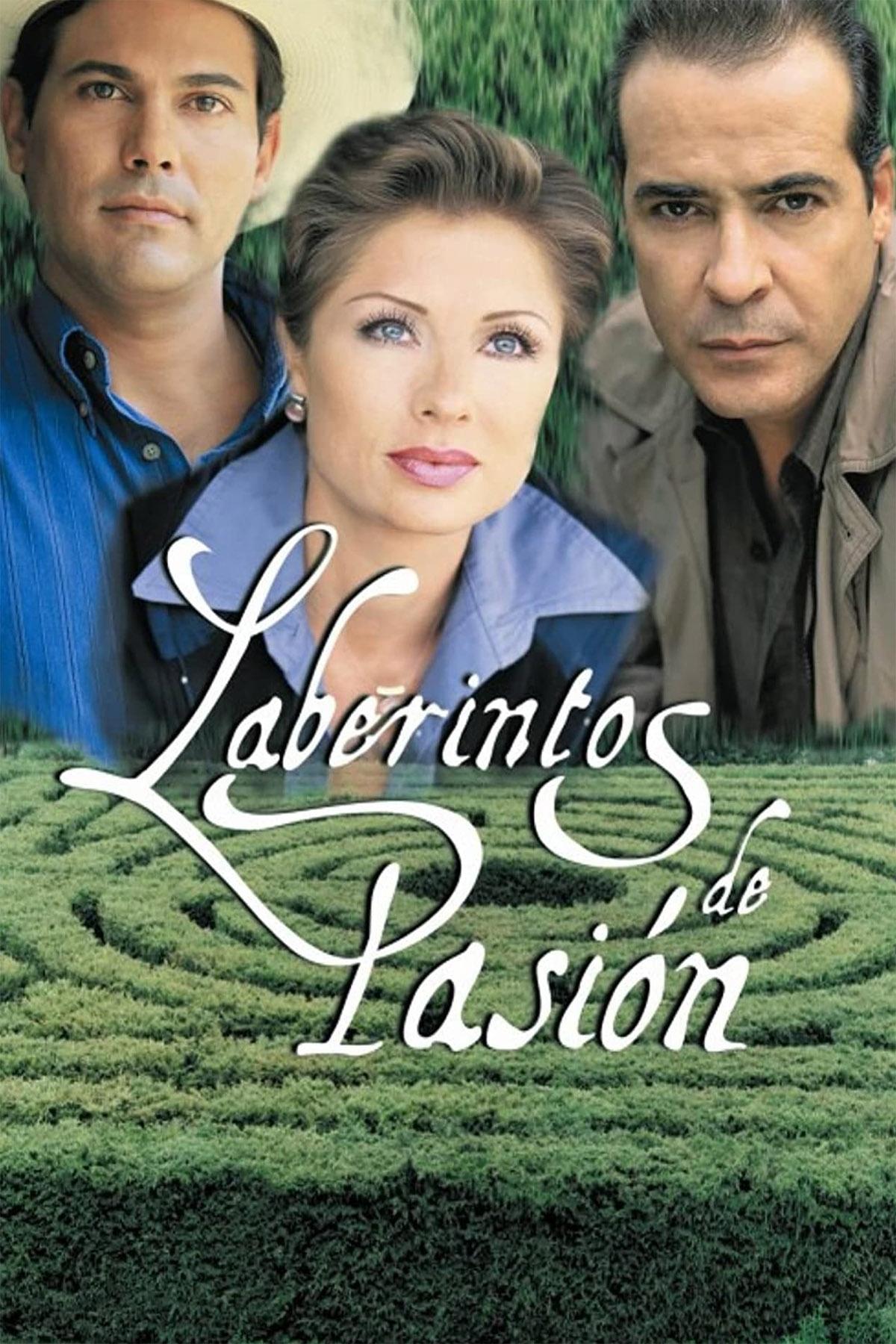
Laberintos de pasión is a Mexican telenovela produced by Televisa in 1999. Starring Leticia Calderon, Francisco Gattorno, César Évora, in addition to the participation of Manuel Ojeda, Monika Sanchez and Azela Robinson.
Paloma is a willful woman whose newborn baby is kidnapped by her own brother, Félix, who plans to become sole heir to the family’s fortune. Bruno is an honest man who, during the same night, loses his wife and son in childbirth and miraculously finds Paloma’s child in a dumpster. Destiny will unite their lives in a plot of secrets, revelations, and disputes, with the unpredictable consequences of lives based on a dangerous and surprising network of lies.
Alisa Lenz and luck? Her boyfriend cheats on her, then leaves her with a mountain of debts... She ruins her job application by angering the company's CEO... She loses the cut-glass pendant that was the only keepsake from her biological parents - and that was her good-luck charm... Decidedly, luck does not seem to smile on Alisa. But if you think this is enough to keep her from pursuing her goal of happiness and fulfillment, you don't know Alisa!
In the early 20th century, the Montes de Oca family—comprising two sisters and a cousin—finds itself entangled in an intense love triangle. Matilde is in love with her cousin Rodrigo, who loves the other sister, Branca Flor; she, in turn, loves a humble fisherman. Upon discovering this, Rodrigo accuses the fisherman of theft, leading to his arrest. The lovestruck cousin’s malice knows no bounds; learning that Branca Flor is carrying the fisherman's child, he waits for the baby to be born so he can make it disappear.
Morir dos veces is a Mexican telenovela produced by José Rendón for Televisa and originally broadcast on Canal de las Estrellas from February 26 to May 10, 1996. Created by José Rendón, with adaptation by Ximena Suárez, co-adaptation by Alfonso Espinosa, and literary editing by Martha Carrillo, the telenovela stars Eduardo Palomo and Carina Ricco. The story follows Silvana, a devoted wife whose life is shattered when her husband, Cristóbal, suddenly dies under mysterious circumstances. As the police uncover his connections to organized crime and suspect Silvana of murder, she becomes entangled in a dangerous web of deception, revenge, and betrayal. Meanwhile, the man everyone believed to be dead returns with a new identity, determined to destroy those who betrayed him.
Estrella Contreras, a single mother struggling to raise her daughter Azul, finds herself having to return to her hometown after the fateful death of her father Ulises, where she meets Fabián Bravo, a widowed father and fisherman by profession who is fighting to regain custody of his teenage daughter Yazmin. Love blossoms between them, but it will be complicated by the intrigues of Érika Méndez, Fabián's ex-partner, and the ambition of Sergio Falcón, a powerful businessman and Azul's father, who will relentlessly seek to prevent this relationship, even if it means ending the customs and traditions of an entire fishing village, which will lead Fabián and Estrella to face a hurricane of calamities, always putting the well-being of their families first.
Triángulo is a Mexican telenovela produced by Ernesto Alonso for Televisa and originally broadcast on Canal de las Estrellas from August 3 to November 20, 1992. Created by María Zarattini and adapted by Irma Ramos, the telenovela stars Daniela Castro and Eduardo Palomo. The story follows Sara Granados, a kind-hearted young woman who is constantly mistreated by her stepmother and stepsister. After being deceived by the ambitious David and becoming pregnant, Sara finds support in his brother Iván, who falls in love with her. As David returns determined to reclaim her, the three become entangled in a love triangle marked by family conflicts, betrayal, and the search for happiness.
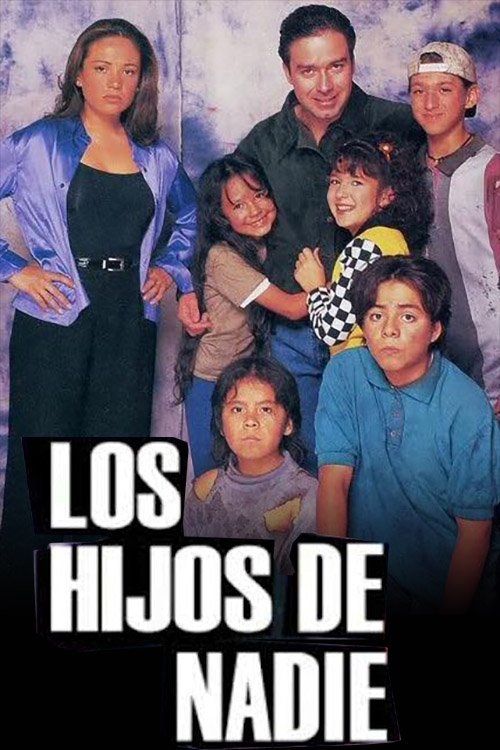
Los hijos de nadie is a Mexican social drama telenovela produced by Miguel Sabido and Irene Sabido for Televisa and originally broadcast on Canal de las Estrellas from February 24 to June 20, 1997. Created by Miguel Sabido, with adaptation by Miguel Sabido, Verónica Suárez, Andrea Ordóñez, Rosa Ana Curiel, and Kary Fajer, the telenovela was supported by UNICEF to raise awareness about the situation of homeless children in Mexico. The story follows Doña Leonor, an elderly woman who loses her daughter and granddaughter in a tragic accident. Seeking to overcome her loneliness, she dedicates herself to helping a group of children living on the streets of Mexico City. Alongside Verónica, a young woman who brings hope to the children through her puppet shows, Leonor faces the challenges of poverty, abandonment, and the people who seek to exploit those most vulnerable.
After serving part of his sentence in a military prison for having appropriated a millionaire FARC cove, Lieutenant Solórzano and his men regain their freedom, but they find themselves with a bleak reality. Outside the army, they are men singled out by society, penniless and haunted by the shadow of their past.
A poor young woman, unhappy with her inevitable destiny as a suburban housewife, gets a job as a nanny for a wealthy family and falls in love with her employer's brother, using every trick to win him over and ultimately become the lady of the mansion. .
Maricruz and Beatriz are school friends; Beatriz comes from a well-to-do family, whereas Maricruz belongs to a lower socioeconomic stratum. Both are on the verge of turning fifteen and are preparing to leave childhood behind. Issues within their family and social environments affect them directly; for Beatriz, her parents' marital breakdown becomes the primary obstacle to overcome, compounded by a sexual awakening fraught with taboos and misinformation. Meanwhile, Maricruz must contend with her mother's overprotectiveness and prejudices, as well as the tension caused by a neighbor who is obsessed with her.
A telenovela that dramatizes the romances and rivalries between two brothers and two sisters in Mexico between the years 1885 and 1900.
¡Válgame Dios! is a Spanish-language Venezuelan telenovela written by Mónica Montañéz for Venevisión. Sabrina Seara and Eduardo Orozco star as the main protagonists while Ricardo Alamo, Carlota Sosa and Raquel Yanez star as the main antagonists.
Emiliano, a wealthy Mexican businessman, is ripped off by his friends and partners. Hidden in Bogotá, he receives help from Rosario, a mariachi singer. She does not know Emiliano’s background and that he is wanted by the police of two countries and by a criminal organization. With a new name and personality, he adapts well to his new life as a mariachi band member and finds in Rosario the love of his life. But he is afraid his secret will tear them apart. He needs to clear his name and resolve his case to avoid that fate. Meanwhile, he often finds his love tested and vulnerable to several rivals, but Rosario always trusts that he has been honest with her.
True love threatens to tear a family apart in this epic Mexican serial set in the 1800s. Rich and beautiful Matilde falls in love with Adolfo, but her mother, Augusta, disapproves of the relationship when she learns Adolfo is poor. Augusta forces her daughter to marry rich and handsome Manuel Fuentes Guerra, but Matilde plays with fire by continuing to be with Adolfo. Adela Noriega, Fernando Colunga, Helena Rojo and Chantal Andere star.
After witnessing a murder, single mother Estela Carrillo must hide the fact that she is an undocumented immigrant escaping a dark past. While hiding her secret, romantic interests and her dream of becoming a singer complicate her plans.
La Mujer Del Vendaval is a 2012 Mexican telenovela produced by Mapat L. de Zatarain for Televisa. It is a remake of the Venezuelan telenovela Un Esposo para Estela. Ariadne Díaz and José Ron star as the main protagonists, while Chantal Andere, Marco Muñoz, Manuel Flaco Ibañez and Florencia del Saracho as the main antagonists.
When Refugio and her three sons—Patricio, Edmundo, and Ignacio—are forced out of their home, a twist of fate brings them to Mexico City, where they begin a new life. Eighteen years later, they are settled in a small apartment in a working-class neighborhood. Refugio holds a modest job; although she suffers from serious vision problems, she neglects her own health to attend to her sons' needs. Patricio is studying law and dreams of a comfortable, prosperous future; his mother admires him for his charitable nature. Meanwhile, Edmundo begins courting Lucero—unintentionally hurting Ignacio, who secretly loved her—while Refugio tries in vain to make Patricio understand that he will never be happy with Olga.
Paulino Córdoba, Gabino Roura, Rodolfo Huerta, and Matías Quiroga have been friends since childhood; however, as adults, their priorities shifted, and a sin now threatens to destroy their friendship. Paulino owns the El Milagro apple hacienda and is married to Rosario; they have two children, César and Lucrecia. Rosario has always favored her son while openly rejecting her daughter. Lucrecia was raised by Delfina, Rosario’s maid and Manuel’s mother.
Two very different families live in the village of Santa Lucía who are involved in a whirlwind of passion, pain, and revenge. The rivaling families are the Mendozas and the Alcocers. Severiano Mendoza and Candela Santana are a rich and powerful marriage who live at the ranch, "Las Ánimas", along with their young son, Cristóbal. Roberta and Raymundo Alcocer also have a daughter named Alonza; however, they do not live with the same luxuries as the Mendoza family, which causes frustration and resentment in Roberta as nothing is enough to fill the inferiority complex that follows her like a shadow.
La Impostora, is a Spanish-language telenovela presumably to be produced by United States-based television network Telemundo Studios, Miami.
Lola... Érase Una Vez is a teen targeted Mexican melodrama telenovela produced by Televisa that is an adaptation of the Argentine global phenomenon and teenage telenovela Floricienta. The show tells the story of a modern Cinderella, Lola, a 20 year old girl, who works as a nanny and sings in a rock band and meets her so call Prince Charming. It debuted in Mexico on February 26, 2007, starring Aarón Díaz and Eiza González. The show had gained popularity among teens and children not only in Mexico but also internationally including Venezuela, Spain and the in United States. With concert performances filling major auditoriums and songs by the protagonist become radio hits. It debuted in the United States on Univision in March 2008 and ended on January 26, 2009. The series consisted of 224 episodes which aried Monday through Friday at 3 P.M, intentionally for teenagers to watch after school, as is typical for most teenage & children telenovelas in Spanish networks.
Danna Paola stars as Patito, Eleazar Gómez as Mateo, Violeta Isfel and Cynthia Klitbo, play antagonist roles as Antonella and Bianca. The telenovela features adult protagonists also, René Strickler and Vanessa Guzmán. It first aired on Sunday, 8 March 2009, as the first telenovela to debut on a Sunday in Mexico. After a year of success, becoming a major hit in Mexico, especially among children, its final episode was also on a Sunday, 7 March 2010.
Popular telenovela produced in Mexico in 1979, starring Verónica Castro, Rogelio Guerra and Rocío Banquells. Castro also sang the theme Aprendí a Llorar, a song written by Lolita de la Colina. The telenovela was produced by Chilean Valentín Pimstein and Carlos Romero, it was directed by Rafael Banquells. The story was written by Inés Rodena and adapted by Valeria Philips.
Yo no creo en los hombres (I don't trust men anymore) is a Mexican telenovela produced by Giselle González for Televisa. It is based on Yo no creo en los hombres (1991), produced in México.
Mi Pequeña Traviesa is a Mexican youth and family telenovela produced and directed by Pedro Damián for Televisa and originally broadcast on Canal de las Estrellas from December 8, 1997, to April 24, 1998. It is an adaptation of the Argentine telenovela Me llaman Gorrión, created by Abel Santa Cruz. The telenovela stars Michelle Vieth and Héctor Soberón. The story follows Julia González, a young woman whose dreams of pursuing a professional career are interrupted after her father is left paralyzed in an accident. To support her family, she disguises herself as a boy in order to find work. Along the way, she falls in love with Alberto Miranda, and together they must overcome social differences, family conflicts, and the many obstacles that stand in the way of their happiness.
La malquerida is a Mexican telenovela produced by José Alberto Castro for Televisa. It is an adaptation of the play "La malquerida", written by Spanish playwright Jacinto Benavente. Victoria Ruffo and Christian Meier will star as the adult protagonist, Ariadne Díaz and Mane de la Parra will star as the young protagonists, while Brandon Peniche will star as the main antagonist.
The story of two lawyers specializing in family law, Ricardo and Alejandra, that despite coming from two disappointments and being in a world where it seems that love loses strength, before so much divorce, they still have faith in finding true love.
Juan de la Cruz, a young seminarian, visits the home of his mother, Ana Joaquina—a religious zealot who has always imposed her will on her son and instilled in him a calling to serve God. Working in Ana Joaquina’s household is Luciana, an innocent, dreamy young woman who falls in love with Juan de la Cruz. One night, swept up in the passion of youth, they give in to their feelings with tenderness and innocence. Upon discovering this, Ana Joaquina throws Luciana out; by then, Luciana is already pregnant with Juan de la Cruz’s child. When the time comes to give birth, she leaves her daughter at a stranger's doorstep, hoping the child will be raised there, but the baby is instead taken to an orphanage. To survive, Luciana becomes involved with a series of unsavory men—including Pedro Trujillo, a brutal man who beats and abuses her.