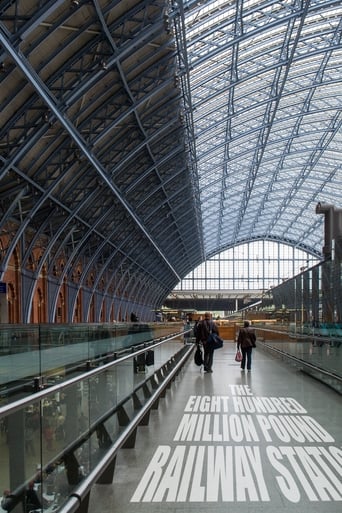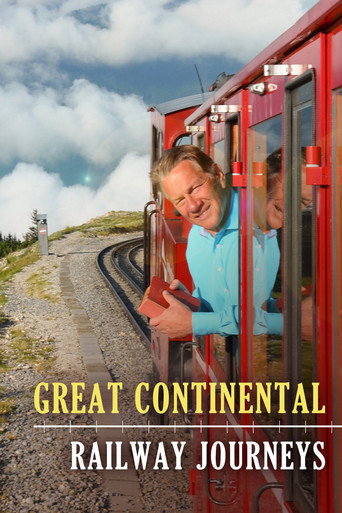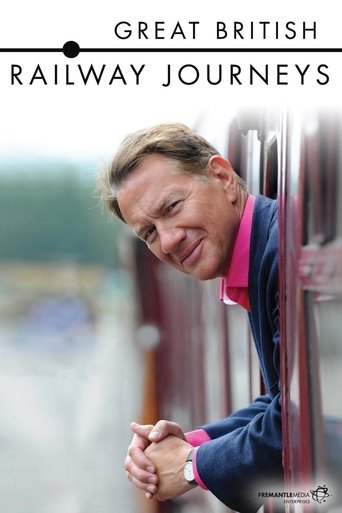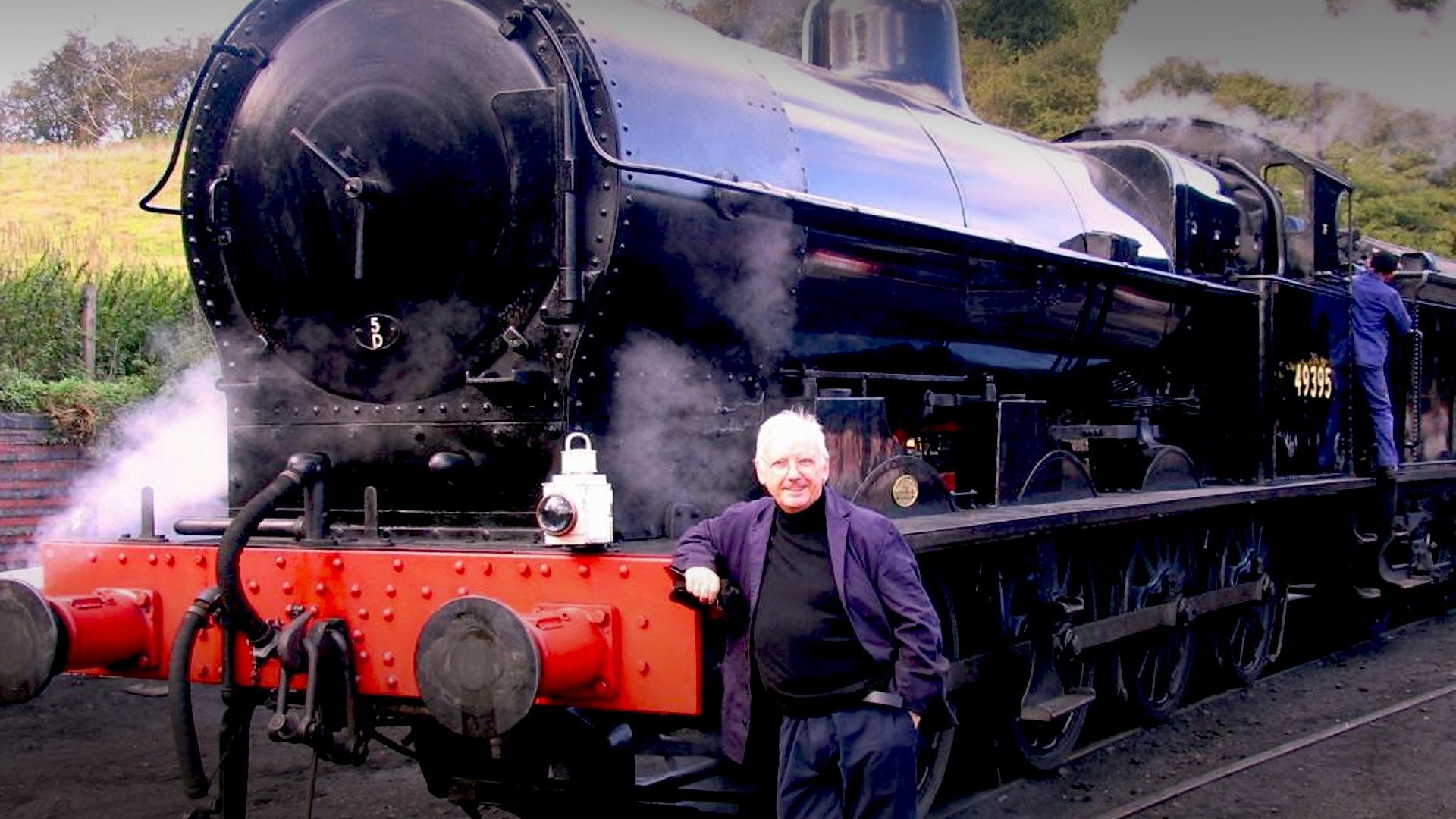
Filmed on location across the UK, the one-time owner of the Flying Scotsman presents a four-part series examining the history of Britain's railways
Social & External
Self - Presenter
Professor Alice Roberts travels across Greece and thousands of years back to our collective past, tracing how the Ancient Greeks developed philosophy, art, theatre and democracy.
A 4-part documentary series capturing the compelling story of James J. Hill and the Great Northern Railway.
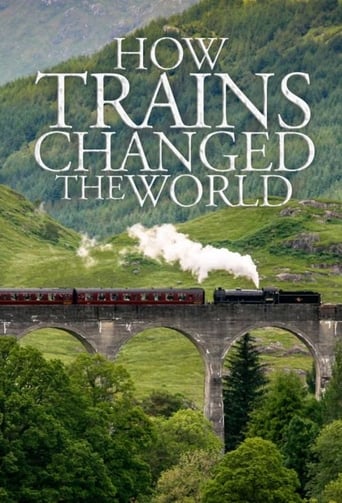
How four iconic British-built trains revolutionised rail travel and inspired incredible railway projects the world over.
A enjoyable low budget variety program about female railroad enthusiasts ("tetsu ota"). The girls who just love trains, travel around the country by themselves. Real railroad trips where nothing may happen. Watch out for the unique ways that women who love trains can enjoy trains!
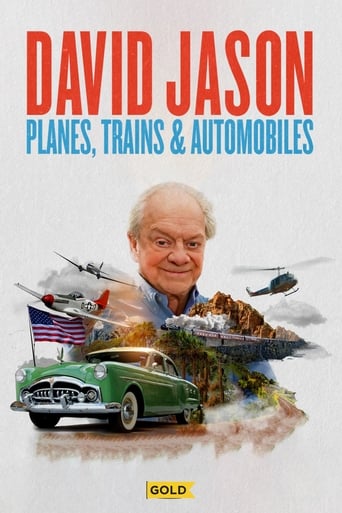
In this five-part series, comedy legend Sir David Jason hits the West Coast of the USA. He’s on a revealing and entertaining journey of a lifetime by planes, trains and automobiles, discovering the machines that made America and changed the world.
British comedian and travel enthusiast Griff Rhys Jones hops on some of Australia's most impressive long distance trains, travelling across the expansive outback and along spectacular coastlines.
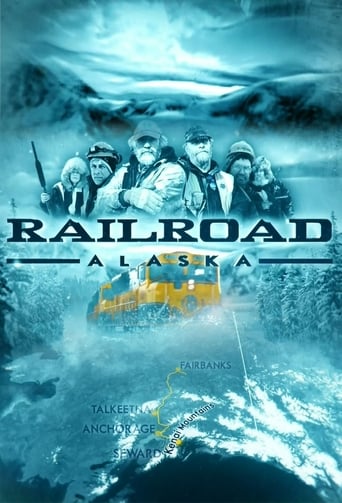
Following an elite crew of workers-- brakemen, engineers, construction crews, mechanics and train drivers – Railroad Alaska illustrates the battle against ferocious weather and treacherous terrain to keep the State of Alaska’s critical 500-mile long railroad rolling to deliver life sustaining supplies. From controlled avalanches to prevent catastrophe, to fascinating characters, like Jim James, the one-handed handy man, learn what it takes to keep this train on track.
Michael Portillo takes to the tracks with a copy of George Bradshaw's Victorian Railway Guidebook. Portillo travels the length and breadth of the country to see how the railways changed us, and what of Bradshaw's Britain remains.
A major political, historical, human and economic fact of the 20th century, the Gulag, the extremely punitive Soviet concentration camp system, remains largely unknown.
Criss-cross Japan by rail. Enjoy an amazing diversity of nature and scenery across the four seasons, exploring both well-known and hidden Japan.
The mere mention of the Orient Express brings to mind evocative images of opulent carriages, stylish passengers and thrilling destinations all wrapped up in the romance of train travel. Jonathan Phang, a self-confessed bon viveur with a passion for gastronomy, feels the allure of old world glamour and sets off on a gourmet journey crossing continents aboard some of the world’s most elegant trains. Along the way he stops off in extraordinary culinary destinations, such as Venice, Paris and Istanbul to explore some modern fine dining. However, it is aboard the fabulous trains that Jonathan truly tests the old adage that sometimes it can be better to travel than to arrive.
The stories behind the iconic structures and engineering feats that have shaped and defined our nation and our world.
In this series, Griff Rhys Jones embarks on a leisurely journey across Africa, utilizing the continent's railways as a means to truly experience its beauty and charm. Spanning 7,000 miles over five separate journeys, Griff explores diverse landscapes, encounters remarkable wildlife, and meets intriguing individuals. Through a combination of breathtaking aerial footage and insightful travelogue, Griff shares his unique perspective on Africa, gained from his experiences on and off the train. As he traverses the continent in five episodes, Griff discovers how the railway network offers a window into the history, culture, and daily life of the places he visits. By train, he ventures into remote deserts, forests, villages, and cities, uncovering their stories and learning about their modern-day significance.
Michael Portillo examines the role of the railways in World War I and travels through Britain and Europe uncovering stories from the Great War.
The railway age in the Austrian Empire began with the construction of the horse-drawn railway from Linz to Budweis. Plans soon followed to connect the imperial capital of Vienna with the iron and coal deposits in northern Moravia and with the port city of Trieste. In 1837 the Kaiser Ferdinands Nordbahn was opened, in 1857 the Semmeringbahn planned by Karl Ritter von Ghega, overcoming one of the most difficult obstacles on the way to the Adriatic. The crossing of the Alps by train, such as over the Arlberg or the Brenner, is still considered a unique engineering masterpiece. The expansion of the railway network brought epochal changes. Goods and people circulated on an unprecedented scale – life accelerated. It had succeeded in connecting the northern crown lands such as Silesia or Bohemia and Moravia with Carinthia, Tyrol or the coastal region.