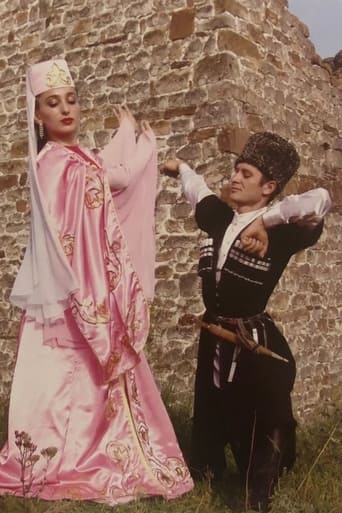
An actuality film showing a Buddhist festival in Kyoto. The procession includes Buddhist monks, geishas, and others dressed coordinately to the Japanese tradition.
Social & External
In the 70s, Barsham Faire on August Bank Holiday became a tradition for many to celebrate things 'medieval' and raise funds for local arts events. It put Barsham on the map.
Illustrated by numerous archives and unpublished testimonies in France, this documentary traces the progress of the aborted edition of the Cannes Festival in 1968.
The film tells two parallel stories. One, set in the present, tells of a pagent about the conquest of America, while the other, set in the 15th century, tells of a group of conquistadors coming ashore searching for gold. The film takes place in an unnamed country.
More than 50 years ago, the Tibetan Bon Buddhist tradition was driven from its refuge deep within the Himalayas. This is the story of the long and difficult journey that followed. Told through the lens of one Bon teacher born in exile -- Tenzin Wangyal Rinpoche -- this film reveals something very precious and very old: a rich spiritual heritage, hidden for millennia, whose secret teachings are only now becoming known to the world. There may be no unbroken spiritual tradition more ancient than Bon, which traces its beginnings to a buddha who predates Shakyamuni by thousands of years. Yet this tradition today may be facing its greatest challenge thus far: to preserve its rich heritage beyond the land of its birth.
Choenzey is a 47-year-old monk living in a Tibetan refugee monastery in South India. His spiritual master, Khensur Rinpoche, a revered high lama, has been dead for four years. According to Tibetan belief, he will soon be reincarnated. It is Choenzey's responsibility, as his closest disciple, to find the reincarnation and to look after him. The film follows Choenzey's search and his eventual discovery of an impish but gentle 4-year-old boy who is recognized by His Holiness the Dalai Lama and the Tibetan State Oracle to be the reincarnation. Without sentimentality, the film captures the moving relationship that develops between the erstwhile disciple and his young master. (columbia.edu)
Shannon Harvey was working in her dream job as a radio news journalist when, at the age of 24 she was diagnosed with a devastating auto-immune disease. Determined to find a solution, she began researching cutting-edge mind-body medicine. Is it really possible, she wonders, that a simple practice that can be done anywhere, any time, by anyone, can ease suffering and promote physical and mental healing? Synthesizing the work of leading scientists with the ways of mystics, she undertakes a year-long experiment, with herself as the subject. Will meditation revolutionize her health and well-being, or is it just another over-hyped self-help fad? This compelling account of her journey provides fascinating insights about how to be well and happy in the modern world.
A revealing one-shot portrait of two Nepali newlyweds in a moment of rest and playful interaction, Stephanie Spray's Untitled challenges our perception of two themes at the very core of ethnographic filmmaking: human relationships and the ways in which they can be experienced by the viewer. Only fourteen minutes long, Untitled is uncut, rejecting the implications of edited sequences and also purposefully excluding subtitles over the couple's conversation. The style of the film confronts the history of ethnography as a controversial study of the "other" by refusing us any clear messages or meanings behind what is being presented, challenging the viewer to come up with their own answers to any questions that may arise.
The Odd Monk is a personal journey through modern day Buddhism. German first time Filmmaker Jesco Puluj travels around the world, meeting a variety of monks and nuns to discover the essence of Buddhism.
Documentary on the Great Stupa at Sanchi, built by the Emperor Ashoka, and adorned with some of the finest examples of Buddhist art in the world.
Narrated by Leonard Cohen, this two-part series explores ancient teachings on death and dying and boldly visualises the afterlife according to Tibetan philosophy. Tibetan Buddhists believe that after a person dies, they enter a state of "bardo" for 49 days until a rebirth. Program 1, The Tibetan Book of the Dead: A Way of Life documents the history of The Tibetan Book of the Dead, tracing the book's acceptance and use in Europe and North America. Program 2, The Tibetan Book of the Dead: The Great Liberation observes an old Buddhist lama and a 13-year-old novice monk as they guide a deceased person into the afterlife.
Speed, emotion, dream. Smoke and Rubber follows the drivers of Istanbul who dedicate it all to modified car culture. Beyond the noise, it traces how speed, sound, and the performance of masculinity define a way of living, from the garage to the streets. Based on ongoing research, this is a reflective portrait of a noisy world.
A cinematic journey through the world. Non-verbal.
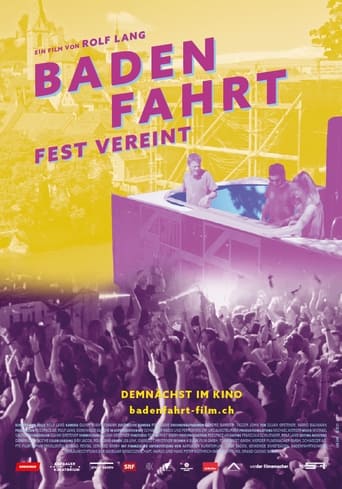
Once every decade, an extraordinary folk festival puts the small town of Baden in an exceptional state of vibrancy that resonates far beyond its borders. Thousands of people contribute to the success of the Badenfahrt in numerous clubs and pubs - a festival that unites the many volunteers for ten days and nights. Over a million people celebrated the last Badenfahrt. Some of the diverse people, whether asylum seekers or CEOs, who played an active role, are accompanied by this cinema documentary. Whether it's a handful of friends daringly building a pub on a steep slope, a young team turning night into day with a party club, or half a village aiming high with its rocket launching ramp: the countless helpers, who go their own ways in normal life, join forces to create something unique before, during and after the Badenfahrt. This feel-good movie is an emotional plea for diversity and for volunteerism in a country where associations are an important pillar of society.
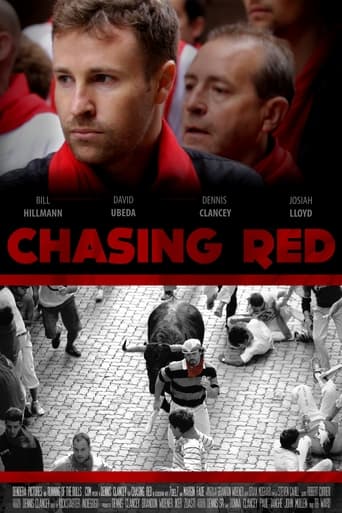
Everyone has heard of Pamplona's Running of the Bulls, yet so few know much about it. Even fewer know that there is an elite group of runners who brave dozens of bull runs each year, risking their life to run inches away from the sharp horns of the 1000+ pound ferocious animals they revere. Chasing Red is a character-driven documentary following 4 runners across the eight bull runs of a single fiesta in Pamplona. Braving through injury and looming risk of death, they embark on an endeavor that will shape their lives forever.
Three leading figures in today's Buddhist-Christian dialogue share their personal journeys in the new documentary Jesus and Buddha: Practicing Across Traditions. We learn how following the path of the Buddha has informed and deepened their understanding of who Jesus was and what he taught. Their experience and insight bring these two liberating archetypes alive in a way that can help guide us through our own confusion and struggle toward lives filled with joy and gratitude, compassion and service.
Referred to as "Woodstock of the 80s", the US Festival was iconic with over 2 million attendees. Created by Apple co-founder Steve Wozniak and legendary concert promoter Bill Graham, the Us Festival assembled the best bands in the world including The Police, Tom Petty, Fleetwood Mac, Santana, Jackson Browne, Eddie Money, Jerry Jeff Walker, Jimmy Buffett, The Cars, Talking Heads, Ramones, Grateful Dead, Pat Benatar & The B52s.
Children parade through the streets of Hinton St George in Somerset on the last Thursday of October. Children have hollowed out pumpkins or mangelwurzels, a type of animal fodder turnip to make lanterns following a tradition in this part of West Somerset that coincides with Halloween. Punky or Punkie Night is thought to date from the turn of the 20th century or perhaps medieval times chanting rhymes and following a Punkie King and Queen.
In this fascinating and unusual conversation, writer and physician Deepak Chopra talks to religion professor Robert Thurman about the connections and differences between two of India's most important philosophical beliefs: Vedanta and Buddhism. Chopra explores the foundation of Vedanta, while Thurman -- the father of actress Uma Thurman -- provides the Buddhist point of view in this meeting held in 1999 at New York City's Tibet House.
From the creators of You Can Heal Your Life: The Movie comes a compelling portrait of three modern lives in need of new direction and new meaning. In his first-ever movie, Wayne Dyer explores the spiritual journey in the second half of life when we long to find the purpose that is our unique contribution to the world. The powerful shift from the ego constructs we are taught early in life by parents and society—which promote an emphasis on achievement and accumulation—are shown in contrast to a life of meaning, focused on serving and giving back. Filmed on coastal California’s spectacular Monterey Peninsula, The Shift captures every person’s mid-life longing for a more purposeful, soul-directed life.
In Nepal, a venerable monk, Geshe Lama Konchog, dies and one of his disciples, a youthful monk named Tenzin Zopa, searches for his master's reincarnation. The film follows his search to the Tsum Valley where he finds a young boy of the right age who uncannily responds to Konchog's possessions. Is this the reincarnation of the master? After the boy passes several tests, Tenzin takes him to meet the Dali Lama. Will the parents agree to let the boy go to the monastery, and, if so, how will the child respond? Central to the film is the relationship the child develops with Tenzin.
A paralysingly beautiful documentary with a global vision—an odyssey through landscape and time—that attempts to capture the essence of life.
A documentary about how a dominant cultural and demographic institution both sustains their traditional activities and adapts to the digital revolution.
A documentary on the expletive's origin, why it offends some people so deeply, and what can be gained from its use.
A compilation of over 30 years of private home movie footage shot by Lithuanian-American avant-garde director Jonas Mekas, assembled by Mekas "purely by chance", without concern for chronological order.
Narrated by Benedict Cumberbatch, Walk With Me is a cinematic journey into the world of a monastic community who practice the art of mindfulness with Zen Buddhist master Thich Nhat Hanh.
This character-driven film considers the evolving sex trafficking landscape as seen by the main players: the exploited, the pimps, the johns that fuel the business, and the cops who fight to stop it.
A visual montage portrait of our contemporary world dominated by globalized technology and violence.
Nine filmmakers each profile a young girl from a different part of the world to weave a global tapestry of youth in the 21st century.
Ross McElwee sets out to make a documentary about the lingering effects of General Sherman's march of destruction through the South during the Civil War, but is continually sidetracked by women who come and go in his life, his recurring dreams of nuclear holocaust, and Burt Reynolds.
Lyrical and powerfully personal essay film that reflects on the deaths of her husband Lou Reed, her mother, her beloved dog, and such diverse subjects as family memories, surveillance, and Buddhist teachings.
Through deeply personal interviews with her siblings and an examination of the photographs, letters, and belongings left behind, Mariska assembles a new portrait of her mother Jayne Mansfield, an extraordinary and complex woman.
A detailing of the rise to prominence and global sporting superstardom of six supremely talented young Manchester United football players (David Beckham, Nicky Butt, Ryan Giggs, Paul Scholes, Phil and Gary Neville). The film covers the period 1992-1999, culminating in Manchester United's European Cup triumph.
SEDUCED AND ABANDONED combines acting legend Alec Baldwin with director James Toback as they lead us on a troublesome and often hilarious journey of raising financing for their next feature film. Moving from director to financier to star actor, the two players provide us with a unique look behind the curtain at the world's biggest and most glamourous film festival, shining a light on the bitter-sweet relationship filmmakers have with Cannes and the film business. Featuring insights from directors Martin Scorsese, 'Bernando Bertolucci' and Roman Polanski; actors Ryan Gosling and Jessica Chastain and a host of film distribution luminaries.
This revealing documentary honors the legendary Sidney Poitier—iconic actor, filmmaker, and civil rights activist. Featuring interviews with Denzel Washington, Spike Lee, Halle Berry, and more.
Daniel Craig candidly reflects on his 15 year adventure as James Bond. Including never-before-seen archival footage from Casino Royale to the upcoming 25th film No Time To Die, Craig shares his personal memories in conversation with 007 producers, Michael G Wilson and Barbara Broccoli.
Stars of "The Walking Dead," Andrew Lincoln and Danai Gurira, walk down memory lane and visit iconic locations where pivotal moments between their characters, Rick and Michonne, were filmed.
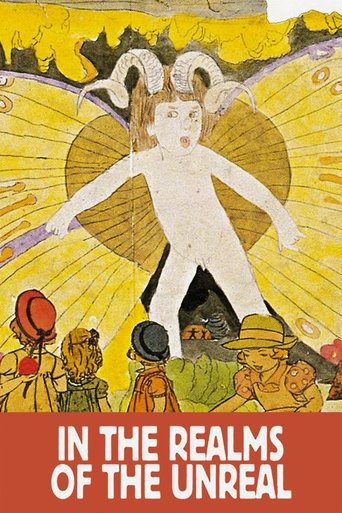
In the Realms of the Unreal is a documentary about the reclusive Chicago-based artist Henry Darger. Henry Darger was so reclusive that when he died his neighbors were surprised to find a 15,145-page manuscript along with hundreds of paintings depicting The Story of the Vivian Girls, in What is Known as the Realms of the Unreal, of the Glodeco-Angelinnian War Storm, Cased by the Child Slave Rebellion.
Those who knew iconic funnyman John Candy best share his story, in their own words, through never-before-seen archival footage, imagery, and interviews.
A dreamlike conversation with the past and the present, reimagining Latasha Harlins' story by excavating intimate memories shared by those who loved her.
The film follows adventurer Jeff Johnson as he retraces the epic 1968 journey of his heroes Yvon Chouinard and Doug Tompkins to Patagonia.