This documentary, produced by Paul Burnford, features how products are made in factories. It uses an example of a jack-in-the-box produced by Mattel.
Social & External
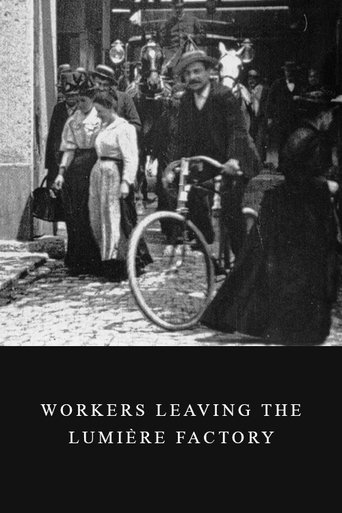
Working men and women leave through the main gate of the Lumière factory in Lyon, France. Filmed on 22 March 1895, it is often referred to as the first real motion picture ever made, although Louis Le Prince's 1888 Roundhay Garden Scene pre-dated it by seven years. Three separate versions of this film exist, which differ from one another in numerous ways. The first version features a carriage drawn by one horse, while in the second version the carriage is drawn by two horses, and there is no carriage at all in the third version. The clothing style is also different between the three versions, demonstrating the different seasons in which each was filmed. This film was made in the 35 mm format with an aspect ratio of 1.33:1, and at a speed of 16 frames per second. At that rate, the 17 meters of film length provided a duration of 46 seconds, holding a total of 800 frames.
Megacities is a documentary about the slums of five different metropolitan cities.
As a decades-old state-run aeronautics munitions factory in downtown Chengdu, China is being torn down for the construction of the titular luxury apartment complex, director Jia Zhangke interviews various people affiliated with it about their experiences.
MANUFACTURED LANDSCAPES is the striking new documentary on the world and work of renowned artist Edward Burtynsky. Internationally acclaimed for his large-scale photographs of “manufactured landscapes”—quarries, recycling yards, factories, mines and dams—Burtynsky creates stunningly beautiful art from civilization’s materials and debris.
In Portugal, the daily life of a bronze foundry, specialized in the semi-industrial production of spare parts for the naval field, is compared with the freedom of spirit characterizing the "pottery of monsters" on a village square where everyone gathers.
The word panchão was first heard in Macao. From the Chinese pan-tcheong or pau-tcheong, dictionaries define it as a Macanese regionalism also known as China cracker. Who inhabits the ancient IEC Long firecracker factory?
Four puppets that can't leave their house because of quarantine, decide to make a short film, but they have no idea what to make it about.
In the spring of 1984, a strange new comic book sat beside cash registers in select shops, too big to fit in the racks, and too weird to ignore. Eastman and Laird's Teenage Mutant Ninja Turtles presented a completely original breed of super hero. It was too bizarre, too crazy. It broke all the rules and should never have worked. Until it sold out. Again and again and again. For 30 years. Now, peek under the shell and see how this so-called "happy accident" defied every naysayer to become one of the most popular and beloved franchises in the world.
Film sponsored by the Troy, New York–based manufacturer of Arrow shirts to explain its reasons for moving its business down south. The true story of how two World War II veterans invited the company to occupy an industrial plant that they had built in the hope of revitalizing Buchanan, Georgia. Five hundred residents signed a pledge stating that they were willing to work in the new factory. Cluett, Peabody & Co. eventually employed one-third of the townspeople.
Discover the untold story of the first Black Barbie and the pivotal role three trailblazing women at Mattel had in creating a doll who looked like them.
On the Kainai (Blood) First Nations Reserve, near Cardston, Alberta, a hopeful new development in Indigenous enterprise. Once rulers of the western plains, the Bloods live on a 1 300-square-kilometer reserve. Many have lacked gainful employment and now pin their hopes on a pre-fab factory they have built. Will the production line and work and wages fit into their cultural pattern of life? The film shows how it is working and what the owners themselves say about their venture.
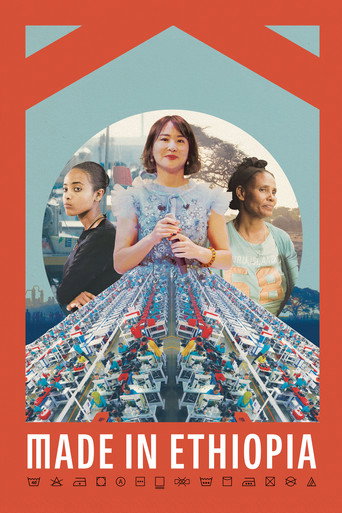
When a massive Chinese factory complex attempts a high-stakes expansion in rural Ethiopia, three women in search of prosperity have their faith in industrialization tested to the limit. Filmed over four years with singular access, Made in Ethiopia lifts the curtain on China’s historic but misunderstood impact on Africa, and explores contemporary Ethiopia at a moment of profound crisis. The film was awarded the Jury Special Mention at Tribeca Festival.
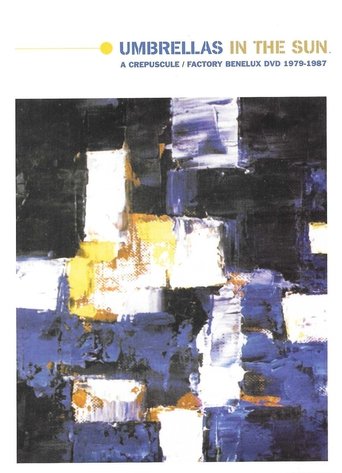
Umbrellas in the Sun takes its title from the 1981 video compilation of the same name released by chic Belgian label Les Disques du Crépuscule (TWI 099), and features selected clips from that project, as well as footage from A Factory Video (Fact 56), A Factory Complication (FBN 7) and A Factory Outing (Fact 71). Plus previously unseen material - the definitive genre document! Featuring cover art by Crépuscule design director Benoît Hennebert, the DVD contains 23 clips filmed between 1979 and 1987 and runs for over 2 hours. The audio soundtracks have been digitally remastered. The disc is Region 0 (multi-region), NTSC format.
The story of the factory worker Pietro Perotti, who worked at Fiat Mirafiori from 1969 to 1985 and participated in the workers’ protests by overseeing communications inside the factory, making stickers, wall posters, texts and drawings in the bathrooms, figures out of papier-mâché and foam rubber, and turning the protest marches into “street theatre.” With his movie camera, Perotti immortalized the situations and workers’ protests at Mirafiori until 1974. Thanks to this unpublished material, the movie paints a fresco of factory life in what used to be Europe’s biggest metalworking factory.
An original portrayal of a small Czech village where – as the locals put it – an UFO has landed in the form of a kilometre-long silverish factory: a Korean Hyundai automobile plant. The village, hitherto famous mostly for its sauerkraut and the “Radegast” beer was thus turned into an industrial zone – the largest greenfield investment project in the Czech Republic’s history. Nonetheless, for a long time many farmers resisted selling the land upon which the factory was now standing. Eventually, they all succumbed under the pressure from the neighbours, and even the anonymous death threats. The filmmakers returned to Nošovice two years after the dramatic property buyouts, at the time when the factory has just started churning out cheap cars. Combining the perspectives of seven characters, they have composed a portrayal of a place suddenly changed beyond recognition that is playful and chilling at the same time: a politically engaged absurd flick about a field that yields cars.
A cinema verite study of the world of the blue-collar worker and the economic and psychological bind in which he is caught.
Hot Wheels and Bobcat Studios are partnering to celebrate the 50th anniversary of the most popular — and disruptive — toy in the world, Hot Wheels.
A journey through a century of Ambrosoli family history.
Steve Glew, a small-town Michigan farmer, boards a plane for Eastern Europe soon after the fall of the Berlin Wall. His mission is to locate a secret factory that holds the key to the most desired and valuable pez dispensers. If he succeeds, he will pull his family out of poverty and finally find a purpose in his mundane life.
In a futuristic, antiseptic food factory, workers select healthy chicks, while the rejects are carried along a conveyor belt until they are crushed by a mallet and drop into a garbage bin. A single black chick appears among the yellow and is shoved toward the garbage bin. Before the mallet strikes, the gasping chick rebels.