"Step Into The Colours"
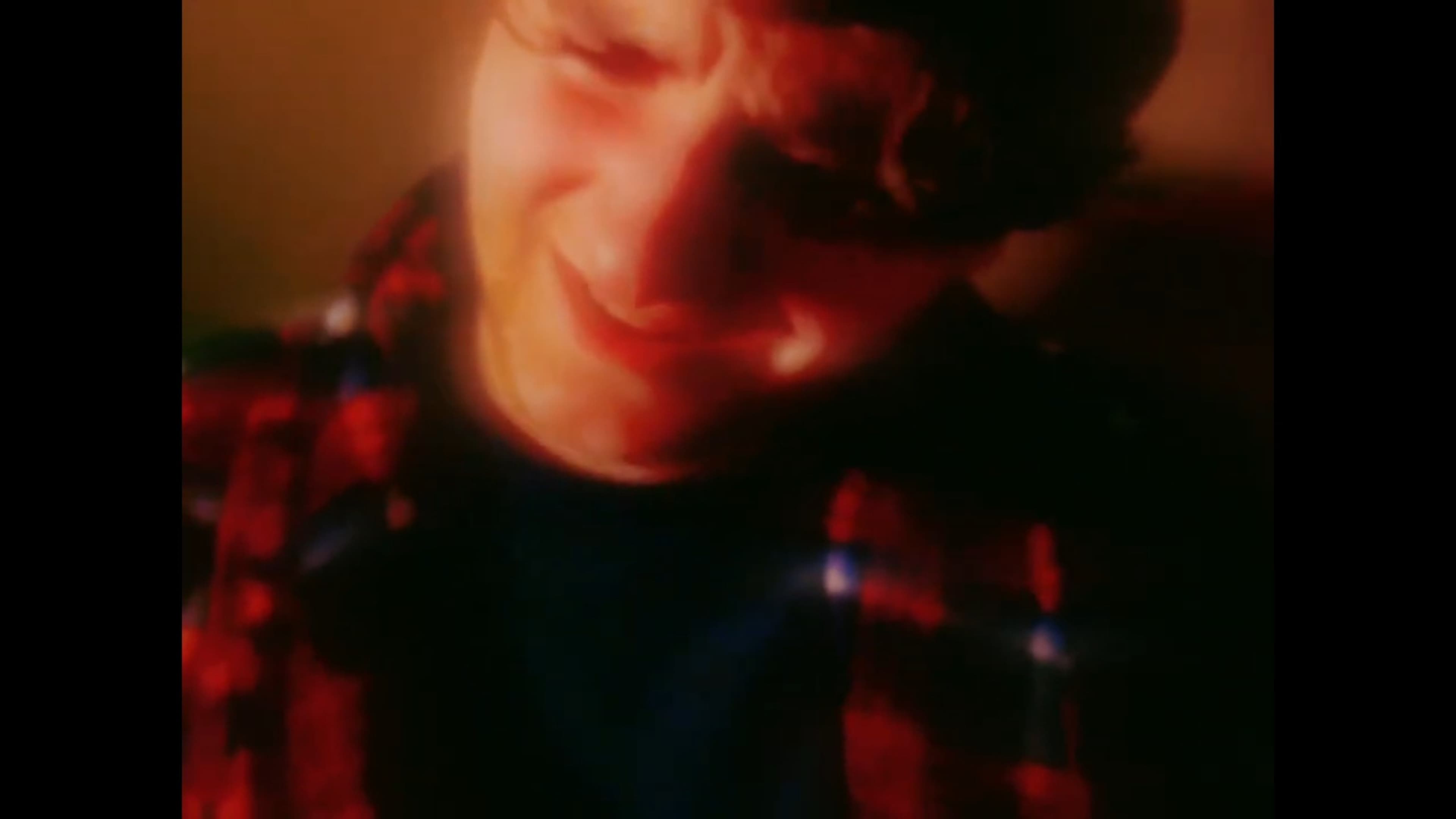
A psychadelic mental breakdown occurs. The lights are bright, the colours vivid, the images blurred, the mind absent.
Social & External
As she keeps watching old home movies isolated in her hotel room, the screen becomes a mirror from which she tries to see herself. Levels of subjectivity, narrative, and reality entwine into a surrealist fever dream of scopophilic cinéma pur. The final layer of meaning is all of us watching the film on the screen-mirror in the theatre.
Winter and summer, day and night, life and dreams. Lucid is all about duality. Anxious and awkward in real life, Everett decides to make a change. After coming across studies in the art of Lucid dreaming, Everett hopes to improve his inept social skills. Will having full control of his dreams help him feel complete? Find out in the second feature-length film imagined by Nate Ross & Daniel Walker: Lucid.
An experimental film revolving around how an artist perceives a man and a woman.
This short, started early on into sobriety, finished about nine months in, is a collage of diaries and notes, collected from within addiction and into recovery.
Over the course of three days Ross, a college dropout addicted to crystal-meth, encounters a variety of oddball folks - including a stripper named Nikki and her boyfriend, the local meth producer, The Cook - but all he really wants to do is hook up with his old girlfriend, Amy.
A 16mm experimental film that analogizes the discourse of racialized criminality and the carceral apparatus, which surveils and delimits the movements of Black people’s bodies, with the conventions and mechanics of the cinematic apparatus which regulates and standardizes the movement of the filmstrip through the motion picture camera and projector. Equal parts essay and visual art, Speaking in Tongues embodies the cinematic Black ecstatic that simultaneously re-envisions resistance defiance in the face of anti-Black state violence and subverts the conventions of cinematic realism through a manually and optically altered collage of original documentary and archival film sourced from Hollywood movies, television commercials, educational films, cartoons, European art cinema and miscellaneous ephemera.
X-ray images were invented in 1895, the same year in which the Lumière brothers presented their respective invention in what today is considered to be the first cinema screening. Thus, both cinema and radiography fall within the scopic regime inaugurated by modernity. The use of X-rays on two sculptures from the Bilbao Fine Arts Museum generates images that reveal certain elements of them that would otherwise be invisible to our eyes. These images, despite being generally created for technical or scientific purposes, seem to produce a certain form of 'photogénie': they lend the radiographed objects a new appearance that lies somewhere between the material and the ethereal, endowing them with a vaporous and spectral quality. It is not by chance that physics and phantasmagoria share the term 'spectrum' in their vocabulary.
Gary, a musician, is trapped in an unhappy relationship with his live-in lover, Dora. He becomes enthralled with a beautiful seductress who enters his dreams, and tries to control his dream-state so he can spend more and more time with her. When Gary sees his mystery woman's face on a bus billboard, he discovers she is real, and fate brings him an opportunity to meet her.
After a young girl discovers a fascinating art museum, she becomes attached to the artwork she comes across. Although over time, there is a strange shift in energy the more time she spends with the artwork.
A personal reflection on hands, the word "tear," and caring for oneself that experiments with sound, silence, and definitions.
After his death, a young man stuck in purgatory attempts to cope with the afterlife.
After his wife Amelia suffers an aneurysm that leaves her bedridden and slowly dying, police officer Carter Summerland searches for a way to revive her. He's approached by Wesley Enterprises pioneering a new program to extend life through robotics, they get caught in a public debate over human’s relationship with technology and her right to exist.
A nuclear family sits in front of the television. The phone rings.
Six sequences about Fascism and its segments throughout history.
Grappling with the complexities of mental health and trauma in a digital age that feels isolating and overwhelming, a young person embarks on a surreal journey of self-discovery, navigating the raw truths of adolescence in an attempt to find a place in the world.
Arda Wuyts experiments with editing and color.
What appears at first glance to be a patterned floor of traditional Islamic tiles is in fact an intricate installation of hand dyed sand. In a light-filled room in an abandoned house, the artist steps into frame to sweep it away, breaking the illusion and destroying the image of traditional heritage.
In the sprawling, desolate expanse of a grand house, resides a solitary girl. Haunted by memories and the weight of isolation, she spends her days wandering through its empty rooms—a labyrinth of forgotten corners and fading grandeur.