It follows Chilean writer Antonio Skármeta as he celebrates the end of the autocrats. Cheerful farewell rituals accompany others facing political persecution on their way to fly home.
Social & External
"Everybody should have a home. If you punish a nation, this is so abstract, it's very mean to use your power to put another country in your control... Instead of punishment, maybe we should have love." Eliane from Chile, Milad from Iran, and Georgia from Greece, three migrants in the UK and their thoughts on love, home, family, and Shakespeare's Romeo and Juliet.

This revealing portrait of Cuba follows the lives of Fidel Castro and three Cuban families affected by his policies over the last four decades.
After the World War I, Mussolini's perspective on life is severely altered; once a willful socialist reformer, now obsessed with the idea of power, he founds the National Fascist Party in 1921 and assumes political power in 1922, becoming the Duce, dictator of Italy. His success encourages Hitler to take power in Germany in 1933, opening the dark road to World War II. (Originally released as a two-part miniseries. Includes colorized archival footage.)
Four lucid grandmothers tell their story forgotten by history: the militancy and resistance of the young women of the leftist youth against the dictatorship of Marcos Pérez Jiménez.
Margherita Sarfatti, Mussolini's lover and advisor, was a woman who exerted a great influence on the Duce and on Italian cultural life. Through archival documents, autobiographical texts and love letters, the documentary paints a portrait of the woman who helped create the myth of the Duce.

Examines the career and literary output of Pablo Neruda, who makes his home at Isla Negra on the coast of Chile. Includes views of Mr. Neruda reading many of his poems in the locales which inspired them.
Dos Islas is a poetic story about old age, family and the bond between a granddaughter and a grandmother. The woman, who just turned 102, tells stories about her past and childhood. In a literary and visual way she describes the most minute details. The film dazzles the viewer with love and optimism, the time passes slowly between the two islands, which might be real people, real places or the products of the main character’s imagination.
Images of Argentinian companies and factories in the first light of day, seen from the inside of a car, while the director reads out documents in voiceover that reveals the collusion of the same concerns in the military dictatorship’s terror.
Documentary tells the story of the Chilean football club Colo-Colo, exploring its profound impact on popular culture and the everyday lives of its fans. Throughout the film, it shows how the club has transcended sport to become a symbol of resistance, pride, and class struggle in Chile.
Bruno Muel's documentary on the coup in Chile in 1973. Muel, who was part of the famed Medvedkine group, along with Chris Marker and Jean-Luc Godard, among others, captured one of the most powerful portraits of the early days of Dictatorship. Profound solidarity with the socialist cause, Muel and his team showed great courage to mix the official registration of images with those triumphant, clandestine, of the nascent opposition.
"The palm trees on the reverse are a delusion; so is the pink sand". This line, taken from a poem by Margaret Atwood, lights the path traced in "Postcard". As the years go by, landscapes transform, take on new meanings, and hold onto joys that will never be regained. The sea and the beach, once stages of happy summers, romances, and encounters, will turn into concentration camps or centers of detention and torture. This occurs across different times and places. In this piece, I embark on a journey through some of my works that explore the relationship between testimony, spaces, and time, engaging in dialogue with the beautiful film directed by Alejandro Segovia in 1972.
A documentary on the rise and fall of Project Cybersyn, an attempt at a computer-managed centralized economy undertaken in Chile during the presidency of Salvador Allende.
A panoramic look at the history of painting in Chile, from its precursors in the first half of the 19th century to the 1970s. This film is a remarkable documentary and animated work, created by a group of animators working at Televisión Nacional de Chile: Ricardo Paniagua, Germán Orellana, Eduardo Ojeda Ortiz, Juan Lafuente, and José Domingo Ulloa.
Cheikh El-Hasnaoui is an Algerian singer who left his country in 1937 without ever setting foot there again. Between 1939 and 1968 he composed most of his repertoire in France. For many years the Algerian cafes of Paris were the stages of his shows. With a handful of artists of his generation, he laid the foundations of modern Algerian song. A fervent defender of women's rights, he claims, as a pioneer, the fight for identity for a plural Algeria. At the end of the Sixties, he ended his artistic career. On July 6, 2002 he died in Saint-Pierre de la Réunion, where he is buried to this day. This 80-minute documentary follows in the footsteps of this extraordinary character. From Kabylia to Saint-Pierre de a Réunion via the Casbah of Algiers and the belly of Paris.
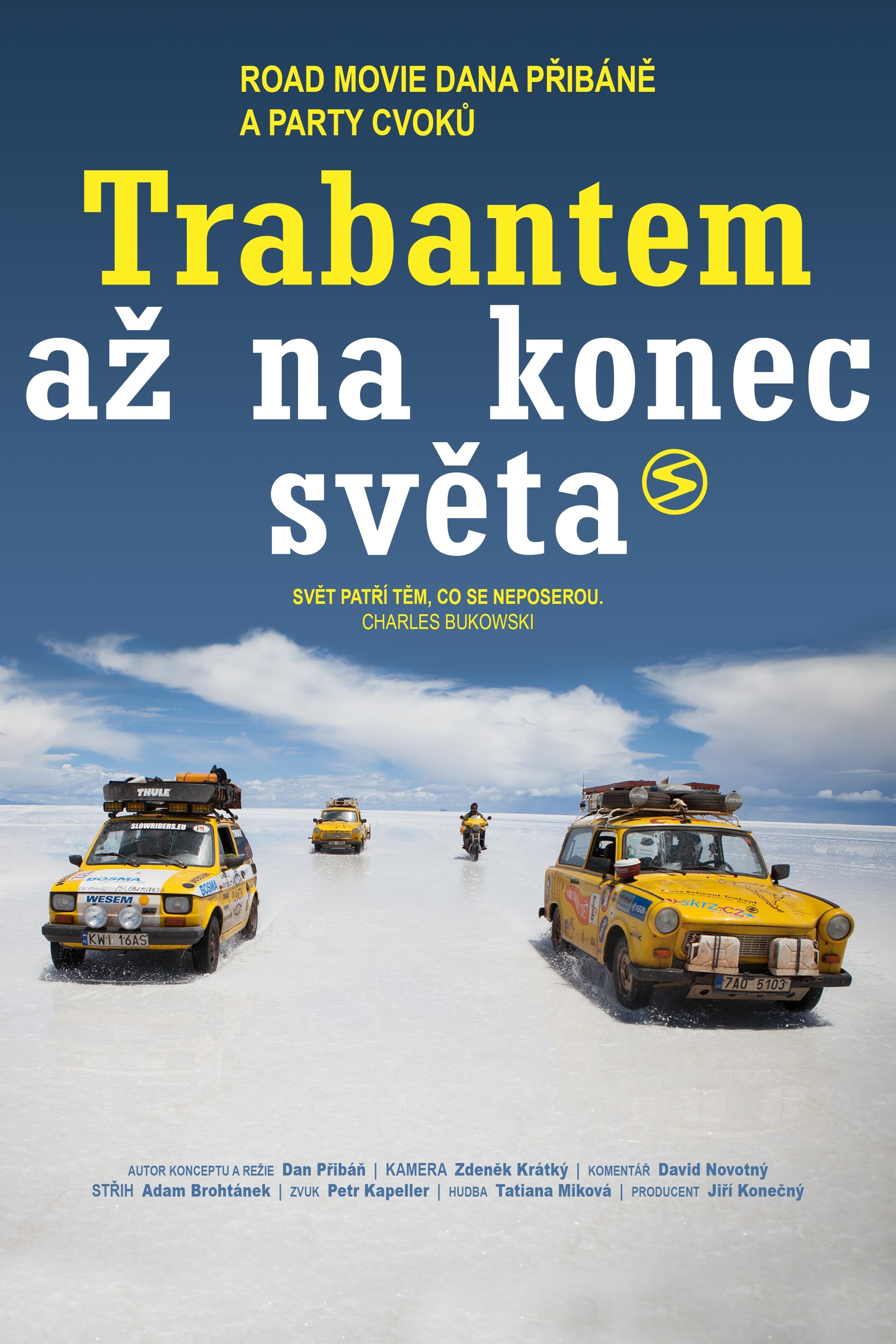
The third installment in Dan Přibáň's series of travel documentaries describes the author's journey with his friends across South America in vehicles that are often notorious but cult in their own way. The charming dynamics of the group on screen are further enhanced by the high-quality craftsmanship.
Documentary that shows the events that culminated in the deposition of President João Goulart, on March 31, 1964, and the implementation of the military dictatorship in Brazil. Around 40 characters reveal behind the scenes and comment in detail on this important moment in Brazilian political history.
During the first days after the 1973 Chilean coup d’état, the political leadership of the Popular Unity government was arrested and transferred to Dawson Island, Magallanes Region, extreme south of Chile and the mainland. The wives of the then political prisoners began an incessant effort to find out the whereabouts of their husbands and then try to return them alive. In these circumstances, they meet and spontaneously organize into a group they call the “Dawsonianas.”