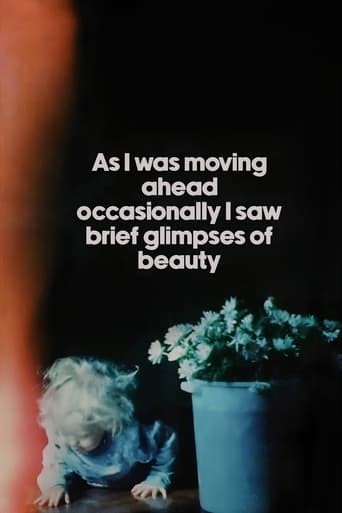
Andy Warhol directs The Factory regular Louisa "Jackie" Foster for a screen test.
Social & External
Herself
Documentary film from a National Socialist perspective on the political development of Germany from the First World War to the annexation of Austria by the German Wehrmacht. The film is presumably one of a series of films intended to convince voters of the achievements of the NSDAP and Adolf Hitler in particular in the run-up to the referendum and Reichstag elections on April 10, 1938
A film about problems in providing the population with housing that meets their needs. Affected citizens and representatives of the responsible state institutions give their views.
The film shows the manufacture of a luxury edition of "Mein Kampf" on real parchment, handwritten.
The 5th anniversary of the inner-German wall to West Germany and West Berlin is on the agenda. The necessity of erecting the border is illustrated by comparing the situation in 1939 and the situation in the summer of 1961 with regard to the "threat of intervention" by the Western powers. Berlin people and GDR border guards are interviewed.
The vivid and inspiring story of British film icon Michael Caine's personal journey through 1960s swinging London.
The portrait of a woman who remembers. Sheila tells the story of Sheila, without concessions or evasions. Her childhood, her parents, her beginnings, the rumors, her love affairs, her marriage, her son, her successes, her farewells, her return, her mourning. The journey of an extraordinary popular icon who never stopped fighting. The courage of an artist who never gives up. "Sheila, toutes ces vies-là" is also a journey through time. 60 years of pop music, punctuated by numerous archives, personal films, timeless hits and illustrations by Marc-Antoine Coulon. But also 60 years of fashion, through a legendary wardrobe (her TV show outfits) that Sheila invites us to rediscover.
A day in the city of Berlin, which experienced an industrial boom in the 1920s, and still provides an insight into the living and working conditions at that time. Germany had just recovered a little from the worst consequences of the First World War, the great economic crisis was still a few years away and Hitler was not yet an issue at the time.
A documentary account by award-winning filmmaker John Ferry of the events that led up to the 1969 Native American occupation of Alcatraz Island as told by principal organizer, Adam Fortunate Eagle. The story unfolds through Fortunate Eagle's remembrances, archival newsreel footage and photographs.
Take a breathtaking train a ride through Nothern Quebec and Labrador on Canada’s first First Nations-owned railway. Come for the celebration of the power of independence, the crucial importance of aboriginal owned businesses and stay for the beauty of the northern landscape.
A roller-coaster ride through the history of American exploitation films, ranging from Roger Corman's sci-fi and horror monster movies, 1960s beach movies, H.G. Lewis' gore-fests, William Castle's schlocky theatrical gimmicks, to 1970s blaxploitation, pre-"Deep Throat" sex tease films, Russ Meyer's bosom-heavy masterpieces, etc, etc. Over 25 interviews of the greatest purveyors of weird films of all kind from 1940 to 1975. Illustrated with dozens of films clips, trailers, extra footage, etc. This documentary as a shorter companion piece focusing on exploitation king David F. Friedman.
The documentary tells the story of Uschi, a farmer living free and recluded in the bavarian alps. Shot in epic black and white pictures, Still follows Uschi's life over a ten year period. From an untroubled summer of making cheese through pregnancy and the uncertain future of the parental farm, Matti Bauer portrays Uschi's struggle to keep alive the dream of a way of life that has become rather untypical in this day and age.
Documentary on the former border patrol sergeant Klein. Klein deserted in 1961, defected to the enemy and betrayed state and military secrets. He was caught by the security forces.
Documentary short film depicting the filmmaking activity at the Paramount Studios in Hollywood, featuring dozens of stars captured candidly and at work.
The individual journeys of the four members of the band, as they move through the music scene of the 1960s, playing small clubs throughout Britain and performing some of the biggest hits of the era, until their meeting in the summer of 1968 for a rehearsal that changes their lives forever.
Through an intimate conversation, Steph Jane, age 28, shares the struggles and lessons her second diagnosis of stage-4 cancer has taught her. From being genuinely present and savouring simple moments to thoughts of the future and what really matters, Steph reveals beauty and wisdom which transcend appearance and years.
Mudos testigos is a cinematographic collage made from all the surviving material of Colombian silent films, re-editing the images in such a way as to create a single imaginary film: the impossible love story of Efraín and Alicia that traces the convulsive first half of the twentieth century in Colombia. Compiled by the late Luis Ospina and finished posthumously by Jeronimo Atehortúa.
After World War II a group of young writers, outsiders and friends who were disillusioned by the pursuit of the American dream met in New York City. Associated through mutual friendships, these cultural dissidents looked for new ways and means to express themselves. Soon their writings found an audience and the American media took notice, dubbing them the Beat Generation. Members of this group included writers Jack Kerouac, William Burroughs, Allen Ginsberg. a trinity that would ultimately influence the works of others during that era, including the "hippie" movement of the '60s. In this 55-minute video narrated by Allen Ginsberg, members of the Beat Generation (including the aforementioned Burroughs, Anne Waldman, Peter Orlovsky, Amiri Baraka, Diane Di Prima, and Timothy Leary) are reunited at Naropa University in Boulder, CO during the late 1970's to share their works and influence a new generation of young American bohemians.
The film looks at men and women of color in the U.S. Merchant Marine from 1938-1975. Through chronicling the lives of these men and women who, with a median age of 82, are beset with a host of life-threatening illnesses, the movie tells how they navigated issues of racism, disparities in the workplace, gender and familial relations.
The first woman to appear in front of an Edison motion picture camera and possibly the first woman to appear in a motion picture within the United States. In the film, Carmencita is recorded going through a routine she had been performing at Koster & Bial's in New York since February 1890.
Showcasing three short films by American writer James Baldwin, wherein he muses about race, sexuality and civil rights, among other topics, in Istanbul, Paris and Great Britain.