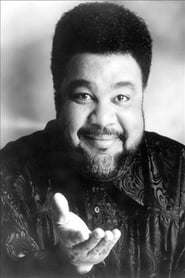
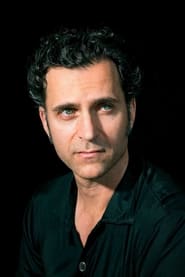
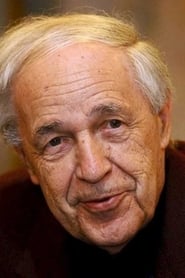
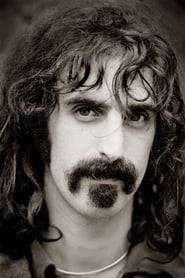
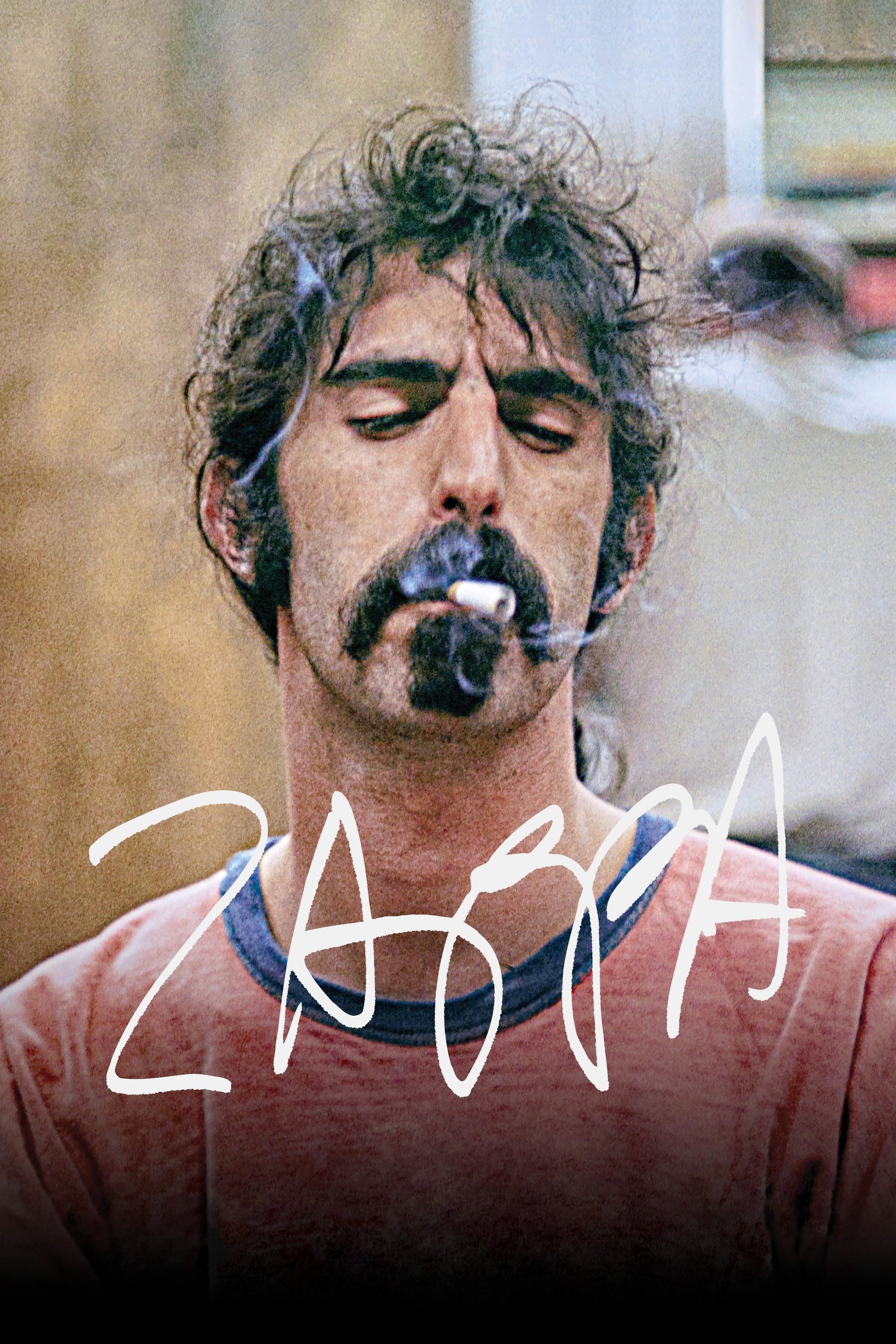
Frank Zappa: The Present-Day Composer Refuses To Die is a 2000 documentary about Frank Zappa.
Social & External
Self
Self (archive footage)
Shenzhen River (the border btw Hong Kong and Shenzhen), and the Second Line of Shenzhen Special Economic Zone (the border between Socialism China and Capitalism China) were compared to the Berlin Wall. The Second Line were constructed June 1982, demolished June 2015. The First Line (Shenzhen River) still flows, running deeper and deeper after 1997. Artist Miaoyuan LONG and Zen LU (the ON/OFF media Group) documented major checkpoints along these two boundaries. It’s a piece to illustrate the Big Escape (Touch Base Policy) from mainland China to Hong Kong during 1950-70’s and the geopolitical history of Shenzhen. The 48min audio-visual live performance version was Official selection of Draft Systems 2017 WRO Media Art Biennale, Poland.
An experience of a camera swinging in different gestures facing the optical distortion of the Sun. The last appearance of the smudge.
An anthology of one-minute films created by 51 international filmmakers on the theme of the death of cinema. Intended as an ode to 35mm, the film was screened one time only on a purpose-built 20x12 meter public cinema screen in the Port of Tallinn, Estonia, on 22 December 2011. A special projector was constructed for the event which allowed the actual filmstrip to be burnt at the same time as the film was shown.
Shot in two places marrying with each other by a single and fractured bridge between Condrieu and les Roches-de-Condrieu, this film is the continuation of exploring ephemeral movement through the use of editing, camera movements and color sampling.
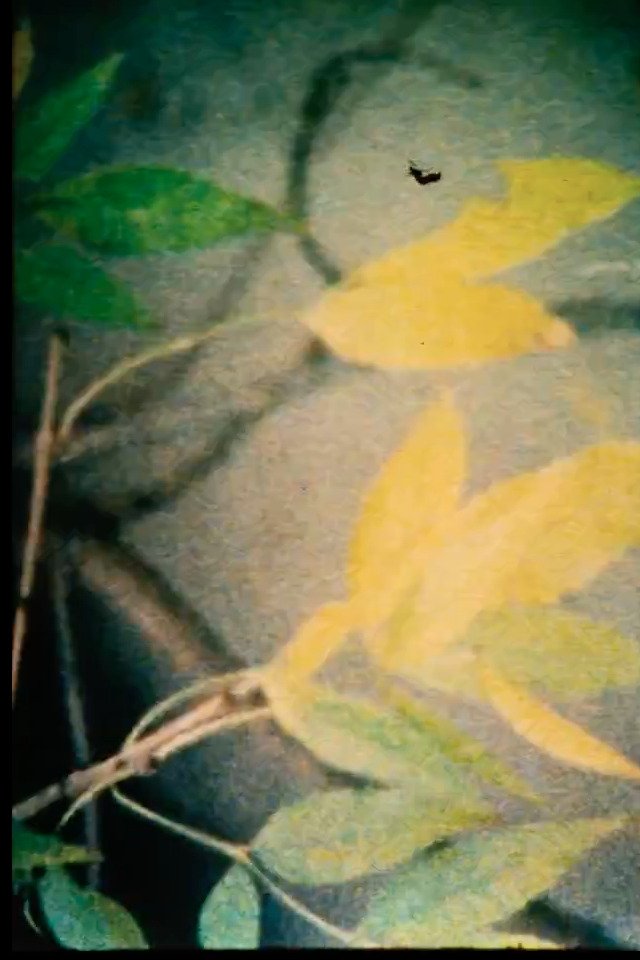
"Like a Dream That Vanishes" continues Sternberg’s work in film both thematically and formally: the ephemerality of life echoed in the temporal nature of film, as the stuff of life echoed on the energy, life-force in rhythmic light pulses (Your life is like a candle burning). Imageless emulsion is inter-cut with brief shots of natural elements and mise-en-scene of the stages of human life: a little boy runs and falls; teens hang out together at night smoking; sun shines through tree branches; men pace, waiting; flashes of lightning; an elderly man speaks philosophically about miracles.
Film Music Historian Jeff Bond discusses how the music for 'Silent Running' was created.
Footage filmed in Spain, subjected a new visual effects process. Deslaw devoted himself to the discovery of a new machine that enabled film to be developed while using a new method called solarisation.
Life in Notting Hill Gate, concentrating on key problems like housing, welfare and drugs, and featuring interviews with local personalities.
Luis Bunuel, the father of cinematic Surrealism, made his film debut with 'Un Chien Andalou' in 1929 working closely with Salvador Dali. Considered one of the finest and controversial filmmakers with, 'L’Age d’Or' (1930), attacking the church and the middle classes. He won many awards including Best Director at Cannes for 'Los Olvidados' (1950), and the coveted Palme d’Or for 'Viridiana' (1961), which had been banned in his native Spain. His career moved to France with 'The Diary of a Chambermaid' with major stars such as Jeanne Moreau and Catherine Deneuve.
In PATH OF CESSATION the image that is communicated to us by Fulton is a highly mystifying one. Rather than analyze, or enter into a dialogue with the Tibetan culture that he photographs, Fulton has succumbed to it, and through the process has presented us a work of great surface, as well as formal, beauty.
"This film explores how freedom of speech — including dissent — is afforded to all Americans, and shows freedom of expression in art, music, dance, architecture, and science. The film also emphasizes the importance of the individual’s contribution to the whole of society and demonstrates how a productive and creative society is formed by the open and respectful exchange of ideas. The film was written, produced, and directed by William Greaves" (National Archives).
A group of leftist activists expose the exploitation of immigrant workers by a criminal network with connections to local government officials. The movie was produced by the group SLON (Société pour le Lancement des Oeuvres Nouvelles, also the Russian word for elephant). SLON was a film collective whose objectives were to make films and to encourage industrial workers to create film collectives of their own. Its members included Valerie Mayoux, Jean-Claude Lerner, Alain Adair and John Tooker, and Chris Marker.
One of Paik’s most overtly political and poignant statements, Guadalcanal Requiem is a performance/documentary collage that confronts history, time, cultural memory and mythology on the site of one of World War II’s most devastating battles.
Former European boxing champion Santiago Rojas has been completely disconnected from the world of boxing for several years. He now works at a small kiosk in the busy Barcelona Metro. Besides reading, one of his greatest curiosities is uncovering the secrets behind the popular and mysterious 'law of attraction'.
"mm"s are m(usic(ian's))m(eetings) mostly held at the Who Unit? in Pittsburgh as a 21st century salon of sorts where formal interests can be broached casually. Attendees delight in sharing their sometimes obscure & sometimes popular musical (& otherwise) loves. For mm 49 (in the 37th month of "mm"'s history) a marathon listening party celebrating the music of Vivian Fine was decided upon. Fine was a dedicated composer who produced a variety of work over a 70 year career. This movie, of course, is not an imitation of Ken Burns style documentary movie-making. Instead, I gleefully mix the casualness & lively uninhibited conversation of mms with the formal exactitude of Fine's music. I hope you enjoy it as an upstanding example of Punk Classical. "Bah to the Bourgeoisie"! Note that I'm starting to disappear in this movie - will you miss me when I'm gone? This is my 111th feature & my 404th movie.

In 1952, Haanstra made Panta Rhei , another view of Holland through the eyes of a painter and filmmaker. Its poetic images of water, skies and clouds reflect Haanstra's own moods.
One of the first US born conductors to receive worldwide fame, Leonard Bernstein is an exceptional composer and certainly not only due to The West Side Story. Instead of concentrating exclusively on his most famous work, Thomas von Steinaecker sets out to paint a complete picture of Bernstein. Thus, the documentary focusses on the American’s less known later works and on three compositions in particular: his Mass, the musical 1600 Pennsylvania Avenue and the great final opera A Quiet Place. The film paints a vivid picture of the multitalented Bernstein, struggling with his role as composer and conductor, tackling the tension between successes and flops, between the politics of his time and his own liberal humanitarian claim. It looks back on Bernstein’s major achievements, such as his acclaimed conducting of Mahler and his involvement in the Young People’s Concerts, and it shows Bernstein’s work with young aspiring musicians as well as his political commitment.