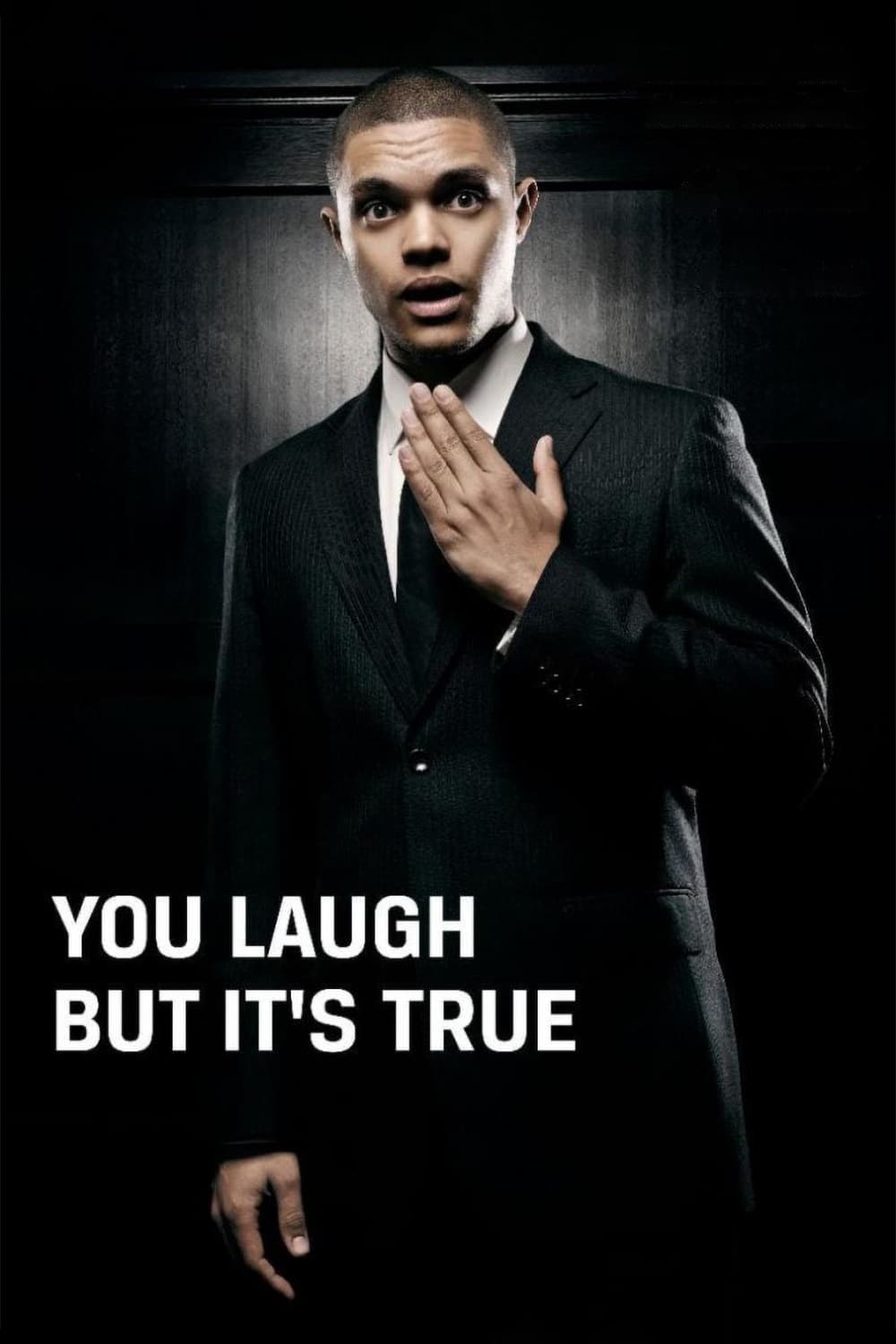
While Trevor and Sam are smoking pot, Trevor’s mom comes home. When she finds out, Trevor reveals his father’s adulterous ways and destroys his family.
Social & External
Himself
Trevor's Mom / Himself
Trevor's Dad / Himself
The mind process behind the film, Transformers the Premake, explained by Kevin B Lee himself.
Shenzhen River (the border btw Hong Kong and Shenzhen), and the Second Line of Shenzhen Special Economic Zone (the border between Socialism China and Capitalism China) were compared to the Berlin Wall. The Second Line were constructed June 1982, demolished June 2015. The First Line (Shenzhen River) still flows, running deeper and deeper after 1997. Artist Miaoyuan LONG and Zen LU (the ON/OFF media Group) documented major checkpoints along these two boundaries. It’s a piece to illustrate the Big Escape (Touch Base Policy) from mainland China to Hong Kong during 1950-70’s and the geopolitical history of Shenzhen. The 48min audio-visual live performance version was Official selection of Draft Systems 2017 WRO Media Art Biennale, Poland.
An experimental documentary about dead turtles, crab swarms, decaying tennis courts, and microscopic histories. The filmmakers shot their explorations into the abandoned golf courses, factories, and resorts of Sarasota, Florida and spoke to local youths who are using them for new and strange purposes. What would the Surrealists and Situationists think of a suburban, subtropical tourist town? What goes on in a storage unit in the dead of night? What is the afterlife of a decommissioned train car? What ghosts haunt a ruined hotel? What is the life cycle of a city? When will waters wash it all away?
"The prevailing stigmatization of the 'villero' universe is fed back by the images. In order to dismantle this stigmatization, other images must be presented or we need to reveal what the existing ones seek to cover up. The slum is usually represented from a limited and deceitful visual panorama. This representation has an intention. Cinema and television are two image-producing devices that strengthen the stereotypes that we have about the people who inhabit these spaces. And what happens in the field of painting? Do clichés reign there too? This visual essay seeks to confront various works by national painters and sculptors, belonging to the Palais collection, with the kinetic images of current cinema and television, to reflect on both the differences and the similarities in the meanings and discourses that both regimes of images can produce." César González
In PATH OF CESSATION the image that is communicated to us by Fulton is a highly mystifying one. Rather than analyze, or enter into a dialogue with the Tibetan culture that he photographs, Fulton has succumbed to it, and through the process has presented us a work of great surface, as well as formal, beauty.
A provocative and poetic exploration of how the British people have seen their own land through more than a century of cinema. A hallucinated journey of immense beauty and brutality. A kaleidoscopic essay on how magic and madness have linked human beings to nature since the beginning of time.
The winner of the Miss World Virginity contest marries, escapes from her masochistic husband and ends up involved in a world of debauchery.
"Like a Dream That Vanishes" continues Sternberg’s work in film both thematically and formally: the ephemerality of life echoed in the temporal nature of film, as the stuff of life echoed on the energy, life-force in rhythmic light pulses (Your life is like a candle burning). Imageless emulsion is inter-cut with brief shots of natural elements and mise-en-scene of the stages of human life: a little boy runs and falls; teens hang out together at night smoking; sun shines through tree branches; men pace, waiting; flashes of lightning; an elderly man speaks philosophically about miracles.
As the city of Paris and the French people grow in consumer culture, a housewife living in a high-rise apartment with her husband and two children takes to prostitution to help pay the bills.
Luis Bunuel, the father of cinematic Surrealism, made his film debut with 'Un Chien Andalou' in 1929 working closely with Salvador Dali. Considered one of the finest and controversial filmmakers with, 'L’Age d’Or' (1930), attacking the church and the middle classes. He won many awards including Best Director at Cannes for 'Los Olvidados' (1950), and the coveted Palme d’Or for 'Viridiana' (1961), which had been banned in his native Spain. His career moved to France with 'The Diary of a Chambermaid' with major stars such as Jeanne Moreau and Catherine Deneuve.
Five lonesome cowboys get all hot and bothered at home on the range after confronting Ramona Alvarez and her nurse.
An essay style film in the vein of Orson Welles' "F For Fake" and Jon Jost's "Speaking Directly". From 2011 to 2013, filmmaker Kristian Day randomly documented the art and actions of the award winning metal sculptor, James Bearden. Refusing to make another artist documentary, Day insisted on illustrating Bearden's creative process through surreal and id oriented story telling.
Words are loaded with meaning. Certain ones conjure joyful memories and others remind us of less happy times. For Nenda Neururer, the word 'oachkatzlschwoaf' invokes a range of emotions. The German word is very hard to pronounce and is synonymous with the Austrian state of Tyrol where locals tease outsiders by asking them to pronounce it. Despite growing up in Tyrol, Nenda Neururer often felt like an outsider when confronted with this word. But when she moved to London she grew nostalgic for it and it became her little secret. Found in Translation is a series made as part of the In The Mix project, in partnership with BBC Studios TalentWorks, Black Creators Matter and the Barbican.
Twenty-five films from twenty-five European countries by twenty-five European directors.
Every image in The Fall of Communism as Seen in Gay Pornography comes from gay erotic videos produced in Eastern Europe since the introduction of capitalism. The video provides a glimpse of young men responding to the pressures of an unfamiliar world, one in which money, power and sex are now connected.
The quasi-fictional story of transgender sex workers living in Rio de Janeiro's swampy red light district, who are joined by a group of hippies and a runaway stockbroker, "Mangue-Bangue" is the paradigmatic expression of the post-1968 spirit of desbunde, the Brazilian slang catchword for "sex, drugs, and rock 'n' roll".