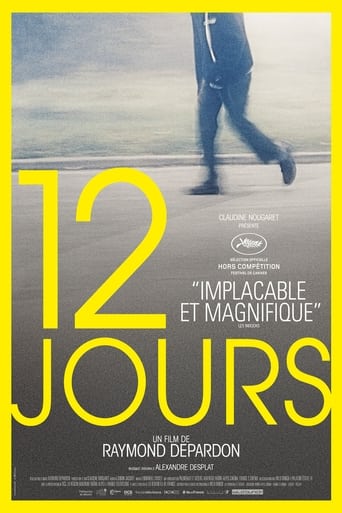
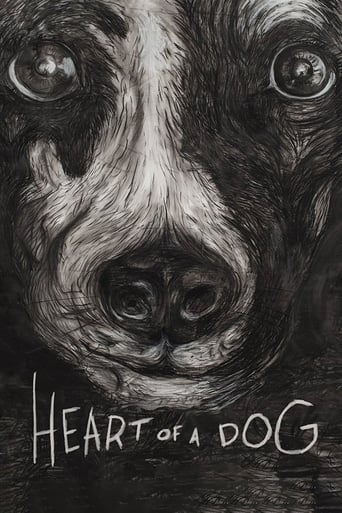
Documentary made with the patients of wards 15 and 17 of the Sainte-Anne psychiatric hospital in Paris in 2008-2009.
Social & External
The psychiatric hospital was and is a disturbing place. Michel Défago, a former nurse, reports on a time when mentally ill people were still shackled or isolated. Today, nurses make every effort to free patients from their suffering and isolation.
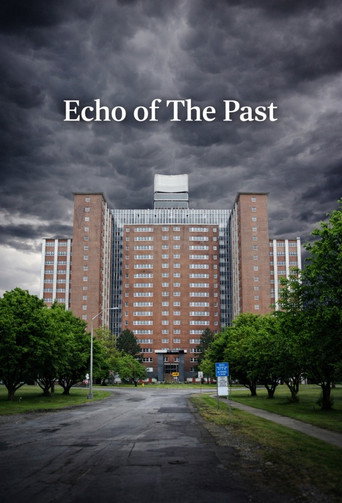
A historical documentary documenting the rise, function, and abandonment of a 17 story building that once housed The Rochester Psychiatric Center. This film tells the story of the building through historical footage, interviews of former staff and patients who recount their memories of the behemoth facility while also exploring the abandoned building as it is today.
This compelling film represents a rare record of an original genius. In Jung on Film, the pioneering psychologist tells us about his collaboration with Sigmund Freud, about the insights he gained from listening to his patients' dreams, and about the fascinating turns his own life has taken. Dr. Richard I. Evans, a Presidential Medal of Freedom nominee, interviews Jung, giving us a unique understanding of Jung's many complex theories, while depicting Jung as a sensitive and highly personable human being.
A solo show whose subject - the controversial Scottish psychiatrist Ronald David Laing - has largely faded from public view, starring an actor who doesn't impersonate him. Scottish actor explores Laing's life and work from the perspective of an unnamed genial ad mirer who says he has just come from Laing's funeral in 1989.
‘Voices from the Shadows’ shows the brave and sometimes heartrending stories of five ME patients and their carers, along with input from Dr Nigel Speight, Prof Leonard Jason and Prof Malcolm Hooper. These were filmed and edited between 2009 and 2011, by the brother and mother of an ME patient in the UK. It shows the devastating consequences that occur when patients are disbelieved and the illness is misunderstood. Severe and lasting relapse occurs when patients are given inappropriate psychological or behavioural management: management that ignores the severe amplification of symptoms that can be caused by increased physical or mental activity or exposure to stimuli, and by further infections. A belief in behavioural and psychological causes, particularly when ME becomes very severe and chronic, following mismanagement, is still taught to medical students and healthcare professionals in the UK. As a consequence, situations similar to those shown in the film continue to occur.
Psychiatrist Dr. Dean Brooks, who appears in the film One Flew Over The Cuckoo's Nest, and others discuss how jails and prisons have become our new asylums and how community care, especially inadequately funded community care, is failing to help people. They also discuss the need for what his granddaughter, Dr. Ulista Brooks, describes as “true asylums” — the construction of new modern mental hospitals, and other important issues regarding care for the mentally ill.
Impudence wins! The cheeky impostor with a secondary school diploma pretends to be "successful" as a court expert and senior physician. TV-docudrama featuring Uwe Bohm
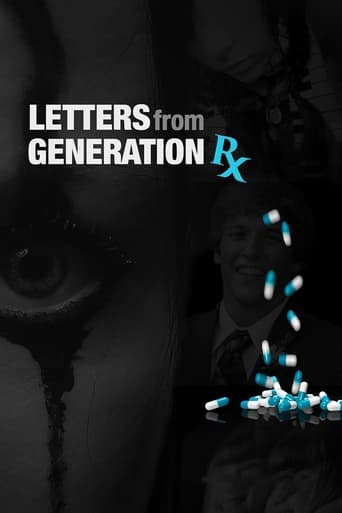
As a result of the 2008 documentary"Generation Rx," thousands of people wrote director Kevin P. Miller to share their experiences on psychiatric drugs. Miller combines their gripping tales with the latest mental health research, science, and medical health perspectives.
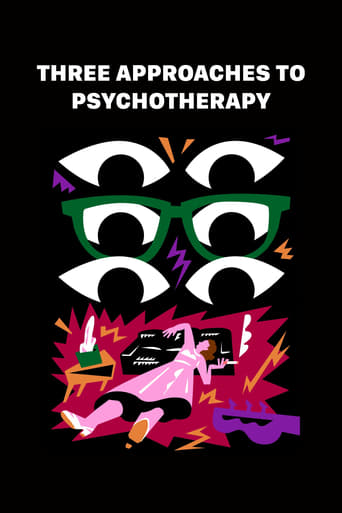
An actual patient, Gloria Szymanski, allowed herself to be filmed while engaged in therapy with three different therapists, distinguished by their different orientations but sharing their therapeutic endeavors. Poster illustration by Kati Szilágyi.
Things are busy at the Paris hospital where young psychiatrist Jamal and his colleagues work. The place is run down, the staff are exhausted, budgets are constantly being slashed. You know the story, but you’ve rarely seen it conveyed as engagingly as in ‘On the Edge’, which employs a handheld camera and meaningful, artistic interventions to observe the daily routine at the psychiatric ward. The deeply sympathetic Jamal is an everyday hero with an exemplary, humanistic disposition, for whom the most important prerequisites for mental health – and for a healthy society in general – are good relationships with other people. He puts his philosophy into practice by listening patiently, giving good advice and organising theatre exercises based on Molière. Realism and idealism, however, are in balance for the young doctor, at least as long as the institutional framework holds up.
Inside the dramatic search for a cure to ME/CFS (Myalgic Encephalomyelitis/Chronic Fatigue Syndrome). 17 million people around the world suffer from what ME/CFS has been known as a mystery illness, delegated to the psychological realm, until now. A scientist in the only neuro immune institute in the world may have come up with the answer. An important human drama, plays out on the quest for the truth.
A grandmother dies and leaves behind hours of secret film and audio recordings as well as an envelope with the words “Must read after my death,” which reveal a dark history for her family to discover.
Documentary film exploring the rise of mechanistic philosophy and the exploitation of human beings under modern hierarchical systems. Topics covered include behaviorism, scientific management, workplace democracy, schooling, frustration-aggression hypothesis, and human experimentation.
This walk in the daily life of several psychiatric institutions, allows us to meet extraordinary people who let us enter their privacy.
Psychiatric Nursing: The Nurse-Patient Relationship is a 1958 American documentary film directed by Lee R. Bobker. It was nominated for an Academy Award for Best Documentary Feature.
Maud Nycander has over one and a half years, filmed a psychiatric emergency ward at St. Göran's Hospital in Stockholm.
"Through rare historical and contemporary footage and interviews with more than 160 doctors, attorneys, educators, survivors and experts on the mental health industry and its abuses, this riveting documentary blazes the bright light of truth on the brutal pseudoscience and the multi-billion dollar fraud that is psychiatry" - The Citizens Commission on Human Rights
Formerly known as ‘multiple personality disorder’, dissociative identity disorder, the most common cause of which is severe childhood trauma, is a condition recognised by psychiatry but still poorly understood, to the extent that it is sometimes called into question. Alongside patients and researchers, we delve into the mechanisms and daily implications of this pervasive condition.