Social & External
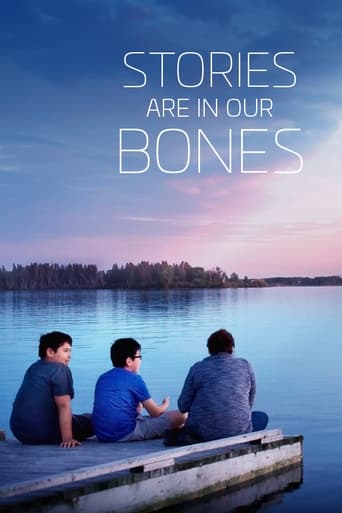
In this layered short film, filmmaker Janine Windolph takes her young sons fishing with their kokum (grandmother), a residential school survivor who retains a deep knowledge and memory of the land. The act of reconnecting with their homeland is a cultural and familial healing journey for the boys, who are growing up in the city. It’s also a powerful form of resistance for the women.
In this feature-length documentary, six teenage girls, aged 14 to 16, agree to open up and have their private worlds invaded by the camera. They have to face problems that they intend to take on "to the end": early experience of sexuality, belonging to a gang, relationships with parents, social tolerance, friendship... They live tender and pure lives in their own way.
The 6 Guarani villages of Jaraguá, in São Paulo, fight for land rights, for human rights and for the preservation of nature. They suffer from the proximity to the city, which brings lack of resources, pollution of rivers and springs, racism, police violence, fires, lack of infrastructure and sanitation, among others. Unable to live like their ancestors, their millenary culture is lost as it merges with the urban culture.
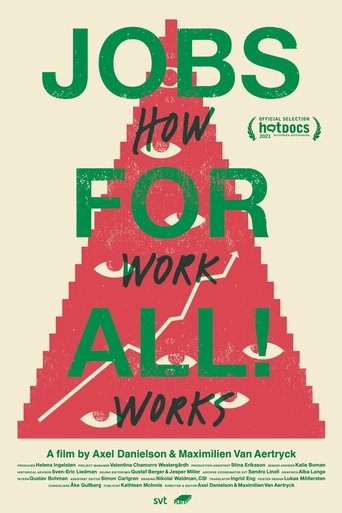
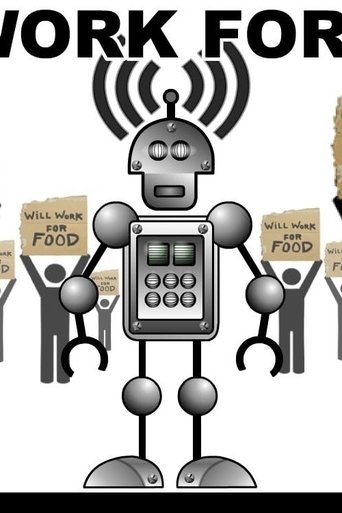
The film explores the potential for automation in every sector of employment and questions the integrity of our methods of resource distribution going into the future.
Departing from peripheral details of some paintings of the Bilbao Fine Arts Museum, a female narrator unravels several stories related to the economic, social and psychological conditions of past and current artists.
After four years away, Huiju returns home to South Korea. Exchanges with her loved ones are awkward and clumsy. Huiju turns once again to her familiar rituals: pruning the trees, preparing a sauce, tying a braid.
Documentary about sexual harassment and rape cases in French Universities and Superior Education. Many women come forward about their personal cases and how, despite the many reports, barely no action is taken.
Using original animation, archival footage and personal interviews, this full-length documentary portrays the multiple relationships Canadian Muslim women entertain with Islam’s place of worship, the mosque. Islam is the fastest growing religion in the world. In North America, a large number of converts are women. Many are drawn to the religion because of its emphasis on social justice and spiritual equality between the sexes. Yet, many mosques force women to pray behind barriers, separate from men, and some do not even permit women to enter the building. Exploring all sides of the issue, the film examines the space – both physical and social – granted to women in mosques across the country.
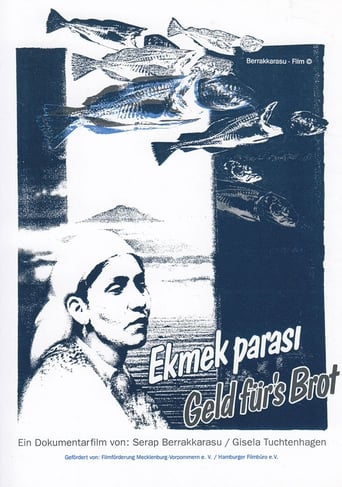
Women from Turkey and Mecklenburg are working together side-by-side at a fish-processing factory in Lübeck. As they work, they share stories about their lives, including their sorrows, griefs, hopes, and dreams, while expressing their longing for home and feelings of being lost in a foreign place.
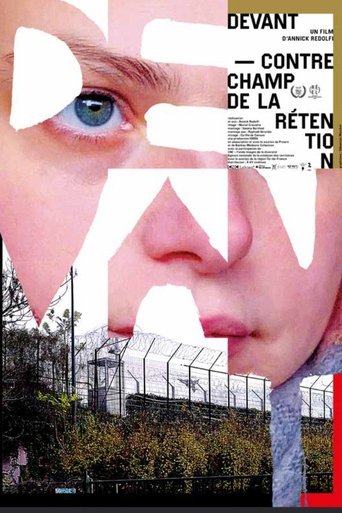
Pauline, Norah, Kristina and others wait for hours, sitting under a hut deep in the Bois de Vincennes. In front of the administrative detention center (CRA) in Paris, they have all come to see their loved ones locked up. Lives on hold, awaiting deportation or release. On this stage, these women tell their stories, talk to each other, share their experience, their revolt and their dreams with new visitors. They are the mirror of migrant detention, its reverse view.
In 2007, unable to compete with cheaper offshore production, Hooker Furniture Co. closed its plant in Martinsville, Virginia, after 83 years in operation. With These Hands follows the last load of wood down the assembly line as it is cut, honed, and assembled into fine furniture. Along the way, employees at the factory share their perspectives on work, community, and survival in a country devastated by de-industrialization and outsourcing.
Isaac, a failed actor and Skies employee, shows us the daily life of workers in an average call center, facing the boredom to get to the end of the work day.
Dadi manages an extended family in Haryana, Northern India, where daughters-in-law face loneliness and unrealistic expectations. The film delves into family dynamics, highlighting Dadi's firm control amidst tensions. Social and economic shifts challenge traditional values, exemplified by Dadi's son marrying outside the village. Despite clinging to tradition, Dadi adapts to her children's modern aspirations. This narrative reflects the clash between generations and gender roles in 1980s rural India, offering insight into the evolving concept of family.
A closer look at the underestimated role of women in the current Whisky industry in Scotland
A reflection on the concept of invisibility, narrated by women who clean public spaces in Mexico City. Combining documentary, fiction and still photography, the film is an intimate mosaic of testimonies and experiences that highlight the precariousness of work in the cleaning industry, in a world where subcontracting rules.
According to an ancient myth, there was a woman who, by violating the prohibition against leaving her house during menstruation, became a cannibalistic woman, an evil spirit. Amid the fear and outcry of the men, the woman was murdered and burned. But soon after, from the ashes of her pubic hair, the tobacco plant sprang forth. Today, the women of the tobacco fields are experiencing a resurgence in collective work that intertwines with personal aspirations. Five women tell us in their own words how they learned the trade from childhood. As they work, the women of the tobacco fields share their lives and their silenced childhoods. They share stories and veiled traditions.