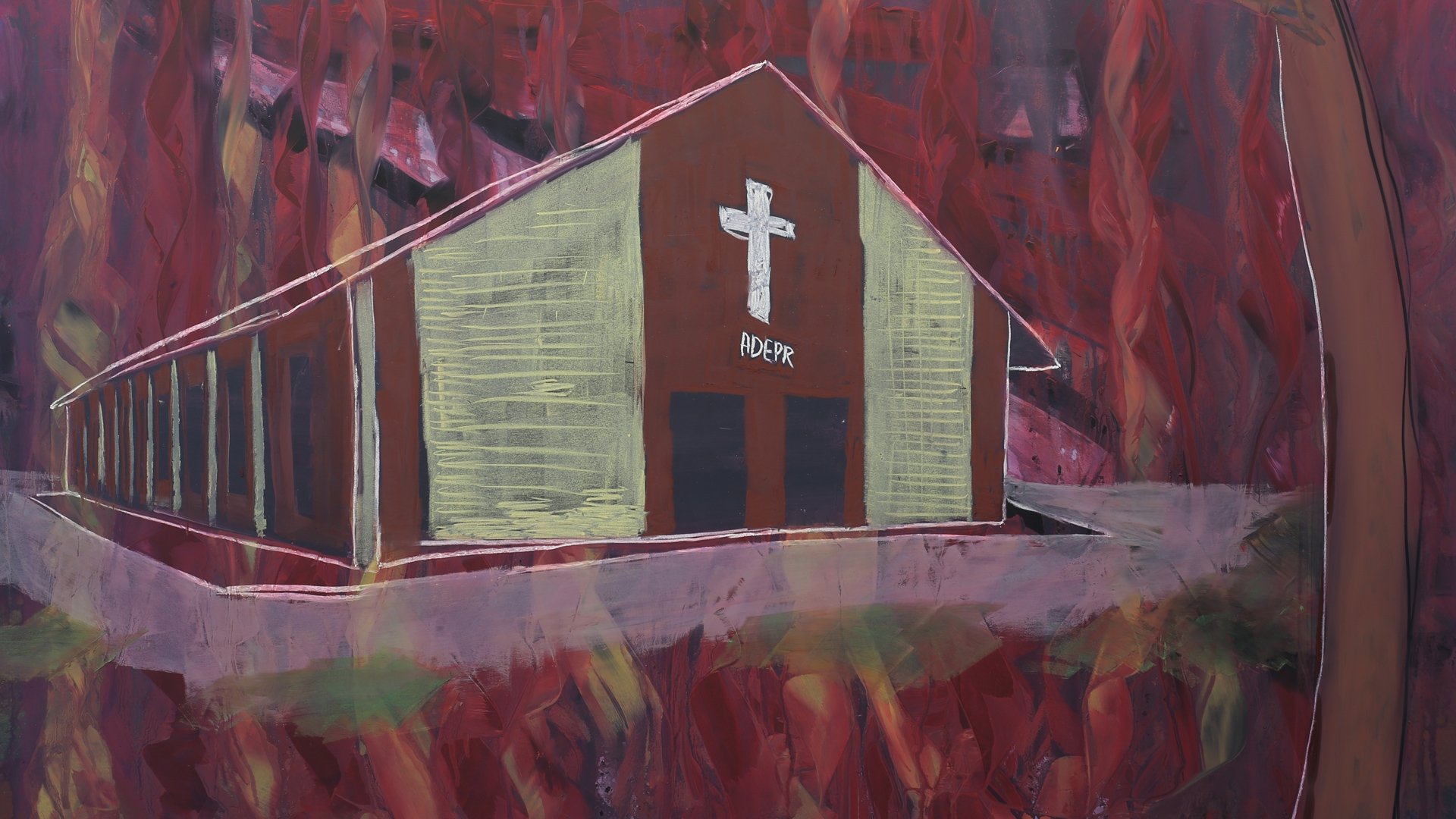
Childhood sweethearts Beatrice and Purudenci plan to wed until Beatrice becomes hunted by Purudenci's family during the 1994 genocide in Rwanda.
Social & External
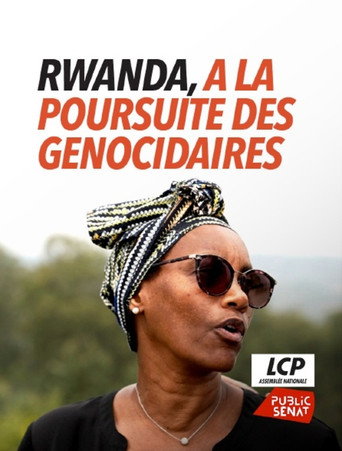
The aftermath of the Rwandan genocide: A student theatre troupe tours Rwanda with a comedy about the genocide, a gang of killers gets rough justice at the local genocide court, and a prosecutor investigates a priest for the murder of five Tutsi children. Meanwhile, in neighbouring Tanzania, two of the genocide's leaders face the United Nations tribunal in snappy suits, defended by a panoply of French lawyers.
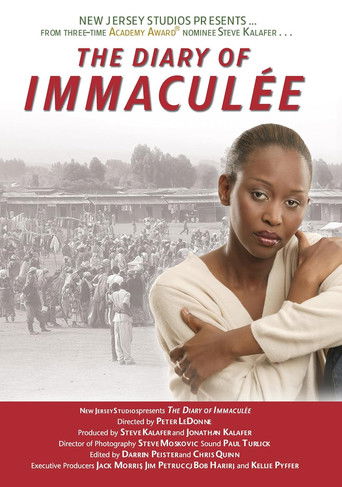
Peter LeDonne and Steve Kalafer chronicle the extraordinary life of Immaculée Ilibagiza, a young African woman who escaped genocide in Rwanda and ultimately found refuge in the United States. Seeking shelter with an Episcopalian minister, Immaculée hid from her attackers inside a bathroom for three long months but stayed centered through prayer and faith.
Their words had never been heard before. Co-directed by French-Rwandan musician and author Gaël Faye and director Michael Sztanke, this movie records with sensitivity and for the first time the testimonies of Prisca, Marie-Jeanne and Concessa about their lives during the genocide and after. The three Tutsi women tell the camera about their daily lives during the genocide and in the refugee camps of Murambi and Nyarushishi, where they lived a nightmare under the guard of the French soldiers of the Opération Turquoise who, under a UN mandate, where supposed to protect them. While the French army denies any rape accusation, the three women filed complaints with the French justice system in 2004 and 2012. The investigation is now at a standstill.
Coexist tells the emotional stories of women who survived the Rwandan genocide in 1994. They continue to cope with the loss of their families as the killers who created this trauma return from jail back to the villages where they once lived. Faced with these perpetrators on a daily basis, the victims must decide whether they can forgive them or not. Their decisions are unfathomable to many, and speak to a humanity that has survived the worst violence imaginable.
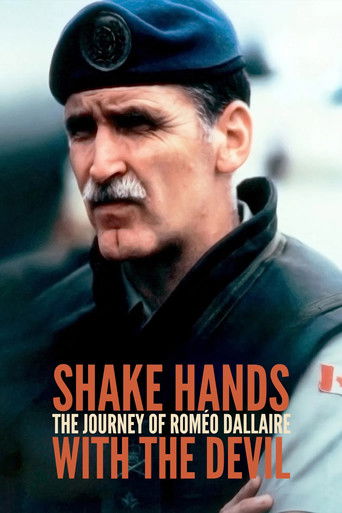
The story of Canadian Lt. Gen. Roméo Dallaire and his controversial command of the United Nations mission to Rwanda during the 1994 genocide. The documentary was inspired by the book Shake Hands with the Devil: The Failure of Humanity in Rwanda which was published in 2003.
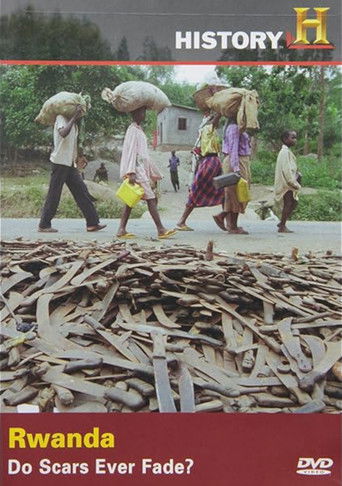
Ghosts of Rwanda marks the 10th anniversary of the Rwandan genocide with a documentary chronicling one of the worst atrocities of the 20th century. In addition to interviews with key government officials and diplomats, this documentary offers eyewitness accounts of the genocide from those who experienced it firsthand. FRONTLINE illustrates the failures that enabled the slaughter of 800,000 people to occur unchallenged by the global community.
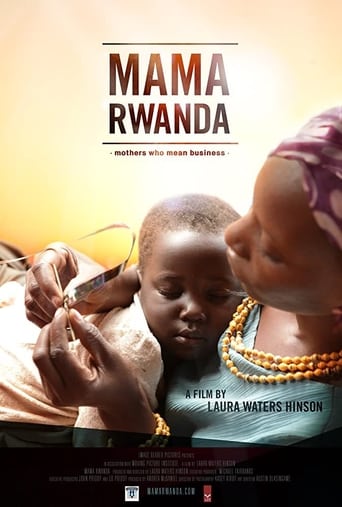
MAMA RWANDA is the story of two women mixing the wit of motherhood with the spirit of entrepreneurship to overcome extreme poverty. Drocella, a village wife, and Christine, a city widow, represent a new generation of women business-owners transforming post-genocide Rwanda into one of the top ten fastest growing economies in the world. A modern tale of the work/life balancing act, MAMA RWANDA illuminates the remarkable lives of two working mothers in the developing world.
A documentary that examines whether a charity organized by Pat Robertson to aid Rwandan genocide refugees was a front for diamond mining.
The oral writer of the April 3 Uprising and a Rwandan who came to Korea to study face each other, have a conversation, and then go on a trip hand in hand. The two people, from different generations, nationalities, and occupations, have something in common: they are the daughters of massacre survivors.
For the first time, light is shed on the Inkotanyi politico-military movement that ended the genocide of the Rwandan Tutsi in 1994 and is led by Paul Kagame, currently President of Rwanda.
A powerful documentary about five women whose lives have been irrevocably altered by the Rwandan genocide. With the country left nearly 70% female in the wake of the massacres, "God Sleeps In Rwanda" is a lucid portrait of the much larger change affected by women in the East African country.
During April 1994, on quiet road in Kigali a group of neighbors in Rwanda were filmed. This was the opening days of the Rwandan Genocide, and even though almost one million people were slaughtered, remarkably there is only one known segment of footage showing any actual killing. This movie is about the extraordinary journey of that evidence as the original photographer returns to Rwanda, revisiting the people and events that he by chance caught on film. As the footage returns to the community, friends and family relive the tragic events as they work with the photographer to identify the victims, and then eventually the killers.
What happened in Rwanda in 1994 was not simply the spontaneous eruption of inter-ethnic hatred. It was planned genocide, on an industrial scale. Something that was prepared for at least a year in advance. Lists were made. Weapons were collected. RTLM radio spent months conditioning their audience to believe that one sector of their population represented a threat.
A history of racialism in Rwanda, from the European colonization to the 1994 genocide.
What is a socially acceptable conversation when your family's killer sits down to dinner? 'Unforgiven' explores the interactions between murderers, rapists, thieves and their victims in this documentary exploring the power of restorative justice, forgiveness and reconciliation 20 years after the Rwandan Genocide.
Rwanda For Memory (Rwanda pour mémoire) is a 2003 documentary film about the Rwandan Genocide. Facing up to the scars left by the genocide, Samba Felix N’Diaye manages to find just the right sense of distance to film the inexpressible while nevertheless communicating a message of hope.
Eliseé survived the Rwandan genocide as a child. Today he leads an orphan acrobat group in a country, which heavily relies on foreign aid. He cares for the orphaned children and wants them to be happy, to have some sense in their lives. Rosta Novák built a worldwide-acclaimed circus group in Prague, where he successfully rules with a firm, paternal hand, but has permanently dark under-eye circles from the workload. The majority of Rwandese think that all people in Europe are fairy rich. On the other hand, many Europeans think that it is necessary to help Africa with everything. What happens, if we merge these two worlds in a film, during the preparation of a joint circus performance? What are the true motivations of our protagonists and what does it tell us about the Africa-Europe relationship? And who actually helps whom, in the end?
Inspired by true events, this film takes place in Rwanda in the 1990s when more than a million Tutsis were killed in a genocide that went mostly unnoticed by the rest of the world. Hotel owner Paul Rusesabagina houses over a thousand refuges in his hotel in attempt to save their lives.
A pretty young girl falls for an enigmatic, shy man who sweeps her off her feet. She becomes pregnant but is not allowed to tell him. His advisers are adamant. Back home, they have set up a wedding with the daughter of an antagonistic family and marriage will put an end to the blood feud between them.
An ex-mercenary turned smuggler. A Mende fisherman. Amid the explosive civil war overtaking 1999 Sierra Leone, these men join for two desperate missions: recovering a rare pink diamond of immense value and rescuing the fisherman's son, conscripted as a child soldier into the brutal rebel forces ripping a swath of torture and bloodshed countrywide.
When seventeen-year-old Hannah stumbles upon a website about Thinspiration--an online community devoted to anorexia as a life choice--she becomes an obsessive follower of the site founder, ButterflyAna. By the time Hannah's family realizes what is happening and get Hannah the help she needs, the disease has fully taken hold and Hannah is refusing to eat. Will this family be able to exorcise the demon of anorexia from their lives?
John Shepherd spent 30 years trying to contact extraterrestrials by broadcasting music millions of miles into space. After giving up the search, he makes a different connection here on earth.
Four women from different backgrounds forge an unbreakable sisterhood while trapped and in hiding during the genocide in Rwanda.
Two brothers are divided by marriage and fate during the 100 horrifying days of the 1994 Rwandan genocide.
A behind the scenes look into George Romero's groundbreaking horror classic Night of the Living Dead.
Bomman and Bellie, a couple in south India, devote their lives to caring for an orphaned baby elephant named Raghu, forging a family like no other.
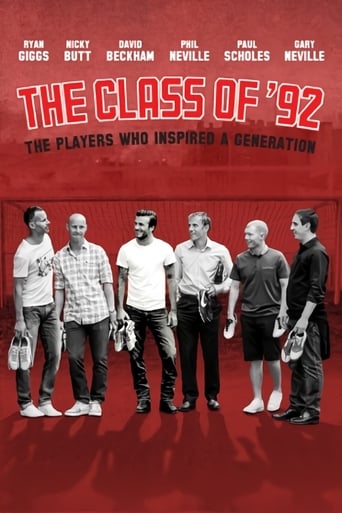
A detailing of the rise to prominence and global sporting superstardom of six supremely talented young Manchester United football players (David Beckham, Nicky Butt, Ryan Giggs, Paul Scholes, Phil and Gary Neville). The film covers the period 1992-1999, culminating in Manchester United's European Cup triumph.
Gabriel, aged 10, lives in a comfortable ex-pat neighborhood in Burundi, his ‘small country’. Gabriel is a normal kid, happy, carefree and having adventures with his friends and little sister. Then in 1993, tensions in neighboring Rwanda spill over, threatening his family and his innocence.
A documentary focused on plastic pollution in the world's oceans.
Against the darkening backdrop of New Delhi's apocalyptic air and escalating violence, two brothers devote their lives to protecting one casualty of the turbulent times: the bird known as the black kite.
A non-narrated documentary following the lovesome lives of four infants from birth to their first birthday. The babies featured are two from rural areas: Ponijao from Opuwo, Namibia, and Bayar from Bayanchandmani, Mongolia, as well as two from urban areas: Mari from Tokyo, Japan, and Hattie from San Francisco, USA.
When Allied forces liberated the Nazi concentration camps in 1944-45, their terrible discoveries were recorded by army and newsreel cameramen, revealing for the first time the full horror of what had happened. Making use of British, Soviet and American footage, the Ministry of Information’s Sidney Bernstein (later founder of Granada Television) aimed to create a documentary that would provide lasting, undeniable evidence of the Nazis’ unspeakable crimes. He commissioned a wealth of British talent, including editor Stewart McAllister, writer and future cabinet minister Richard Crossman – and, as treatment advisor, his friend Alfred Hitchcock. Yet, despite initial support from the British and US Governments, the film was shelved, and only now, 70 years on, has it been restored and completed by Imperial War Museums under its original title "German Concentration Camps Factual Survey".
In the early-morning hours of July 23, 2007, in Cheshire, Conn., ex-convicts Steven Hayes and Joshua Komisarjevsky broke into the family home of William Petit, his wife, Jennifer, and their daughters, Michaela, 11, and Hayley, 17. Dr. Petit was beaten and tied to a pole in the basement. The three women were bound in their bedrooms while the men ransacked the house. The brutal ordeal continued throughout the morning, ending with rape, arson and a horrific triple homicide.
Upon his release from prison, an ex-convict returns to his beloved city of Genoa, and to his lover.
After the high-profile killing of Damilola Taylor, Cornelius' family move out of London. But when they discover their new town is run by racists, Cornelius takes a drastic step to survive.
Granted unprecedented access, Berlinger captures renowned life and business strategist Tony Robbins behind the scenes of his mega seminar Date with Destiny, pulling back the curtain on this life-altering and controversial event, the zealous participants and the man himself.
Capturing life on the Italian island of Lampedusa, a frontline in the European migrant crisis.