An immigrant's last attempt to restore childhood innocence on strange lands.
Social & External
The people behind it
Eyan Weiss
Narrator
Writes Ando, "Oh! My Mother was the first work I made using a newly bought 16mm camera I had purchased with the writer Shuji Terayama in Paris. This piece was selected for the Oberhausen International Film Festival. In 1969, there were, of course, no video cameras like ones we see now, and color TVs were only found at broadcast television studios. I had just been employed at the TBS (Tokyo Broadcasting System), and I often snuck into the studios after hours to experiment with the equipment. Oh! My Mother was made using the feedback effect, which is produced by infinitely expanding the image by looping the video."
After his mother's death, a young man edits the family's home videos to bring back her image. As he delves into the occult he begins to reveal the paradoxical magic of memories and cinema.
The Garden is an experimental work that describes the inner worlds of two sisters manifested through their connection with the garden outside their home. While mourning the passing of their close relative, the sisters encounter a man in the garden, evoking a sense of mortality in one and awakening the sensuality in another. The film was directed by Ong Ann Meng (better known as Meng Ong), who went on to win numerous awards for his short films at the Singapore International Film Festival between 1991 and 1993. His first feature, Miss Wonton (2001), won the FIPRESCI Prize at the Locarno International Film Festival.
A dying man in his forties recalls his childhood, his mother, the war and personal moments that tell of and juxtapose pivotal moments in Soviet history with daily life.
The Hypergaussian Wars is an AI-generated feature-length audiovisual work exploring algorithmic warfare, obsolete media and the transformation of images through repetition, saturation and collapse. Built from thousands of generated images, synthetic landscapes and references to 14th–16th century painting, the film stages a continuous conflict between historical visual culture and contemporary computational systems. Fragments of obsolete video games, ruined architectures, military simulations and post-human figures circulate through increasingly unstable environments. Rather than telling a linear story, the film operates as an image system in which visual excess progressively erodes meaning. The Hypergaussian Wars reflects on memory, obsolescence, artificial intelligence and the persistence of images after their original function has disappeared.
After the end of a relationship, a young Belgian woman remains alone in an isolated house and turns silence, repetition, and solitude into forms of existence and resistance to forgetting.
A woman on the run from the mob is reluctantly accepted in a small Colorado community in exchange for labor, but when a search visits the town, she learns that their support has a price.
After concluding the now-legendary public access TV series, The Pain Factory, Michael Nine embarked on a new and more subversive public access endeavor: a collaboration with Scott Arford called Fuck TV. Whereas The Pain Factory predominantly revolved around experimental music performances, Fuck TV was a comprehensive and experiential audio-visual presentation. Aired to a passive and unsuspecting audience on San Francisco’s public access channel from 1997 to 1998, each episode of Fuck TV was dedicated to a specific topic, combining video collage and cut-up techniques set to a harsh electronic soundtrack. The resultant overload of processed imagery and visceral sound was unlike anything presented on television before or since. EPISODES: Yule Bible, Cults, Riots, Animals, Executions, Static, Media, Haterella (edited version), Self Annihilation Live, Electricity.
Three stories. Three ages. Three men. Grandfather, father, son. One is an orderly, one is a leading sportsman, and one is a master taxidermist. One desires love, the other success, and the third immortality.
A tale of people unfolds under the night sky. These doomed couples and lost individuals begin journeys and attempt to find resolution in their lives. Love is observed from a distance, sadness is in the air. With little sympathy for the loss and destruction caused to the characters, the stories progress and become neatly woven into a minimalistic portrayal of modern life.
Human, Tears, Art
In his contribution to the On Art and Artists interview series, Nathaniel Dorsky (b.1943) begins by discussing his childhood love of the John Ford film Stagecoach and its influence upon his decision to make films while attending Antioch College. Describing the affinity he developed for work operating at the intersection of film materiality and personal language, Dorsky explains how he developed his philosophy of the “devotional film” and the “microcosmic viewer.” Dorsky likens his practice to Buddhist sculpture, referring to himself as a “Japanese poet continuing aspects of the ethos of the Marxist revolution.” In the interview, the artist describes his use of the screen as an “altarpiece for the image” and emphasizes his use of editing to create works which “harmoniously coalesce.” Interview conducted by Jeffrey Skoller in May 2000, edited in 2014.
A short, experimental film that traces how two lovers (who are actually CCTV cameras) argue about love, ownership and sex in a virulently capitalist state of thought, while negotiating new terms for their increasingly anarchic relationship.
Through interspersed conversation and prose, this experimental documentary follows a poet and a neuroscientist as they explore the definition of love, what it means, and why it matters.
A kinetic prayer and structuralist intervention. Shot entirely on an iPhone 11 in a desolate Midwest laundromat, 108 spin documents the mechanics of impermanence. The film shifts from heavy turbulence to suspended repetition—not as a path to completion, but as a study of the loop itself. Featuring a layered soundscape, the work asks the viewer to stare into the rotation until the noise becomes a mantra.
Twenty images of a camera running next to a chemical platform and capturing abstract light throught improvised gestures and asymmetrical motion
Holding Space explores the lived experiences of Burmese immigrants in Singapore under the gaze of neighbours in public flats. With a focus on spatial arrangements and housing exteriors, the experimental film challenges the ways architects visualise and instrumentalise their ways of seeing, seeking to hold space for subjective experiences and the subtle yet persistent influences on our domestic interiors.
TAMAN HUTAN Chapter Four: The Wound Response focuses on the rubber craze of the 20th century through both archival documentation of wages and an interview with Cek Anuan on his grandfather Rasimin who worked with English naturalist Henry Nicholas Ridley. Focusing on the Singapore Botanic Gardens as the site of interaction between colonists and labourers, the film reveals the wounds of those erased from colonial records but who remain inscribed within nature itself.
Proximities focuses on the trope of the Malay Boy found in the works of Singaporean artist Cheong Soo Pieng (b. 1917-1983). It attempts to locate the Malay male in art history while unpacking underlying systems of power that have shaped and naturalised the understanding of difference.
Against the darkening backdrop of New Delhi's apocalyptic air and escalating violence, two brothers devote their lives to protecting one casualty of the turbulent times: the bird known as the black kite.
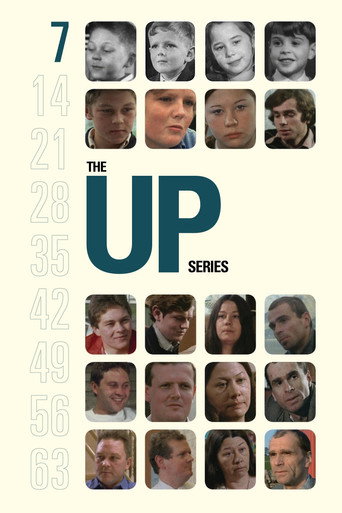
A group of British children aged 7 from widely ranging backgrounds are interviewed about a range of subjects. The filmmakers plan to re-interview them at 7 year intervals to track how their lives and attitudes change as they age.
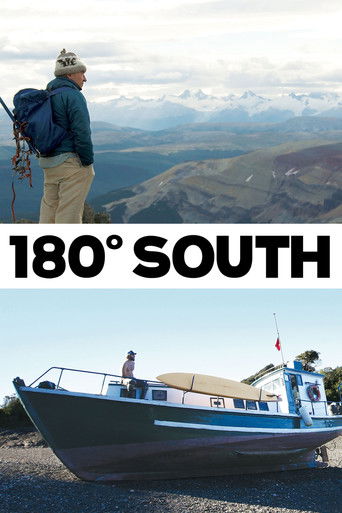
The film follows adventurer Jeff Johnson as he retraces the epic 1968 journey of his heroes Yvon Chouinard and Doug Tompkins to Patagonia.
A string of threatening emails escalates into a revenge plot involving a newly married US marshal and his ex-girlfriend.
Unravel the case of Utah therapist Jodi Hildebrandt, whose child abuse arrest with parenting YouTuber Ruby Franke exposed a twisted tale of manipulation.
An inside look at one of the most anticipated movie sequels ever with James Cameron and cast.
Alex Gibney explores the charged issue of pedophilia in the Catholic Church, following a trail from the first known protest against clerical sexual abuse in the United States and all way to the Vatican.
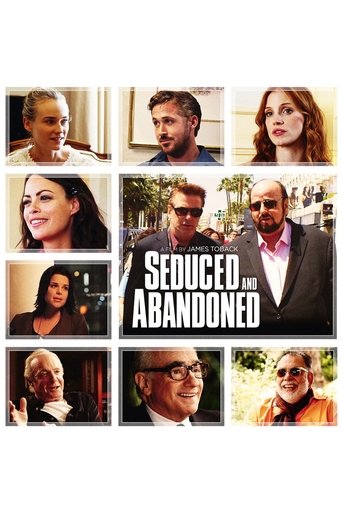
SEDUCED AND ABANDONED combines acting legend Alec Baldwin with director James Toback as they lead us on a troublesome and often hilarious journey of raising financing for their next feature film. Moving from director to financier to star actor, the two players provide us with a unique look behind the curtain at the world's biggest and most glamourous film festival, shining a light on the bitter-sweet relationship filmmakers have with Cannes and the film business. Featuring insights from directors Martin Scorsese, 'Bernando Bertolucci' and Roman Polanski; actors Ryan Gosling and Jessica Chastain and a host of film distribution luminaries.
In 1997, Louis Theroux made a documentary about the world of male porn performers in Los Angeles. 15 years later, he returns to find a business struggling with the deluge of free porn on the internet. Louis revisits some of the original programme's contributors as well as meeting the latest crop of porn performers dreaming of porn stardom.
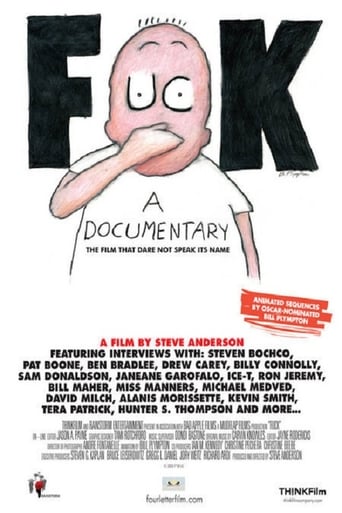
A documentary on the expletive's origin, why it offends some people so deeply, and what can be gained from its use.
A documentary about the life and films of director John Ford.
Alexander McQueen's rags-to-riches story is a modern-day fairy tale, laced with the gothic. Mirroring the savage beauty, boldness and vivacity of his design, this documentary is an intimate revelation of McQueen's own world, both tortured and inspired, which celebrates a radical and mesmerizing genius of profound influence.
Over 35 years after Bob Lazar's revelations, this documentary exposes secrets of a facility the government still denies. Featuring Lazar's testimony, recreations, and new evidence, it reopens a case that continues to spark global curiosity
Police pull over a woman who claims she just gave birth. But the baby — and the blood — aren't hers. Twisted lies unravel in this true-crime documentary.
Daft Punk Unchained is the first film about the pop culture phenomenon that is Daft Punk, the duo with 12 million albums sold worldwide and seven Grammy Awards. Throughout their career Thomas Bangalter and Guy-Manuel de Homem-Christo have always resisted compromise and the established codes of show business. They have remained determined to maintain control of every link in the chain of their creative process. In the era of globalisation and social networks, they rarely speak in public and neither do they show their faces on TV. This documentary explores this unprecedented cultural revolution revealing a duo of artists on a permanent quest for creativity, independence and freedom.
A purely observational non-fiction film that takes viewers into the ethically murky world of end-of-life decision making in a public hospital.
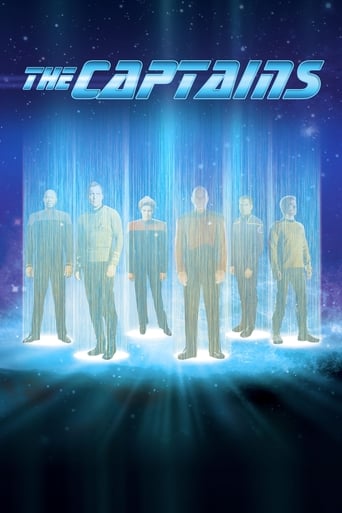
The Captains is a feature-length documentary film written and directed by William Shatner. The film follows Shatner as he interviews the other actors who have portrayed starship captains in the Star Trek franchise.
In an intimate and joyful story of love in the face of loss, celebrated poets Andrea Gibson and Megan Falley find strength—and unexpected hilarity—in what might be their final year together.
This revealing documentary honors the legendary Sidney Poitier—iconic actor, filmmaker, and civil rights activist. Featuring interviews with Denzel Washington, Spike Lee, Halle Berry, and more.
A documentary about the making of season five of the acclaimed AMC series Breaking Bad.