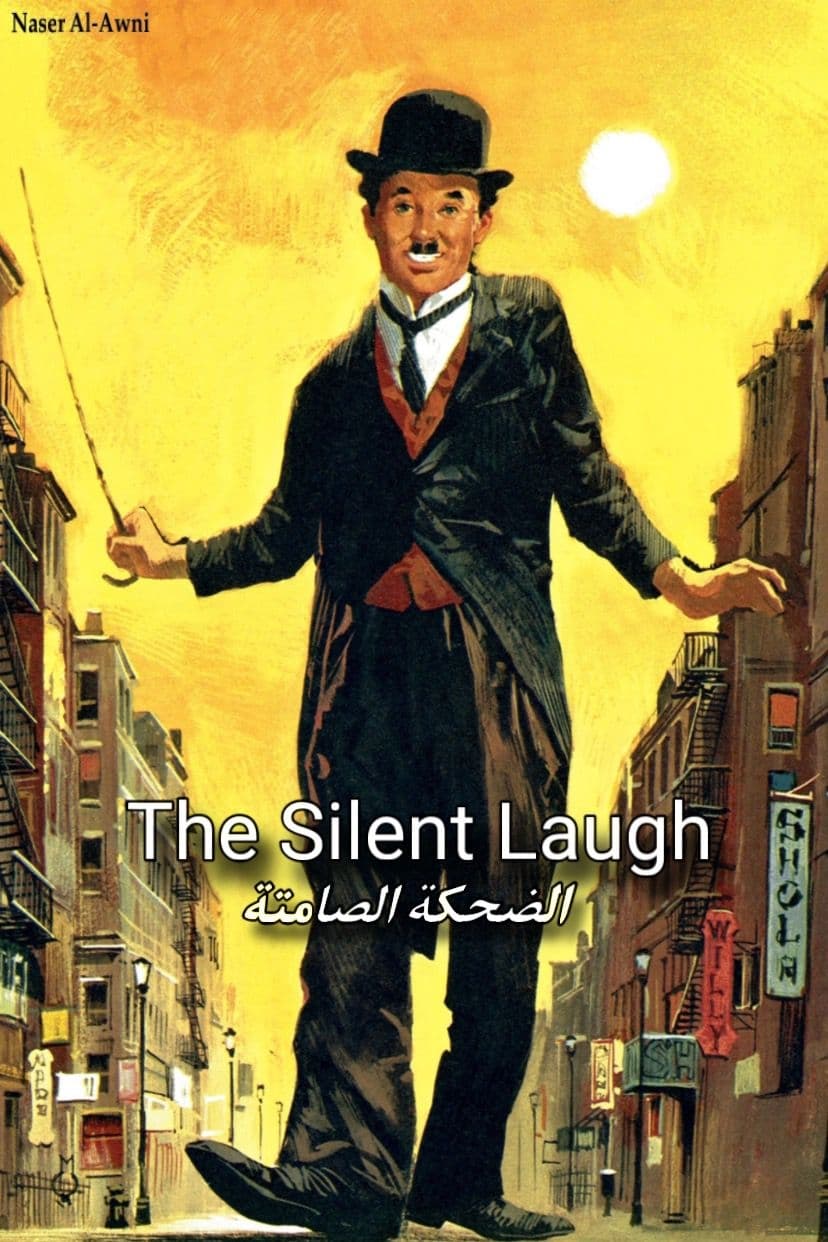
Charlie Chaplin, The Tramp. In this documentary, we will take a look at the life of actor and director Charlie Chaplin, and talk about his films and hidden symbolisms.

Social & External
Narrator (voice)
Jacques Rozier or the fierce, independent itinerary of a filmmaker in perpetual disarray, admired by his peers and pampered by the critics.
Throughout the 19th century, imaginative and visionary artists and inventors brought about the advent of a new look, absolutely modern and truly cinematographic, long before the revolutionary invention of the Lumière brothers and the arrival of December 28, 1895, the historic day on which the first cinema performance took place.
A film crew crisscrosses England trying to unravel the mystery surrounding a record released 30 years earlier, 'Spirit of Eden', that defined the passage from light to shadow of its makers, the band Talk Talk and its lead singer Mark Hollis. From overwhelming obstacles to unpredictable encounters, their journey soon turns into an organic quest. With silence as a horizon line. And punk as a philosophy, thinking that music is accessible to all and that the human spirit is above the technique.
A walk through the life and work of the brilliant French filmmaker Georges Méliès (1861-1938), pioneer of special and visual effects.
The story of Fantômas, the first villain of modernity, from his birth in 1911 as a novel character to his contemporary vicissitudes, passing through Louis Feuillade, André Hunebelle, surrealism and Moscow.
The epic and poetic tale of the early years of Italian cinema, from 1896 to 1930: how peplum was born, how the first stars shone, how many daring filmmakers were able to create an original style amalgamating literature, theater, painting and opera; a tale of splendor and decadence.
A documentary which covers Splatterfest ’90, the notorious all-night horror festival held at London’s legendary Scala Cinema.
In 1982, Wim Wenders asked 16 of his fellow directors to speak on the future of cinema, resulting in the film Room 666. Now, 40 years later, in Cannes, director Lubna Playoust asks Wim Wenders himself and a new generation of filmmakers (James Gray, Rebecca Zlotowski, Claire Denis, Olivier Assayas, Nadav Lapid, Asghar Farhadi, Alice Rohrwacher and more) the same question: “is cinema a language about to get lost, an art about to die?”
She is the grande dame of German and international cinema, always a bit of a rocker chick, freedom-loving, adventurous and willing to take risks. This portrait unfolds Iris Berben's career, which has spanned more than five decades - between the art of film and television, between rock 'n' roll and political commitment.
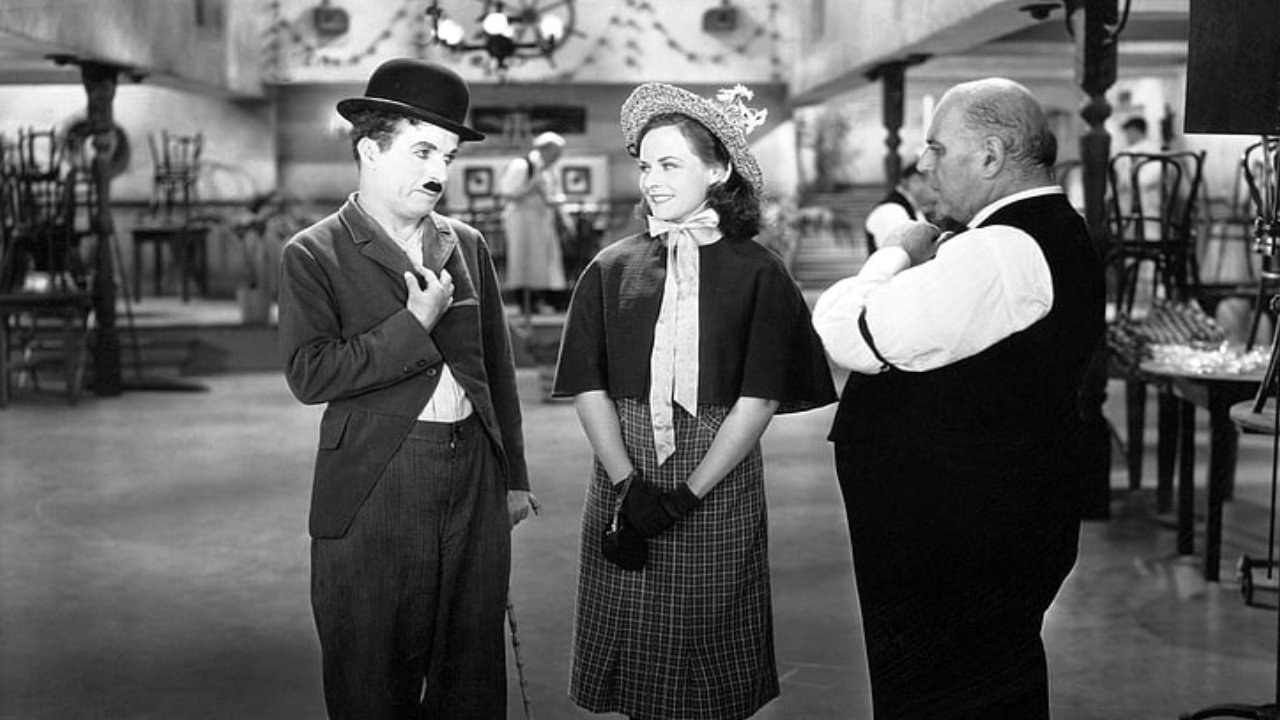
The whole world knows him. Burlesque comedy genius, popular actor, author, director, producer, composer, choreographer, Charlie Chaplin (1889-1977) used his talent to serve an ideal of justice and freedom. But his best scenario was his own destiny, a story written into the political and artistic history of the 20th century.
MAURICE reveals the famous #9 of the Montreal Canadiens like never before. Through never-before-seen archival footage shot over 35 years, this documentary offers exclusive access to the man behind the Rocket myth. Designed by Serge Giguère and Robert Tremblay, who died before completing this project, MAURICE paints an intimate and authentic portrait of Maurice Richard, well beyond his exploits on the ice rink. More than a hockey player, he embodies the perseverance and hope of a people, forever marking Quebec culture.
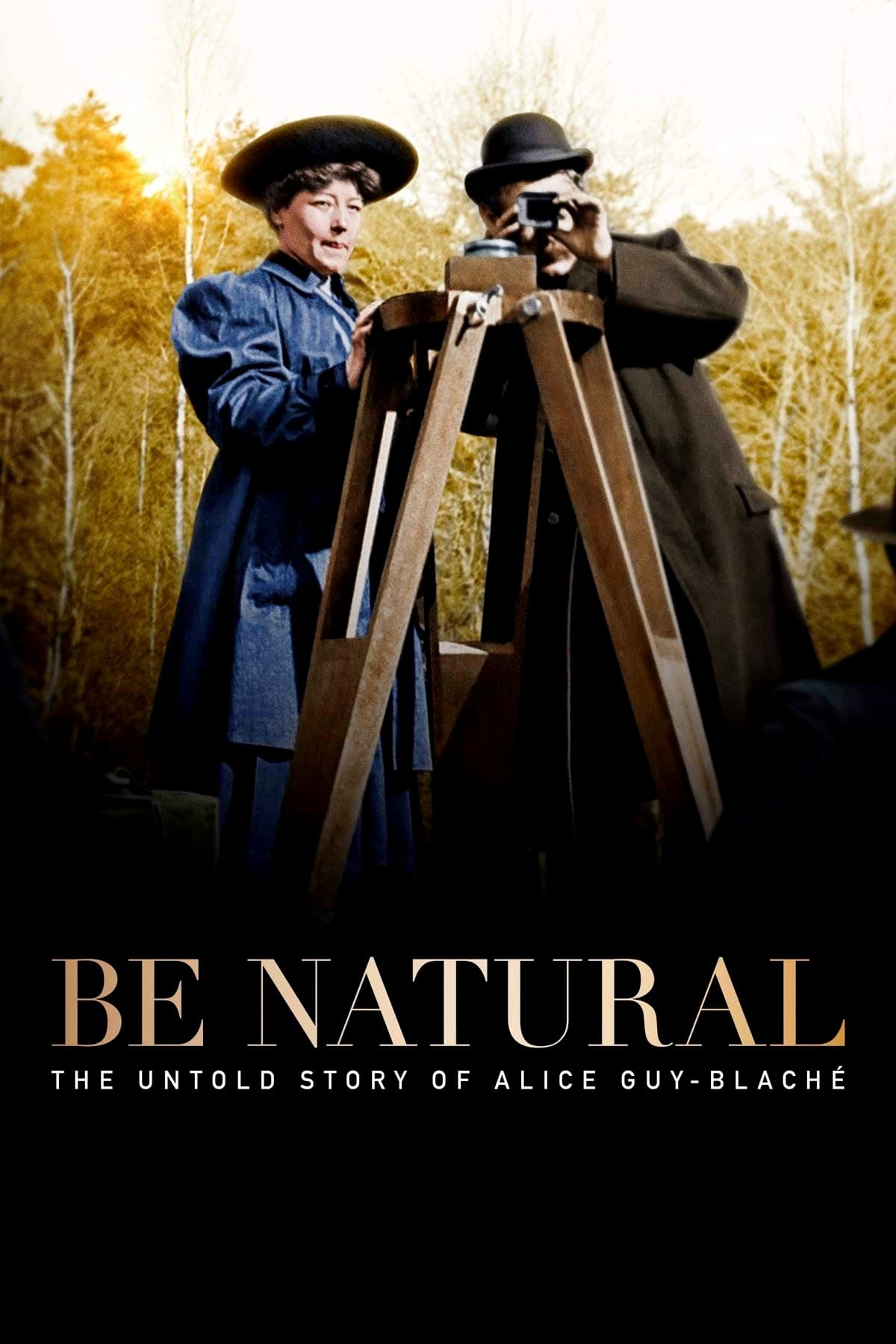
The epic life story of Alice Guy-Blaché (1873–1968), a French screenwriter, director and producer, true pioneer of cinema, the first person who made a narrative fiction film; author of hundreds of movies, but banished from history books. Ignored and forgotten. At last remembered.
The first meeting of a U.S. president and a Mexican president took place when William Howard Taft met Porfirio Díaz on 16 October 1909, in El Paso. The meeting was celebrated in both El Paso and Juárez with parades, elaborate receptions, lavish gifts and large crowds. Shot by the pioneers of Mexican Cinema the brothers Alva. This is a typical example of newsreel material prior to the Mexican revolution. By hemerographical references we know that this footage was presented to the then president of Mexico General Porfirio Díaz in the Castle of Chapultepec, then residence of the president.
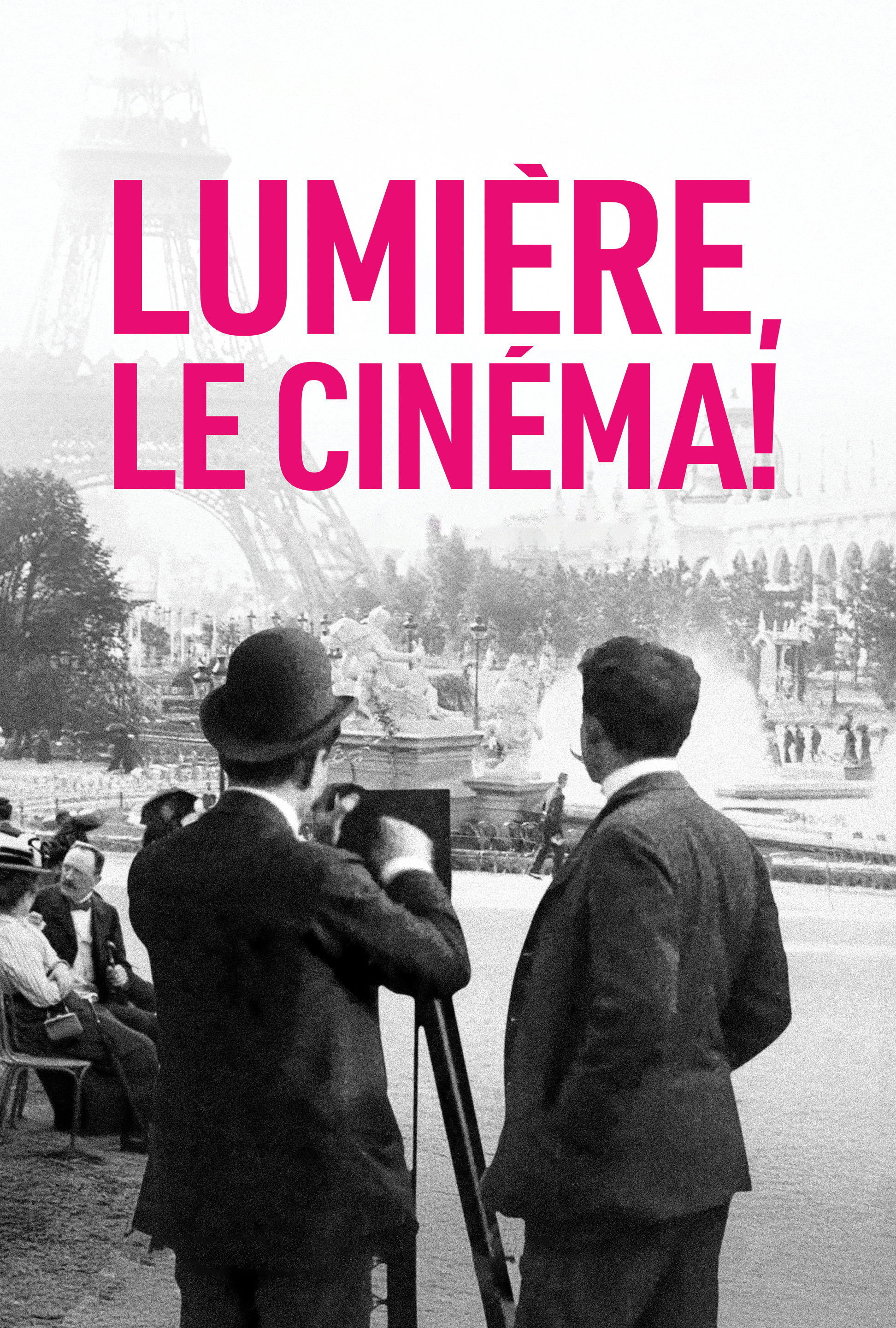
A collection of restored prints from the Lumière Brothers.
A subtle portrait of Japanese director Satoshi Kon by the specialist of Japanese cinema Pascal-Alex Vincent and a dive into a rich work. With interviews of the greatest Japanese, French and American directors inspired by his work.
Takashi Miike is a cinema monster. Let's return to his filmography, his main themes, the framework of his monumental universe.
Aristocratic Italian roots, a close family connection to James Bond novelist Ian Fleming, wartime experiences in the British and Finnish military, post-war Nazi-hunting adventures and a side career as a heavy metal rock singer. And one of the most iconic actors of all time.
Meryl Streep conducts us to a trip to New York City as presented in many films during the 20th Century, and how its cultural importance and impact are important to viewers. With a comprehensive gathering of clips from films between 1910's and 1990's, the documentary presents the mandatory classic films that presented the city and its multiple cultural variations, situations and the great stories filmed there. Actors and directors also discuss how they view the city in reality and also through the pictures.
The love of Kim Jong Il, the former dictator of North Korea, for cinema and his adventures, including the kidnapping of a director.
John Shepherd spent 30 years trying to contact extraterrestrials by broadcasting music millions of miles into space. After giving up the search, he makes a different connection here on earth.
A weary traveler stops at an inn along the way to get a good night's sleep, but his rest is interrupted by odd happenings when he gets to his room--beds vanishing and re-appearing, candles exploding, pants flying through the air and his shoes walking away by themselves.
After returning home to his long-estranged mother upon a request from her deathbed, a man raised by his parents in an orphanage has to confront the childhood memories that have long haunted him.
Roscoe and Buster give a bullying Strongman the what-for, but after the performance troupe quits it's up to Fatty and Buster to keep the show going.
A child borrows his grandmother's magnifying glass to look at a newspaper ad for Bovril, at a watch, and then at a bird. The child shows grandma what he is doing. The child looks next at grandma's eye, then at a kitten.
Charlie takes care of a man in a wheelchair.
In a long, diaphanous skirt, held out by her hands with arms extended, Broadway dancer Annabelle Moore performs. Her dance emphasizes the movement of the flowing cloth. She moves to her right and left across an unadorned stage. Many of the prints were distributed in hand-tinted color.
A man attempts to evade observation by an all-seeing eye.
The hero, a janitor played by Chaplin, is fired from work for accidentally knocking his bucket of water out the window and onto his boss the chief banker (Tandy). Meanwhile, one of the junior managers (Dillon) is being threatened with exposure by his bookie for gambling debts unpaid. Thus the manager decides to steal from the company.
Mother, father and daughter go to the park. The women doze off on a bench while the father plays a hide-and-seek game with a girl, blindfolded. Charlie leads him into a lake. Both dozing ladies on the bench fall for Charlie and invite him for dinner. The father returns home with a friend. Charlie rushes upstairs and dresses like a woman, shaving his mustache. Both men fall for Charlie.
An enthusiastic young couple is astounded with modern technology's giant leaps in the fascinating field of electricity.
A Soviet woman is caught between her husband and son, who find themselves on opposing sides of the Russian Revolution.
When a man becomes tyrannical towards his family, the women of the house decide to teach him a lesson in gratitude.
A young prostitute, who is trying to give her infant son a good start in life, must contend with a coercive pimp and the prejudices of others.
A shipowner intends to scuttle his ship on its last voyage to get the insurance money. Charlie, a tramp in love with the owner's daughter, is grabbed by the captain and promises to help him shanghai some seamen. The daughter stows away to follow Charlie. Charlie assists in the galley and attempts to serve food during a gale.
Charlie is released from prison and immediately swindled by a fake parson. A fellow ex-convict convinces Charlie to help burglarize a house.
Mr. Pest tries several theatre seats before winding up in front in a fight with the conductor. He is thrown out. In the lobby he pushes a fat lady into a fountain and returns to sit down by Edna. Mr. Rowdy, in the gallery, pours beer down on Mr. Pest and Edna. He attacks patrons, a harem dancer, the singers Dot and Dash, and a fire-eater.
This short burlesque film presents an anthropomorphic pig in elegant dress flirting and dancing with a woman, before being humiliated and compelled to perform for her amusement. The film is a screen adaptation of "Le cochon mondain," a successful Paris music-hall act, likely performed by its creator Odéo using the same custom-designed costume.
A young golfer is mugged by an escaped convict and finds himself in a prison where he foils a jailbreak.
Roscoe and Buster operate a combination garage and fire station. In the first half they destroy a car left for them to clean. In the second half they go off on a false alarm and return to find their own building on fire.