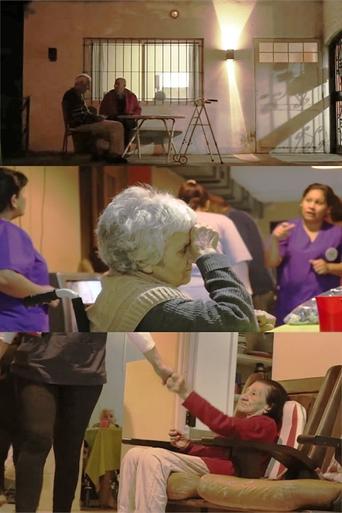
Samirah, a grandmother who lived three parts of her life, starting with her daughter who married and then converted, the death of her husband and ending with loneliness.
Social & External
Unknown Role
Twenty-five years after she moved away, Canadian filmmaker Kristina Wagenbauer (a participant in the 2019 Talent Lab) returns to her native Russia to visit her grandmother – her Babushka – with whom she spent part of her childhood, in this film brimming with tenderness and humour. The two women reflected in the mirror bear an undeniable resemblance, and each seeks to recognize herself in the other. Plumbing her memories, Wagenbauer hopes to re-establish a lost bond of intimacy and to confront the wounds of the past. Babushka has survived the Second World War, the break-up of the Soviet Union, the void that her daughter and granddaughter left behind when they moved abroad, and, more recently, the death of the love of her life. Despite all of this, she holds to life with a strong spirit of resilience.
A multigenerational story celebrating director Sean Wang's two grandmothers, one on his father's side and the other on his mother's side.
In a decaying Soviet-era retirement home, a vibrant group of elders cling to life by staging Shakespeare. Yet loneliness lingers beyond the theater’s doors, until drama begins to blur with reality.
Everyone in town knows Simón's story, because like a rumor or an urban legend, it has been spreading among its inhabitants, the few who believe him and those who question everything about his story... But Simón will clear up doubts, recounting what happened during those supernatural events...
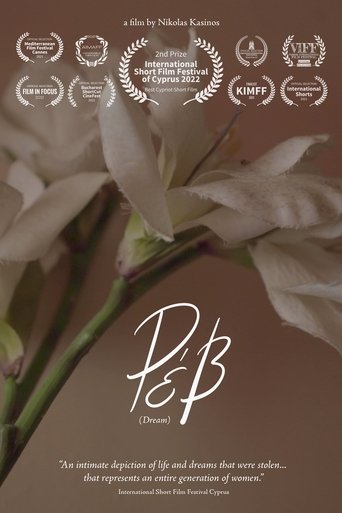
A short documentary examining the consequence of time within the fragility of memory, exposing a sense of self, trapped within materiality and fantasy. We observe Chrystalla in her safe place, her home, reflecting on her childhood, her successful beauty business in 70s Cyprus and her deeply troubled marriage. Loneliness, abandonment and regret are prevailing themes within cycles of reflection, jest and contradiction.
A cellar. A forgotten amphora. The ashes of a woman. Her granddaughter, daughter-in-law and son characterise her, entwining their memories and experiences. They reflect about filial love, gender and isolation through her overbearing nature.
This documentary is a sad sight of the reality of child abuse victims who now live in public shelters in Brazil, with stories told by themselves. Children and adolescents who are now in shelters were victims of violence. Most were the victim of the own family and others never knew theirs. The years are passing and the childhood and adolescence of them also ...
On the age of 51, a father leaves his family to live as a carpenter. Away from the family and house burdens, he spends his last 15 years living alone. From the point of view of his child, the idealistic father then changes his mind to let go of everything and lives his dream of traveling.
A story with almost 100 years told by the 95 years old woman Floripes.
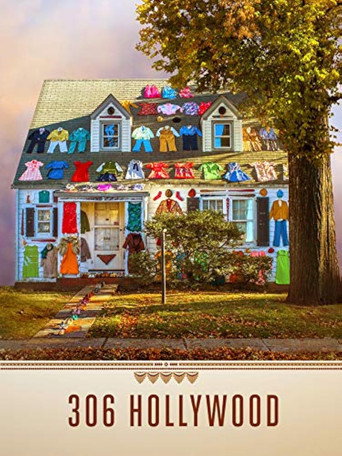
When two siblings undertake an archaeological excavation of their late grandmother’s house, they embark on a magical-realist journey from her home in New Jersey to ancient Rome, from fashion to physics, in search of what life remains in the objects we leave behind.
TWO OR THREE THINGS I KNOW ABOUT EDWARD HOPPER is an immersive experience in 3D, that takes its viewers on a journey into the world of Hopper, sharpening their senses for some aspects of his unique work.
A short documentary on a grandson returning home to visit his aging grandmother who was crying to see him on the phone.
Made in Japan, Last Room is both fiction and documentary. The occupants of the love-hotels and capsule-hotels tell their own intimate, dreamlike stories, interspersed with journeys through the archipelago's landscapes. Soon, these personal stories resonate with a collective history: that of Gunkanjima, the abandoned ghost island of Nagasaki, and then that of Japan as a whole.
A house. A shelter. A man the last one left in the homeland. A woman returns to her community every year. The daughters and husband who have lost all traditions. A rapper who raps in the old language. In 1990 Susanna marries Udo. Their wedding is the last one celebrated between two Saxons in their village. After that the couple emigrated like half a million of Transylvanian Saxons. After 30 years in Germany the relationship between Susi and Udo has gone stale and they haven't taught their native language to their daughters that feel just German. Georg on the other hand is proud of his identity. He hopes with his rap to spread the young generations about the heritage to make them proud of being a Saxon. This is the choral story of a family who is learning to change in order not to disappear.
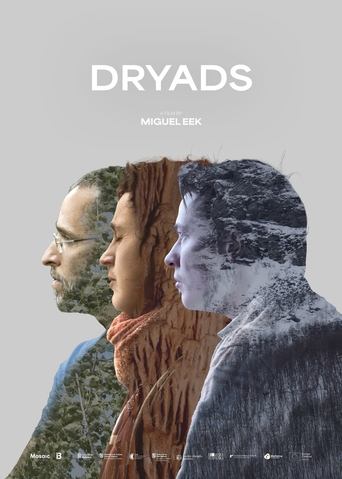
After consolidating itself as a tourist destination in the mid-1960s, this small coastal village has become the dormitory town for the workers of a Nuclear Power Plant. With the liberal promise of prosperity and socioeconomic wellfare, many workers left their homes to move to the small city and started working at the new Nuclear Power Plant. The collective unrest and the silence, cut off by the great gusts of wind, articulate the landscape of the village that is now under the aid of the Nuclear Power Plant.