Social & External
Narrator
Self
Archival film maestro Göran Hugo Olsson has assembled—from a vast catalogue of footage in the vaults of Sweden’s national television service SVT—accounts of the Israeli-Palestinian conflict as witnessed and represented by Swedish journalists. Stories of the beginning of the Israeli state interwoven with the Palestinian struggle for independence. News coverage with Yasser Arafat and interviews with Israeli foreign minister Abba Eban during a visit to Sweden unseen since first broadcast. From the tenth anniversary of Israel’s founding to the First Intifada, perspectives and encounters with statesmen, civilians, revolutionaries, and intellectuals tell the story from myriad angles of an evolving media landscape, revivifying a history of the ongoing conflict.
Delves into the world of makeshift oil refineries and the stark realities of life in war-torn northern Syria,. Mahmood is a prominent figure in these operations, navigating complex working conditions and local dynamics.
A group of people are standing along the platform of a railway station in La Ciotat, waiting for a train. One is seen coming, at some distance, and eventually stops at the platform. Doors of the railway-cars open and attendants help passengers off and on. Popular legend has it that, when this film was shown, the first-night audience fled the café in terror, fearing being run over by the "approaching" train. This legend has since been identified as promotional embellishment, though there is evidence to suggest that people were astounded at the capabilities of the Lumières' cinématographe.
An exploration —manipulated and staged— of life in Las Hurdes, in the province of Cáceres, in Extremadura, Spain, as it was in 1932. Insalubrity, misery and lack of opportunities provoke the emigration of young people and the solitude of those who remain in the desolation of one of the poorest and least developed Spanish regions at that time.
Whether famous or anonymous, stars or prisoners, models or sex workers, women have always been at the center of Bettina Rheims' photographic work since her debut in 1978. Both subversive and glamorous, trashy and sophisticated, her photographs mark and bear witness to the upheavals of the era, which this leading photographer both anticipated and accompanied.
In May 1943, Ernst Kaltenbrunner, the new head of the Reich Central Security Office, gave Hitler a report describing in detail the organization of the French Resistance. Indeed, during the Second World War, most of the Resistance networks had been infiltrated by traitors, the "V Man" (trusted men) in the service of the occupier. The Germans had established treason as a system and recruiting Frenchmen ready to inform on them was one of their priorities. It was these Frenchmen, whose number is estimated at between 20,000 and 30,000, who dealt terrible blows to the Resistance.
Directed by Patrick Gramm, 'The Pigeon People' (2023) takes you deep into Arizona's underground pigeon racing scene as racing rivals prepare for and compete in the Grand Canyon Classic - a 350-mile pigeon race from Utah to Arizona that crosses over the Grand Canyon.
In Israel, a joint French-Israeli scientific mission is set to unearth the secrets of the hill of Kiryath-Jearim (or Kiryat Ya’arim), converted to the site of a Catholic convent, where, according to the Bible, the Ark of the Covenant was kept for at least twenty years before being brought to Jerusalem by King David, father of King Solomon, who would eventually build the Holy of Holies inside the First Temple to house it.
A documentary that details the process of restoring 270 of the 520 lost films of pioneering director Georges Méliès, all orchestrated by a Franco-American collaboration between Lobster Films, the National Film Center, and the Library of Congress.
Bill Moyers takes a piercing look at how global economic changes are destroying the lives and livelihoods of hardworking Americans. The documentary follows several individuals and their families in Milwaukee, Wisconsin, as they fight to make ends meet in the “new economy.” In sheer numbers, more jobs were created than lost in America during the last decade, but a look behind those numbers reveals a shortage of jobs that pay enough to support a family. The program intimately portrays the lives of workers and their families as they struggle to make it in today’s job market.
On the Puerto Rican diaspora, which includes renowned artists who have converted New York, Florida, Chicago, Hawaii, Santa Cruz and Dominican Republic into their second home, but with Puerto Rico in their hearts.
In 2001, Jimmy Wales published the first article on Wikipedia, a collaborative effort that began with a promise: to democratize the spreading of knowledge, monopolized by the elites for centuries. But is Wikipedia really a utopia come true?
This documentary follows the French soccer team on their way to victory in the 1998 World Cup in France. Stéphane Meunier spent the whole time filming the players, the coach and some other important characters of this victory, giving us a very intimate and nice view of them, as if we were with them.
Computer-generated imagery and other visualization techniques reveal how it would look if all the water was removed from RMS Titanic's final resting place.
Tells the extraordinary story of Anita Lasker-Wallfisch who, along with other victims of Auschwitz, played and created music amidst the terrors of the Holocaust.
Bill Moyers tells the story of several hardworking Milwaukee families struggling with low-paying jobs after previous employers downsized their operations. Filmed over a period of five years, these families were first featured in Moyers’s 1992 documentary ‘Minimum Wages: The New Economy.’ FRONTLINE chronicles the families’ emotional and financial strains, their search for better jobs and job retraining, and looks at Milwaukee’s efforts to adapt to an ever-shrinking industrial sector.
A feature length documentary shot in Iceland on mediums and the relationship between humans and invisible beings such as elves ghosts, angels, water monsters and extra-terrestrials. The film is a journey to the frontiers of life questioning the scope of our existence. Are we alone in the universe? If life exists in other dimensions, it's worth knowing more.
This film is a comment on a current political scenario, where history is in Flux. In a documentary disguise, this film tries to revive faded memories of bygone public figures like Kartar Singh Thatte and other right-wing hardliners... and through the collective memoir, draws a trajectory of a political narrative to understand the 'paradox of tolerance'.
In January 1961, a new generation in the guise of John F. Kennedy moved into the White House. All of a sudden politics were youthful, dynamic and sexy. During the brief period in which he was in office, the first pop star of politics accompanied America through the darkest days of the Cold War. At the same time, his signal to embark in new directions was eagerly welcomed by younger generations all around the world. Later on, Jackie Kennedy was to compare his presidency with Camelot - the legendary court of King Arthur. Yet, there were also dark sides to this popular president's life.
A documentary on the expletive's origin, why it offends some people so deeply, and what can be gained from its use.
In 1977, a book of photographs captured an awakening - women shedding the cultural restrictions of their childhoods and embracing their full humanity. This documentary revisits those photos, those women and those times and takes aim at our culture today that alarmingly shows the need for continued change.
A behind-the-scenes documentary about the Clinton for President campaign, focusing on the adventures of spin doctors James Carville and George Stephanopoulos.
Director Claude Lanzmann spent 11 years on this sprawling documentary about the Holocaust, conducting his own interviews and refusing to use a single frame of archival footage. Dividing Holocaust witnesses into three categories – survivors, bystanders, and perpetrators – Lanzmann presents testimonies from survivors of the Chelmno concentration camp, an Auschwitz escapee, and witnesses of the Warsaw Ghetto Uprising, as well as a chilling report of gas chambers from an SS officer at Treblinka.
Filmmaking icon Agnès Varda, the award-winning director regarded by many as the grandmother of the French new wave, turns the camera on herself with this unique autobiographical documentary. Composed of film excerpts and elaborate dramatic re-creations, Varda's self-portrait recounts the highs and lows of her professional career, the many friendships that affected her life and her longtime marriage to cinematic giant Jacques Demy.
When a feminist filmmaker sets out to document the mysterious and polarizing world of the Men’s Rights Movement, she begins to question her own beliefs. Chronicling Cassie Jaye’s journey exploring an alternate perspective on gender equality, power and privilege.
Produced and presented as evidence at the Nuremberg war crimes trial of Hermann Göring and twenty other Nazi leaders, this film consists primarily of dead and surviving prisoners and of facilities used to kill and torture during the World War II.
Paris, summer 1960. Anthropologist and filmmaker Jean Rouch and sociologist and film critic Edgar Morin wander through the crowded streets asking passersby how they cope with life's misfortunes.
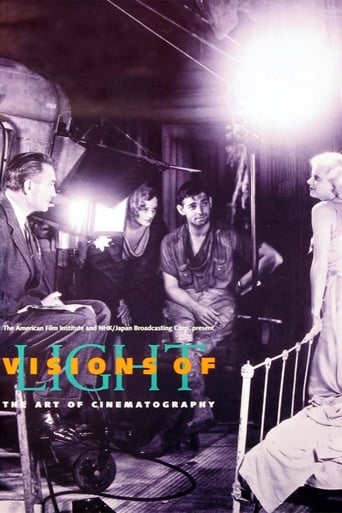
Cameramen and women discuss the craft and art of cinematography and of the "DP" (the director of photography), illustrating their points with clips from 100 films, from Birth of a Nation to Do the Right Thing. Themes: the DP tells people where to look; changes in movies (the arrival of sound, color, and wide screens) required creative responses from DPs; and, these artisans constantly invent new equipment and try new things, with wonderful results. The narration takes us through the identifiable studio styles of the 30s, the emergence of noir, the New York look, and the impact of Europeans. Citizen Kane, The Conformist, and Gordon Willis get special attention.
A documentary highlighting the Soviet Union's legendary and enigmatic hockey training culture and world-dominating team through the eyes of the team's Captain Slava Fetisov, following his shift from hockey star and celebrated national hero to political enemy.
An unprecedented and intimate look at the life, work and enduring legacy of British actress Audrey Hepburn (1929-1993).
Candid interviews of ordinary people on the meaning of happiness, an often amorphous and inarticulable notion that evokes more basic and fundamentally egalitarian ideals of self-betterment, prosperity, tolerance, economic opportunity, and freedom.
Justice Ruth Bader Ginsburg now 84, and still inspired by the lawyers who defended free speech during the Red Scare, Ginsburg refuses to relinquish her passionate duty, steadily fighting for equal rights for all citizens under the law. Through intimate interviews and unprecedented access to Ginsburg’s life outside the court, RBG tells the electric story of Ginsburg’s consuming love affairs with both the Constitution and her beloved husband Marty—and of a life’s work that led her to become an icon of justice in the highest court in the land.
Michael Moore comes home to the issue he's been examining throughout his career: the disastrous impact of corporate dominance on the everyday lives of Americans (and by default, the rest of the world).
Filmmaker Alain Resnais documents the atrocities behind the walls of Hitler's concentration camps.
BBC Arena's documentary on the Dames of British Theatre and film featuring Maggie Smith, Eileen Atkins, Judi Dench and Joan Plowright on screen together for the first time as they reminisce over a long summer weekend in a house Joan once shared with Sir Laurence Olivier.
Working men and women leave through the main gate of the Lumière factory in Lyon, France. Filmed on 22 March 1895, it is often referred to as the first real motion picture ever made, although Louis Le Prince's 1888 Roundhay Garden Scene pre-dated it by seven years. Three separate versions of this film exist, which differ from one another in numerous ways. The first version features a carriage drawn by one horse, while in the second version the carriage is drawn by two horses, and there is no carriage at all in the third version. The clothing style is also different between the three versions, demonstrating the different seasons in which each was filmed. This film was made in the 35 mm format with an aspect ratio of 1.33:1, and at a speed of 16 frames per second. At that rate, the 17 meters of film length provided a duration of 46 seconds, holding a total of 800 frames.
The film MISS REPRESENTATION exposes how American youth are being sold the concept that women and girls’ value lies in their youth, beauty and sexuality. Explores the under-representation of women in positions of power and influence in America, and challenges the media's limited portrayal of what it means to be a powerful woman. It’s time to break that cycle of mistruths.
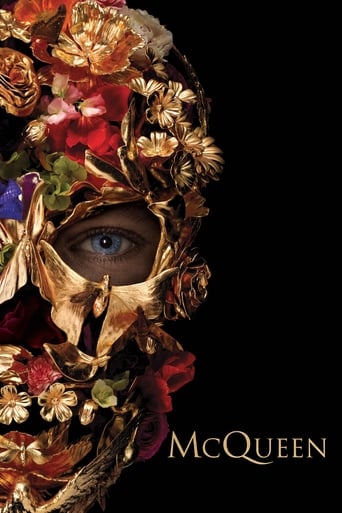
Alexander McQueen's rags-to-riches story is a modern-day fairy tale, laced with the gothic. Mirroring the savage beauty, boldness and vivacity of his design, this documentary is an intimate revelation of McQueen's own world, both tortured and inspired, which celebrates a radical and mesmerizing genius of profound influence.
Diaries, audiotapes, videotapes and testimonials from friends and colleagues offer insight into the life and career of Gilda Radner -- the beloved comic and actress who became an icon on Saturday Night Live.