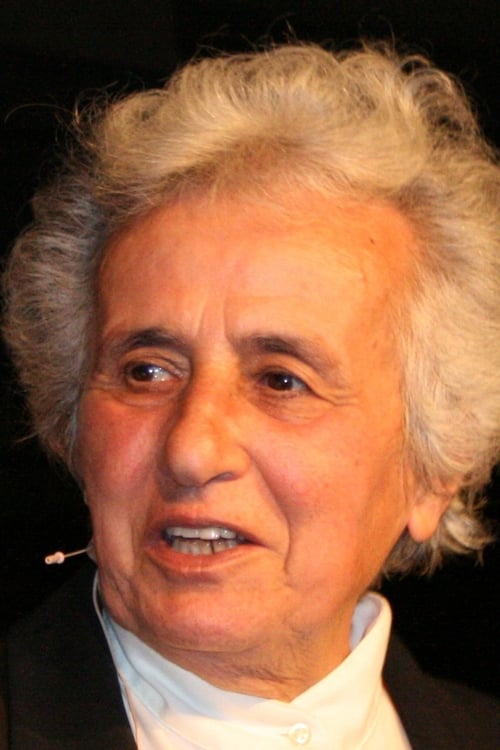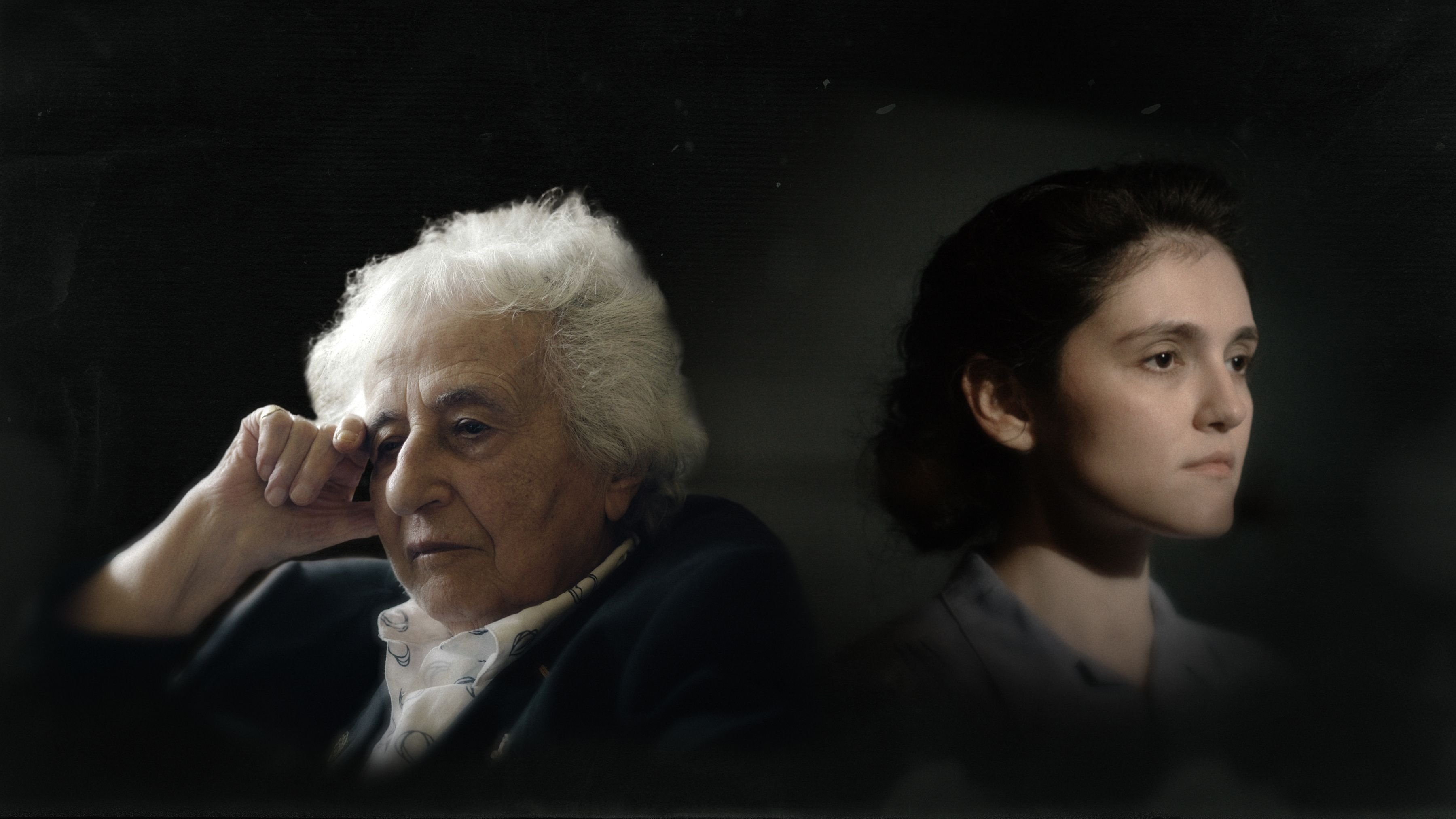
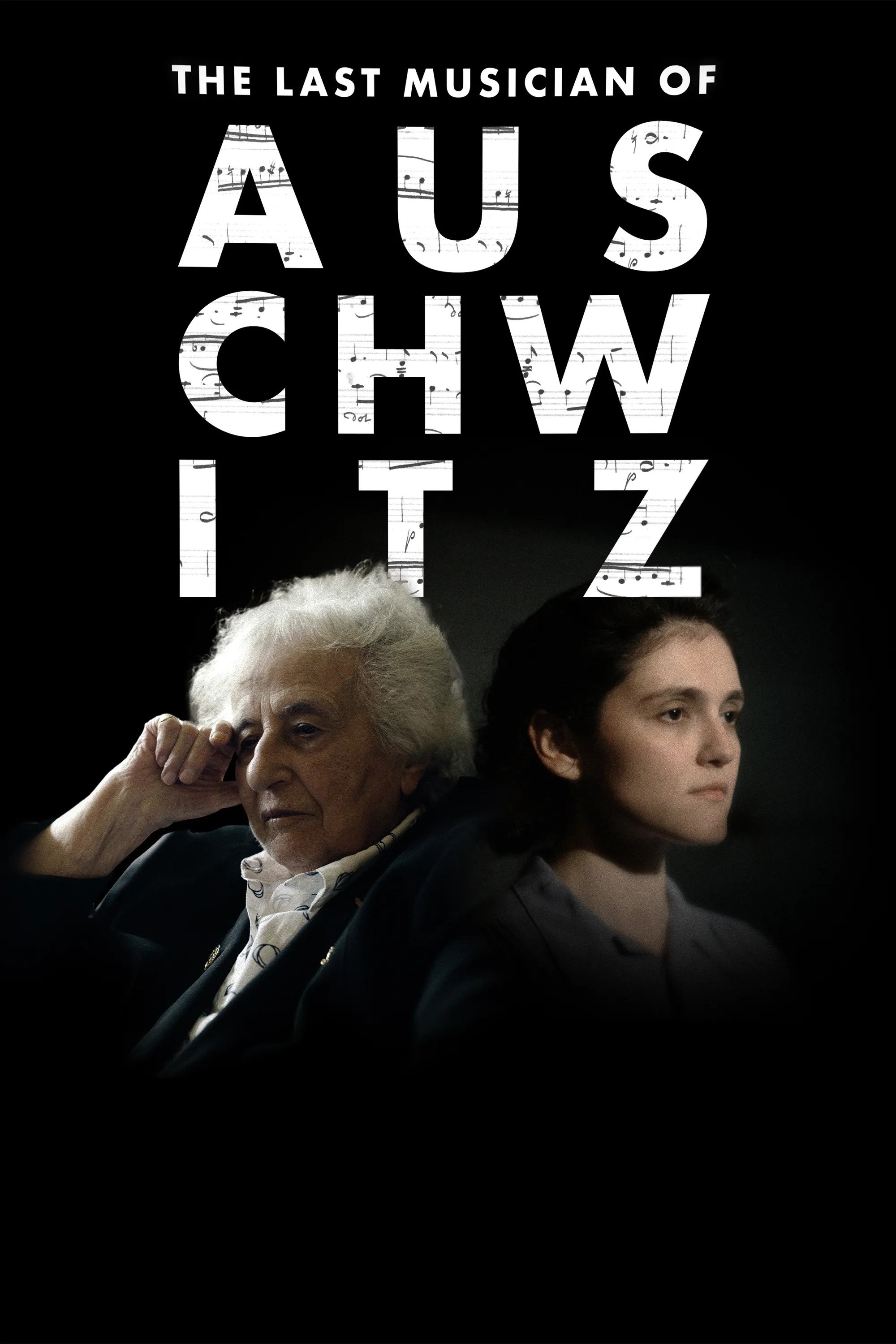
Tells the extraordinary story of Anita Lasker-Wallfisch who, along with other victims of Auschwitz, played and created music amidst the terrors of the Holocaust.
Social & External
Self
The post-war guilt and horrific secrets of Nazi Germany serve as a backdrop to a disturbing mind game between a young anatomist and a prostitute in a small hotel room the first Christmas following the war.
The Glorious Story of Castles Carriers of myths and legends, castles strongly mark our imaginations, appearing most often as the pivot of a dark and barbaric period. Reality is different. They are full of mystery and grandeur, emblematic abstractions of the Middle Ages, they testify to medieval civilization.
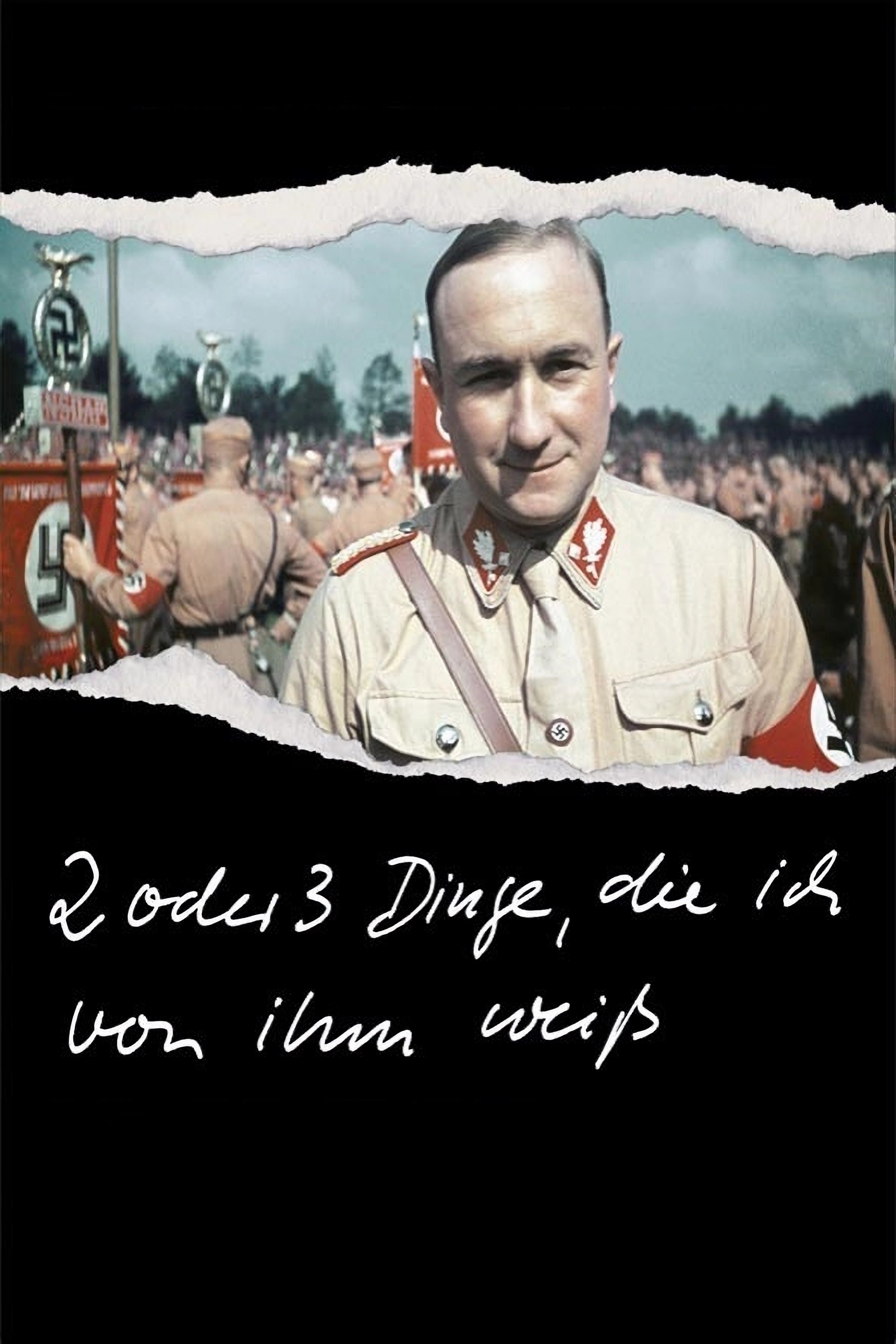
What would your family reminiscences about dad sound like if he had been an early supporter of Hitler’s, a leader of the notorious SA and the Third Reich’s minister in charge of Slovakia, including its Final Solution? Executed as a war criminal in 1947, Hanns Ludin left behind a grieving widow and six young children, the youngest of whom became a filmmaker. It's a fascinating, maddening, sometimes even humorous look at what the director calls "a typical German story." (Film Forum)
In March 1943, twenty-year-old Ovadia Baruch was deported together with his family from Greece to Auschwitz-Birkenau. Upon arrival, his extended family was sent to the gas chambers. Ovadia struggled to survive until his liberation from the Mauthausen concentration camp in May 1945. While in Auschwitz, Ovadia met Aliza Tzarfati, a young Jewish woman from his hometown, and the two developed a loving relationship despite inhuman conditions. This film depicts their remarkable, touching story of love and survival in Auschwitz, a miraculous meeting after the Holocaust and the home they built together in Israel. This film is part of the "Witnesses and Education" project, a joint production of the International School for Holocaust Studies and the Multimedia Center of the Hebrew University of Jerusalem. In this series, survivors recount their life stores - before, during and after the Holocaust. Each title is filmed on location, where the events originally transpired.
On the 29th September 1945, the incomplete rough cut of a brilliant documentary about concentration camps was viewed at the MOI in London. For five months, Sidney Bernstein had led a small team – which included Stewart McAllister, Richard Crossman and Alfred Hitchcock – to complete the film from hours of shocking footage. Unfortunately, this ambitious Allied project to create a feature-length visual report that would damn the Nazi regime and shame the German people into acceptance of Allied occupation had missed its moment. Even in its incomplete form (available since 1984) the film was immensely powerful, generating an awed hush among audiences. But now, complete to six reels, this faithfully restored and definitive version produced by IWM, is being compared with Alain Resnais’ Night and Fog (1955).
Kurt Gerstein—a member of the Institute for Hygiene of the Waffen-SS—is appalled to discover that a poison gas he helped discover is being used to kill Jews. Driven by his conscience to alert the rest of the world, Gerstein teams up with a young Jesuit priest, Riccardo Fontana, but their protestations fall on deaf ears in the Vatican.
In 1935, German scientists dug for bones; in 1943, they murdered to get them. How the German scientific community supported Nazism, distorted history to legitimize a hideous system and was an accomplice to its unspeakable crimes. The story of the Ahnenerbe, a sinister organization created to rewrite the obscure origins of a nation.
In 1892, Ellis Island, in New York Bay, became the main gateway to the United States for immigrants arriving increasingly from Europe. The story of immigration to the United States from 1892 to 1954, an enthralling polyphonic narrative that embraces both small and great history.
In 2001, Jimmy Wales published the first article on Wikipedia, a collaborative effort that began with a promise: to democratize the spreading of knowledge, monopolized by the elites for centuries. But is Wikipedia really a utopia come true?
In 1945, two young American soldiers, brothers Budd and Stuart Schulberg, are commissioned to collect filmed and recorded evidence of the horrors committed by the infamous Third Reich in order to prove Nazi war crimes during the Nuremberg trials (1945-46). The story of the making of Nuremberg: Its Lesson for Today, a paramount historic documentary, released in 1948.
A gripping documentary about the courage and determination of a young English stockbroker who saved the lives of 669 children. Between March 13 and August 2, 1939, Nicholas Winton organized 8 transports to take children from Prague to new homes in Great Britain, and kept quiet about it until his wife discovered a scrapbook documenting his unique mission in 1988. Winton was a successful 29-year-old stockbroker in London who "had an intuition" about the fate of the Jews when he visited Prague in 1939. He quietly but decisively got down to the business of saving lives. We learn how only two countries, Sweden and Britain, answered his call to harbor the young refugees; how documents had to be forged and how once foster parents signed for the children on delivery, that was the last he saw of them.
A story of the LGBT struggle from the 1960s to the present, after the Stonewall riot sparked the militant action in New York that was to spread around the world. From San Francisco to Paris via Amsterdam, between the first Gay Pride, the election of Harvey Milk, the French "decriminalization", the AIDS epidemic and the first homosexual marriages, these few decades of struggle are embodied through numerous testimonies of actors and actresses of this revolution rainbow.
Sir John Franklin set off from England in 1845 with two ships and 129 men to be the first to navigate the Northwest Passage, a new trade route over the top of the world, when Franklin’s ships vanished without a trace. Now, a team of explorers attempts to solve the mystery by retracing Franklin’s route in search of his long-lost tomb.
Nazi troops massacre 30,000 Jews over a three-day period in September 1941. Babyn Yar ravine in Kyiv, Ukraine.
Churchill, a name typically associated with braveness and altruism. Recently found evidence from Soviet and British sources however brings up questions about Churchill's doings in the conferences of Tehran, Yalta and Potsdam. Why did he agree to give Stalin large parts of Poland? The story of two world leaders in times of war - it is also the story of Poland.
In August 1936, the Olympic Games, orchestrated by Joseph Goebbels, the Third Reich's Minister of Propaganda, took place in Berlin. This was a vast charm offensive designed to present Germany as a nation that respected the Olympic principles of equality and fraternity. This documentary reveals the political strategies of the Third Reich, which benefited from the complicity of the International Olympic Committee in thwarting calls for a boycott by several countries. Once the games were over, Nazi policy intensified. How could the civilized world turn a blind eye to this "great illusion"? Gretel Bergmann, the German Jewish athlete at the center of a bargaining chip between the German authorities and the US government, and Noël Vandernotte, who won a bronze medal in rowing, share their stories.
Beginning with Guernica and the Chinese cities of Chongqing and Shanghai in 1937 and ending with the bombing of Hiroshima and Nagasaki in August 1945, World War Two saw a new art of warfare in the form of extensive, worldwide bombing campaigns.
Fascinating new translations and fresh research are transforming the myth of Atlantis from the realm of fantasy into an incredible reality. Travel across continents and centuries to unlock the secrets of Plato's final legacy - a true story of Ancient Greece, Africa, and climate change across deep time.
For the 75th anniversary of the liberation of Auschwitz, CNN’s Wolf Blitzer looks back through the eyes of those who were imprisoned there.

The sinking of the RMS Titanic remains one of the most enduring and mysterious tragedies of the 20th century. For decades, investigators and amateurs alike have floated theories for why it occurred and who was to blame for the extraordinary loss of life, but no one answer could fully explain what happened. Until now. To mark the 100th anniversary of the infamous disaster, Smithsonian Channel will premiere Titanic's Final Mystery. The two-hour special investigates a century of theories and uncovers astonishing new forensic evidence that proves the most likely theory for the case.
In the Jewish tradition of arguing with God, Jewish prisoners in Auschwitz decide to put God on Trial.
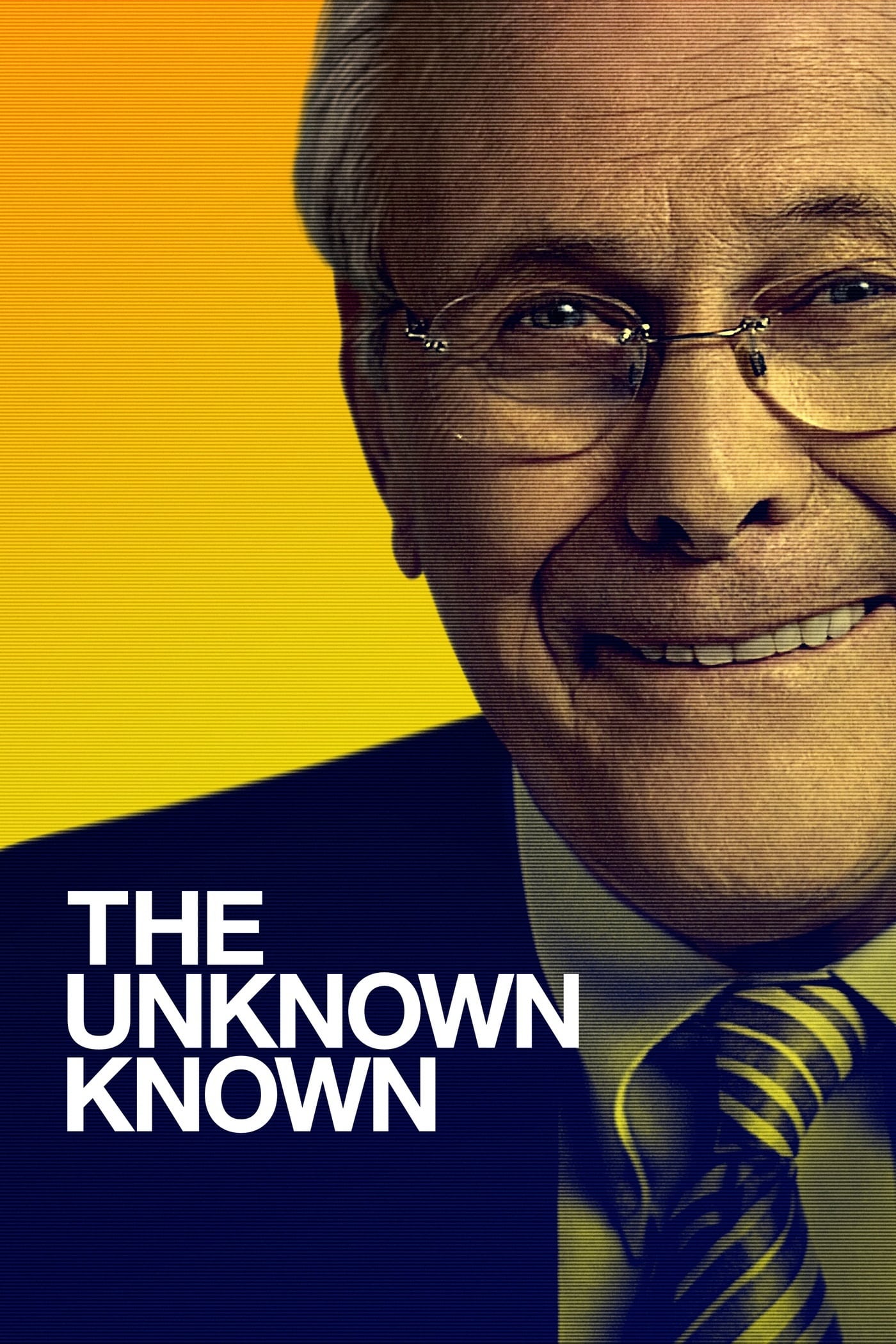
Former United States Secretary of Defense, Donald Rumsfeld, discusses his career in Washington D.C. from his days as a congressman in the early 1960s to planning the invasion of Iraq in 2003.
One single Anne Frank moves us more than the countless others who suffered just as she did but whose faces have remained in the shadows-Primo Levi. The Oscar®-winning Helen Mirren will introduce audiences to Anne Frank's story through the words in her diary. The set will be her room in the secret refuge in Amsterdam, reconstructed in every detail by set designers from the Piccolo Theatre in Milan. Anne Frank this year would have been 90 years old. Anne's story is intertwined with that of five Holocaust survivors, teenage girls just like her, with the same ideals, the same desire to live: Arianna Szörenyi, Sarah Lichtsztejn-Montard, Helga Weiss and sisters Andra and Tatiana Bucci. Their testimonies alternate with those of their children and grandchildren.
When Allied forces liberated the Nazi concentration camps in 1944-45, their terrible discoveries were recorded by army and newsreel cameramen, revealing for the first time the full horror of what had happened. Making use of British, Soviet and American footage, the Ministry of Information’s Sidney Bernstein (later founder of Granada Television) aimed to create a documentary that would provide lasting, undeniable evidence of the Nazis’ unspeakable crimes. He commissioned a wealth of British talent, including editor Stewart McAllister, writer and future cabinet minister Richard Crossman – and, as treatment advisor, his friend Alfred Hitchcock. Yet, despite initial support from the British and US Governments, the film was shelved, and only now, 70 years on, has it been restored and completed by Imperial War Museums under its original title "German Concentration Camps Factual Survey".
The commandant of Auschwitz, Rudolf Höss, and his wife Hedwig, strive to build a dream life for their family in a house and garden next to the camp.
The story of Auschwitz's twelfth Sonderkommando — one of the thirteen consecutive "Special Squads" of Jewish prisoners placed by the Nazis in the excruciating moral dilemma of assisting in the extermination of fellow Jews in exchange for a few more months of life.
What happened after Einstein fled Nazi Germany? Using archival footage and his own words, this docudrama dives into the mind of a tortured genius.
At the Wannsee Conference on January 20, 1942, senior Nazi officials meet to determine the manner in which the so-called "Final Solution to the Jewish Question" can be best implemented.
A documentary on the expletive's origin, why it offends some people so deeply, and what can be gained from its use.
The incredible, untold true story of how a group of prisoners attempt a seemingly impossible escape from the first Nazi death camp in order to provide the first eyewitness account of the Holocaust.
With unprecedented access, this documentary follows the extraordinary journey of “Raqqa is Being Slaughtered Silently”—a group of anonymous citizen journalists who banded together after their homeland was overtaken by ISIS—as they risk their lives to stand up against one of the greatest evils in the world today.
From the heights of her modeling fame to her tragic death, this documentary reveals Anna Nicole Smith through the eyes of the people closest to her.
Lyrical and powerfully personal essay film that reflects on the deaths of her husband Lou Reed, her mother, her beloved dog, and such diverse subjects as family memories, surveillance, and Buddhist teachings.
The remarkable true-life survival story of a Jewish boy hiding and being hunted in the forests of Nazi-occupied Eastern Europe, based on Maxwell Smart's memoir.
The true story of how businessman Oskar Schindler saved over a thousand Jewish lives from the Nazis while they worked as slaves in his factory during World War II.
Pete Postlethwaite stars as a man living alone in the devastated future world of 2055, looking at old footage from 2008 and asking: why didn’t we stop climate change when we had the chance?
In the Warsaw ghetto in 1943, Jews rise against the Nazis.
An in-depth investigation into the private world of the American writer J. D. Salinger (1919-2010), who lived most of his life behind the impenetrable wall of a self-imposed seclusion: how his dramatic experiences during World War II influenced his life and work, his relationships with very young women, his obsessive writing methods, his many literary secrets.
A woman’s Holocaust memoir takes the world by storm, but a fallout with her publisher-turned-detective reveals her story as an audacious deception created to hide a darker truth.
Five Jewish Hungarians, now US citizens, tell their stories: before March 1944, when Nazis began to exterminate Hungarian Jews, months in concentration camps, and visiting childhood homes more than 50 years later. An historian, a Sonderkommando, a doctor who experimented on Auschwitz prisoners, and US soldiers who were part of the liberation in April 1945.