"It's still men who win coal": a look at the past, present and future of the coal industry.
Social & External
Documentary about the emergence of the strike movement in the iron ore mines of Rudňa in Slovakia. The miner Michal Ogurčák introduced a new way of mining iron ore here, overcame initial misunderstandings, and eventually inspired 160 followers to perform striking feats by his example.
Ten years after an enormous open-pit gold mine began operations in Malartic, the hoped-for economic miracle is nothing more than a mirage. Filmmaker Nicolas Paquet explores the glaring contrast between the town’s decline and the wealth of the mining company, along with the mechanisms of an opaque decision-making system in which ordinary people have little say. Part anthropological study, part investigation into the corridors of power, Malartic addresses the fundamental issue of sustainable and fair land management.
An investigation into the unfolding history of nuclear testing, uranium mining, and nuclear waste disposal on indigenous lands in the US. It raises the voices of those who witnessed and experienced the consequences of nuclear colonialism and those who still resist.
In this feature documentary, filmmaker Paul Cowan offers an innovative, moving account of the Westray coal mine disaster that killed 26 men in Nova Scotia on May 9, 1992. The film focuses on the lives of three widows and three miners lucky enough not to be underground that day when the methane and coal dust ignited. But their lives were torn apart by the events. Meet some of the working men, who felt they had no option but to stay on at Westray. And wives, who heard the rumours, saw their men sometimes bloodied from accidents and stood by them, hoping it would all turn out all right. This is a film about working people everywhere whose lives are often entrusted to companies that violate the most fundamental rules of safety and decency in the name of profit.
Documentary marking the 30th anniversary of the 1984 miners' strike, one of the bitterest industrial disputes in British history, with stories from both sides of the conflict.
Warwick company newsreel material of the Universal Colliery at Senghenydd on fire after an explosion on 14th October 1913, and footage of a funeral procession for some of the 439 mine workers who were killed, is followed by a collage of images of the town and its people as they are 50 years later. Wynford Vaughan Thomas, narrating his own commentary, wonders if "colour"- superficial re-decoration – can really make any difference to "the inner heart of Senghenydd". Shot on spare, blank pieces of film by James Clark. Assisted by local amateur photographer and former miner Bill Probert. Script written and narrated by Wynford Vaughan Thomas. 1964.
Capturing Americans in communities across the country as they wrestle with the legacy of the coal industry and what its future should be under the Trump Administration. From Appalachia to the West’s Powder River Basin, the film goes beyond the rhetoric of the “war on coal” to present compelling and often heartbreaking stories about what’s at stake for our economy, health, and climate.
Acid rain, economic development, and a century of mining pollute Rocky Mountain waters.
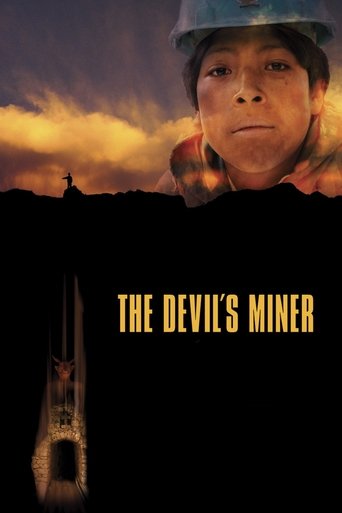
'The Devil's Miner' tells the story of 14-year-old Basilio who worships the devil for protection while working in a Bolivian silver mine to support his family.
Gold fever has gripped northern Niger. In search of the precious metal, and despite the risks, an army of researchers has invaded the sites of interest. While camps are set up and dismantled as rumours of new leads spread, Moussa and his companions are banking on the Ikazan vein.
Documents the cultural and ecological impacts of coal stripmining, uranium mining, and oil shale development in Utah, Colorado, New Mexico, and Arizona – homeland of the Hopi and Navajo.
The mining industry, which always had been “sponsor” and “financier” of the soccer clubs in the Ruhr valley during the post-war period, doesn’t exist anymore nowadays in that form. Many of the once glorious clubs which dominated German soccer until the 1970s faded into obscurity without financial backers. The documentary “Im Westen ging die Sonne auf" ("The sun had risen in the west“) shows the history of the “Revierfußball” from after the second World War until the decline of the mining industry and recalls legendary players and forgotten clubs. The film shows especially how deeply rooted the sport was back then in the entire lifestyle of the Ruhr area - in private life as well as in society - and how structural change also left clearly visible marks in sports. With pictures from back then, interviews with contemporary witnesses, and footage of original locations nowadays, a contemporary document of German post-war history, by taking the example of soccer, has been created.
Dakota Fred Hurt, Dustin Hurt and the Richardson brothers battle nature, time, and death itself to strike gold under a huge waterfall. This film documents what Fred and Dustin were up to since they left Discovery's GOLD RUSH, and it's the prequel to Discovery's new show starring this team called GOLD RUSH: WHITE WATER.
Newly into addiction recovery, an urgent threat emerges to spur filmmaker, Mark Titus back to the Alaskan wilderness - where the people of Bristol Bay and the world's last intact wild salmon runs face devastation if a massive copper mine is constructed.
A film about the first benefit rock concert when major musicians performed to raise relief funds for the poor of Bangladesh. The Concert for Bangladesh was a pair of benefit concerts organised by former Beatles guitarist George Harrison and Indian sitar player Ravi Shankar. The shows were held at 2:30 and 8:00 pm on Sunday, 1 August 1971, at Madison Square Garden in New York City, to raise international awareness of, and fund relief for refugees from East Pakistan, following the Bangladesh Liberation War-related genocide.
A documentary about Nain, a Labrador Inuit community located near the world's largest nickel and copper deposits. As commercial mining interests prepare to exploit the resources, local residents consider the potential environmental and cultural impact. Meanwhile longstanding Aboriginal land claims are unsettled.
Documentary about a Finnish mining company struggling with production and environmental management problems.