"Fuel Precision Satisfaction Transportation"
A Documentary on the railways and their role in supporting the United States
Social & External
Narrator
HISTORY brings you an all-encompassing documentary event cantered around the 25th anniversary of the LA Riots, the most destructive riot in American history that left 53 people dead and caused over a billion dollars in damage.
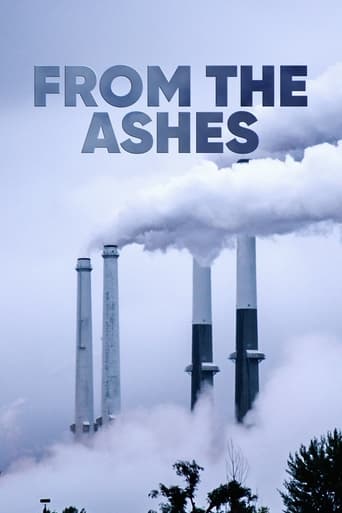
Capturing Americans in communities across the country as they wrestle with the legacy of the coal industry and what its future should be under the Trump Administration. From Appalachia to the West’s Powder River Basin, the film goes beyond the rhetoric of the “war on coal” to present compelling and often heartbreaking stories about what’s at stake for our economy, health, and climate.
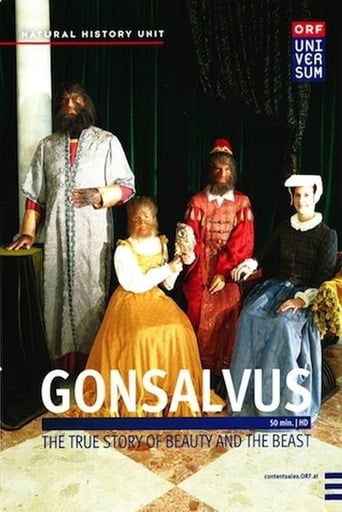
It's a condition known as "hypertrichosis" or "Ambras Syndrome," but in the 1500s it would transform one man into a national sensation and iconic fairy-tale character. His name: Petrus Gonsalvus, more commonly known today as the hairy hero of Beauty and the Beast.
Featuring Douglas Fairbanks Jr. and Diana Vreeland, La Belle Epoque evokes "the beautiful era" of 1890-1914, a time in which the wealthy upper classes of the Western world gave themselves over to a life of elegance and taste-making, their eyes closed to the increasing social and political turmoil fermenting beneath the surface of polite society. The program uses period motion pictures, photographs, and sound recordings, as well as the arts and fashions of the period to supplement the spoken memories of the participating interviewees who actually lived... La Belle Epoque.
Documentary film with play scenes about the rise and fall of the short-lived Bavarian Soviet Republic in 1919 from the perspective of various well-known poets and writers who experienced the events as contemporary witnesses.
Dr Janina Ramirez travels across glaciers and through the lava fields of Iceland to find out about one of the most compelling of the great Viking stories - the Laxdaela Saga. This hour-long film explores how the unique literary achievements of the Saga writers were possible at a time of such immense cultural, political and religious upheaval.
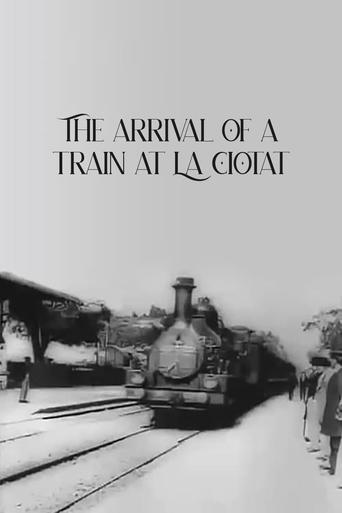
A group of people are standing along the platform of a railway station in La Ciotat, waiting for a train. One is seen coming, at some distance, and eventually stops at the platform. Doors of the railway-cars open and attendants help passengers off and on. Popular legend has it that, when this film was shown, the first-night audience fled the café in terror, fearing being run over by the "approaching" train. This legend has since been identified as promotional embellishment, though there is evidence to suggest that people were astounded at the capabilities of the Lumières' cinématographe.
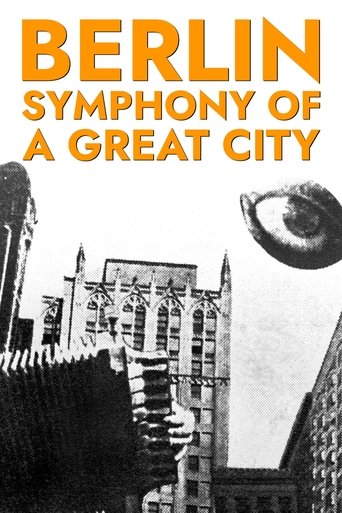
A day in the city of Berlin, which experienced an industrial boom in the 1920s, and still provides an insight into the living and working conditions at that time. Germany had just recovered a little from the worst consequences of the First World War, the great economic crisis was still a few years away and Hitler was not yet an issue at the time.
For the past ten years, Jürgen Henn has filmed over-height trucks crashing into the 11foot8 train bridge affectionately nicknamed the "Can Opener." In that time, millions have viewed the crashes online. Regional, national, and international news organizations have dined out on the story and the goofy crash reels. But why do motorists continue to crash despite the many warnings, sensors, and signs? And what is it about these crashes that holds our attention? In this piece, we look for the humanity in human error.
Seekers of Oblivion explores the exciting life and adventures of Isabelle Eberhardt. Born in Geneva, Switzerland in 1877, Isabelle left Europe for North Africa at a young age. While there, she consorted with tramps, prostitutes, soldiers, murderers and thieves, at times masquerading as a man in orde.
It was perhaps the most spectacular flourishing of imagination and achievement in recorded history. In the Fourth and Fifth Centuries BC, the Greeks built an empire that stretched across the Mediterranean from Asia to Spain. They laid the foundations of modern science, politics, warfare and philosophy, and produced some of the most breathtaking art and architecture the world has ever seen. This series, narrated by Liam Neeson, recounts the rise, glory, demise and legacy of the empire that marked the dawn of Western civilization. The story of this astonishing civilization is told through the lives of heroes of ancient Greece. The latest advances in computer and television technology rebuild the Acropolis, recreate the Battle of Marathon and restore the grandeur of the Academy, where Socrates, Plato and Aristotle forged the foundation of Western thought.
Was the Christ Story stolen from other, older religions? Theologian Dr Robert Beckford investigates remarkable parallels between the stories of Jesus, Krishna, Buddha, Mithra, and other major religious entities, and examines how these similarities impact Christianity and its message.
Discover the untold stories of D-Day from the men, women and children who lived through German occupation and Allied liberation of Normandy, France. Powerful and deeply personal, THE GIRL WHO WORE FREEDOM tells the stories of an America that lived its values, instilling pride in a country that's in danger of becoming a relic of the past.
Professor Niall Ferguson argues that Britain's decision to enter the First World War was a catastrophic error that unleashed an era of totalitarianism and genocide.
Between 1968 and 1970, J M Goodger, a lecturer at the University of Salford, made a film record of the living conditions in the slums of Ordsall, Salford, which were then in the process of being demolished. Under the title 'The Changing face of Salford', the film was in two parts: 'Life in the slums' and 'Bloody slums'.
Take a breathtaking train a ride through Nothern Quebec and Labrador on Canada’s first First Nations-owned railway. Come for the celebration of the power of independence, the crucial importance of aboriginal owned businesses and stay for the beauty of the northern landscape.
An excellent comprehensive look at all the music that came out of Cincinnati, Ohio. Cincinnati "Rock Legends" "James Brown" "King Records" "Pure Prairie League" "Lemon Pipers" "Syd Nathan" WEBN "Bootsy Collins" "Lonnie Mack" "The Who concert 1979" "Rick Derringer"
A Documentary film exploring the history and evolution of vinyl records. Featuring Interviews with the experts, musicians and fans alike, 'Stuck in the groove' takes you on a journey of vinyl-mania, music and nostalgia.
Over the course of 10 months, a camera travels to Buenos Aires, Argentina and Hanover, Germany to meet with Magalí, María Belén, Ivana and Carla, the founding members of the Archivo De La Memoria Trans Argentina, the first existing Trans Archive in the world. Taking the shape of a photo-novel, the documentary not only recounts the founding members lives as trans women under the Argentine dictatorship (1976-1983), the AIDS epidemy, state repression and mass assassinations but also years of fighting for their rights, sorority and the exaltation of life and laughter in times of death. Filming each one of them is filming them embracing their new role as curators, archivists and historians while a collection of 7,000 photos goes through the filter of their memories.
How the Monuments Came Down is a timely and searing look at the history of white supremacy and Black resistance in Richmond. The feature-length film-brought to life by history-makers, descendants, scholars, and activists-reveals how monuments to Confederate leaders stood for more than a century, and why they fell.