"Intimate and moving discussions"
Intimate discussion with the inhabitants of Kfarbaal, a village tucked in the mountains above Byblos. We hear them share their experiences, deceptions and dreams.
Social & External
Nina
Mariam
Charbel
Rosa
Remond
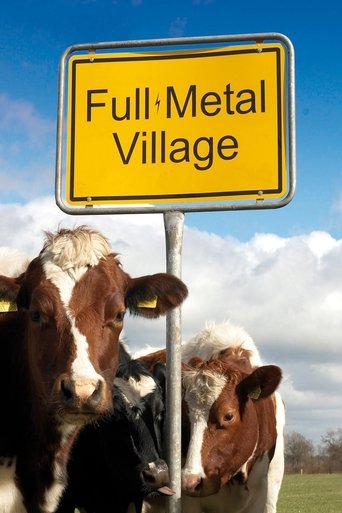
The film describes the microcosmos of the small village Wacken and shows the clash of the cultures, before and during the biggest heavy metal festival in Europe.
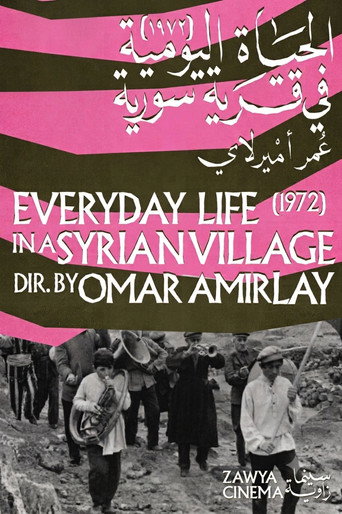
Dadi manages an extended family in Haryana, Northern India, where daughters-in-law face loneliness and unrealistic expectations. The film delves into family dynamics, highlighting Dadi's firm control amidst tensions. Social and economic shifts challenge traditional values, exemplified by Dadi's son marrying outside the village. Despite clinging to tradition, Dadi adapts to her children's modern aspirations. This narrative reflects the clash between generations and gender roles in 1980s rural India, offering insight into the evolving concept of family.
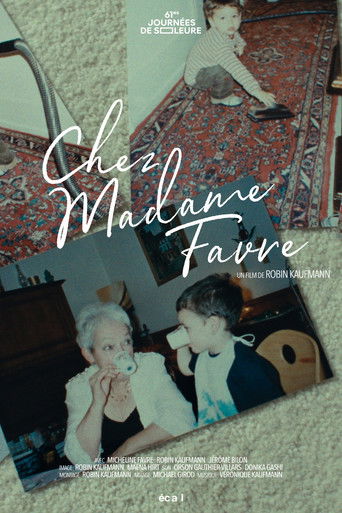
After discovering more than 100 Super 8 reels in his great-aunt's basement, a young filmmaker reflects on the value of these movies and his family's legacy.
A retrospective special commemorating the 20th anniversary of the sitcom The Mary Tyler Moore Show.
Billy the pet seal adapts to village life in Wereham, Norfolk.
Filmmaker Karim Aïnouz decides to take a boat, cross the Mediterranean, and embark on his first journey to Algeria. Accompanied by the memory of his mother, Iracema, and his camera, Aïnouz gives a detailed account of the journey to his father’s homeland, interweaving present, past, and future.
An Israeli film director interviews fellow veterans of the 1982 invasion of Lebanon to reconstruct his own memories of his term of service in that conflict.
Dive full-force into the most electric, profound, action-packed, and emotionally resonant decade in the history of filmmaking with the fifth installment of the “Tour de Cinema” series.
Using testimonies by pioneers and witnesses of the times, delve into the feverish visual culture the media generated – with far-fetched examples of canine television games, seduction manuals, aerobics class while holding a baby, among others.
The audience is taken through a range of years through archival footage exploring the ups and downs of our lives and the thing that connects us all, love. Seven interview subjects: a philosophy professor, a film professor, a humanities professor, a retired lawyer turned archivist, a volunteer, a dance student, and a fashion student, explore their backgrounds with religion, their current personal philosophies, whether or not they believe we have a purpose, or if the things we do have any meaning at all. Eventually everything wraps back around to love.
Two friends, one Black and one white, journey to their Southern ancestral homes, exploring reparations' meaning. Their travels uncover opportunities that transform their bond, communities, reclaiming and reckoning with their roots.
A Chinese girl returns home to Helsinki, with a desire to reassess her feelings about home, perfection, friendship, and regret. A tender dialogue is raised between father and daughter.
The meaty saga of Burger Baron, a rogue fast-food chain with mysterious origins and a cult following, run by a loose network of fiercely independent Arab Canadian immigrants.
‘Objects of War’ is a series of testimonials on the Lebanese war. Each person chooses an object, ordinary or unusual, which serves as a starting point for his / her story. These testimonials while helping to create a collective memory, also show the impossibility of telling a single History of this war. Only fragments of this History are recounted here, held as truth by those expressing them. In ‘Objects of War’, the aim is not to reveal a truth but rather to gather and confront many diverse versions and discourses on the subject. ‘Objects of War’ started in 1999 assembling the testimonials of eleven persons. It was first shown in 2000 . It continued in 2003 with ‘Objects of War n°2’, recording seven additional testimonials. This time however, and since then, the recorded material is left unedited, shown in its integrity. The work of collecting and assembling these stories continued with ‘Objects of War n°3 & n°4’ in 2006 and ‘n°5 & 6’ in 2014.
Sayedat Al-Kasr traces the history of the Joumblatt family of Mount Lebanon from the 17th century to the present, focusing on early 20th century leader and politician Nazira Joumblatt. Born in 1889, Nazira ascended the throne of the Moukhtara palace in 1923, following the assassination of her husband Fouad and the resignation of her brother Aly Joumblatt. She presided over the region as Lady of the Palace for twenty-five years while raising her son Kamal, preparing him to take his place in a long line of Jumblatt leaders. Famous for her wisdom and strong personality, Nazira boldly entered the Lebanese political scene at a time when this field was entirely dominated by men. Unwavering, she contributed to maintaining peace and stability in Lebanon for many years, earning the respect of men and women, whether Druze or Maronites.
In 1982, Cody Webster and a small group of friends from Kirkland, Washington, sat anxiously in a dugout waiting to take the field for the championship game of the Little League World Series. Their focus was just about what you’d expect from any 12-year-old: hit the ball, throw strikes, cross your fingers and then maybe – maybe – you’ll win. Adults in the stands and watching from home saw a much broader field of play. The memories of American hostages and a crippling oil crisis were still fresh; the economic malaise of the late 1970s still lingered; and the new President was recovering from an assassination attempt even while confronting new threats from the Soviet Union. Meanwhile, back on that tiny baseball field in Williamsport, Pennsylvania, no American team had won a true international Little League World Series Championship in more than a decade. When the Kirkland players rushed from their dugout that day, they stepped onto a much bigger field than the one they saw.
A short documentary about the rapidly disappearing era of heritage movie palaces and the film going experience once offered within those hallowed walls.
Jean-Claude walks his dog in a neighborhood forever stuck in reconstruction. On his trip, he wonders about life, mortality, and 'what if' scenarios while remembering fragments from the direct impact of the second that almost cost him his life on August 4. At the moment of the explosion, the end of the world, bodies, buildings, roads, and cities may shatter. Perhaps the universe itself breaks apart. But the most severe fragmenting remains that of memory. A picture here and a sound there are vaguely reconstituted. Can a future be built from such a memory? Can it rebuild what was lost? Is it time to leave?
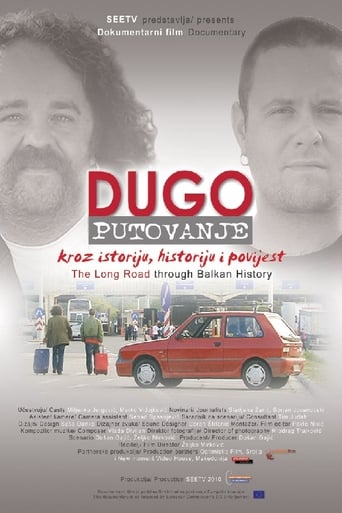
Petar Peca Popović is one of the greatest, most famous, most authoritative and for sure, the best, connoisseur of Rock and Roll in the former Yugoslavia. He promoted Rock and Roll in those heroic times. We are going on a peculiar kind of trip with him, along an "emotional homeland", of ex-Yu, "searching for the lost times" and dear friends, the most significant representatives of this culture - rock'n'roll legends.
Discover the untold story of Pinball and Arcade in Australia in this heart-warming, and at times heart-breaking, nostalgic journey through the golden era of gaming.