"Versions of Cause and Effect"
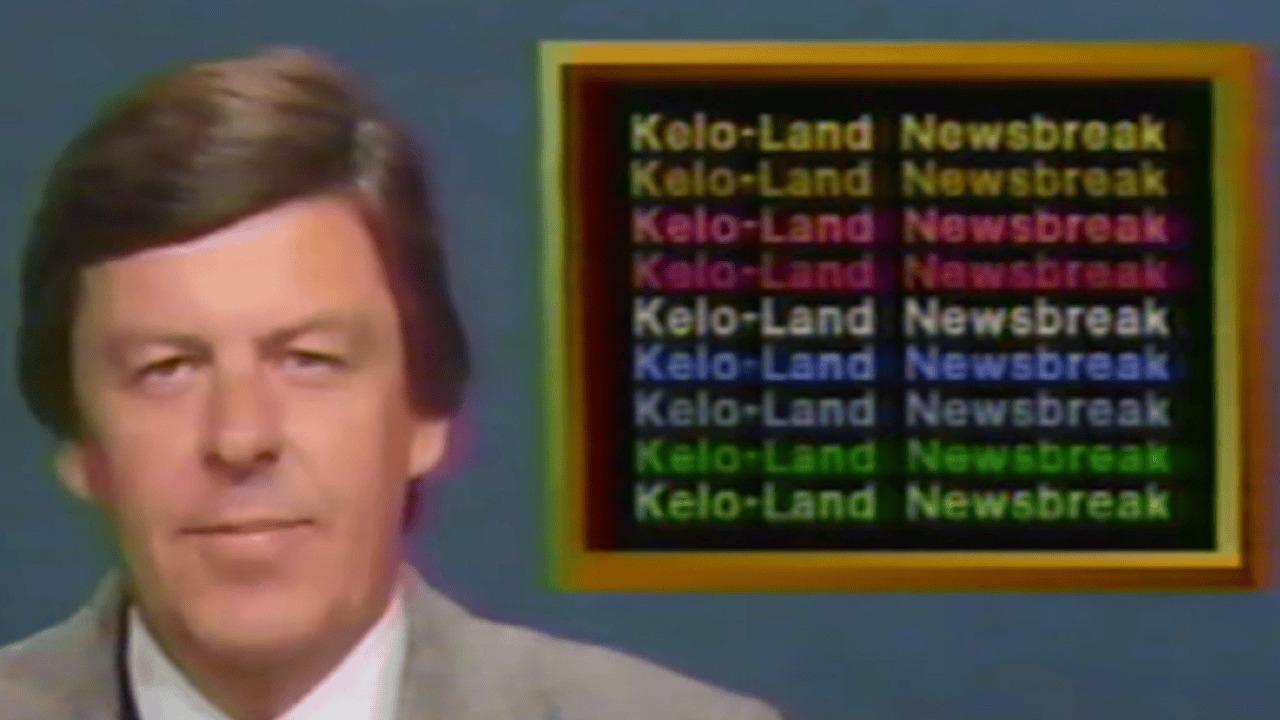
Television was invented as a result of scientific and technical research. Its power as a medium of news and entertainment altered all preceding media of news and entertainment
Social & External
Though both the historical and modern-day persecution of Armenians and other Christians is relatively uncovered in the mainstream media and not on the radar of many average Americans, it is a subject that has gotten far more attention in recent years.
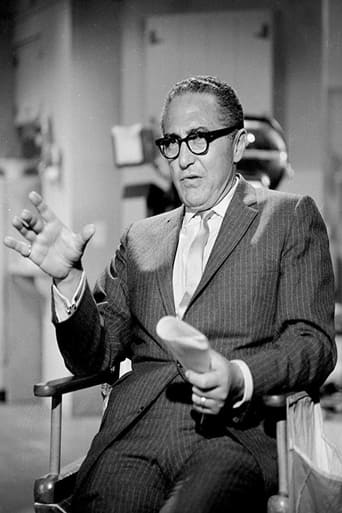
"This film explores how freedom of speech — including dissent — is afforded to all Americans, and shows freedom of expression in art, music, dance, architecture, and science. The film also emphasizes the importance of the individual’s contribution to the whole of society and demonstrates how a productive and creative society is formed by the open and respectful exchange of ideas. The film was written, produced, and directed by William Greaves" (National Archives).
Shenzhen River (the border btw Hong Kong and Shenzhen), and the Second Line of Shenzhen Special Economic Zone (the border between Socialism China and Capitalism China) were compared to the Berlin Wall. The Second Line were constructed June 1982, demolished June 2015. The First Line (Shenzhen River) still flows, running deeper and deeper after 1997. Artist Miaoyuan LONG and Zen LU (the ON/OFF media Group) documented major checkpoints along these two boundaries. It’s a piece to illustrate the Big Escape (Touch Base Policy) from mainland China to Hong Kong during 1950-70’s and the geopolitical history of Shenzhen. The 48min audio-visual live performance version was Official selection of Draft Systems 2017 WRO Media Art Biennale, Poland.
An anthology of one-minute films created by 51 international filmmakers on the theme of the death of cinema. Intended as an ode to 35mm, the film was screened one time only on a purpose-built 20x12 meter public cinema screen in the Port of Tallinn, Estonia, on 22 December 2011. A special projector was constructed for the event which allowed the actual filmstrip to be burnt at the same time as the film was shown.
"Like a Dream That Vanishes" continues Sternberg’s work in film both thematically and formally: the ephemerality of life echoed in the temporal nature of film, as the stuff of life echoed on the energy, life-force in rhythmic light pulses (Your life is like a candle burning). Imageless emulsion is inter-cut with brief shots of natural elements and mise-en-scene of the stages of human life: a little boy runs and falls; teens hang out together at night smoking; sun shines through tree branches; men pace, waiting; flashes of lightning; an elderly man speaks philosophically about miracles.
Every image in The Fall of Communism as Seen in Gay Pornography comes from gay erotic videos produced in Eastern Europe since the introduction of capitalism. The video provides a glimpse of young men responding to the pressures of an unfamiliar world, one in which money, power and sex are now connected.
Twenty-five films from twenty-five European countries by twenty-five European directors.
An experience of a camera swinging in different gestures facing the optical distortion of the Sun. The last appearance of the smudge.
"In continuo" uses slaughterhouse imagery to present the warlike nature of man, first depicting the cleaning and mechanical preparations for the slaughterhouse and then the killing, however, the animal slaughter itself isn’t shown.
Luis Bunuel, the father of cinematic Surrealism, made his film debut with 'Un Chien Andalou' in 1929 working closely with Salvador Dali. Considered one of the finest and controversial filmmakers with, 'L’Age d’Or' (1930), attacking the church and the middle classes. He won many awards including Best Director at Cannes for 'Los Olvidados' (1950), and the coveted Palme d’Or for 'Viridiana' (1961), which had been banned in his native Spain. His career moved to France with 'The Diary of a Chambermaid' with major stars such as Jeanne Moreau and Catherine Deneuve.
A scientific expedition travels to an alternative Earth in hope of finding a new home for humanity, which has destroyed its own planet. But is it even possible to escape old patterns?
Shot in two places marrying with each other by a single and fractured bridge between Condrieu and les Roches-de-Condrieu, this film is the continuation of exploring ephemeral movement through the use of editing, camera movements and color sampling.
Included in this groundbreaking work are interviews with active farm attackers and serving police officers who confirm corrupt police are complicit in the mass‐slaughter of South Africa’s whites. Their truths are horrifying—a man and woman branded with hot irons and left to die. A husband killed in front of his wife and children. An elderly woman raped, another with half her face blown off from a shotgun. And they all share a common thread: revenge. This is a disturbing documentary—it wrought both an emotional and physical toll on all involved. What’s more, Katie was detained at the airport in South Africa on the orders of the African National Congress (ANC) for her work on this project because Plaasmoorde is the story—the truth—they don’t want you to see. We owe it to the victims—to our fellow man—to listen and to open our eyes to the truth.
Peter LeDonne and Steve Kalafer chronicle the extraordinary life of Immaculée Ilibagiza, a young African woman who escaped genocide in Rwanda and ultimately found refuge in the United States. Seeking shelter with an Episcopalian minister, Immaculée hid from her attackers inside a bathroom for three long months but stayed centered through prayer and faith.
A documentary chronicling the adolescent years of Elie Wiesel and the history of his sufferings. Eliezer was fifteen when Fascism brutally altered his life forever. Fifty years later, he returns to Sighetu Marmatiei, the town where he was born, to walk the painful road of remembrance - but is it possible to speak of the unspeakable? Or does Auschwitz lie beyond the capacity of any human language - the place where words and stories run out?
Words are loaded with meaning. Certain ones conjure joyful memories and others remind us of less happy times. For Nenda Neururer, the word 'oachkatzlschwoaf' invokes a range of emotions. The German word is very hard to pronounce and is synonymous with the Austrian state of Tyrol where locals tease outsiders by asking them to pronounce it. Despite growing up in Tyrol, Nenda Neururer often felt like an outsider when confronted with this word. But when she moved to London she grew nostalgic for it and it became her little secret. Found in Translation is a series made as part of the In The Mix project, in partnership with BBC Studios TalentWorks, Black Creators Matter and the Barbican.
Rummaging for Pasts is an experimental juxtaposition of two cinematic documents: the video diary of an international archaeological excavation and a collection of assorted eight millimeter found footage of Indian weddings.
A documentary that explores the myth behind the truth. Different people around the globe reinterpret the legend of Che Guevara at will: from the rebel living in Hong Kong fighting Chinese domination, to the German neonazi preaching revolution and the Castro-hating Cuban. Their testimonies prove that the Argentinian revolutionary's historical impact reverberates still. But like with all legends, each sees what he will, in often contradictory perspectives.
The inner world of the great painter Max Ernst is the subject of this film. One of the principal founders of Surrealism, Max Ernst explores the nature of materials and the emotional significance of shapes to combine with his collages and netherworld canvases. The director and Ernst together use the film creatively as a medium to explain the artist's own development.